Yudofu Recipe
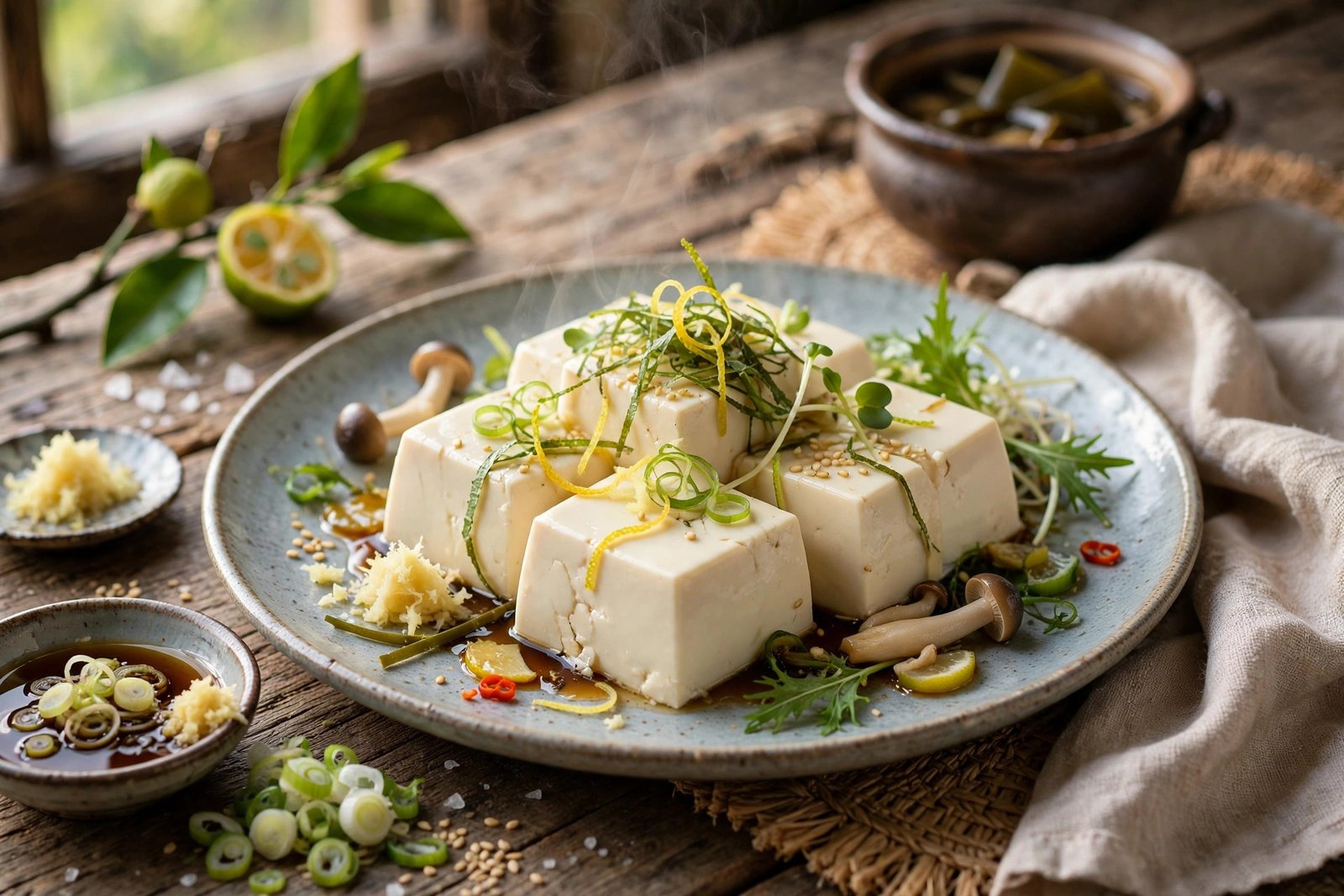
Yudofu is the quiet, comforting soul of Kyoto cooking: blocks of silken tofu simmered gently in a light kombu broth until warm and custard-soft, then lifted out and dipped in ponzu sauce. Simple, nourishing and deeply calming, it proves how little you need when the ingredients are good.
The story behind Yudofu
Yudofu is the signature dish of Kyoto, the old imperial capital, where it grew out of shojin ryori — the vegetarian temple cooking of Buddhist monks. In the quiet streets around Nanzen-ji temple, restaurants have served simmered tofu in light kombu broth for generations, and the dish has become a symbol of Kyoto itself: restrained, elegant and deeply peaceful.
The philosophy behind yudofu is as important as the recipe. Shojin ryori is cooking that respects the ingredient, wastes nothing, and seeks balance rather than excess. Yudofu is that philosophy in a bowl — tofu, water, kombu, salt, and a dipping sauce. Nothing more is needed, and nothing more is added.
What makes it special is the tofu itself. Good silken or medium tofu, simmered gently until it is warm all the way through, has a texture like warm custard — soft, delicate and almost trembling. The kombu broth gives it a subtle savoury depth, and the ponzu dipping sauce adds brightness and salt.
The kombu is the quiet hero. A single piece of dried kelp, simmered briefly in water, gives the broth its umami — a gentle, savoury flavour that you notice more when it is absent than when it is present. It is the difference between tofu in hot water and tofu in a broth.
Eating yudofu is a slow, meditative experience. The pot sits in the middle of the table, steam rising, and each person lifts out pieces of tofu with a slotted spoon, dips them in ponzu, and eats them one by one. It is food that asks you to slow down.
The dish is also remarkably nourishing. Tofu is rich in protein and low in fat, the broth is light, and the whole meal leaves you satisfied without feeling heavy. It is the kind of food that suits a cold evening, a quiet lunch, or a day when you want something gentle.
In Kyoto, yudofu restaurants are often set in old wooden buildings with gardens, and the meal is as much about the setting as the food. You do not need a temple garden to enjoy it at home, but a quiet table and an unhurried half hour will help.
Cook it when you want something simple and restorative — a light dinner, a starter for a Japanese meal, or a way to appreciate good tofu. It takes 25 minutes and almost no effort, and it is one of the most calming dishes there is.
The simplicity of yudofu is deceptive. With so few ingredients, every one of them matters — the quality of the tofu, the freshness of the kombu, the balance of the ponzu. There is nowhere to hide a mediocre ingredient, which is why Kyoto's yudofu restaurants are so particular about their suppliers.
Yudofu is also a dish that suits the seasons. In winter it is warming and comforting, steam rising from the pot on a cold evening. In summer it is light and cooling, the tofu barely warmed and the ponzu sharp and refreshing. The recipe does not change — only the appetite around it.
- Prep time
- 10 mins
- Cook time
- 15 mins
- Total time
- 25 mins
- Servings
- 4 servings
- Calories
- 260
Ingredients
- 600 g silken or medium tofu, cut into large cubes
- 1 litre water
- 1 piece kombu (10 cm), wiped clean
- 1 teaspoon sea salt
- 2 spring onions, finely chopped
- 1 tablespoon grated fresh ginger
- 80 ml ponzu sauce
- 1 teaspoon chilli oil (optional)
- 1 tablespoon toasted sesame seeds
- 2 tablespoons dried bonito flakes (optional)
Instructions
- Put the water and the piece of kombu in a wide pot and heat gently over medium heat. Watch closely — you want the water just below a simmer, with tiny bubbles at the edges, for about 5 minutes. Do not let it boil, or the kombu will turn bitter.
- Lift the kombu out and discard it — its work is done. The water should taste faintly savoury, like the lightest possible broth. If you cannot taste anything, the kombu needed another minute.
- Add the sea salt and stir to dissolve. Then slide the tofu cubes in carefully, one at a time, keeping the heat low so the water barely trembles. The tofu is delicate — handle it gently and do not stir roughly.
- Simmer very gently for 10 minutes, until the tofu is heated all the way through and feels soft and yielding when pressed lightly. The water should never boil hard — a rolling boil will break the tofu apart.
- While the tofu simmers, mix the ponzu sauce with the grated ginger and chilli oil in small individual bowls — one per person. The ginger adds warmth, the chilli oil adds a gentle heat, and the ponzu brings salt and citrus.
- Warm the serving bowls with hot water, then drain them. Warm bowls keep the tofu hot at the table, which matters for a dish this delicate.
- Lift the tofu out with a slotted spoon and divide it between the warm bowls, adding a little of the hot broth to each. The broth keeps the tofu warm and adds flavour.
- Sprinkle each bowl with chopped spring onions, toasted sesame seeds and bonito flakes if using. Serve immediately, with the ponzu dipping bowls on the side, and eat the tofu piece by piece, dipping as you go.
Pro tips
- Never let the broth boil hard. A gentle simmer is essential — boiling will shatter the delicate tofu into clouds.
- Use silken or medium tofu. Firm tofu is too dense for this dish and will not develop the custard-soft texture that makes yudofu special.
- Remove the kombu before the water boils. Kombu left in boiling water releases bitter compounds that spoil the clean flavour of the broth.
- Warm the bowls first. Cold bowls steal heat fast, and yudofu is at its best when the tofu is warm all the way through.
- Handle the tofu with a slotted spoon, not tongs. Tongs crush the soft cubes; a spoon cradles them.
Variations & serving ideas
Add shiitake or enoki mushrooms and a handful of wakame to the pot so they simmer alongside the tofu. The mushrooms add an earthy depth, the wakame adds a gentle sea flavour, and the broth becomes richer. A splash of sake stirred into the broth adds warmth.
Try a sesame dipping sauce instead of ponzu — tahini thinned with dashi, soy sauce and a little sugar, with a squeeze of lemon. It is richer and nuttier, and it coats the tofu in a way that ponzu does not.
For a heartier meal, add leafy greens such as spinach or chrysanthemum leaves to the pot for the last 2 minutes, and serve the yudofu over steamed rice. The greens wilt quickly and add colour and freshness.
Make it vegan by skipping the bonito flakes — the kombu broth and ponzu are already plant-based. A sprinkle of toasted sesame seeds and a little grated ginger make up for the missing bonito.
Serve yudofu as part of a Japanese spread with miso soup, pickles and grilled fish, or keep it simple with rice and a green salad. It works as a light main or as a starter before something richer.
For a winter version, add sliced daikon and carrot to the broth and simmer them with the tofu. The root vegetables sweeten the broth and make the dish more substantial — closer to a hot pot than a delicate simmer.
Leftover broth is too good to waste. Strain it and use it as a base for miso soup, or cook noodles in it for a quick, savoury lunch. The kombu flavour deepens as it sits.
If you cannot find ponzu, make a quick version with soy sauce, lemon juice and a little dashi — equal parts soy and citrus with a splash of dashi. It is not identical, but it is close and it works well.
For a richer broth, add a few slices of fresh ginger to the water with the kombu. The ginger warms the broth and adds a gentle heat that complements the tofu. Remove the ginger with the kombu so the flavour stays subtle.
Getting it right
Heat control is the whole technique here. The water should tremble, not boil — you are looking for the barest movement on the surface, a lazy bubble now and then. If the water is rolling, the tofu will break apart. Keep the heat low and watch the pot for the first minute until you find the right setting.
The kombu needs care too. It should be wiped clean, simmered gently for about 5 minutes, and removed before the water boils. Kombu that boils releases bitter, slimy compounds that cloud the broth and spoil the clean flavour. Set a timer if it helps — 5 minutes is enough.
The most common mistake is using the wrong tofu. Firm or extra-firm tofu will not soften into the custard texture that defines yudofu — it stays dense and chewy. Silken tofu is the most delicate choice, though it is fragile to handle; medium tofu is a good compromise, soft but sturdy enough to lift with a spoon.
Timing matters at the table too. Yudofu should be eaten as soon as it is served — the tofu cools quickly and the texture firms up as it sits. Have the dipping bowls ready, the table set, and everyone seated before you lift the tofu from the pot.
Sourcing good tofu makes all the difference. Look for tofu from a Japanese or Korean grocer, sold in water and dated recently — it will be fresher and more delicate than long-life cartons. The best yudofu starts with the best tofu you can find.
Storing & reheating
Yudofu is best eaten fresh — the tofu is at its silkiest straight from the pot, and it firms up as it cools. Leftovers can be refrigerated in the broth for up to 2 days, but the texture will not be the same.
Do not freeze yudofu. Freezing changes tofu's texture dramatically, turning it spongy and chewy — the opposite of the silken softness this dish is about. Make only as much as you will eat.
To reheat leftovers, warm them very gently in the broth over low heat until just heated through. Do not boil. A fresh ponzu dipping sauce and a scattering of spring onions will help revive the dish.
Frequently asked questions
What is yudofu?
Yudofu is a Kyoto dish of tofu simmered gently in a light kombu broth and served with ponzu dipping sauce. It comes from shojin ryori, the vegetarian temple cooking of Buddhist monks, and it is one of the simplest and most calming dishes in Japanese cooking.
What kind of tofu should I use?
Silken or medium tofu is best — they turn soft and custard-like in the gentle broth. Firm tofu is too dense and will not develop the right texture. Silken is the most delicate choice, though it needs careful handling with a slotted spoon.
Is yudofu vegan?
Yes, if you skip the bonito flakes. The kombu broth, tofu and ponzu are all plant-based. Bonito flakes are optional — they add a smoky note, but the dish is complete without them, and a sprinkle of sesame seeds works just as well.
What is kombu, and where do I find it?
Kombu is dried kelp, a type of seaweed used in Japanese cooking to make dashi broth. It adds a gentle umami flavour. Find it in Asian supermarkets or health food shops — a single piece is enough for this recipe, and the rest keeps for months.
Can I add other ingredients to the pot?
Yes — mushrooms, leafy greens, wakame and sliced daikon all simmer well alongside the tofu. Add sturdy vegetables first and delicate greens in the last 2 minutes. The dish stays simple, but the additions make it heartier.
What do I serve with yudofu?
Steamed rice, pickles and a simple salad make a complete light meal. Yudofu also works as a starter before grilled fish or a richer main. Keep the accompaniments simple — the tofu is the star, and it needs little company.