Agedashi Nasu Recipe
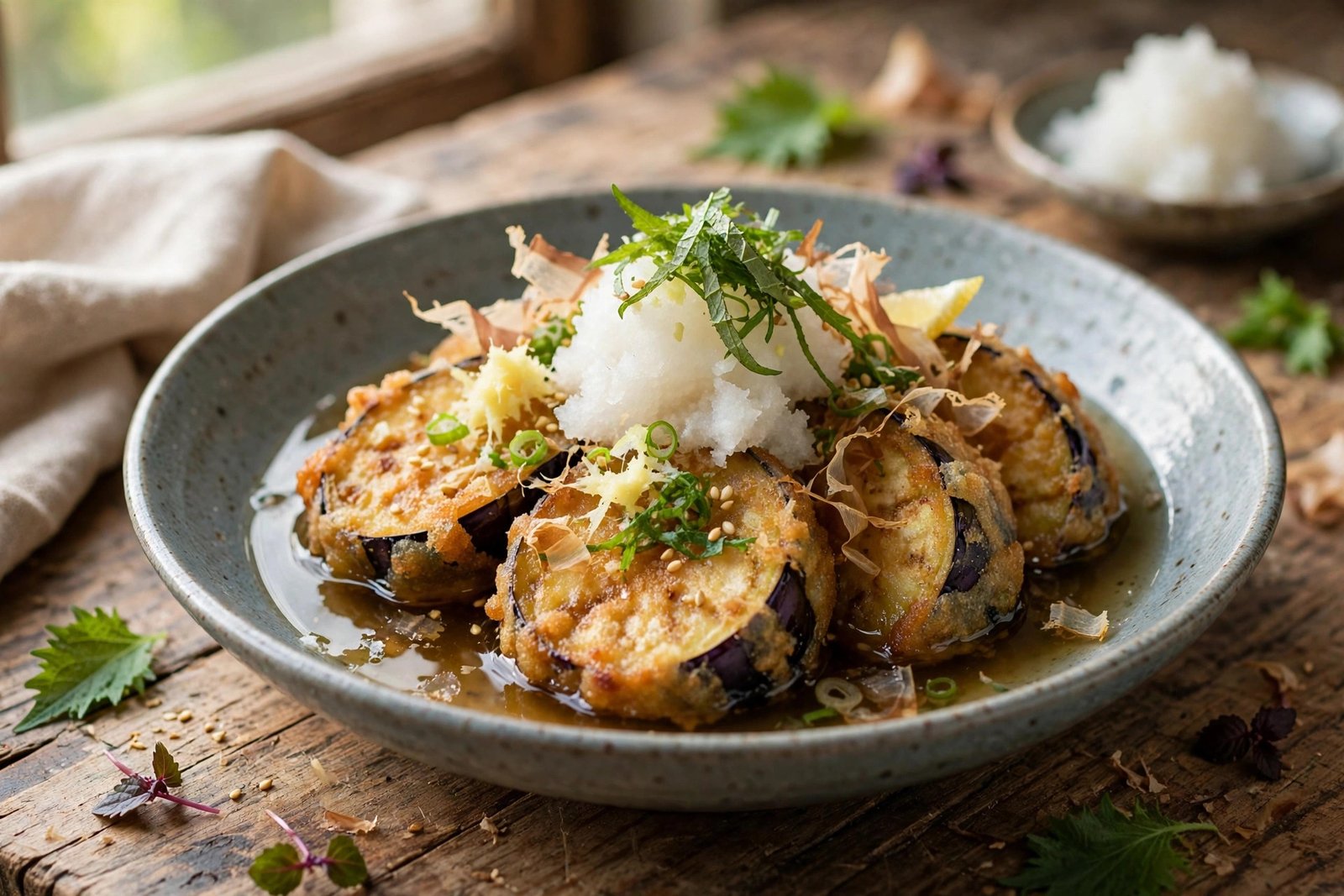
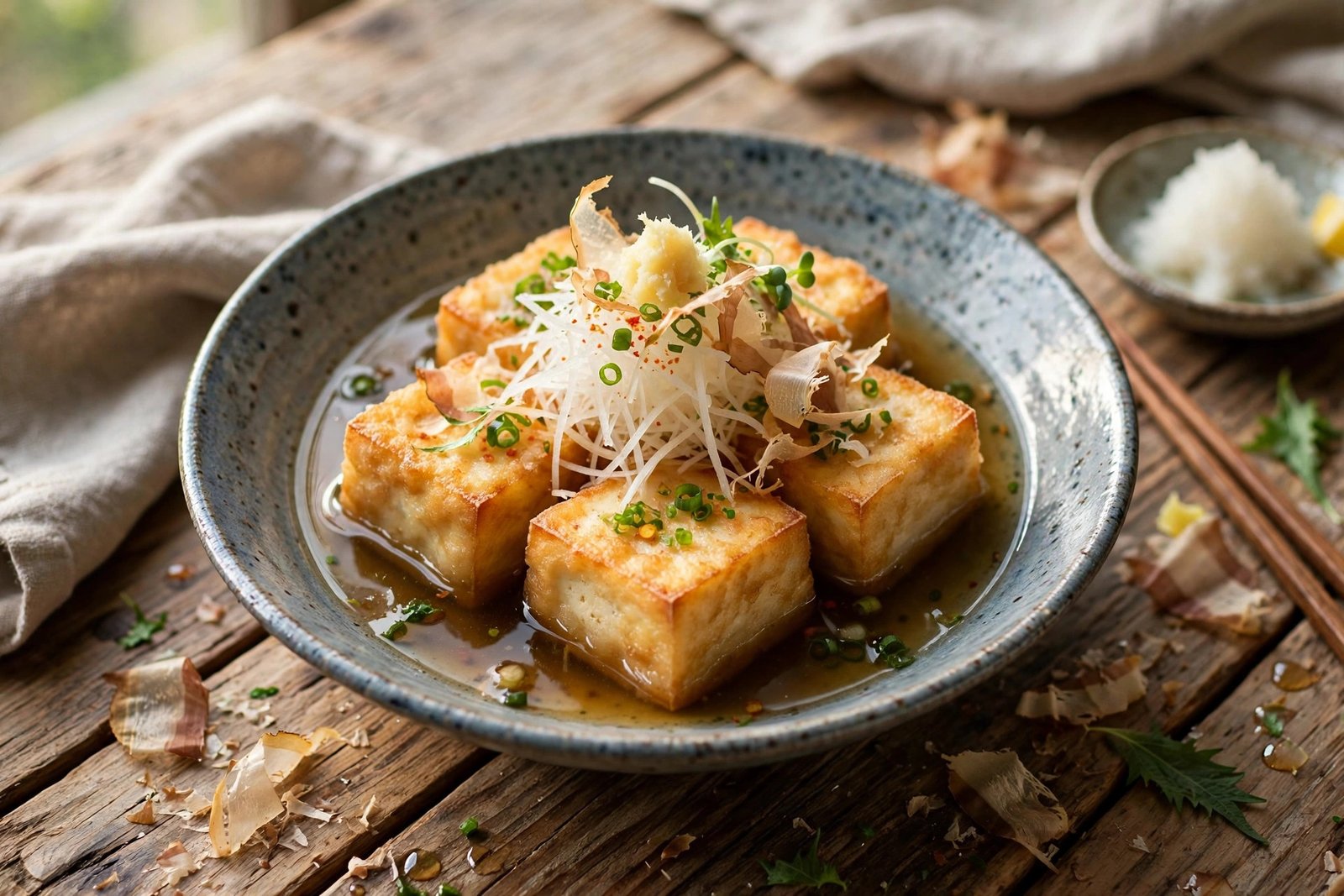
Agedashi Nasu is Japanese fried aubergine served in a warm, savoury dashi broth, its crisp edges softening as it soaks up the sauce. Ginger and spring onions add brightness to every bite. It is a small, elegant dish that shows how much flavour a humble aubergine can carry.
The story behind Agedashi Nasu
Agedashi nasu is a variation on agedashi tofu, one of the most beloved dishes in Japanese cooking. The word agedashi means 'fried and served in broth' — and that is exactly what happens here. Aubergine pieces are coated in potato starch, fried until golden, then placed in a warm dashi broth that softens the crisp edges and soaks into the flesh.
The dish belongs to the world of izakaya — Japanese pubs — where small, flavourful plates are served alongside drinks. Agedashi nasu is the kind of dish you order without thinking, eat in a few minutes, and then order again. It is simple, savoury and deeply satisfying.
What makes it special is the contrast. The aubergine comes out of the oil crisp and golden, then meets the warm broth and begins to soften at the edges while the centre stays tender. The dashi, soy, mirin and sake create a broth that is savoury, slightly sweet and deeply comforting.
The aubergine itself is the star. Japanese aubergines are long, slender and mild, with thin skin and few seeds. They fry beautifully, turning creamy inside while the starch coating crisps up. The crosshatch scoring on the skin helps the heat penetrate and lets the broth soak in.
The toppings are not decoration. Grated ginger adds warmth and a sharp, fresh note; spring onions bring a clean, green bite; grated daikon adds a cool, peppery crunch. Together they lift the rich, savoury broth and keep each bite lively.
Agedashi dishes are a lesson in Japanese balance — fried food that is not heavy, because the broth lightens it; a simple vegetable made luxurious by good technique. It is the kind of cooking that looks effortless and tastes like care.
The dish also shows the versatility of dashi. That clear, umami-rich stock — made from kombu and bonito — is the backbone of Japanese cooking, and here it carries the whole dish. A good dashi makes the difference between a pleasant plate and a memorable one.
Cook it when you want a small, elegant starter or a side dish with real character. It takes 35 minutes, uses pantry ingredients, and it is the kind of dish that makes a simple meal feel considered.
Agedashi dishes are a study in contrast — crisp against soft, hot against warm, rich against light. The fried food goes into the broth and begins to change the moment it arrives, so every bite is slightly different from the last. It is a dish that rewards eating promptly and paying attention.
The potato starch coating is worth a word. Unlike wheat flour, which forms a thick, bready crust, potato starch fries into a thin, glassy shell that shatters lightly and then softens in the broth. It is the difference between a heavy fritter and a delicate agedashi.
- Prep time
- 15 mins
- Cook time
- 20 mins
- Total time
- 35 mins
- Servings
- 4 servings
- Calories
- 210
Ingredients
- 2 Japanese aubergines, cut into 5 cm pieces
- 60 g potato starch
- 500 ml vegetable oil, for frying
- 250 ml dashi stock
- 2 tablespoons soy sauce
- 1 tablespoon mirin
- 1 tablespoon sake
- 1 teaspoon grated fresh ginger
- 2 spring onions, finely sliced
- 1 teaspoon toasted sesame seeds
- Grated daikon radish, to serve
Instructions
- Cut the aubergines into pieces about 5 cm long. Score the skin of each piece with shallow crosshatch cuts — this helps them cook evenly and lets the broth soak in later. Do not cut too deep; you are scoring the skin, not slicing the flesh.
- Toss the aubergine pieces in the potato starch, coating them lightly and evenly on all sides. Shake off any excess — you want a thin, even coat, not a thick crust. Too much starch turns gummy in the oil.
- Heat the vegetable oil in a deep pan to 180 C. Test it with a pinch of starch — it should sizzle at once. If you do not have a thermometer, a wooden chopstick dipped in the oil should bubble steadily around the tip.
- Fry the aubergine in batches for 2 to 3 minutes per batch, turning once, until golden and tender. Do not crowd the pan — the pieces need space to crisp. The coating should be golden and the flesh soft when pierced.
- Lift the fried aubergine out with a slotted spoon and drain on a wire rack or kitchen paper. The rack is better — paper can make the coating soggy from below. Season lightly with salt while the pieces are still hot.
- While the aubergine drains, combine the dashi, soy sauce, mirin and sake in a small saucepan. Bring to a gentle simmer over medium heat and cook for 2 minutes, until the alcohol has cooked off and the flavours have married.
- Place the fried aubergine in shallow bowls and pour the hot broth over the top — enough to come halfway up the pieces, not to submerge them. The broth will soften the edges while the tops stay crisp.
- Top each serving with grated ginger, sliced spring onions, a little grated daikon and a sprinkle of toasted sesame seeds. Serve immediately, while the contrast between crisp and soft is at its best.
Pro tips
- Score the skin before coating. The crosshatch cuts help the aubergine cook evenly and let the broth soak in — skip them and the skin stays tough.
- Keep the oil at 180 C. Too cool and the aubergine absorbs oil and turns greasy; too hot and the coating burns before the flesh softens.
- Fry in batches. Crowding the pan drops the oil temperature and the aubergine steams instead of crisping.
- Drain on a wire rack, not paper. Air circulating underneath keeps the coating crisp while you make the broth.
- Pour the broth over the aubergine, not the other way round. You control the amount, and the tops stay crisp for the first few bites.
Variations & serving ideas
Use the same method with tofu, sweet potato, courgette or mushrooms — the agedashi treatment works with almost any vegetable that fries well. Tofu is the classic version, and sweet potato adds a lovely sweetness against the savoury broth.
Add a soft-boiled egg to the bowl for extra richness. The yolk mingles with the broth and turns it silky — a small addition that makes the dish feel more substantial.
For a spicier version, add a pinch of shichimi togarashi (Japanese seven-spice) to the broth, or a drizzle of chilli oil on top. The heat plays well against the sweet mirin and the savoury dashi.
Change the broth by adding a splash of yuzu juice or a little grated yuzu zest — the citrus lifts the whole dish and adds a fragrant, floral note. A spoonful of grated daikon stirred into the broth adds body.
Serve agedashi nasu as part of a Japanese spread with rice, miso soup and grilled fish, or as a starter before a richer main. It also works as a small plate alongside drinks, izakaya-style.
For a heartier meal, serve the aubergine over a bowl of steamed rice with the broth spooned over the top. The rice soaks up the dashi and turns a side dish into a satisfying main.
If you cannot find dashi, use a light chicken or vegetable stock with a splash of soy sauce — it will not be identical, but it will be savoury and satisfying. Instant dashi powder is a good shortcut.
Make it gluten-free by checking the soy sauce — use tamari instead, and confirm the potato starch is pure. The rest of the dish is naturally gluten-free.
Try agedashi with thick slices of lotus root or burdock root for a more unusual version. Both fry well, hold their shape in the broth, and add an earthy flavour that pairs beautifully with the dashi.
For a cold-weather version, serve the aubergine in a deeper bowl with more broth, almost like a soup. The extra broth keeps everything warm, and a bowl of rice on the side turns it into a complete, comforting meal.
Getting it right
The starch coating is the key technique. Potato starch fries up lighter and crisper than wheat flour, and it clings to the aubergine without forming a heavy crust. Coat the pieces evenly but thinly, and shake off every bit of excess — a thick coat turns gummy in the oil and soggy in the broth.
Oil temperature is the second skill. At 180 C, the aubergine crisps quickly and the inside turns creamy in 2 to 3 minutes. If the oil is too cool, the aubergine absorbs it and turns greasy; if it is too hot, the coating burns. Use a thermometer if you have one, or test with a pinch of starch.
The most common mistake is overcrowding the pan. Each piece of aubergine needs space — if they touch, they steam instead of frying, and the coating never crisps. Fry in batches, let the oil come back to temperature between batches, and be patient.
Timing the broth matters too. Make it while the aubergine drains, so it is hot when the aubergine is ready. The dish comes together in seconds at the end — aubergine in bowls, broth poured over, toppings scattered — and it should reach the table immediately.
The dashi itself deserves care. If you are using instant dashi powder, dissolve it fully in hot water and taste before adding the soy and mirin — some powders are saltier than others, and you may need less soy sauce. A good dashi is the foundation of the whole dish.
Storing & reheating
Agedashi nasu is best eaten immediately — the contrast between crisp coating and soft, broth-soaked flesh fades quickly. Leftovers can be refrigerated in the broth for up to 2 days, but the coating will soften completely.
Do not freeze the finished dish. The aubergine turns mushy on thawing and the coating disintegrates. If you want to prep ahead, fry the aubergine and refrigerate it separately, then reheat in a hot oven and pour over freshly made broth.
To reheat leftovers, warm them gently in the broth over low heat until heated through. A fresh scattering of spring onions and ginger will help revive the flavour, though the crispness will be gone.
Frequently asked questions
What does agedashi mean?
Agedashi means 'fried and served in broth' in Japanese. The food — usually tofu or aubergine — is coated in starch, fried until crisp, then placed in a warm dashi broth. The broth softens the coating and soaks into the food, creating a contrast between crisp and tender.
Can I use regular aubergines instead of Japanese ones?
Yes — cut them into similar-sized pieces and score the skin the same way. Japanese aubergines are slimmer and milder, but regular aubergines work well. You may need to fry them a minute longer since the pieces are thicker.
What is potato starch, and can I substitute it?
Potato starch is a fine white powder used as a coating and thickener in Asian cooking. It fries up lighter and crisper than flour. Cornflour is the closest substitute, though the coating will be slightly less crisp. Plain flour works but gives a heavier result.
What is dashi?
Dashi is a clear Japanese stock made from kombu seaweed and bonito flakes. It is the backbone of Japanese cooking, adding a gentle umami flavour. Instant dashi powder is widely available and works well for this recipe — dissolve it in hot water according to the packet.
Is agedashi nasu vegan?
It can be — use a kombu-only dashi (without bonito flakes) and the dish is fully plant-based. Traditional dashi contains bonito, so check the label on instant dashi powder if you are cooking for vegans.
Why is my coating soggy?
The usual causes are oil that is too cool, a coating that is too thick, or overcrowding the pan. Keep the oil at 180 C, shake off excess starch, fry in batches, and drain on a wire rack. Pour the broth over just before serving.