Shumai Recipe
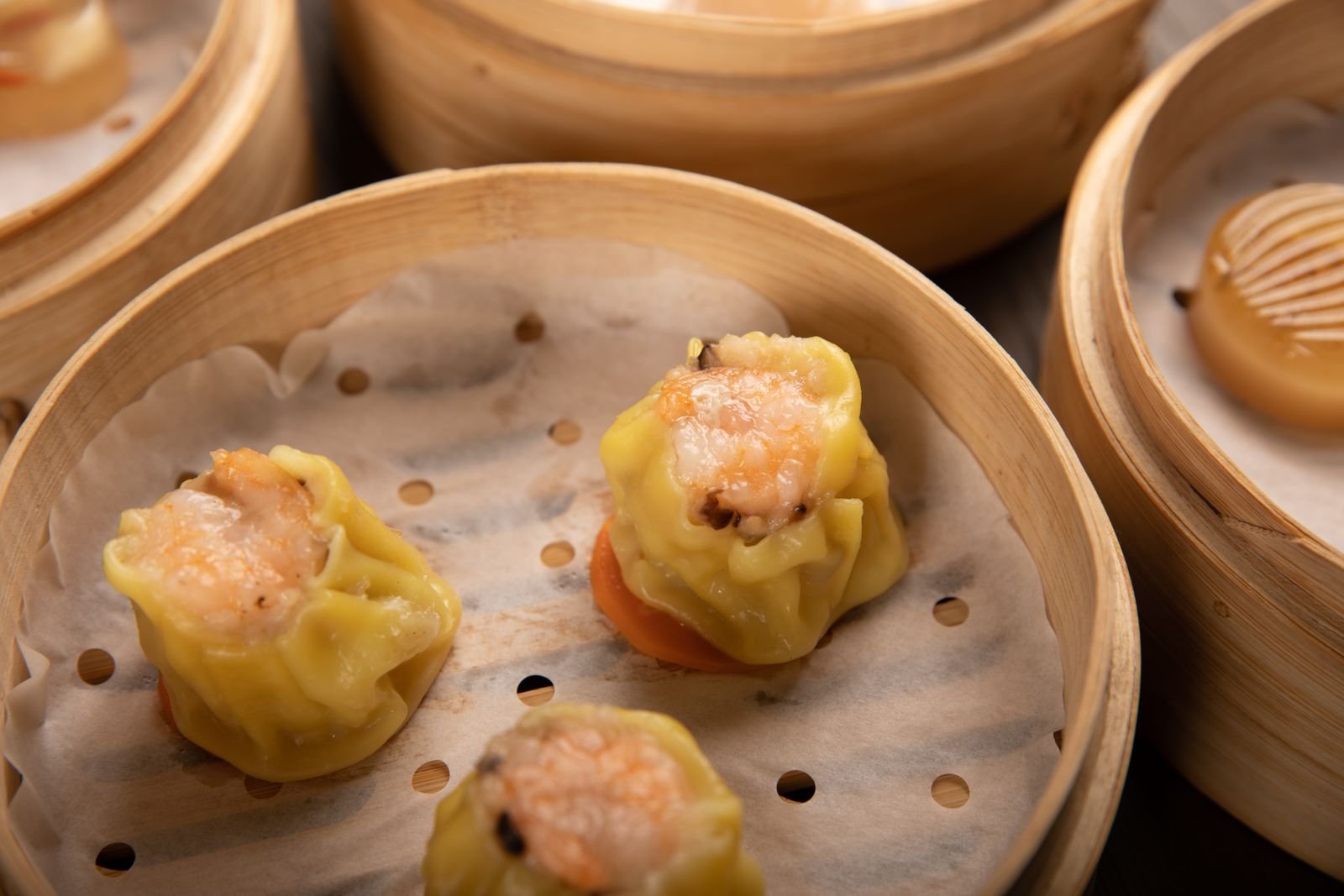
Shumai are open-topped steamed dumplings filled with juicy pork and prawn, wrapped in thin wonton skins and finished with a dab of colour on top. They are tender, savoury and fun to eat, and they make a wonderful shared starter or a light main. Once you learn to fold them, a batch of thirty takes less than an hour. They are best shared, so put the plate in the middle of the table.
The story behind Shumai
Shumai began in China, where they are called shaomai, and travelled to Japan with Chinese traders and cooks in the nineteenth century. Japanese cooks kept the open-topped shape and the steamed cooking, but made the filling their own: minced pork mixed with prawn, onion and ginger, seasoned with soy sauce and sake, and wrapped in a thin yellow wonton skin. In Japan, shumai became a food of the railway station and the department store basement, sold in neat wooden boxes as a snack for travellers.
The dish spread through Japan quickly because it suits the way Japanese people eat. Shumai are small, so you can eat a few as a snack or a dozen as a meal. They are steamed, so they are light and clean-tasting. They are also food for sharing: a plate of shumai in the middle of the table, with soy sauce, mustard and vinegar for dipping, is a familiar sight at family dinners and in izakaya bars. Yokohama, the port city where Chinese food first landed, is still famous for its shumai shops.
What makes a good shumai is the filling. The pork should be fatty enough to stay juicy, the prawn should be chopped, not minced to a paste, so you get little bites of sweetness, and the onion should be finely chopped so it melts into the mixture. The filling is mixed until it turns sticky, which is what holds the dumpling together when it steams. That sticky texture is the sign of a well-made shumai.
In Australia, shumai are a lovely project for a weekend family dinner. The folding is easy to learn, children can help, and the steamer does the cooking in ten minutes. Serve them hot from the steamer with soy sauce, Japanese mustard and a little black vinegar, and put the plate in the middle of the table. They disappear fast, so make more than you think you need. The city of Yokohama is still the heart of shumai in Japan, and its famous shops sell the dumplings in wooden boxes tied with string. Travellers buy them at the station and eat them on the train, and families order them for celebrations. The dumplings are so much a part of the city that the local baseball team hands them out to fans, and the boxes have become a souvenir in their own right.
- Prep time
- 25 mins
- Cook time
- 15 mins
- Total time
- 40 mins
- Servings
- 4 servings
- Calories
- 380
Ingredients
- 300 g minced pork, not too lean
- 150 g raw prawns, peeled and roughly chopped
- 1/2 onion, very finely chopped
- 2 spring onions, finely chopped
- 1 tablespoon fresh ginger, grated
- 1 tablespoon soy sauce
- 1 tablespoon sake
- 1 teaspoon sesame oil
- 1 teaspoon sugar
- 1/2 teaspoon salt and 1/4 teaspoon white pepper
- 1 tablespoon cornflour
- 30 round wonton wrappers
- 30 small peas or 1 tablespoon tobiko, to top
- Soy sauce, Japanese mustard and black vinegar, to serve
Instructions
- Put the minced pork, chopped prawns, onion, spring onions and ginger in a large bowl. Add the soy sauce, sake, sesame oil, sugar, salt, white pepper and cornflour. Mix with your hand in one direction for 2 to 3 minutes, until the mixture turns sticky and holds together when you lift it.
- Take a wonton wrapper and lay it in your palm. Put a heaped teaspoon of filling in the centre. The filling should be a generous mound, because shumai are meant to be full and plump, not flat.
- Gather the wrapper up around the filling with your fingers, pressing gently so the skin sticks to the filling. Leave the top open and flat, so you can see the pink filling. Tap the bottom of the dumpling on the bench so it sits flat and stands up on its own.
- Place a pea or a tiny spoonful of tobiko on top of each dumpling. The colour is traditional and it also tells you which dumplings are which if you make two kinds. Repeat with the rest of the wrappers and filling.
- Line a bamboo steamer with baking paper or cabbage leaves, and arrange the shumai inside with a little space between them. They will swell slightly as they cook, so do not pack them tightly together.
- Bring a wok or a wide pot of water to a rolling boil and set the steamer over it. The water should not touch the bottom of the steamer. Cover and steam the shumai for 8 to 10 minutes, until the pork is cooked through and the wrappers look soft and slightly translucent. Do not lift the lid early, or the steam escapes.
- Check one dumpling by cutting it open: the filling should be hot all the way through, with no pink pork left in the centre. The prawn pieces should be opaque and the wrapper should be tender, not chewy.
- Serve the shumai straight from the steamer, on the plate, with small dishes of soy sauce, Japanese mustard and black vinegar for dipping. Eat them while they are hot, because the wrappers firm up as they cool.
- If a wrapper tears while you fold it, do not throw the dumpling away. Patch the tear with a small piece of another wrapper, pressed on with a dab of water, and it will hold together in the steamer. A patched shumai tastes just as good as a perfect one.
Pro tips
- Mix the filling in one direction only. Stirring back and forth breaks the fibres, while one direction builds the sticky texture that holds the dumpling together. A melon baller or a small spoon helps you portion the filling evenly.
- Do not overfill the wrappers. A heaped teaspoon is enough; too much filling and the wrapper will split in the steamer. If the filling feels too wet, add another teaspoon of cornflour and mix again.
- Keep the wrappers covered with a damp cloth while you work. They dry out fast in the open air and will crack when you fold them. Steam in batches if your steamer is small, and keep the finished ones warm under a cloth.
- Line the steamer so the dumplings do not stick. Baking paper with a few holes, or cabbage leaves, both work well and add a little flavour. A little rice wine in the dipping sauce adds a gentle sweetness that suits the pork.
- Steam over a proper rolling boil. Gentle steam cooks the dumplings slowly and makes the wrappers soggy instead of tender. Freeze the dumplings before steaming for the best texture, not after they are cooked.
Variations & serving ideas
The filling is easy to change. A mix of pork and chicken mince is lighter and works well for children. A seafood version with all prawn and a little white fish is delicate and sweet, and it suits a summer meal. For a vegetarian version, use finely chopped mushrooms, cabbage and tofu, seasoned the same way, though the texture will be softer than the pork version.
The topping is a small detail that changes the look of the plate. A single green pea is the classic Japanese topping, while tobiko, the tiny orange fish roe, gives a salty pop and a bright colour. A little grated carrot or a sliver of spring onion also works. You can make a mixed plate with different toppings, which looks lovely on the table.
Serve shumai as a starter before a Japanese meal, or as a light main with rice and a simple soup. In Australia, they make a fine shared dish for a family dinner, with a plate of gyoza or a bowl of ramen alongside. They pair well with a cold beer or a cup of green tea, and with a simple cucumber salad dressed with rice vinegar.
For a prettier plate, make two fillings: one pork and prawn, and one with chopped shiitake mushrooms and spring onion, topped with a different colour. A little truffle oil stirred into the pork filling gives a luxurious version for a special occasion, though a few drops are enough. If you are short on time, buy ready-made wonton wrappers and focus your effort on the filling, which is where the flavour lives. The wrappers are the same ones used for wonton soup, and they are sold in most Asian grocers. A dipping sauce of soy, rice vinegar and a little chilli oil is a good partner, and it takes seconds to mix. If you are making shumai for a party, cook them in batches and keep the finished ones warm in a low oven, covered with a damp cloth, so they stay soft until you serve them. Children love folding shumai, so let them help with the filling and the topping, and do not worry if the shapes are uneven.
Getting it right
The key technique in shumai is the filling, and it starts with the mixing. The pork, prawn and seasonings must be worked together in one direction until the mixture turns sticky and springy. That stickiness comes from the protein in the meat binding together, and it is what keeps the dumpling from falling apart in the steamer. Two to three minutes of steady mixing is enough, and you will feel the texture change under your hand.
Folding is the second technique, and it is simpler than it looks. The wrapper sits in your palm, the filling goes in the middle, and your fingers gather the skin up around it. The top stays open, which is the mark of a shumai, and the bottom is tapped flat on the bench so the dumpling stands up. Do not worry if the first few look rough; by the tenth one your hands will know the shape.
The most common mistake is under-mixing the filling, which leaves the dumpling loose and crumbly. If the filling falls apart when you lift it, mix it for another minute. The second common mistake is steaming on too low a heat, which makes the wrappers soggy. The water must be at a rolling boil before the steamer goes on, and the lid must stay on for the full cooking time. The steaming time depends on the size of your dumplings, so check one before you serve the batch. Cut it open and look at the centre: the pork should be cooked through with no pink left, and the prawn should be opaque. If the centre is still pink, steam for two more minutes. The wrappers will look slightly translucent when they are ready, and the filling should be hot and juicy.
Storing & reheating
Cooked shumai keep in the fridge for up to 2 days in a sealed container. Let them cool first, then store them in a single layer so they do not stick together. The wrappers will firm up in the fridge, but they soften again when reheated.
Reheat them by steaming for 3 to 4 minutes over boiling water, which brings back their soft texture. The microwave works in a pinch: sprinkle a little water over them and heat for 1 minute, covered. Uncooked shumai freeze well for up to 1 month; freeze them on a tray first, then bag them, and steam from frozen for 12 to 14 minutes. To stop cooked shumai sticking in the fridge, brush them lightly with sesame oil before you put them in the container.
Frequently asked questions
What is the difference between shumai and gyoza?
Shumai are open-topped steamed dumplings, while gyoza are closed, crescent-shaped dumplings that are pan-fried and then steamed. Shumai have a thinner skin and a looser, juicier filling, and they are eaten with soy sauce and mustard rather than a vinegar dip.
Can I make shumai without prawns?
Yes, use all pork instead, and add a little extra fat to keep the filling juicy. The prawns add sweetness and a firmer bite, but a pork-only shumai is still delicious. You can also use chicken mince, though the flavour will be milder.
Do I need a bamboo steamer for shumai?
A bamboo steamer is traditional and gives the best result, but a metal steamer basket or a heatproof plate on a rack inside a pot also works. Line the steamer so the dumplings do not stick, and keep the water at a rolling boil.
Can I freeze shumai?
Yes, uncooked shumai freeze very well. Freeze them in a single layer on a tray until firm, then transfer them to a bag. Steam them straight from frozen for 12 to 14 minutes, without thawing first. Cooked shumai also freeze, but the wrappers are softer after thawing.
Why are my shumai falling apart?
The filling was probably under-mixed, or the wrappers were too dry. Mix the filling in one direction until it turns sticky and holds together, and keep the wrappers covered with a damp cloth while you work. A little cornflour in the filling also helps it bind.
What do you serve with shumai?
Soy sauce, Japanese karashi mustard and black vinegar are the classic dips. Serve them as a starter, or as a light main with steamed rice, miso soup and a cucumber salad. They also sit well on a shared table beside gyoza, edamame and a bowl of ramen.