Cold Soba Noodles Recipe
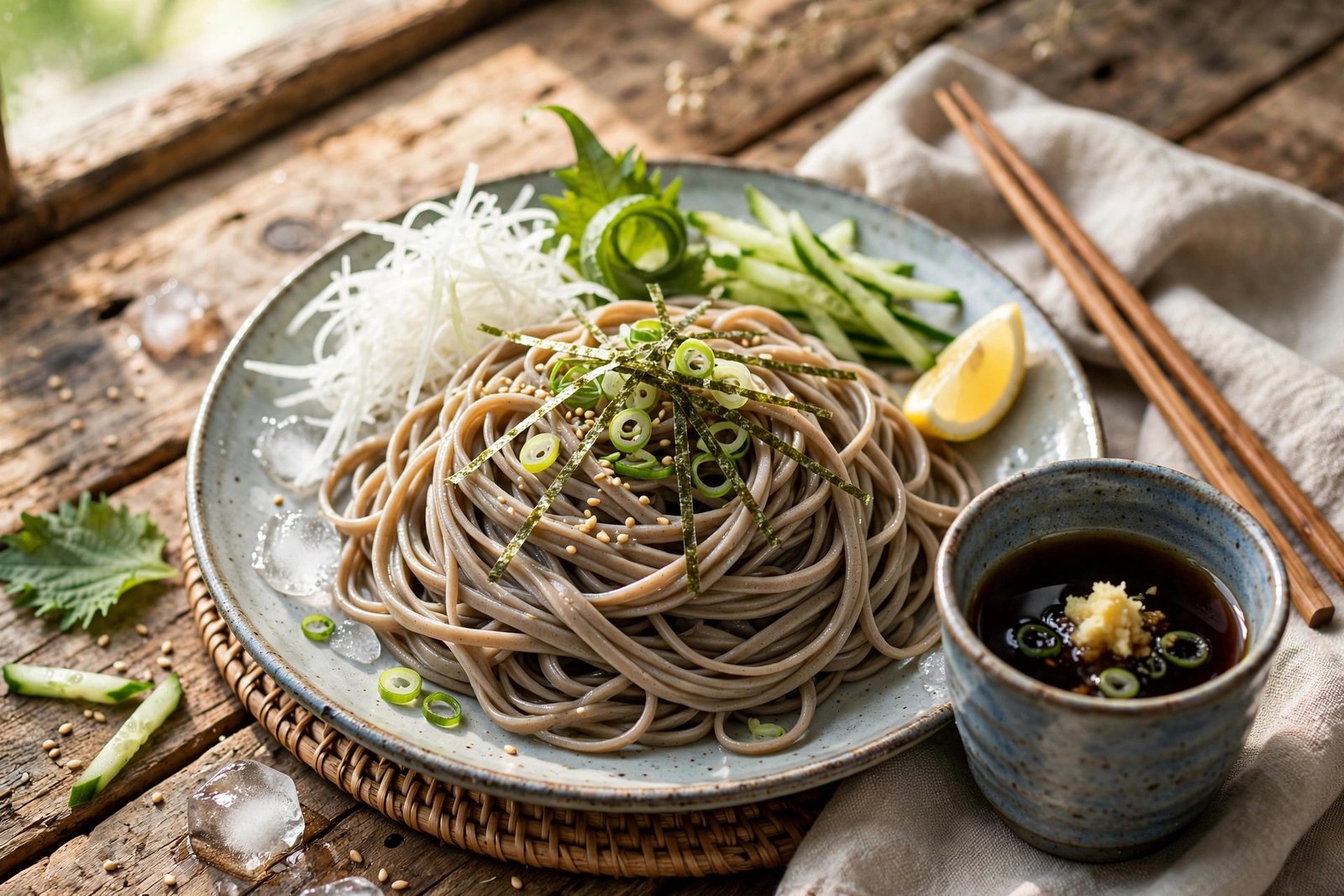
Cold soba noodles, known in Japan as zaru soba, are the ultimate refreshing meal — nutty buckwheat noodles served chilled alongside a sweet-savoury mentsuyu dipping sauce. Every bite is brightened with fresh scallions, a touch of wasabi, and strips of nori, and the whole dish takes 20 minutes.
The story behind Cold Soba Noodles
Cold soba, or zaru soba, is one of Japan's great summer dishes. Zaru means the bamboo mat the noodles are served on, and soba means buckwheat — the nutty, earthy grain that gives the noodles their distinctive flavour and their grey-brown colour. It is a dish of almost nothing: noodles, dipping sauce, and a few garnishes. And it is one of the most refreshing meals in the world.
What makes soba special is the buckwheat itself. Real soba is made mostly or entirely from buckwheat flour, which gives the noodles a nutty, slightly earthy taste that wheat noodles cannot match. The texture is firm and springy, with a clean bite that wheat pasta lacks. A good soba noodle tastes of the grain it came from, and that is the whole point — the noodle is the dish, not the sauce.
The dipping sauce, mentsuyu, is the partner. Dashi, soy sauce, mirin and sugar, simmered briefly and cooled completely, give a sweet-savoury broth that seasons the noodles without drowning them. The noodles are dipped, not soaked — just the ends, briefly, so the sauce clings to the strands without overwhelming the buckwheat flavour. The garnishes — scallions, wasabi, nori, ginger — add freshness and heat in small, precise amounts.
Soba is also a dish with manners. The slurp is not rude — it is correct. Slurping cools the noodles, mixes in air, and brings out the flavour, and in Japan a quiet eater is a puzzling one. The wasabi goes on the noodles, never in the sauce. And the noodles are eaten in small bundles, dipped lightly, savoured one mouthful at a time.
Make it on a hot day, when the idea of a heavy meal is unbearable and something cool and clean is what you want. It takes 20 minutes, it feeds four, and it is the kind of meal that leaves you refreshed rather than full. A bamboo mat, a bowl of sauce, and a pair of chopsticks — that is all it takes.
Soba is also a dish with a long history in Japan. Buckwheat has been grown in Japan for over a thousand years, and soba noodles have been eaten since at least the sixteenth century. The noodles were originally a fast food — sold from stalls, eaten standing up, finished in minutes. They became a staple because buckwheat grows in poor soil and cold weather, where rice will not, and the noodles kept well and travelled easily. Today soba is both everyday food and a craft, with specialist shops that make their noodles by hand every morning.
- Prep time
- 10 mins
- Cook time
- 10 mins
- Total time
- 20 mins
- Servings
- 4 servings
- Calories
- 340
Ingredients
- 12 oz (340 g) dried soba noodles
- 1 cup dashi stock (homemade or instant)
- 1/3 cup soy sauce
- 1/4 cup mirin
- 1 tablespoon sugar
- 4 green onions, thinly sliced
- 1 sheet nori seaweed, cut into thin strips
- 1 teaspoon wasabi paste
- 1 tablespoon toasted sesame seeds
- 2 tablespoons grated daikon radish (optional)
- 1 teaspoon grated fresh ginger
- Plenty of ice water, for rinsing
Instructions
- Make the mentsuyu dipping sauce first. Stir the dashi stock, soy sauce, mirin and sugar together in a small saucepan, and bring to a gentle simmer for 2 minutes, until the sugar dissolves completely. Take it off the heat and cool it completely — the sauce must be cold when served, because lukewarm sauce flattens the whole dish.
- Bring a large pot of unsalted water to a rolling boil. Soba cooks in plain water, never salted — the noodles cook in seconds and the salt makes them tough. Use plenty of water, so the noodles have room to move and do not clump together.
- Add the soba noodles to the boiling water and cook according to the package, usually 4 to 5 minutes, stirring gently with chopsticks so the strands do not stick. The noodles should be tender but still firm, with a slight bite — soba goes from perfect to mushy in under a minute, so watch the clock.
- Drain the noodles at once and rinse them under cold running water, rubbing them lightly with your hands until they are completely cool. The rinse washes off the surface starch that makes soba sticky, and the cold water stops the cooking instantly. Shake the colander well to remove all excess water — wet noodles dilute the dipping sauce.
- Arrange the chilled noodles on a bamboo mat or a flat plate, or divide them among individual bowls. A loose mound, not a tight nest, looks best and is easiest to pick up with chopsticks. The noodles should glisten slightly, with no water pooling underneath.
- Set out small bowls of the cold dipping sauce and the garnishes — sliced green onions, nori strips, wasabi paste, toasted sesame seeds, grated daikon and grated ginger — so everyone seasons their own bowl. The garnishes are not decoration; they are the seasoning, and each person adds what they like.
- To eat, pick up a small bundle of noodles with chopsticks, dip just the ends into the sauce, and slurp. The slurp is not rude — it cools the noodles and mixes in air, which brings out the flavour. Add wasabi in small dabs to the noodles, not to the sauce, and dip lightly — the noodles should be seasoned, not soaked.
Pro tips
- Never boil soba in salted water — the noodles cook in seconds and the salt makes them tough and dull.
- Rinse thoroughly: starch left on the noodles makes them sticky and gummy, and the cold water stops the cooking instantly.
- Chill the dipping sauce fully before serving; lukewarm sauce flattens the whole dish and kills the refreshing contrast.
- Store-bought concentrated mentsuyu works in a pinch — dilute it 1 part sauce to 2 parts cold water, and taste before serving.
- Dip just the ends of the noodles, not the whole bundle. The noodles should be seasoned, not soaked, and the buckwheat flavour should come through.
Variations & serving ideas
The toppings are the easiest place to change the dish. A soft-boiled egg, halved and laid on top, adds richness. Tempura shrimp, served on the side, makes a classic tempura soba — the crisp, hot shrimp against the cold noodles is a wonderful contrast. Sliced cucumber, shredded carrot, or a handful of bean sprouts add crunch and colour.
The sauce can flex too. A little grated daikon, stirred into the mentsuyu, adds a fresh, peppery bite. A spoonful of chili oil gives gentle heat. A squeeze of yuzu or lemon, added to the sauce, brightens it for summer. And for a richer sauce, add a little more mirin and a splash of sake.
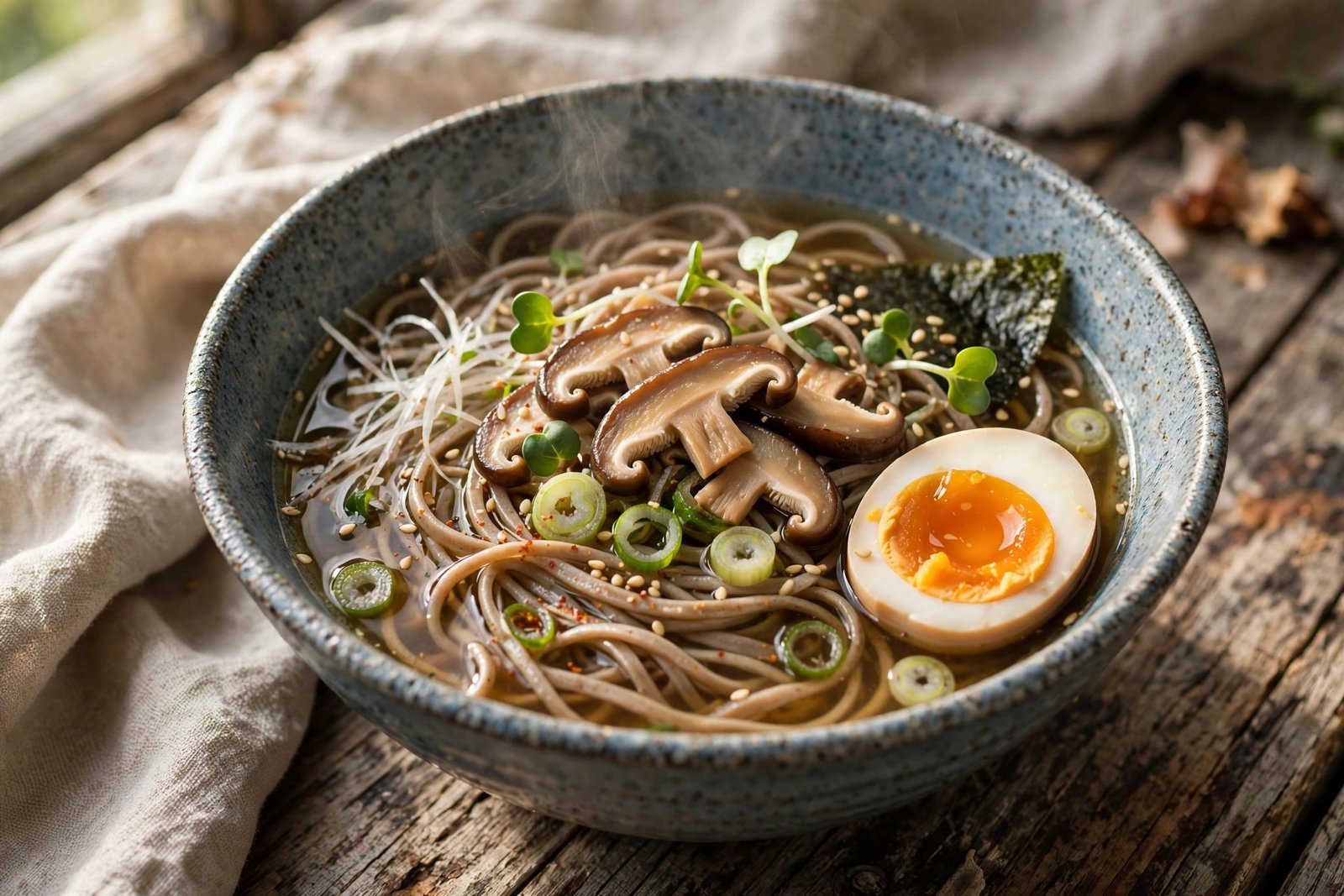
Hot soba is the winter version. Serve the same noodles in a bowl of warm mentsuyu, with the toppings floating on top, and eat it like a soup. The noodles soften slightly in the hot broth, and the dish becomes warming rather than refreshing — the same ingredients, a completely different meal.
Serve cold soba as a light lunch or a starter, with a cold drink and a quiet moment. It pairs with iced green tea, cold sake, or a sparkling water. A bamboo mat, a bowl of sauce, and a pair of chopsticks — that is the whole occasion.
A few practical notes help the dish turn out well every time. If the noodles clump in the pot, stir them gently with chopsticks as soon as they go in — the first 30 seconds are when they stick. If the sauce tastes too salty, add a splash of water or dashi; if it tastes flat, add a little more soy. And if you are serving soba to guests, have everything laid out before the noodles go into the pot, because the noodles wait for no one once they are cooked.
Getting it right
The key technique is the cooking and the rinse. Soba cooks in unsalted water — never salted, because the salt toughens the noodles — for just 4 to 5 minutes, and it goes from perfect to mushy in under a minute. Watch the clock, taste a strand a minute before the package time, and drain the moment the noodles are tender but still firm.
The rinse is the second skill. The cooked noodles must be rinsed under cold running water, rubbed lightly with your hands, until they are completely cool. The rinse washes off the surface starch that makes soba sticky and gummy, and the cold water stops the cooking instantly. Shake the colander well afterwards — wet noodles dilute the dipping sauce and make the whole dish taste watery.
The sauce is the third skill. The mentsuyu must be simmered just long enough to dissolve the sugar, then cooled completely before serving. Lukewarm sauce flattens the dish — the contrast of cold noodles and cold sauce is what makes it refreshing. Make the sauce first, so it has time to chill while the noodles cook.
The common mistakes are salted water, under-rinsing, and warm sauce. Salt toughens the noodles. Starch left on the strands makes them gummy. And a lukewarm sauce turns a refreshing dish into a dull one. Cold water, a thorough rinse, and a properly chilled sauce — those three things are the whole technique.
One last detail: serve the noodles on a bamboo mat or a flat plate, not in a deep bowl. A flat surface lets the noodles cool evenly and shows them off, while a deep bowl traps steam and makes them sticky. A loose mound, not a tight nest, is easiest to pick up with chopsticks.
Storing & reheating
Cold soba is best eaten the moment it is made, while the noodles are chilled and springy and the sauce is cold. Cooked soba does not keep well — the noodles dry out in the fridge and turn brittle, and reheating them makes them mushy. If you must keep them, toss the rinsed noodles with a little sesame oil and refrigerate for up to a day.
The mentsuyu dipping sauce keeps for about 2 weeks in a sealed jar in the fridge, and it actually improves after a day as the flavours marry. The garnishes — green onions, nori, sesame seeds — keep separately for several days. For the best result, cook only as much soba as you will eat, and make the sauce ahead in a batch.
Frequently asked questions
Why do my soba noodles taste different from restaurant ones?
The nutty, slightly earthy taste is the signature of buckwheat flour, which is the main ingredient in real soba. Cheap 100 percent wheat noodles labeled soba will taste flat — look for ones listing buckwheat flour first.
How do I keep soba noodles from getting mushy?
Soba turns gummy fast, so rinse the cooked noodles under cold running water until they are completely cool, then shake off all the water. The ice bath stops the cooking instantly and keeps each strand springy.
How long does homemade dipping sauce last?
Mentsuyu keeps about 2 weeks in a sealed jar in the fridge. Warm it gently before using or serve it cold — both are traditional. The sauce actually improves after a day, as the flavours marry.
Can I add wasabi directly to the sauce?
Yes, with one rule: never mix wasabi into the sauce bowl. Put a dab on top of your noodles and dip — that is the Japanese way and it keeps the wasabi's heat bright and sharp.
Can I serve soba hot instead of cold?
Yes — hot soba, served in a bowl of warm mentsuyu with toppings, is a winter classic. Use the same noodles and sauce, but serve the sauce hot and the noodles in the broth rather than on the side.
Is soba gluten-free?
Buckwheat is naturally gluten-free, but most soba noodles contain some wheat flour as a binder. Look for 100 percent buckwheat soba — juwari soba — if you need a fully gluten-free noodle.