Sunomono Recipe
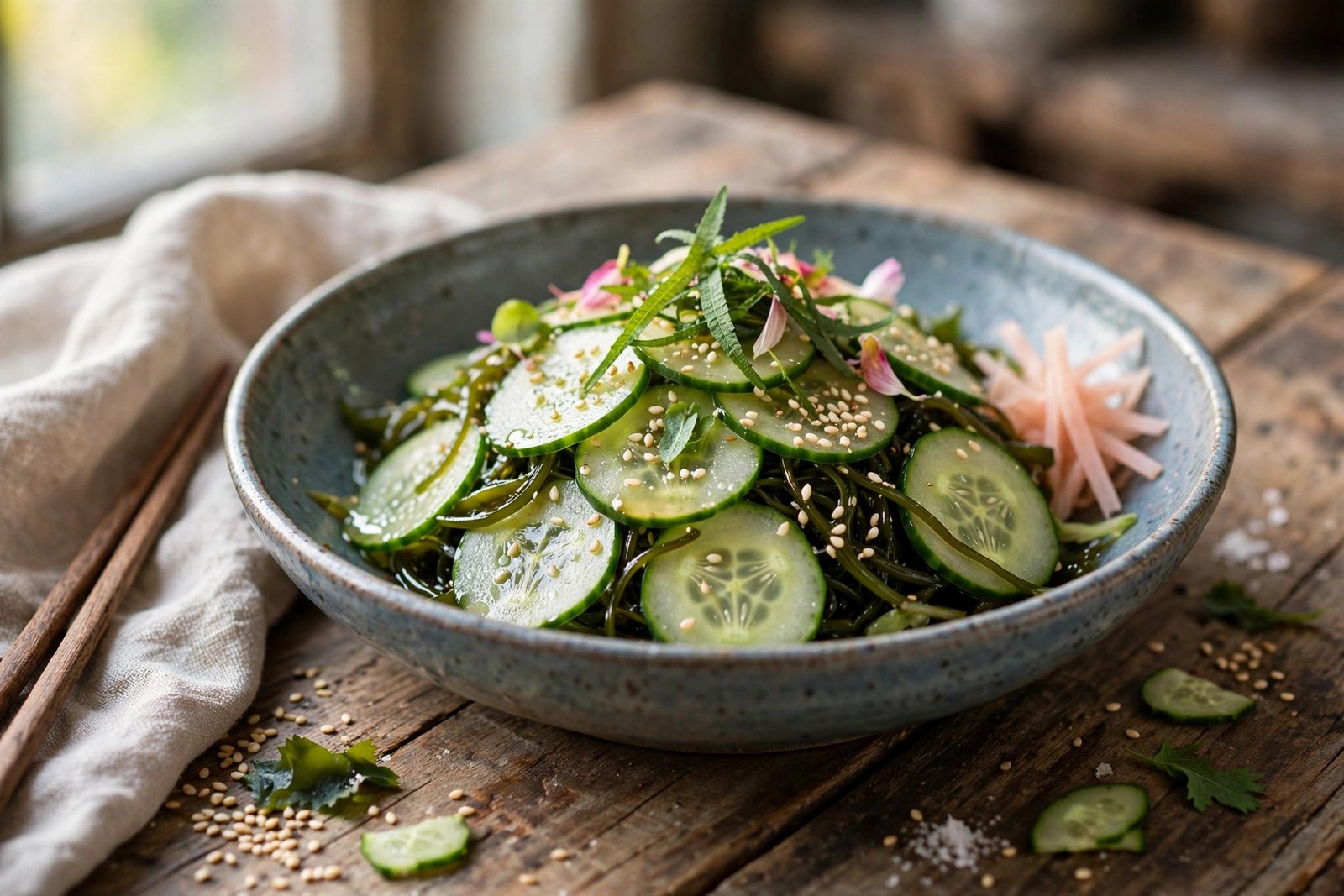
Sunomono is Japan's most refreshing little salad: paper-thin cucumber ribbons in a sweet-tart rice vinegar dressing, with soft wakame seaweed and a whisper of sesame. It is crisp, clean, and the perfect cool counterpoint to rich dishes — and it takes twenty minutes, most of it waiting.
The story behind Sunomono
Sunomono means vinegared things in Japanese, and it is the name for a whole family of light, vinegar-dressed salads that appear at the start of a Japanese meal. The cucumber version is the most familiar: paper-thin slices, salted and squeezed, dressed in a sweet-tart vinegar sauce called sanbaizu, with soft wakame seaweed and a sprinkle of sesame. It is a dish of almost nothing — cucumber, vinegar, sugar, salt — and it is one of the most refreshing things you can eat. The dressing, sanbaizu, is one of the mother sauces of Japanese cooking — three parts vinegar, one part sugar, a splash of soy — and it appears in dozens of dishes beyond sunomono.
What makes it special is the texture. The cucumber is sliced as thinly as possible, salted to draw out its water, then squeezed firmly, so what is left is a crisp, concentrated ribbon that holds the dressing without diluting it. The dressing is a balance of three things: rice vinegar for tang, sugar for sweetness, and a touch of soy sauce for depth. The wakame adds a soft, slippery contrast, and the sesame seeds add a nutty whisper. Nothing in the dish is complicated, and everything depends on doing the simple things properly.
In Japan, sunomono is a side dish and a palate cleanser, served in a small bowl alongside richer food — grilled fish, tempura, sushi. It appears in kaiseki meals, in bento boxes, and on home tables in summer, when its cool, clean flavour is exactly what a hot day calls for. It is also a cook's dish: the slicing, the salting, the balancing of the dressing are all small skills that reward care, and a good sunomono tells you the cook was paying attention.
This recipe serves four as a side dish and takes twenty minutes, most of it waiting for the salt and the chill to do their work. It needs a sharp knife or a mandoline, a good cucumber, and rice vinegar — nothing else is essential. Make it when you want something cool and clean on the table, or when the main course is rich and needs a bright counterpoint. A small bowl of sunomono makes the whole meal feel more considered.
- Prep time
- 15 mins
- Cook time
- 5 mins
- Total time
- 20 mins
- Servings
- 4 servings
- Calories
- 90
Ingredients
- 2 Japanese cucumbers or 1 large English cucumber
- 1 tablespoon dried wakame seaweed
- 3 tablespoons rice vinegar
- 1 tablespoon sugar
- 1/2 teaspoon soy sauce
- 1/2 teaspoon salt
- 1 teaspoon toasted sesame seeds
- 1 teaspoon grated ginger (optional)
Instructions
- Soak the dried wakame in a bowl of cold water for 5 minutes, until it softens and expands. It will grow to several times its dried size and turn from dark and brittle to soft and slippery. Drain it well and squeeze it gently to remove the excess water, then chop it roughly if the pieces are large.
- Slice the cucumber as thinly as you can. A mandoline gives the most even, paper-thin slices, but a sharp knife and a steady hand work well too — aim for slices thin enough to see light through. Japanese cucumbers are ideal for their thin skin and few seeds; an English cucumber, halved lengthways and deseeded, is a good substitute.
- Put the cucumber slices in a bowl, toss them with the salt, and leave them to rest for 10 minutes. The salt draws the water out of the cucumber — you will see a pool of liquid gather at the bottom of the bowl. This step is essential: it concentrates the cucumber's flavour and keeps the dressing bright instead of diluted.
- Squeeze the cucumber firmly, a handful at a time, to remove as much water as you can. Press it between your palms or in a clean tea towel. You will be surprised how much water comes out. The squeezed cucumber should feel limp and compact, not wet — that is exactly right, and it will crisp up again in the dressing.
- Put the squeezed cucumber in a bowl with the drained wakame. The two should be roughly equal in volume, with the cucumber slightly dominant. Toss them together gently so the wakame is distributed evenly through the cucumber ribbons.
- Whisk the rice vinegar, sugar and soy sauce in a small bowl until the sugar dissolves completely. Taste the dressing: it should be sweet and tart in balance, with the soy sauce in the background. Adjust it to your taste — a little more sugar for sweetness, a touch more vinegar for tang.
- Pour the dressing over the cucumber and wakame and toss gently, so every ribbon is coated. The dressing should cling to the cucumber, not pool at the bottom of the bowl. If it looks watery, the cucumber was not squeezed firmly enough — drain off the excess and carry on.
- Chill the sunomono in the fridge for 10 minutes, then sprinkle with the toasted sesame seeds and the grated ginger, if using, and serve cold in small bowls. Eat it soon after serving, while the cucumber is still crisp — it softens as it sits in the dressing, and the first half hour is its best.
Pro tips
- Slicing the cucumber paper-thin is the secret to sunomono's delicate texture; a mandoline helps. Thin slices absorb the dressing evenly and eat like ribbons; thick slices stay watery and taste like plain cucumber. Take the time to slice thinly — it is the whole dish.
- Squeezing out the water keeps the dressing bright instead of diluted. Salt draws the water out, and a firm squeeze removes it. Skip the squeezing and the dressing turns watery within minutes, and the salad tastes flat instead of sharp and clean.
- Balance the dressing to your taste: a little more sugar for sweetness, a touch more vinegar for tang. The classic ratio is three parts vinegar to one part sugar, with a splash of soy, but cucumbers and vinegars vary, so taste and adjust. The dressing should make your mouth water, not pucker.
- Add cooked shrimp or crab for a more substantial version. A handful of small cooked shrimp, or a little flaked crab meat, tossed in with the cucumber turns the salad into a light starter. Octopus, thinly sliced, is the classic addition — tako sunomono is a dish in its own right.
- Chill the sunomono well before serving. It should arrive at the table properly cold, not cool — the cold sharpens the vinegar and makes the cucumber taste crisper. Ten minutes in the fridge is the minimum; twenty is better.
Variations & serving ideas
The classic variation is tako sunomono, with thinly sliced cooked octopus tossed through the cucumber. The octopus adds a firm, chewy contrast to the crisp cucumber, and the vinegar dressing suits it perfectly. Cooked shrimp or flaked crab meat work the same way, and a few slices of smoked salmon, added at the end, make a luxurious version.
Other vegetables can take the cucumber's place. Daikon radish, sliced paper-thin and treated the same way — salted, squeezed, dressed — makes a sharper, more peppery sunomono. A mix of cucumber and daikon is a good middle ground. Thinly sliced carrots, blanched for 30 seconds first, add colour and sweetness.
For a spicy version, add a pinch of shichimi togarashi or a few slices of fresh chilli to the dressing. The heat wakes the salad up and suits the sweetness of the vinegar. A little grated ginger in the dressing, rather than on top, gives a warm background note that works well in winter.
A sesame variation swaps the vinegar dressing for a sesame one: tahini thinned with rice vinegar, soy sauce and a little sugar, tossed through the cucumber and wakame. It is richer and nuttier than the classic version, and it suits a meal that needs something more substantial on the side.
Sunomono is also a natural partner for sushi nights. Serve a small bowl alongside a platter of sushi or sashimi, and it cleanses the palate between pieces the way pickled ginger does. It is the salad that makes a sushi meal feel complete, and it takes twenty minutes to make while the rice cooks. A small bowl of sunomono also works as a light lunch on its own, with a bowl of rice and a piece of grilled fish — the kind of simple, balanced meal that Japanese home cooking does best.
Getting it right
Slicing is the first technique, and it decides the dish. The cucumber must be paper-thin, so thin you can almost see through it. A mandoline gives the most consistent result, but a sharp knife works if you take your time. Thick slices stay watery inside and never absorb the dressing properly; thin slices become ribbons that hold the dressing and eat delicately. If your knife skills are not there yet, the mandoline is worth the investment — use the guard, and go slowly. If you are using a mandoline, use the hand guard every time — a mandoline is the fastest way to slice a cucumber, and the fastest way to cut yourself if you get careless.
Salting and squeezing is the second skill, and it is the step people are tempted to skip. Salt draws the water out of the cucumber, and squeezing removes it. Without this step, the cucumber releases its water into the dressing, which turns thin and flat within minutes. With it, the cucumber is concentrated and crisp, and the dressing stays bright. Squeeze firmly — you cannot over-squeeze a cucumber slice.
Balancing the dressing is the final art. The classic sanbaizu dressing is three parts rice vinegar, one part sugar, and a splash of soy sauce, but the exact balance depends on your vinegar and your taste. Taste the dressing before it goes on the salad: it should be sweet and tart in balance, making your mouth water. The most common mistakes are a watery salad from un-squeezed cucumber, a dressing that is all vinegar and no sweetness, and a salad left sitting too long — the cucumber softens in the dressing, so serve it within half an hour of tossing.
Storing & reheating
Sunomono is best eaten within a few hours of making it. It keeps for a day in the fridge in a sealed container, though the cucumber softens a little over time and the dressing dilutes as the cucumber releases more water. It is still good the next day, just less crisp.
The dressing itself keeps for a week in the fridge in a sealed jar, so you can whisk up a batch and use it for a fresh salad whenever you like. Do not freeze sunomono — the cucumber turns to mush on thawing and the texture is ruined. Make it fresh, in the amount you will eat, and enjoy it at its best.
Frequently asked questions
What does sunomono mean?
It means vinegared things in Japanese, referring to the light vinegar dressing that defines the dish. Sunomono is a category of salads, not a single recipe — cucumber is the most common version, but octopus, crab and daikon all appear in sunomono form.
Can I make sunomono ahead?
Yes, it keeps for a day in the fridge, though the cucumber softens a little over time. It is at its best within half an hour of tossing, when the cucumber is still crisp. The dressing keeps for a week, so you can make a fresh salad quickly whenever you want one. For the best result, salt and dress the cucumber no more than 30 minutes before serving.
What cucumber should I use?
Japanese cucumbers are ideal for their thin skin and few seeds; English cucumbers are a good substitute. If you use an English cucumber, halve it lengthways and scoop out the seeds first, since the seedy middle is watery and dilutes the dressing.
Is sunomono gluten-free?
Use tamari instead of soy sauce and it is fully gluten-free. Rice vinegar is naturally gluten-free, and everything else in the dish — cucumber, wakame, sugar, sesame — contains no gluten.
Can I use another vinegar?
Rice vinegar is best for its mild, slightly sweet flavour. Apple cider vinegar works in a pinch, though it is sharper and fruitier. Avoid white wine vinegar, which is too harsh, and never use distilled white vinegar, which will overpower the delicate cucumber.
Is sunomono vegan?
Yes, as written it is fully vegan — cucumber, wakame, rice vinegar, sugar, soy sauce and sesame, with no animal ingredients. The shrimp and crab variations are optional additions, and the classic cucumber version needs neither.