Shoyu Ramen Recipe
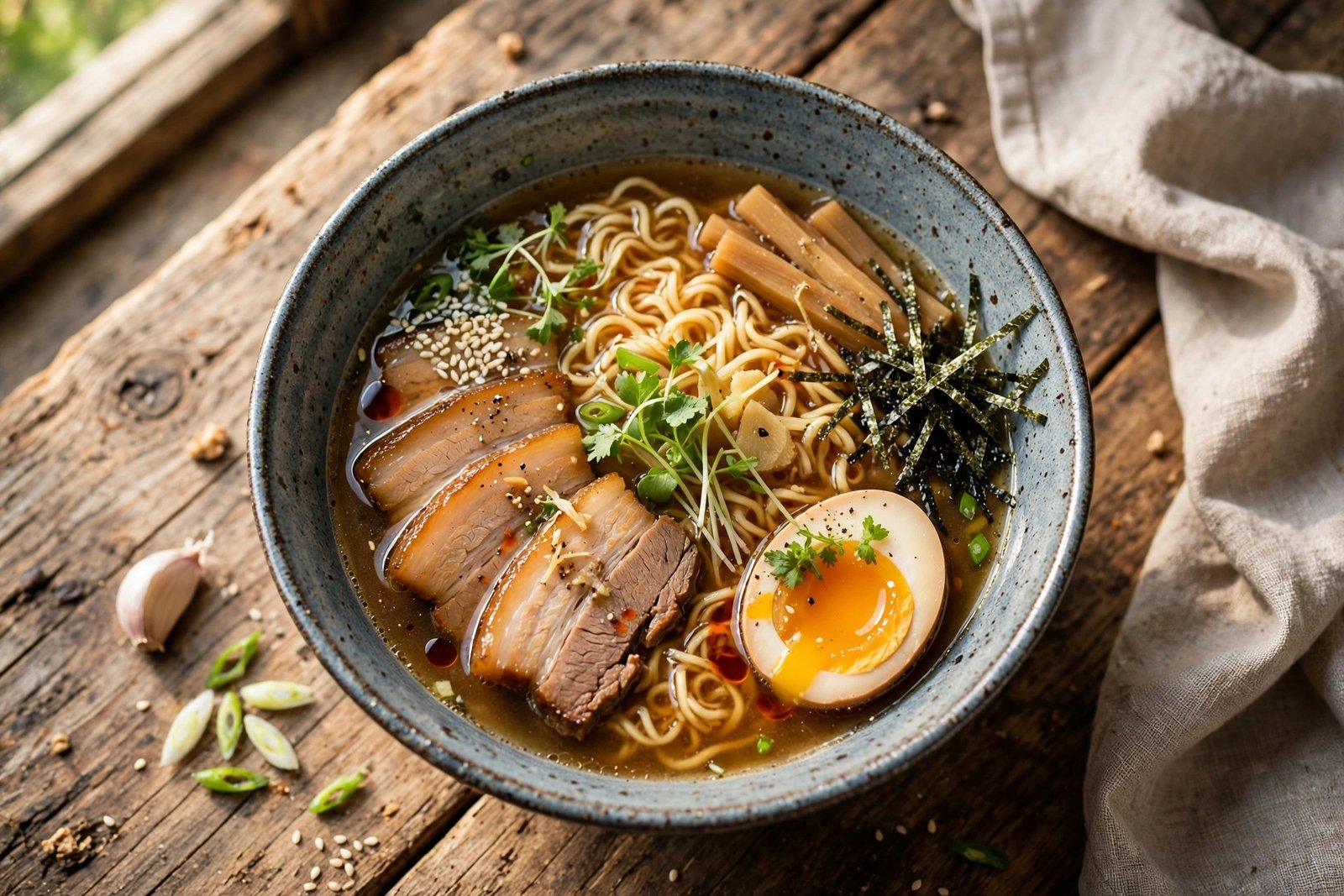
Shoyu Ramen is the Tokyo classic: a clear, soy-seasoned broth with springy noodles, tender pork or chicken, and a jammy egg. It is the bowl to make when you crave real ramen comfort at home. The broth is light and clean, the noodles are springy, and the toppings make it complete.
The story behind Shoyu Ramen
Shoyu ramen is the original Tokyo ramen, and it is a study in clarity. Where tonkotsu ramen is rich and milky, and miso ramen is deep and earthy, shoyu ramen is clear and clean: a chicken-based broth seasoned with soy sauce, with springy noodles, sliced pork, a soft egg, spring onions and nori. It is the bowl that most Japanese people think of when they think of ramen, and it is the version that has been served in Tokyo's ramen shops for over a century.
Ramen came to Japan from China in the late 1800s, and it was remade in Japanese kitchens into something new. The first ramen shop in Japan, Rairaiken in Tokyo, opened in 1910 and served a shoyu ramen that set the template: clear broth, soy seasoning, wheat noodles, and simple toppings. From there, ramen spread across Japan, with each region developing its own style, but Tokyo-style shoyu remains the classic.
What makes it special is the balance. The broth should be light and clean, with a clear soy flavour and a gentle savouriness from the chicken stock. The noodles should be springy and firm, with a good bite. The toppings should be simple and well chosen: tender pork, a jammy egg with a runny yolk, fresh spring onions, and a sheet of nori for an oceanic note. Nothing should dominate. The bowl should taste harmonious.
Make it when you want comfort without heaviness, or when you crave ramen but do not have hours to make tonkotsu broth. Shoyu ramen comes together in about an hour, most of it hands-off simmering, and it uses ingredients that are easy to find. It is a natural choice for a weekend lunch, a cold evening, or any time you want a proper bowl of noodles.
The dish is also a good introduction to ramen-making. It teaches broth, the foundation of all ramen, and the art of assembly: hot broth, fresh noodles, and toppings arranged with care. Once you have made shoyu ramen, you have the skills for miso, shio and tonkotsu versions too.
Ramen shops in Tokyo take the craft seriously, with some chefs spending years perfecting a single broth. The best shops make their own noodles, simmer their broth for hours, and marinate their eggs overnight. Home ramen will never match a great ramen shop, but it can come close, and it is far better than instant noodles. The key is good stock, fresh noodles, and care in assembly.
- Prep time
- 30 mins
- Cook time
- 40 mins
- Total time
- 70 mins
- Servings
- 4 servings
- Calories
- 640
Ingredients
- 200 g fresh or dried ramen noodles
- 1 litre good chicken stock
- 4 tbsp soy sauce
- 1 tbsp mirin
- 2 garlic cloves, crushed
- 1 piece ginger, sliced
- 2 spring onions
- 2 soft eggs
- 200 g sliced cooked pork or chicken
- 1 sheet nori, cut into strips
- 1 tsp sesame oil
Instructions
- Make the broth: put the chicken stock in a large pot with the crushed garlic and sliced ginger. Bring to a gentle simmer over medium heat and cook for 15 minutes, so the garlic and ginger flavour the stock. Do not boil hard: a gentle simmer keeps the broth clear.
- Add the soy sauce and mirin to the broth and simmer for 5 minutes more. Taste: the broth should be savoury and lightly sweet, with a clear soy flavour. Adjust with a little more soy sauce if it needs salt, or a pinch of sugar if it tastes too sharp. Keep the broth at a gentle simmer while you prepare the toppings.
- Cook the eggs: bring a pan of water to a rolling boil, lower the eggs in gently with a spoon, and cook for exactly 6 minutes 30 seconds for a jammy yolk. Plunge immediately into ice water for 5 minutes, then peel carefully. The yolks should be soft and runny in the centre, with the whites just set. Cut each egg in half just before serving.
- Cook the noodles according to the packet, usually 2-4 minutes in boiling water, until springy and firm. Fresh noodles cook faster than dried. Drain well and do not rinse: a little starch on the noodles helps the broth cling. The noodles should be hot and ready the moment the broth is ready, so time them carefully.
- Warm the sliced pork or chicken in the simmering broth for 1-2 minutes, just to heat through. If you are using leftover roast pork or chicken, this is enough. The meat should be tender and hot, not overcooked. Remove with tongs and set aside.
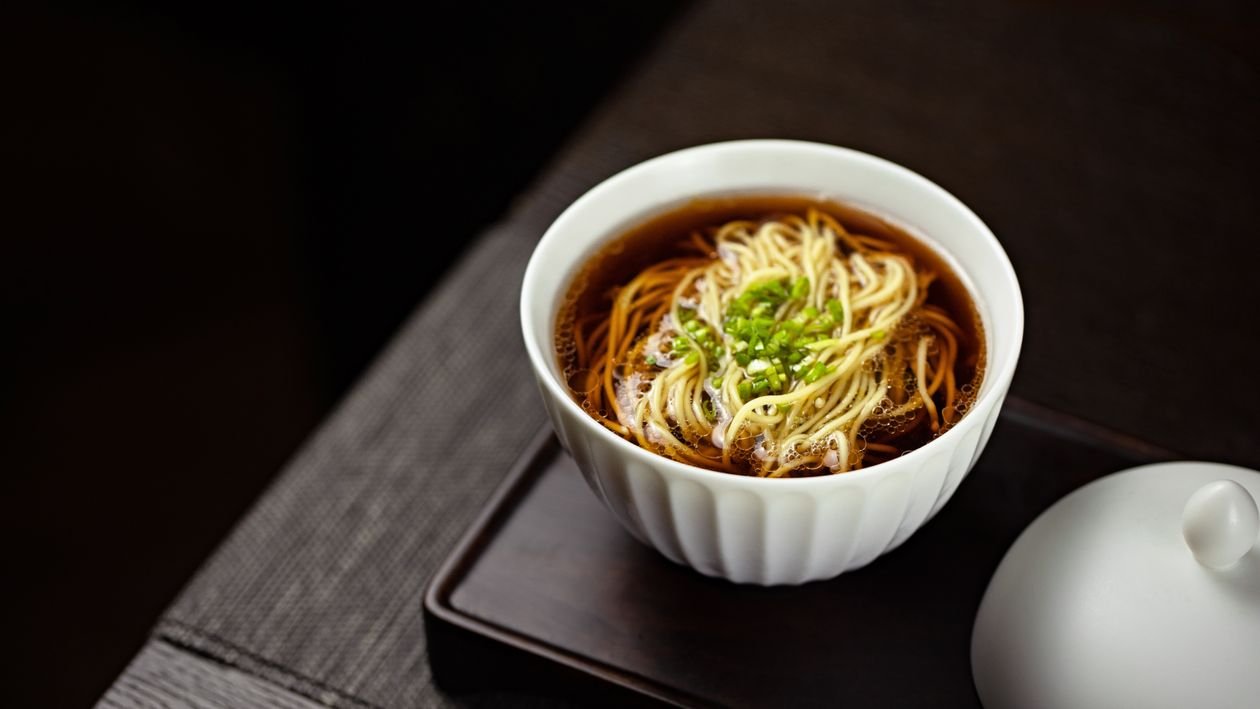
- Divide the drained noodles between four deep bowls, twirling them into neat nests with tongs. Ladle the hot broth over the noodles until they are mostly covered. The broth should be steaming hot: a lukewarm ramen is a sad thing. Work quickly so everything stays hot.
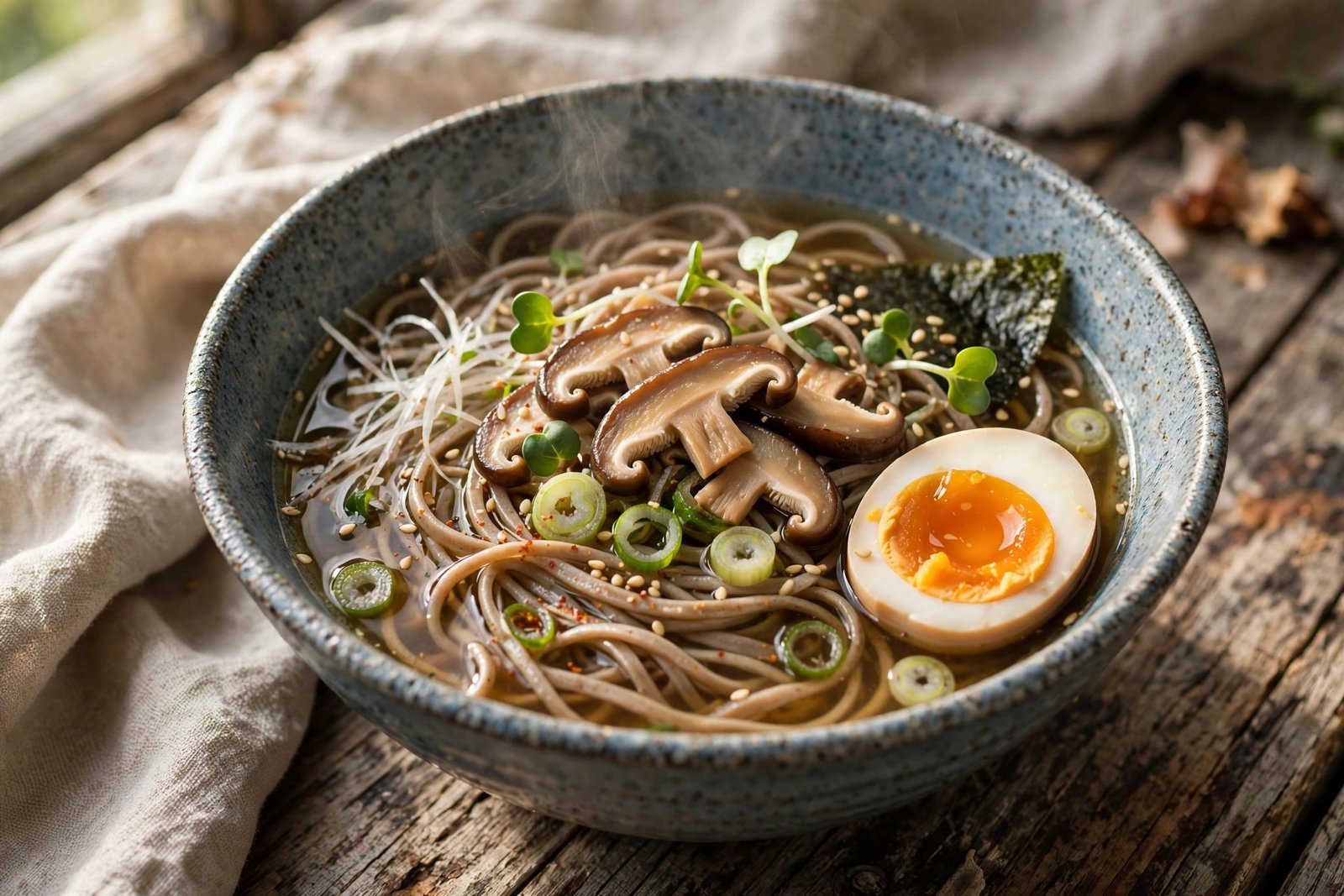
- Arrange the toppings on top: the sliced pork or chicken, a halved egg, the sliced spring onions, and the nori strips. Place the egg yolk-side up so the runny centre is visible. Drizzle over the sesame oil, just a few drops per bowl, for aroma.
- Serve at once, with chopsticks and a spoon. Eat the noodles first, slurping is encouraged, then drink the broth from the bowl. The broth is meant to be finished: it is light and clean, and it is the best part of the dish for many people.
Pro tips
- Use good stock. The broth is mostly stock, so its quality shows. A good homemade chicken stock is ideal. A quality shop-bought stock is fine. A stock cube, dissolved in water, gives a thinner, saltier broth: use half the recommended amount and add more soy sauce to compensate.
- Do not overcook the noodles. Ramen noodles should be springy and firm, with a good bite. Cook them for the shortest time on the packet and taste one to check. Overcooked noodles go soft and mushy in the hot broth within minutes.
- Time the eggs carefully. Six minutes 30 seconds gives a jammy yolk with a just-set white. Six minutes gives a runnier yolk. Seven minutes gives a firmer yolk. Use a timer, plunge the eggs into ice water immediately, and peel them carefully under running water.
- Warm the bowls. A cold bowl cools the ramen fast. Rinse the bowls with boiling water before assembling, or warm them in a low oven. Hot broth in a warm bowl stays hot to the last spoonful, which matters in a dish that is meant to be eaten steaming.
- Assemble quickly. Ramen is a race against time: the noodles soften in the broth, the broth cools, and the egg firms up. Have all the toppings ready, cook the noodles last, and assemble the bowls in under a minute. Serve immediately.
Variations & serving ideas
The toppings can change endlessly. Menma, fermented bamboo shoots, add a savoury, slightly funky crunch. Corn kernels, sweet and bright, are a popular topping in Hokkaido-style ramen. Bean sprouts add crunch. Narutomaki, the pink-swirled fish cake, adds colour and a mild seafood flavour. Whatever you add, keep it simple: three or four toppings is enough.
Spicy shoyu ramen is an easy variation. Add a spoonful of chilli oil or a teaspoon of chilli paste to the broth, or serve with chilli oil on the side. A little grated ginger in the broth adds warmth. A clove of raw garlic, crushed and stirred in at the table, is a classic ramen-shop addition for garlic lovers.
For a vegetarian version, use a rich vegetable stock, simmered with mushrooms, kombu and dried shiitake, and top with tofu, mushrooms and a soft egg. The broth will be lighter than a chicken broth, but with good mushrooms and a little miso stirred in, it can be deeply savoury.
Miso ramen is the closest cousin: replace half the soy sauce with miso paste, whisked into the broth at the end. The broth turns cloudy and rich, with a deeper, earthier flavour. Shio ramen uses salt instead of soy sauce, for a lighter, clearer broth. The method is the same; only the seasoning changes.
Getting it right
The broth is the foundation, and it needs care. A good shoyu broth is clear, not cloudy, which means gentle heat and no hard boiling. The garlic and ginger simmer in the stock to flavour it, then the soy sauce and mirin are added at the end so their flavour stays bright. The broth should taste savoury and balanced on its own, before the noodles go in. Taste and adjust: a little more soy for salt, a little mirin for sweetness.
Noodle cooking is the second skill. Ramen noodles cook fast, in 2-4 minutes, and they continue softening in the hot broth. Cook them until springy and firm, drain well, and get them into the bowls immediately. Do not rinse them: the surface starch helps the broth cling. Fresh noodles are better than dried if you can find them, with a springier texture.
The egg is the third skill, and it is all about timing. Six and a half minutes in boiling water, then ice water, gives a jammy yolk that is runny in the centre and just set at the edges. The eggs can be cooked ahead and kept in the fridge for a day, then warmed briefly in hot water before serving. Marinating the peeled eggs in soy sauce and mirin overnight gives them a beautiful brown colour and a savoury flavour.
Storing & reheating
Ramen is best eaten fresh, assembled just before serving. The components keep separately: the broth keeps in the fridge for up to 3 days, or in the freezer for up to 3 months, and it reheats well. The toppings keep in the fridge for a day or two. The noodles must be cooked fresh each time: cooked noodles left in broth go soft and swollen within an hour.
If you have leftover broth, use it as a base for noodle soup, or drink it hot on its own: it is light and savoury, and it is good when you are feeling unwell. Leftover eggs keep in the fridge for a day. Do not store the assembled ramen: the noodles absorb the broth and the dish is ruined within an hour.
Frequently asked questions
What noodles should I use for ramen?
Fresh ramen noodles are best, with a springy, chewy texture. They are sold in Asian groceries, often in the fridge section. Dried ramen noodles work well too, though they are slightly less springy. Do not use instant ramen noodles: they are thinner, softer, and designed for a different kind of soup.
Can I use stock cubes for the broth?
You can, but the broth will be thinner and saltier than one made from good stock. Use half the recommended amount of stock cube and add more soy sauce to compensate. A good shop-bought fresh chicken stock is a better option, and homemade stock is best of all.
How do I get a jammy egg?
Boil the eggs for exactly 6 minutes 30 seconds, then plunge into ice water for 5 minutes. The yolk should be soft and runny in the centre, with the white just set. Use a timer and large eggs at room temperature. Cold eggs straight from the fridge need an extra 30 seconds.
What is the difference between shoyu, miso and tonkotsu ramen?
Shoyu ramen has a clear, soy-seasoned broth. Miso ramen uses fermented soybean paste for a cloudy, earthy broth. Tonkotsu ramen uses a pork bone broth, simmered for hours until milky and rich. Shoyu is the lightest, tonkotsu the richest, and miso sits in between.
Can I make ramen ahead of time?
The broth can be made ahead and kept in the fridge for 3 days or frozen for 3 months. The toppings can be prepared ahead. But the noodles must be cooked fresh, and the bowls assembled just before serving. Ramen is a dish that does not wait.
What toppings go on shoyu ramen?
The classic toppings are sliced pork, a soft egg, spring onions and nori. Menma (bamboo shoots), corn, bean sprouts and narutomaki (fish cake) are all popular additions. Keep it simple: three or four toppings is enough, and each one should earn its place in the bowl.