Agnolotti del Plin Recipe
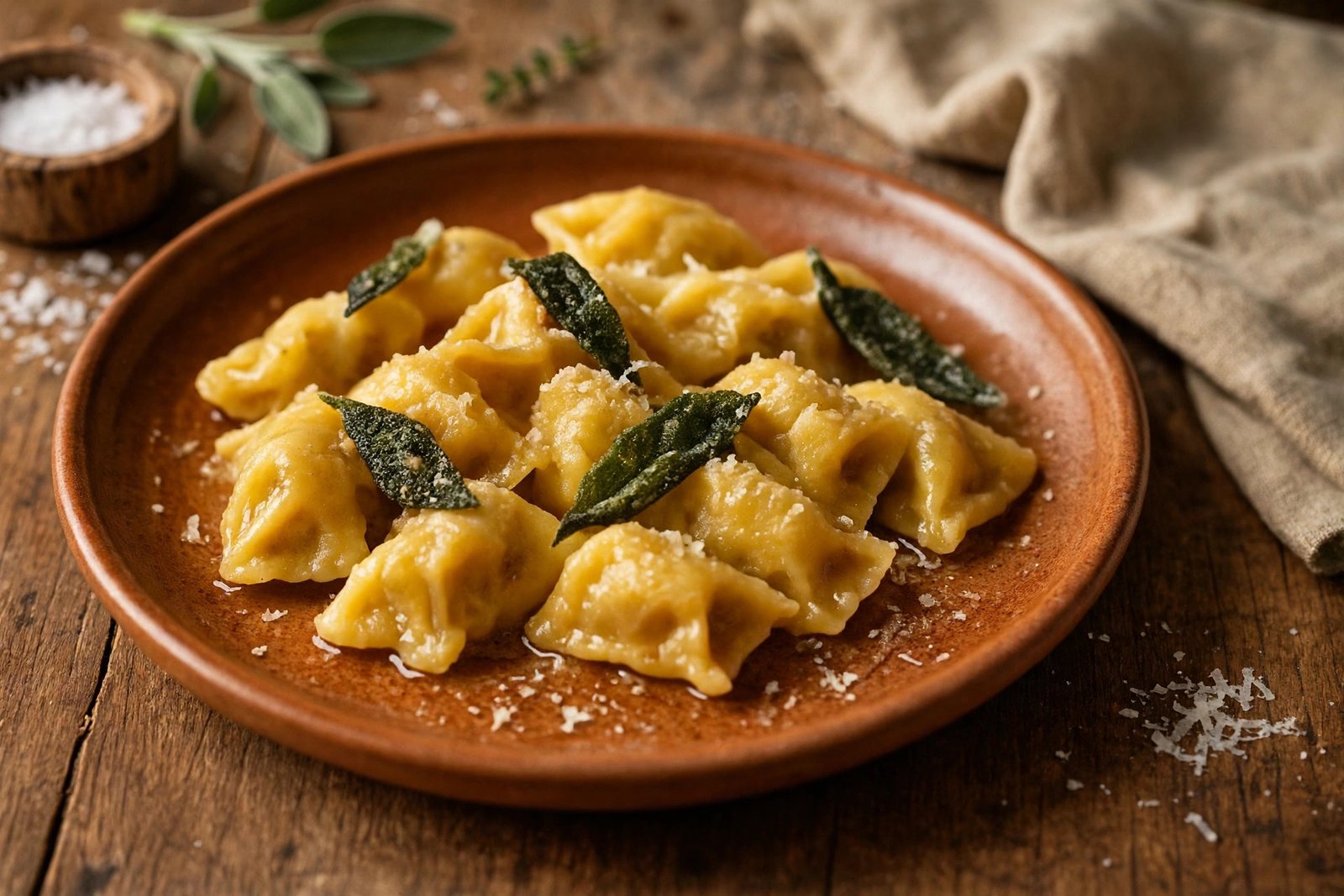
Agnolotti del Plin are the tiny pinched pasta parcels of Piedmont, filled with a rich roasted meat mixture and served simply in sage butter. Each little pillow is sealed with a pinch — the plin that gives them their name — and the result is pure Italian comfort.
The story behind Agnolotti del Plin
Agnolotti del plin are the tiny pasta parcels of Piedmont, in northwestern Italy, where they have been made for centuries. The name comes from the Piedmontese word plin — a pinch — because each parcel is sealed with a pinch of the fingers, giving it a distinctive shape.
The dish is a study in patience. Fresh pasta dough, rolled paper-thin, filled with a mixture of roasted meats, parmesan and egg yolk, then pinched into tiny parcels and cooked in boiling water. The whole process takes an hour, and most of it is the careful, meditative work of filling and pinching.
What makes it special is the filling. Roasted beef or pork, minced fine, mixed with roast chicken, onion, parmesan and egg yolk, seasoned with nutmeg. The meats are already cooked — roasted the day before, or leftovers from a Sunday roast — so the filling is rich, deep and complex.
The pasta dough is simple — flour and eggs, kneaded until smooth and elastic, then rested for 30 minutes. The rest relaxes the gluten and makes the dough easier to roll thin. The sheets must be rolled until you can almost see your hand through them.
Pinching is the technique that defines the dish. The filling is placed in small mounds along a strip of pasta, the pasta is folded over, and the cook pinches between each mound to seal it. The pinch gives the parcel its shape and its name.
Sage butter is the classic sauce — butter melted with sage leaves until foaming and nutty, then tossed with the cooked agnolotti. The sauce is simple, but it is perfect: the nutty butter and the fragrant sage complement the rich meat filling without overwhelming it.
The agnolotti are cooked for just 3 to 4 minutes, until they float and the pasta is tender. They are delicate — handle them gently with a slotted spoon, and do not overcrowd the pot.
Cook it when you want a project with a delicious payoff — a weekend afternoon, a special occasion, or any day when you feel like making pasta with your hands. It takes an hour, and the pinching is half the pleasure.
The economy is generous. Flour, eggs, leftover roast meat and butter make a dish that feeds four and feels luxurious. It is proof that the best Italian food comes from using what you have, with care.
Agnolotti del plin endures because it is one of those dishes that is both humble and refined — a peasant dish made from leftovers, raised to an art by generations of Piedmontese cooks.
The pinch is the point. Each parcel is sealed by hand, with a small, firm pinch that gives it its shape. It is a technique that takes practice, but it is also a pleasure — the rhythm of filling, folding and pinching is meditative.
- Prep time
- 45 mins
- Cook time
- 15 mins
- Total time
- 60 mins
- Servings
- 4 servings
- Calories
- 540
Ingredients
- 300 g plain flour, plus extra for dusting
- 3 large eggs
- 200 g cooked roast beef or pork, finely minced
- 100 g cooked roast chicken, finely minced
- 1 small onion, finely chopped
- 1 tablespoon butter
- 50 g Parmigiano Reggiano, finely grated
- 1 egg yolk, for the filling
- 80 g butter, for the sauce
- 8 fresh sage leaves
- Salt and black pepper, to taste
- Nutmeg, a pinch
Instructions
- Make the pasta dough by piling the flour on a work surface, making a well in the centre and cracking in the eggs. Mix with a fork, then knead for 8 to 10 minutes until smooth and elastic. Wrap in cling film and rest for 30 minutes.
- Melt the tablespoon of butter in a pan over medium heat and soften the finely chopped onion for 5 minutes, until translucent. Stir in the minced roast meats, season with salt, pepper and a pinch of nutmeg, then let the mixture cool completely.
- Mix the cooled meat with the grated Parmigiano and the egg yolk until it holds together. Roll the filling into a log, wrap in cling film and chill while you roll the pasta — cold filling is easier to handle.
- Roll the dough out in thin sheets, either with a pasta machine or a rolling pin, until you can almost see your hand through it. The sheets should be thin and even — thick pasta makes heavy agnolotti. Cut the sheets into strips about 8 cm wide.
- Place small teaspoons of filling along each strip, spaced about 3 cm apart. Fold the pasta over the filling and press firmly around each mound to seal, squeezing out any air. Air pockets will burst during cooking.
- Pinch between each mound to form the classic plin shape — a small, firm pinch that seals the parcel and gives it its distinctive waist. Cut into separate parcels with a wheel or knife. Dust lightly with flour.
- Cook the agnolotti in a large pot of gently boiling salted water for 3 to 4 minutes, until they float and the pasta is tender. Do not overcrowd the pot — cook in batches if needed.
- Meanwhile, melt the 80 g butter in a wide pan with the sage leaves until foaming and nutty — the butter should smell fragrant and turn a light golden brown. Lift the agnolotti in with a slotted spoon, toss gently and serve at once with extra Parmigiano.
Pro tips
- Rest the dough for the full 30 minutes. Rested dough rolls thinner and is easier to handle; unrested dough springs back.
- Chill the filling before using it. Cold filling holds its shape and is easier to portion — warm filling is soft and messy.
- Roll the pasta as thin as you can. The sheets should be almost translucent — thick pasta makes heavy, doughy agnolotti.
- Squeeze out all the air when sealing. Air pockets expand in the boiling water and burst the parcels, letting the filling escape.
- Do not overcrowd the pot. The agnolotti need space to float freely — cook in batches if needed, and handle them gently.
Variations & serving ideas
Use a single meat instead of the mixture — all beef, all pork, or all chicken. The filling will be simpler but still delicious, and the method stays the same.
Make a vegetarian filling with roasted vegetables, ricotta and parmesan. The vegetables should be finely chopped and well seasoned — roasted pumpkin, mushrooms and spinach all work well.
For a richer sauce, add a splash of cream to the sage butter. The cream softens the butter's nuttiness and gives the sauce a silky texture.
Serve the agnolotti in broth instead of butter — a clear chicken or beef broth, with the agnolotti floating in it. This is the traditional Piedmontese way to serve them in winter.
Add a pinch of truffle to the filling for a luxurious version. The truffle's earthy aroma pairs beautifully with the roasted meats and the parmesan.
Serve the agnolotti with a simple tomato sauce instead of sage butter — the acidity of the tomato cuts through the rich meat filling. A light, fresh sauce works best.
For drinks, a red wine from Piedmont — a Barbera or a Nebbiolo — pairs perfectly. The wine's earthiness echoes the roasted meats and the sage.
Leftover agnolotti can be pan-fried until crisp — the fried parcels are a delicious snack, with a crunchy outside and a soft, savoury filling.
Double the recipe and freeze half — the uncooked agnolotti freeze well on a tray, then transfer to a bag. Cook from frozen, adding 1 minute to the time.
In summer, serve the agnolotti with a light sage and lemon butter. In winter, serve them in a rich meat broth with plenty of parmesan.
Add a handful of chopped fresh herbs to the filling — parsley, thyme or rosemary add fragrance and freshness to the rich meat mixture.
For a festive version, serve the agnolotti with shaved white truffle on top. The truffle's earthy aroma is the ultimate Piedmontese luxury, and it pairs beautifully with the sage butter.
Getting it right
Rolling the pasta thin is the technique that defines this dish. The sheets must be almost translucent — you should be able to see your hand through them. A pasta machine makes this easier, but a rolling pin works with patience.
Pinching is the second skill. The pinch between each mound seals the parcel and gives it its distinctive shape. The pinch should be firm but gentle — too hard and the pasta tears, too soft and the parcel opens.
The most common mistake is rolling the pasta too thick. Thick pasta makes heavy, doughy agnolotti that take too long to cook and overwhelm the filling. Roll it as thin as you can.
Sealing out the air is essential. Air pockets expand in the boiling water and burst the parcels, letting the filling escape into the pot. Press firmly around each mound, squeezing out every bit of air.
Sourcing good parmesan matters. Use real Parmigiano-Reggiano, finely grated — pre-grated cheese contains anti-caking agents that affect the filling's texture. Grate it fresh for the best result.
The sage butter should be nutty, not burnt. Melt the butter with the sage leaves until it foams and turns a light golden brown, then remove from the heat. Burnt butter tastes bitter and ruins the dish.
Storing & reheating
Fresh agnolotti are best cooked the day they are made. Uncooked agnolotti keep in the fridge for up to 1 day, dusted with flour and covered with a damp cloth.
Uncooked agnolotti freeze well for up to 3 months — freeze them on a tray in a single layer, then transfer to a sealed bag. Cook from frozen, adding 1 minute to the cooking time.
Cooked agnolotti keep in the fridge for up to 2 days in a sealed container. Reheat gently in butter or broth — avoid the microwave, which makes the pasta tough.
Leftover agnolotti can be pan-fried until crisp or added to soup. The fried parcels are a delicious snack, and the soup version is warming and comforting.
The filling on its own keeps in the fridge for up to 2 days and works as a stuffing for other pasta, a filling for pies, or a topping for bruschetta.
Frequently asked questions
What does plin mean?
Plin is the Piedmontese word for a pinch — each agnolotti is sealed with a pinch of the fingers, giving it a distinctive shape. The pinch is what makes agnolotti del plin different from other filled pasta. The dish is a speciality of the Langhe region in Piedmont, where it has been made for centuries.
Can I use store-bought pasta dough?
Fresh pasta dough is simple — flour and eggs — and it is worth making. Store-bought fresh pasta sheets can work in a pinch, but they are often too thick. Roll them thinner with a rolling pin if you use them.
Do I have to use roasted meat?
Roasted meat gives the best flavour — the roasting adds depth and complexity. You can use raw minced meat, cooked in a pan, but the filling will be less rich. Leftover roast meat is ideal.
How thin should the pasta be?
Almost translucent — you should be able to see your hand through the sheet. Thick pasta makes heavy, doughy agnolotti. A pasta machine makes this easier, but a rolling pin works with patience.
Can I freeze agnolotti?
Yes — freeze the uncooked parcels on a tray in a single layer, then transfer to a sealed bag. They keep for up to 3 months. Cook from frozen, adding 1 minute to the cooking time.
What do I serve with agnolotti del plin?
Sage butter is the classic sauce — butter melted with sage leaves until nutty. A red wine from Piedmont, like Barbera, pairs perfectly. The agnolotti are a complete meal on their own. Serve them hot, straight from the pan.