Bollito Misto Recipe
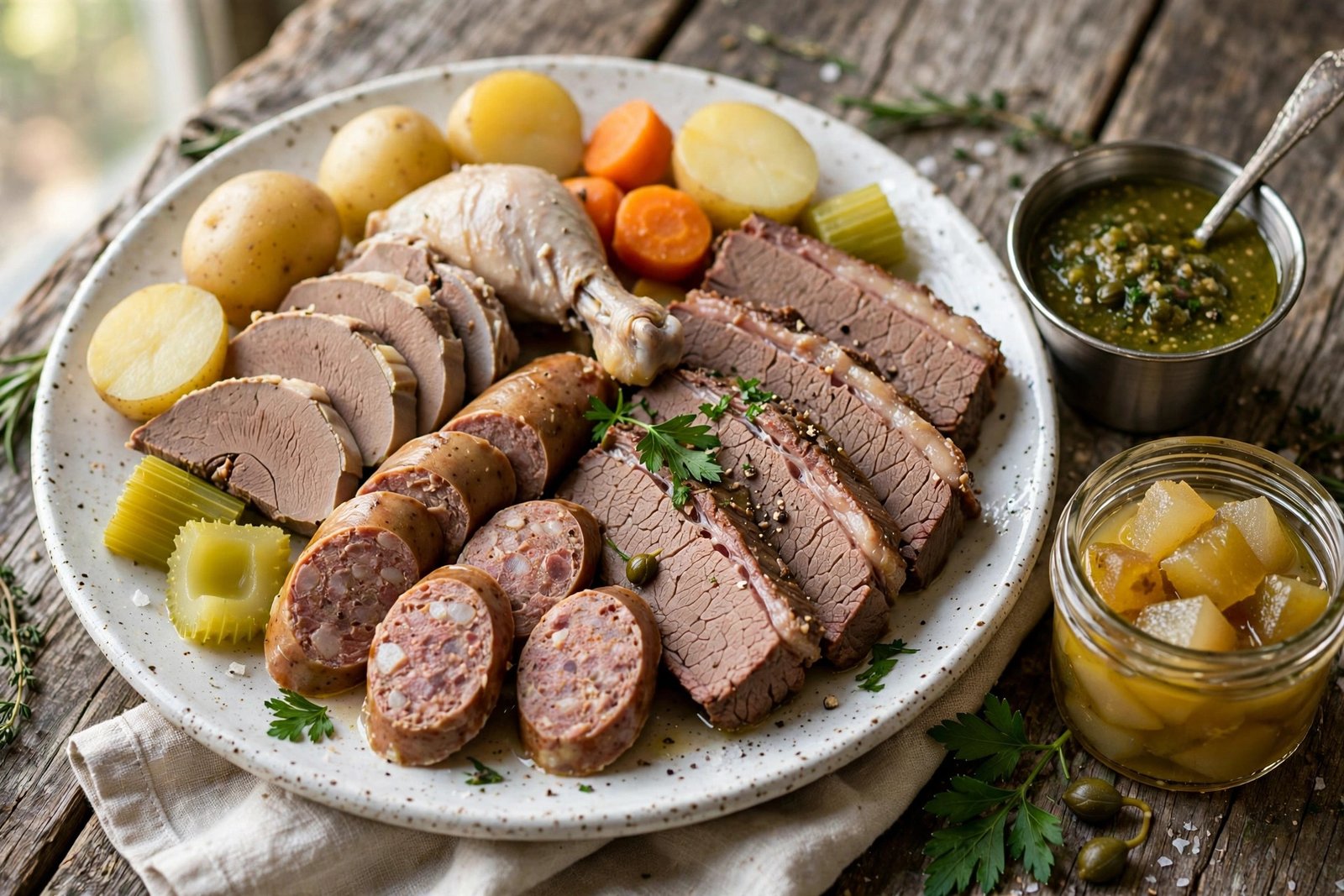
Bollito misto is the grand boiled-meat feast of Piedmont: beef, chicken, tongue and cotechino sausage simmered gently in a fragrant broth until meltingly tender, then sliced and served with salsa verde and mostarda. It is a celebration dish, made for long lunches and generous appetites.
The story behind Bollito Misto
Bollito misto is the great boiled-meat feast of Piedmont, in the north-west of Italy. The name means mixed boil, and the dish is exactly that: several meats, simmered gently in a fragrant broth, sliced and served with sauces. It is a dish for a celebration, for a long Sunday lunch, for a table full of people with time to eat.
The tradition goes back centuries, to the kitchens of Piedmontese farmhouses and the courts of Turin. The rule, according to the old brotherhood of bollito, is seven meats and seven sauces, but home cooks use what they have. Beef brisket, tongue, chicken and cotechino sausage are the core. The broth is flavoured with carrot, onion, celery, leek, bay and cloves.
The cooking is slow and gentle. The meats simmer for hours, never boiling hard, until they are meltingly tender. The broth becomes rich and fragrant, and it is served alongside the meats, in a bowl, to spoon over the slices. Nothing is wasted; the broth is the base for risotto or soup the next day.
Salsa verde is the classic sauce: parsley, capers, anchovy, garlic and olive oil, chopped together into a bright green sauce. Mostarda di Cremona, candied fruit in a mustard syrup, is the sweet, sharp partner. Together, they cut through the richness of the meats and keep the plate interesting.
Cook bollito misto when you have an afternoon to spare and a table to fill. It takes about three and a half hours, most of it hands-off, and it feeds eight generously. It is a dish that makes a meal into an occasion.
The brotherhood of bollito, founded in Piedmont, takes the dish seriously. Its rules call for seven meats, seven sauces and seven vegetables, and its members meet to eat bollito and argue about the details. The rules are a guide, not a law, but they show how much the dish means in its home region. Bollito misto is not just a meal; it is a tradition with a society to protect it.
The dish is also a lesson in patience. There is no shortcut to a good bollito; the meats need their hours in the pot, and the broth needs its slow simmer. It is a dish that rewards a cook who is willing to wait, and it punishes a cook who rushes. In a fast world, bollito misto is an argument for slowing down, for spending an afternoon on a meal that feeds the people you love.
- Prep time
- 25 mins
- Cook time
- 3 hrs
- Total time
- 3 hrs 25 mins
- Servings
- 8 servings
- Calories
- 580
Ingredients
- 800 g beef brisket
- 500 g beef tongue, soaked overnight
- 1 whole chicken (about 1.5 kg)
- 400 g cotechino sausage
- 3 carrots, peeled and halved
- 2 onions, halved
- 2 celery stalks, halved
- 1 leek, halved
- 6 black peppercorns
- 2 bay leaves
- 2 cloves
- 1 tablespoon sea salt
- Salsa verde, to serve
- Mostarda di Cremona, to serve
Instructions
- Soak the beef tongue in cold water overnight in the fridge. This removes excess salt and improves the texture. Drain and rinse before cooking.
- Put the brisket and tongue in a very large pot and cover with cold water. Bring slowly to a boil over medium heat, skimming off the foam that rises to the surface. Starting in cold water gives a clearer broth.
- Add the carrots, onions, celery, leek, peppercorns, bay leaves, cloves and sea salt to the pot. The vegetables flavour the broth and are served alongside the meats.
- Lower the heat until the water is just below a boil, with only the occasional bubble breaking the surface. Simmer very gently for 2 hours, skimming occasionally. Never let the pot boil hard.
- Add the whole chicken to the pot and simmer for a further 45 minutes, until the chicken is cooked through and the juices run clear when the thigh is pierced.
- While the chicken cooks, cook the cotechino separately in simmering water for 30 minutes, following the packet instructions. Cotechino is cooked separately because it is very fatty and would cloud the broth.
- Lift the meats from the broth and let them rest for 10 minutes, covered loosely with foil. The rest lets the juices settle and makes slicing easier.
- Slice the brisket, tongue, chicken and cotechino into thick slices. Arrange on a large, warm platter with the cooked vegetables from the pot.
- Serve with bowls of salsa verde, mostarda di Cremona and some of the hot broth, strained, for spooning over the meat.
Pro tips
- Never let the pot boil hard; a gentle simmer keeps the meats tender. A rolling boil tightens the fibres and dries the meat out.
- Soaking the tongue overnight removes excess salt and improves the texture. Do not skip this step.
- The leftover broth is wonderful as a base for risotto or soup. Strain it, cool it, and refrigerate for up to 3 days.
- Slice the meats just before serving so they stay moist. Sliced meat dries out quickly on a platter.
- Use the largest pot you have. The meats need room to simmer gently in plenty of water.
Variations & serving ideas
The meats can change with what is available. A piece of veal, a pork shoulder, or a few chicken legs can join the pot. A ham hock adds a smoky depth. The rule is to use cuts that benefit from long, gentle cooking; lean, tender cuts dry out in a long simmer.
The sauces can change too. A horseradish sauce, sharp and creamy, is a good partner for the beef. A tomato salsa, fresh and bright, cuts the richness. A simple mustard, Dijon or wholegrain, is always welcome on the table. Offer three or four sauces and let people choose.
For a smaller version, use just brisket and chicken, and skip the tongue and cotechino. The cooking time is the same, but the shopping is simpler and the pot is smaller. The dish is still bollito misto in spirit, and it still feeds a family well.
The broth is a dish in itself. Serve it as a first course, strained and clear, with a little pasta or some torn bread. Or use it the next day for a risotto, where its richness gives the rice a deep, meaty flavour. A pot of bollito broth is a gift to the next day's cooking.
In summer, the meats can be served at room temperature, sliced and arranged on a platter with the sauces. It is a different experience from the hot winter version, lighter and more suited to warm weather. The broth, chilled and jellied, is a delicacy in itself.
The vegetables from the pot are a dish in themselves. Serve them warm, sliced and arranged on a plate, with a drizzle of olive oil and a little salsa verde. The carrots, leeks and celery have absorbed the flavour of the broth, and they are tender and sweet. Do not throw them away; they are part of the feast.
A little grated horseradish, mixed with cream and a squeeze of lemon, makes a sharp, creamy sauce that suits the beef particularly well. It is not a traditional Piedmontese sauce, but it works, and it is easy to make. Offer it alongside the salsa verde and let people choose.
A little barley, added to the broth in the last hour, turns the cooking liquid into a hearty soup that can be served as a first course. The barley absorbs the flavour of the meats and vegetables, and the soup is rich and satisfying. Strain out the barley, serve the broth, and save the meats for the main course.
Getting it right
The simmer is the whole technique. The water should be just below a boil, with the occasional bubble rising lazily to the surface. A hard boil tightens the meat fibres and squeezes out moisture, leaving the meat dry and stringy. A gentle simmer lets the connective tissue melt slowly into gelatine, which is what makes the meat tender and the broth rich.
Starting in cold water matters. The meats release their impurities gradually as the water heats, and the foam can be skimmed off, leaving a clear broth. Starting in boiling water seals the surface and traps the impurities inside. Patience at the start pays off in a cleaner broth and better meat.
The order of adding the meats is timed to their cooking needs. Brisket and tongue go in first, because they need the longest time. Chicken goes in later, because it cooks faster and would fall apart in three hours. Cotechino cooks separately, because its fat would cloud the broth. Each meat gets the time it needs, and no more.
Skimming the foam is a small job with a big effect. As the meats heat up, impurities rise to the surface as grey foam. Skim it off with a ladle or a slotted spoon, and the broth stays clear and clean. Skip it, and the broth turns cloudy and the flavour muddies. Skim for the first 20 minutes, then occasionally after that.
The pot should be large enough that the meats are covered by at least 5 cm of water. A cramped pot cooks unevenly, and the meats at the bottom overcook while the ones on top stay raw. If your pot is too small, cook the meats in two batches, or use a smaller selection. Room in the pot matters as much as time on the heat.
Storing & reheating
Leftover bollito keeps in the fridge for up to 3 days, stored in a little of the broth to keep it moist. Slice only what you need; whole pieces stay juicier than sliced meat. Reheat gently in the broth over low heat.
The broth keeps for 3 days in the fridge or 3 months in the freezer. It is a superb base for risotto, soup or a stew. Freeze it in portions so you can use it a little at a time.
Cold sliced bollito is wonderful in sandwiches, with salsa verde and some pickled vegetables. It also works chopped into a salad, or served with a mustard dressing as a light lunch. The meats are versatile, and leftovers are a pleasure rather than a problem.
The cooked meats, sliced and stored in broth, can be turned into a bollito salad the next day. Toss cold slices with salsa verde, capers and pickled vegetables for a light lunch. The meat is tender, the sauce is bright, and the dish feels completely different from the hot feast of the day before.
Frequently asked questions
What is cotechino?
Cotechino is a large Italian pork sausage made from pork rind and meat, traditionally eaten at New Year. It is rich, fatty and deeply savoury. It is sold fresh or pre-cooked in vacuum packs. Cook it separately from the other meats, following the packet instructions, because its fat would cloud the broth.
Can I make bollito misto with fewer meats?
Yes. Brisket and chicken alone make a very good bollito. Add tongue or cotechino when you can find them, but the dish works with two meats. The key is long, gentle simmering and good sauces, not the number of meats in the pot.
What is salsa verde?
Salsa verde is an Italian green sauce made from flat-leaf parsley, capers, anchovy, garlic, mustard and olive oil, chopped together. It is bright, salty and sharp, and it cuts through the richness of boiled meats. It keeps for a few days in the fridge under a layer of oil.
Can I cook bollito misto in a slow cooker?
Yes. Put the meats and vegetables in a large slow cooker, cover with water, and cook on low for 8 hours. Add the chicken for the last 2 hours. The slow cooker is ideal for the gentle heat the dish needs. Cook the cotechino separately as usual.
What is mostarda di Cremona?
Mostarda di Cremona is a northern Italian condiment of candied fruit preserved in a sweet, mustard-flavoured syrup. It is sweet, sharp and hot all at once, and it is the classic partner for bollito misto. Find it in Italian delis or online.
How do I slice the tongue?
Peel the tongue while it is still warm; the skin comes away more easily. Use a sharp knife and cut across the tongue into slices about 5 mm thick. The texture is tender and mild, quite different from what people expect. Serve it with plenty of salsa verde.


