Amatriciana Recipe
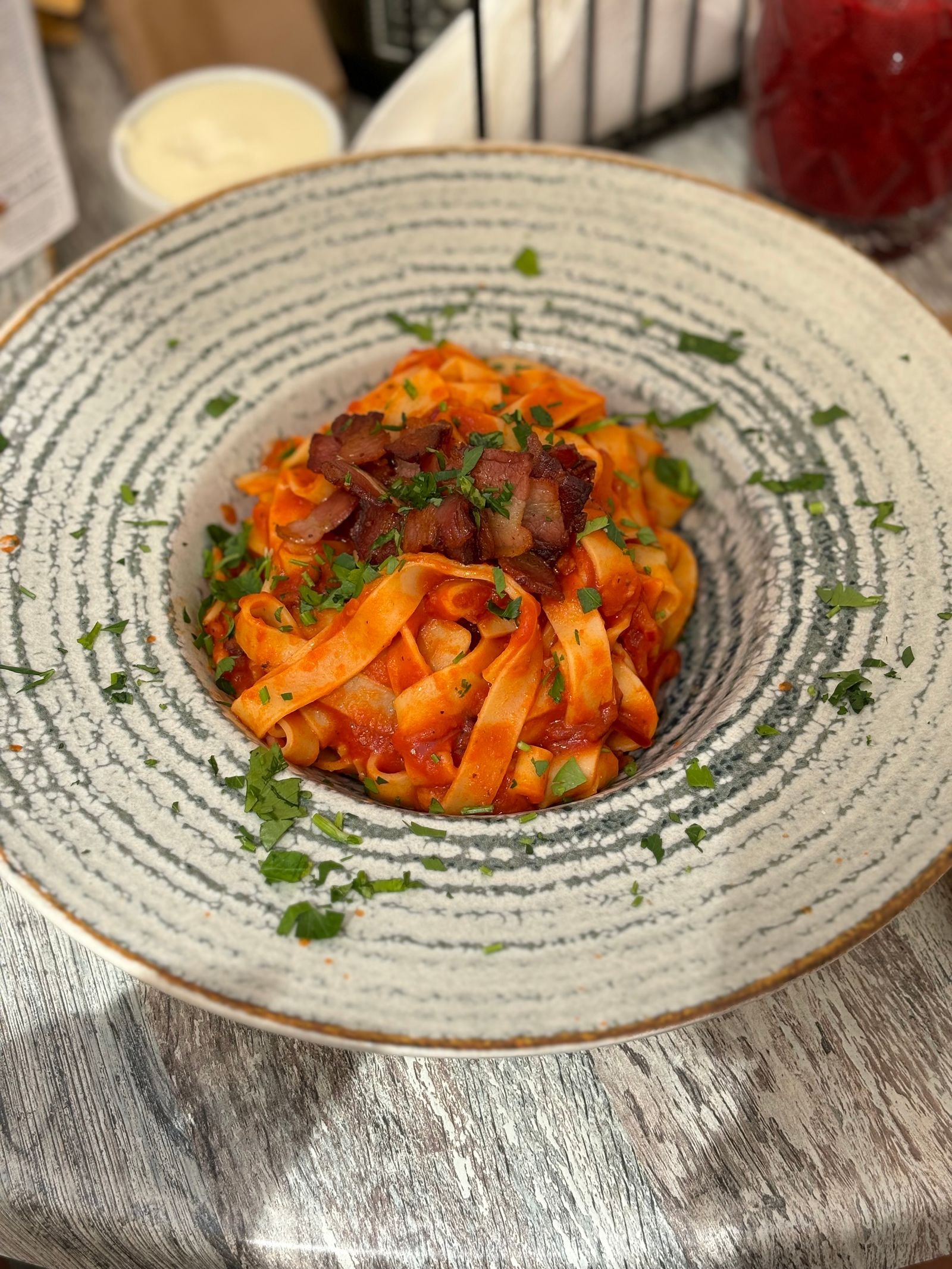
Amatriciana is tomato, guanciale and pecorino Romano cooked into one of the great pasta sauces of Rome. The pork crisps in its own fat, the tomatoes turn sweet and silky, and the cheese melts into a rich, salty finish. It needs five main ingredients and about thirty minutes, and it tastes like the heart of Italy. It is the kind of sauce that makes a quiet evening feel like a small trip to Rome.
The story behind Amatriciana
Amatriciana comes from Amatrice, a small town in the hills of Lazio, about a hundred kilometres north-east of Rome. Shepherds from the area carried a sauce of cured pork cheek, pecorino cheese and black pepper in their packs, and that tomato-free version is still cooked today under its older name, gricia. Tomatoes arrived later, once they had travelled from the Americas and become part of Italian cooking, and the red version we know now took shape in Rome in the nineteenth century.
The dish is fiercely protected by the people of Amatrice, and that pride shows in the rules around it. The pork must be guanciale, the cured cheek of the pig, not pancetta and never smoked bacon. The cheese must be pecorino Romano, sharp and salty, and the pasta is traditionally bucatini, the thick hollow spaghetti that holds the sauce inside. There is no onion and no garlic in the strict version, and chilli is the only extra heat. These rules sound strict, but they exist because each ingredient has a clear job.
What makes amatriciana special is how little it asks of the cook and how much it gives back. The guanciale renders its own fat, and that fat becomes the base of the sauce. Tomatoes cook down in it until the sauce turns a deep red and the oil separates at the edges. Pecorino stirred in at the end melts into the sauce and thickens it, so the final dish is glossy, rich and salty with a warm chilli finish. No cream, no stock, no long list of extras.
In the US, amatriciana is a perfect weeknight pasta for anyone who loves Italian food but wants something more than a plain tomato sauce. It is a little richer and saltier than a marinara, and it feels like a proper meal with just a salad on the side. Cook it on a Friday evening, open a bottle of red wine, and let the kitchen fill with the smell of pork and tomato. It is the kind of cooking that reminds you how good simple food can be. The town of Amatrice is proud of this dish, and every year it holds a festival in its honour. Cooks from across Italy gather to argue about the details, but they all agree on the heart of it: guanciale, pecorino, tomato and chilli, cooked simply and eaten hot.
- Prep time
- 10 mins
- Cook time
- 25 mins
- Total time
- 35 mins
- Servings
- 4 servings
- Calories
- 620
Ingredients
- 400 g bucatini or spaghetti
- 150 g guanciale, cut into small strips
- 1 tablespoon olive oil
- 1/2 teaspoon dried chilli flakes
- 100 ml dry white wine
- 400 g tinned San Marzano tomatoes, crushed by hand
- Salt and black pepper, to taste
- 60 g pecorino Romano, finely grated
- Extra pecorino Romano, to serve
Instructions
- Bring a large pot of well-salted water to the boil and cook the bucatini until just shy of al dente, about 1 minute less than the packet says. Before draining, scoop out a mug of the starchy pasta water for finishing the sauce.
- Put the guanciale in a cold, wide pan with the olive oil, then set it over medium heat. Cooking from cold lets the fat render slowly. Stir now and then for 6 to 8 minutes until the strips are crisp at the edges and golden, and the pan holds a pool of clear fat.
- Lift the crisp guanciale out with a slotted spoon and set it aside on a plate. Leave the rendered fat in the pan, because that fat is the flavour base of the whole sauce. Turn the heat down to medium-low.
- Add the chilli flakes to the fat and stir for 30 seconds until they smell warm and fragrant. Pour in the white wine and let it bubble for about 1 minute, scraping the bottom of the pan to lift up the browned bits.
- Add the crushed tomatoes with their juices and a good pinch of salt. Let the sauce simmer gently, uncovered, for 12 to 15 minutes. Stir now and then until it thickens, turns deep red, and the fat starts to separate at the edges.
- Tip the drained bucatini into the sauce with a splash of pasta water. Toss over medium heat for 1 to 2 minutes so every strand is coated and the sauce turns glossy. The hollow centre of the bucatini will fill with sauce as you toss.
- Take the pan off the heat and stir in half the pecorino and the crisp guanciale. Toss again until the cheese melts into the sauce and everything looks creamy and well coated. Taste and add black pepper and a little more salt if needed.
- Serve in warm bowls with the rest of the pecorino on top. Pass extra cheese at the table, and eat it while it is hot, because the sauce thickens as it cools and the bucatini is at its best straight from the pan.
- If the sauce looks too thin after simmering, turn the heat up for a minute or two and let it bubble uncovered. It should coat the back of a spoon and leave a clear trail when you drag the spoon through it. If it looks too thick, add a splash of the reserved pasta water and stir it through.
Pro tips
- Buy guanciale if you can find it, at an Italian deli or online. Pancetta is the nearest swap, but it is leaner and milder, so the sauce loses some of its depth. Ask the deli to cut the guanciale into a thick slab, so you can cut neat strips at home.
- Crush the tomatoes by hand in a bowl before they go in the pan. You get a lovely uneven texture that tinned chopped tomatoes cannot match. San Marzano tomatoes are worth the extra cost here, because the sauce has so few ingredients.
- Keep the rendered fat. It is liquid gold for this dish, and pouring it away would take most of the flavour with it. Warm the serving bowls with hot water first, so the sauce stays glossy at the table.
- Add the cheese off the heat. Pecorino can turn grainy if it boils, so let the residual heat of the pan do the melting. A pinch of sugar can help if your tomatoes taste sharp, but taste first before adding it.
- Do not add onion or garlic. The traditional sauce has neither, and the guanciale and tomato are strong enough to carry the dish on their own. Leftover guanciale freezes well in small bags, ready for the next time you cook this.
Variations & serving ideas
The classic pasta is bucatini, and it is worth seeking out for this recipe. The hollow tube drinks up the sauce, so each strand carries flavour inside as well as out. Spaghetti is the next best choice and works just as well in practice, and rigatoni is a good option if you prefer a short shape that catches the crisp guanciale in its ridges. Whichever you choose, cook it a minute short and finish it in the sauce.
If guanciale is impossible to find, pancetta is the honest substitute, and unsmoked bacon works in a pinch. Smoked bacon changes the flavour and moves the dish away from the Roman original, so use it only if nothing else is available. For a vegetarian version, fry cubes of firm smoked tofu or mushrooms in olive oil until crisp, then proceed with the sauce as written. It will not be amatriciana in the strict sense, but it will still be a very good pasta.
In the US, amatriciana makes a fine main course for a relaxed dinner with friends. Serve it with a bitter green salad, such as arugula with lemon and olive oil, and a glass of Chianti or another medium red wine. A piece of crusty bread is useful for the sauce left in the bowl. Leftovers reheat well, and the sauce on its own freezes nicely for a fast supper another night.
For a richer version, stir a spoonful of the pasta water and an extra handful of pecorino into the sauce before you add the pasta, which makes it thicker and glossier. Some cooks use a splash of red wine instead of white, which gives a deeper colour and a rounder flavour. If you are cooking for a crowd, the sauce scales up easily: double everything except the chilli, then taste and add more heat at the end. A little of the sauce spooned over grilled bread makes a fine starter while the pasta cooks. A little grated lemon zest stirred into the sauce at the end gives a fresh lift, though it is not traditional. If you like a thicker sauce, use half the pasta water at first and add more only if the sauce looks dry.
Getting it right
The heart of amatriciana is the guanciale, and how you cook it sets the tone for everything else. Starting it in a cold pan is the key move. The fat renders out slowly as the pan warms, the meat crisps evenly, and you end up with a pan full of flavourful fat instead of burnt edges and raw centres. Give it six to eight minutes at medium heat, and listen for the steady sizzle that tells you the fat is rendering.
Heat control matters again when the tomatoes go in. The sauce should simmer, not boil hard, so the tomatoes sweeten slowly and the fat has time to separate. A fierce boil will make the sauce sharp and thin, while a gentle bubble gives you that deep red colour and silky texture. Stir now and then and watch the edges of the pan, where the oil will start to glisten when the sauce is ready.
The most common mistake is adding the pecorino while the pan is still over the flame. Pecorino Romano is a hard, salty cheese, and direct heat can make it clump and turn grainy. Take the pan off the heat first, then stir the cheese in and let the residual warmth melt it. The second common mistake is over-salting early: the guanciale and pecorino are both salty, so season lightly and taste at the very end. The wine step matters too. Pour it in while the pan is hot and let it bubble for a full minute, so the alcohol cooks off and the sharp edge disappears. If you rush this step, the sauce can taste raw and boozy, so give it the time it needs before the tomatoes go in.
Storing & reheating
Leftover amatriciana keeps in the fridge for up to 3 days in a sealed container. The sauce and pasta are best stored together, since the fat in the sauce stops the pasta drying out. The flavours settle overnight and the dish often tastes even richer the next day.
Reheat it in a pan over medium-low heat with a splash of water, stirring until it is hot all the way through and the sauce loosens again. The microwave works too, but stir halfway for even heating. The sauce on its own freezes well for up to 3 months; freeze it without the pasta and cook fresh pasta when you serve it. If the sauce thickens too much in the fridge, loosen it with a splash of water as it reheats, and stir in the cheese fresh.
Frequently asked questions
What is the difference between amatriciana and arrabbiata?
Amatriciana is built on guanciale and pecorino with tomato, while arrabbiata is a tomato and chilli sauce with garlic and no pork or cheese. Amatriciana is richer and saltier, and arrabbiata is lighter and spicier. Both are Roman classics, but they taste quite different.
Can I use pancetta instead of guanciale?
Yes, pancetta is the closest substitute and it works well. It is leaner and milder than guanciale, so add a little extra olive oil at the start to make up for the missing fat. Avoid smoked bacon if you can, because the smoky flavour takes the sauce away from the original.
Is amatriciana spicy?
It has a mild warmth from the chilli flakes rather than real heat. Half a teaspoon gives a gentle tingle that sits behind the tomato and pork. Increase it to a full teaspoon if you like more bite, or leave it out for a very mild version.
What pasta should I use for amatriciana?
Bucatini is the traditional choice, because the hollow tube fills with sauce. Spaghetti is a close second and is much easier to find in most US shops. Rigatoni also works well if you prefer a short shape that catches the crisp pork pieces.
Can I make amatriciana ahead of time?
Yes, the sauce keeps for 3 days in the fridge and freezes for up to 3 months. Make the sauce, cool it, and store it in a sealed container. Cook fresh pasta when you are ready to eat, and toss it with the reheated sauce and a little pasta water.
Why is there no onion or garlic in amatriciana?
The traditional recipe from Amatrice uses neither, because the guanciale, tomato and pecorino are strong enough on their own. Onion and garlic are sometimes added in other regions, but the Roman version keeps it simple. Leaving them out lets the pork and cheese lead the flavour.


