Baba au Rhum Recipe
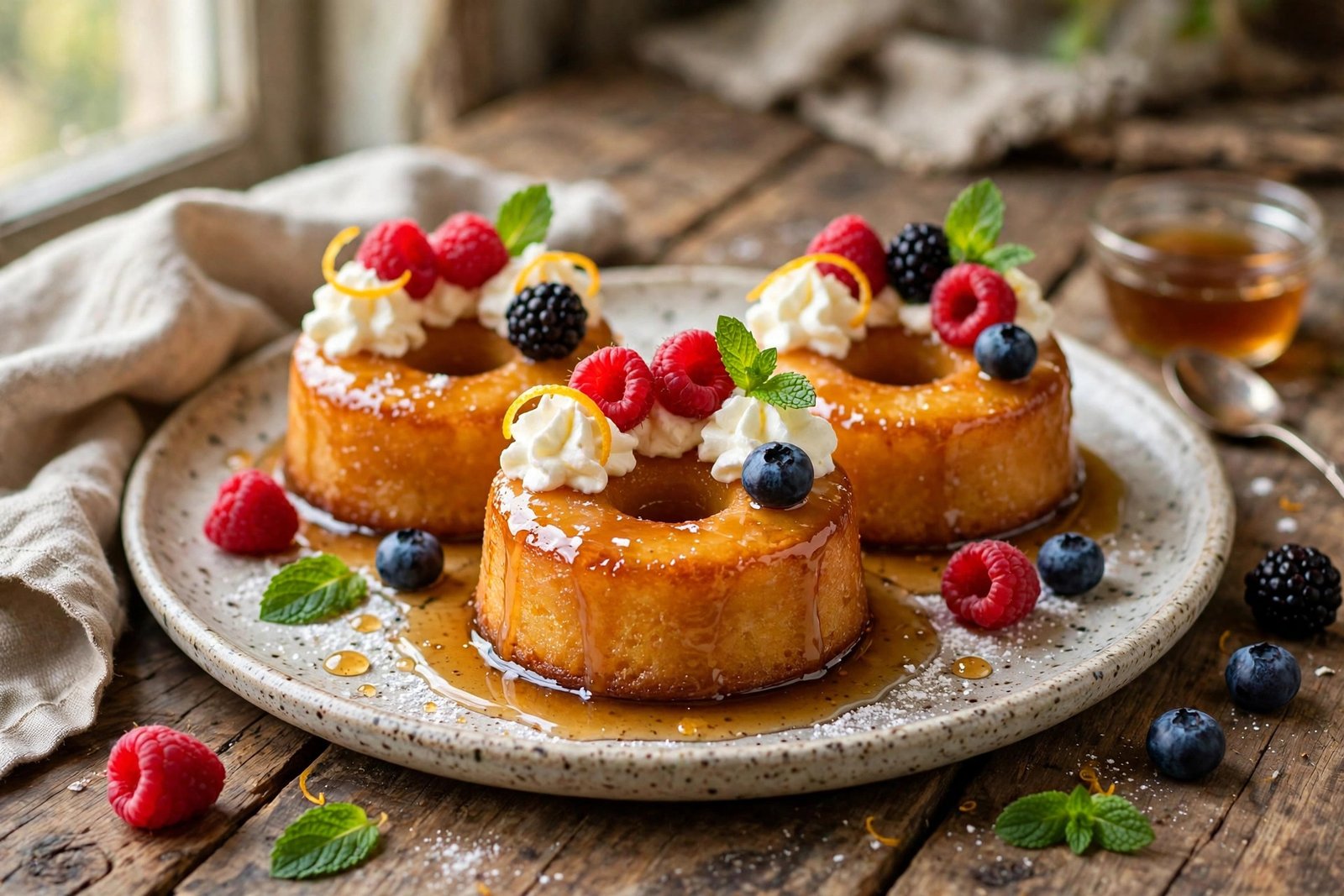
Baba au Rhum is a gloriously indulgent French classic. A light, yeasted sponge is baked in small moulds, then soaked in warm rum syrup until drenched, and served with whipped cream and berries. The cake should be soft and yielding, the syrup warm and fragrant with orange — a dessert that tastes like a Parisian patisserie.
The story behind Baba au Rhum
Baba au rhum has a story that starts in Poland, travels through France, and ends in a Paris patisserie. The baba itself — a small yeasted cake — is said to have been brought to France in the 18th century by Stanislas Leszczynski, the exiled king of Poland, who is credited with the idea of soaking the dry cake in rum. Whether the story is exactly true hardly matters: the combination stuck, and the baba au rhum became a fixture of French patisserie, served in cafes and bakeries across the country.
The cake is a light, yeasted sponge, richer than bread but lighter than a butter cake. It is baked in small dariole moulds or a savarin ring, then soaked in a warm syrup of water, sugar, rum and orange zest. The soaking is the point — a baba should be drenched, not just damp, and the cake should be soft enough to yield to a spoon. The rum flavour should be present but not harsh, warmed by the orange zest and sweetened by the sugar. Whipped cream on the side cuts the richness and gives the plate a clean finish.
Making baba at home is easier than it looks. The dough comes together in minutes, the proving takes about ninety minutes in total, and the baking is under half an hour. The only part that needs care is the soaking — the babas and the syrup should both be warm, and the babas need time to absorb the syrup fully. Rushing the soak leaves a dry centre, and that is the one thing a baba should never have.
Serve baba au rhum as a dinner-party dessert, or as an afternoon treat with coffee. It is a cake that improves overnight, as the syrup settles into the crumb, so it is a good make-ahead dessert. A few fresh berries on the plate add colour and a sharp contrast to the sweet, rum-soaked sponge.
The rum syrup is where the baba earns its name, and the quality of the rum matters. A good dark rum — the kind you would drink — gives a deep, molasses-like flavour with notes of vanilla and spice. A cheap rum gives a harsh, alcoholic bite that no amount of sugar can soften. You do not need the most expensive bottle, but use one you enjoy drinking. The orange zest in the syrup brightens the rum and keeps it from tasting heavy, and the sugar rounds out the edges.
- Prep time
- 30 mins
- Cook time
- 25 mins
- Total time
- 55 mins
- Servings
- 8 servings
- Calories
- 460
Ingredients
- 250 g plain flour
- 7 g fast-action dried yeast
- 50 g caster sugar
- 3 eggs, beaten
- 100 g soft butter
- A pinch of salt
- For the syrup: 300 ml water
- 150 g sugar
- 100 ml dark rum
- Zest of 1 orange
- Whipped cream and berries, to serve
Instructions
- Mix the flour, yeast, sugar and salt in a large bowl. Make a well in the centre and beat in the eggs, one at a time, until you have a soft, sticky dough. It will look rough at this stage — that is fine.
- Knead in the soft butter, a little at a time, working it into the dough until smooth and elastic. This takes about 5 minutes by hand or 3 minutes in a stand mixer. The dough should be soft, slightly sticky and smooth when you are done.
- Cover the bowl with a damp cloth or cling film and leave in a warm place to prove for 1 hour, until doubled in size. The dough should look puffy and feel light when you press it gently.
- Divide the dough between 8 greased dariole moulds or a greased savarin tin, filling each about two-thirds full. Cover loosely and prove for 30 minutes more, until the dough has risen to near the top of the moulds.
- Heat the oven to 180°C. Bake the babas for 20 to 25 minutes until deep golden all over. They should sound hollow when tapped on the base, and a skewer inserted in the centre should come out clean.
- While the babas bake, make the syrup. Simmer the water, sugar and orange zest in a saucepan for 5 minutes until the sugar dissolves, then take off the heat and cool slightly. Stir in the dark rum — do not boil the syrup after adding the rum, or the flavour will dull.
- Turn the warm babas out of their moulds and place them in a deep dish. Pour the warm syrup over them and leave to soak, turning occasionally, until they are saturated — about 15 to 20 minutes. The babas should feel heavy and drenched when you lift them.
- Serve the babas on plates with a generous spoonful of whipped cream and a few fresh berries. Spoon a little extra syrup over the top if you like.
Pro tips
- The babas should feel light, not dense, so let them prove fully. Under-proved dough bakes into a heavy cake that does not absorb the syrup well.
- Soak while both cake and syrup are warm for the best absorption. Cold cake and cold syrup do not combine — the syrup just sits on the surface.
- Do not boil the syrup after adding the rum, or the flavour will dull. Add the rum off the heat, once the syrup has cooled slightly.
- Grease the moulds generously. Baba dough is sticky and rich, and it will cling to an ungreased mould.
- Let the babas cool slightly before soaking. Straight from the oven they are too fragile and can fall apart; five minutes of cooling firms them up just enough.
Variations & serving ideas
The syrup can be flavoured in different ways. Orange zest is classic, but lemon zest gives a sharper note, and a split vanilla pod steeped in the syrup adds warmth. A spoonful of apricot jam stirred into the warm syrup gives it a fruity depth. For a spicier version, add a cinnamon stick and a star anise to the syrup while it simmers, then remove them before adding the rum.
The rum itself can change. Dark rum is traditional and gives a deep, molasses-like flavour. A lighter rum makes a cleaner, less intense baba. Spiced rum adds warmth and a hint of vanilla. For an alcohol-free version, replace the rum with orange juice and a few drops of rum essence — the flavour is lighter, but the cake is still delicious and the soaking method is the same.
The serving can be dressed up. A scoop of vanilla ice cream instead of whipped cream, a spoonful of crème fraîche, or a scattering of toasted almonds all work. Fresh berries are the classic accompaniment, but sliced peaches, poached pears or a spoonful of macerated strawberries are all lovely. A dusting of icing sugar over the top makes the plate look like it came from a patisserie.
For a larger gathering, bake the baba in a single savarin ring tin and serve it as a centrepiece, sliced at the table. The soaking method is the same — pour the syrup over the warm ring and let it absorb — and the presentation is more dramatic than individual babas.
A chocolate baba is a modern twist worth trying. Add two tablespoons of cocoa powder to the flour when making the dough, and use a chocolate-flavoured rum or a spoonful of cocoa in the syrup. Serve with whipped cream and a dusting of cocoa powder. The result is richer and darker than the classic, and it works beautifully as a dinner-party dessert.
For a summer version, serve the babas with macerated strawberries and a spoonful of crème fraîche instead of whipped cream. The tartness of the strawberries and the tang of the crème fraîche cut through the sweet syrup, and the plate looks beautiful with the red berries against the golden cake.
Getting it right
The dough is a soft, enriched yeast dough, and the key is patience with the proving. The first prove takes about an hour, until the dough doubles, and the second prove in the moulds takes another thirty minutes. Rushing either prove gives a dense cake that does not absorb the syrup properly. The dough should feel light and airy when it goes into the oven — if it still feels heavy, give it more time. A warm kitchen speeds things up; a cold one slows them down, so adjust to your room.
The baking needs a good colour. Baba should be deep golden, not pale — the darker crust holds up to the syrup and adds a slight caramel note. If your oven runs cool, give the babas an extra few minutes. They should sound hollow when tapped, and the tops should spring back when pressed gently. Under-baked baba collapses in the syrup; properly baked baba holds its shape while soaking up the liquid.
The soak is the defining technique. Both the cake and the syrup should be warm, and the babas need time — fifteen to twenty minutes, turned occasionally — to absorb the syrup all the way to the centre. Test by lifting one and pressing gently: it should feel heavy and saturated, and syrup should weep slightly from the crumb. If the centre is still dry, leave them longer. A baba that is soaked properly is soft all the way through, with no dry crumb at all.
The moulds need attention too. Grease them generously with softened butter, getting into every corner, and dust lightly with flour if you like extra insurance. Fill them only two-thirds full — the dough rises significantly in the second prove and again in the oven, and overfilled moulds spill over and bake into the tray. If a baba does stick, run a thin knife around the edge while it is still warm and it should release.
Storing & reheating
Soaked babas keep for 2 days in the fridge in an airtight container, and they taste better the next day as the syrup settles into the crumb. Serve them at room temperature — take them out of the fridge 30 minutes before serving so the syrup is not cold and the cake is soft.
Unsoaked babas keep for 2 days at room temperature in an airtight container, or freeze for up to a month. Soak them from frozen by warming them in a low oven first, then pouring over warm syrup. The syrup itself keeps in the fridge for a week. Whipped cream should be made fresh on the day of serving.
Frequently asked questions
What is baba au rhum?
It is a small yeasted cake soaked in rum syrup, a classic French dessert often served with cream. The cake is light and airy, the syrup is warm and fragrant with orange, and the whole thing is drenched rather than just damp.
Can I make it without alcohol?
Yes, replace the rum with orange juice and a little rum essence. The flavour is lighter and fruitier, but the cake and the soaking method are the same, and it is still a lovely dessert.
How long does it keep?
Soaked babas keep for 2 days in the fridge and taste better the next day. Unsoaked babas freeze for up to a month — warm them in a low oven, then soak in warm syrup.
What moulds should I use?
Dariole moulds are traditional, but a savarin ring tin works for a single large baba, and a muffin tin works in a pinch. Grease whatever you use generously — the dough is sticky.
Why is my baba dry in the middle?
It was not soaked long enough, or the syrup was too cool. Both cake and syrup should be warm, and the babas need 15 to 20 minutes in the syrup, turned occasionally, to absorb it fully.
Can I make the dough ahead?
Yes. After the first prove, refrigerate the dough overnight, then shape and prove in the moulds the next day. The cold prove actually improves the flavour, giving a slightly deeper, more complex taste.