Beef Bourguignon Recipe
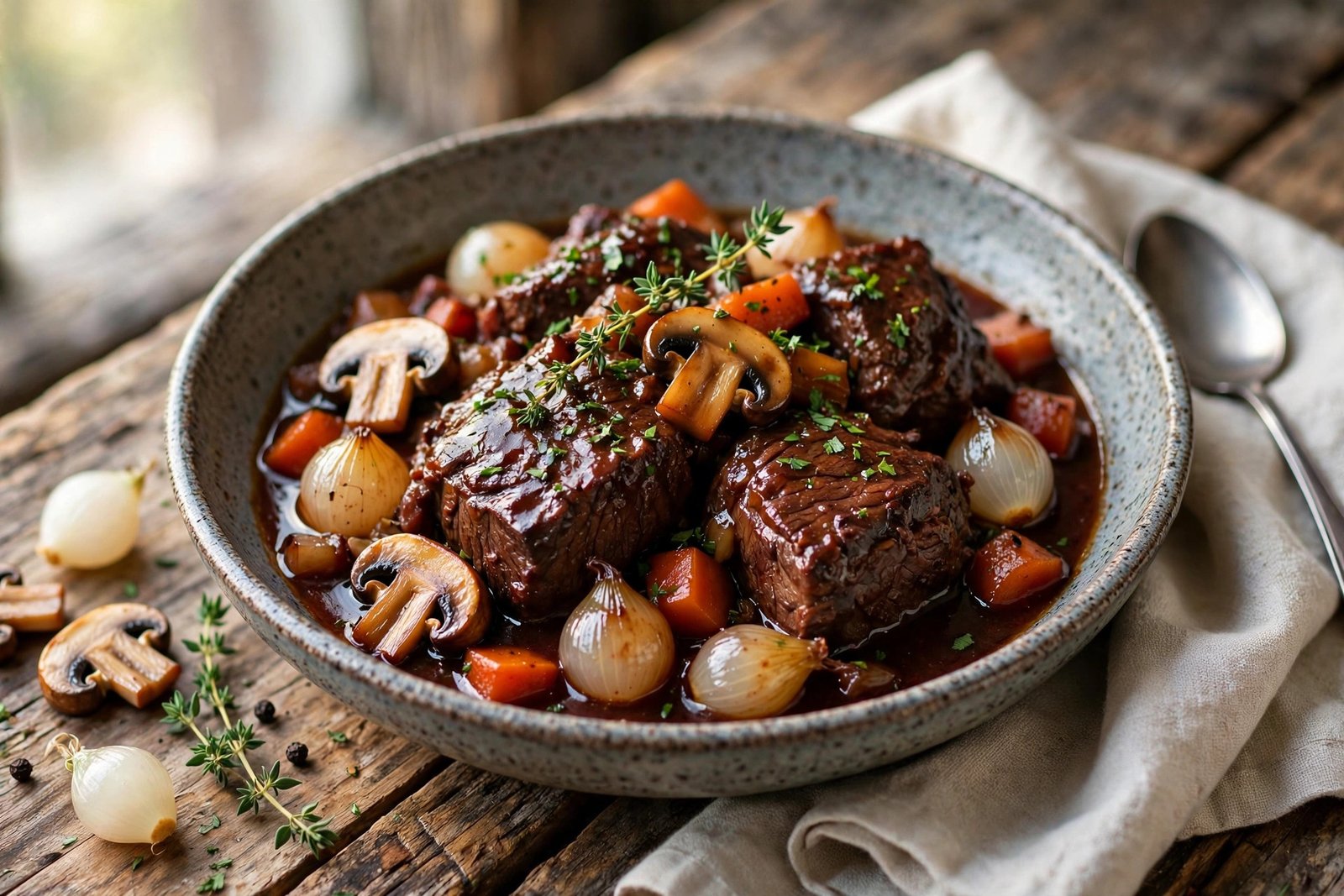
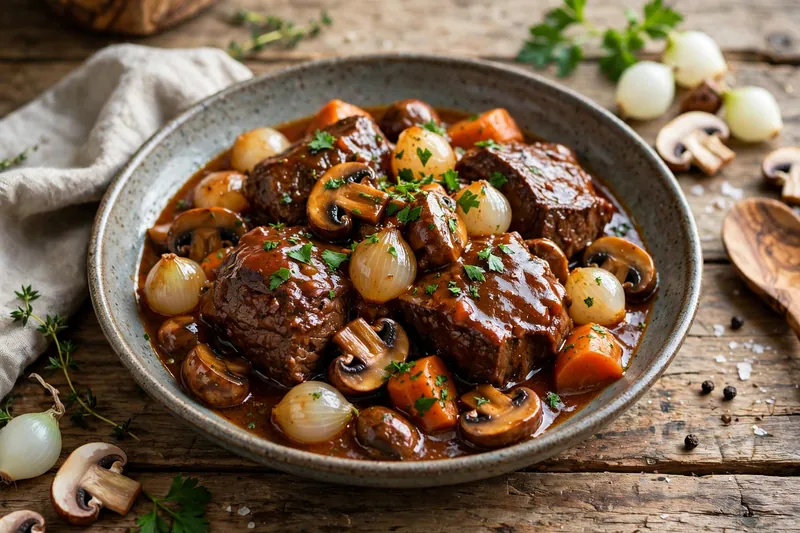
Chuck beef is slow-braised for hours in red wine until it melts at the touch of a fork, joined by carrots, mushrooms, and pearl onions in a silky, deeply flavored sauce. This is Burgundy's most beloved stew: hearty, elegant, and worth every minute. It takes nearly three hours, but most of that is hands-off simmering while the oven or stove does the work.
The story behind Beef Bourguignon
Beef bourguignon comes from Burgundy, a region in eastern France famous for its wine and its cattle. It began as a way to turn a tough cut of beef into something tender by cooking it slowly in the local red wine. The wine did two jobs at once: its acidity helped break down the tough connective tissue, and its flavor soaked into the meat over hours of gentle heat. What started as a practical way to feed a family became, over time, one of the great dishes of French cooking.
The dish owes much of its fame to Julia Child, who put it in her 1961 book Mastering the Art of French Cooking and showed a generation of home cooks that a long, slow French stew was within their reach. Her version kept the classic structure, and it is still the standard today: beef browned in batches, bacon for richness, wine and stock for the braise, and mushrooms and pearl onions added near the end so they keep their shape.
What makes beef bourguignon special is time. There is no shortcut to what two and a half hours of gentle heat does to chuck beef. The fat melts, the connective tissue turns to gelatin, and the meat becomes so tender it falls apart under a fork. The sauce thickens and darkens, and the wine loses its raw edge. The mushrooms and pearl onions, added late, bring sweetness and texture to a dish that would otherwise be all softness. It is patience you can taste.
Cook beef bourguignon when you have an afternoon and want the house to smell wonderful. It suits a Sunday dinner, a cold evening, and any gathering where the food should feel like an occasion. It is even better the next day, so it rewards making ahead: cook it on Saturday, reheat it gently on Sunday, and it will taste deeper and richer than it did fresh. Serve it over mashed potatoes, creamy polenta, or egg noodles, with a green salad and crusty bread to catch the sauce.
- Prep time
- 25 mins
- Cook time
- 2 hrs 30 mins
- Total time
- 2 hrs 55 mins
- Servings
- 6 servings
- Calories
- 585
Ingredients
- 1.25 kg beef chuck, cut into 5cm cubes
- 120 g thick-cut bacon or lardons, diced
- 3 tbsp all-purpose flour
- 3 tbsp olive oil, divided
- 3 large carrots, cut into thick rounds
- 1 large onion, chopped
- 3 cloves garlic, minced + 2 tbsp tomato paste
- 750 ml dry red wine (Burgundy or Pinot Noir style)
- 400 ml beef stock
- 2 bay leaves + 5 sprigs fresh thyme (or 1.5 tsp dried)
- 250 g button mushrooms, halved
- 200 g pearl onions, peeled
- Salt and freshly ground black pepper, to taste
- 2 tbsp chopped fresh parsley, for garnish
Instructions
- Pat the beef cubes very dry with paper towels and season them generously with salt and pepper. Dry meat browns; wet meat steams, and steamed beef never develops the deep color and flavor this dish depends on. Toss the cubes in the flour until lightly coated, then shake off the excess. The flour helps the beef brown and later thickens the sauce slightly.
- Heat 2 tablespoons of the olive oil in a large Dutch oven over medium-high heat until it shimmers. Sear the beef in batches, leaving space between the cubes, until deeply browned on all sides, 8 to 10 minutes per batch. Do not crowd the pot: crowded beef steams instead of searing, and you will lose the brown crust that gives the sauce its depth. Set each batch aside on a plate as it finishes.
- In the same pot, cook the diced bacon over medium heat until crisp, about 5 minutes. Listen for the sizzle to slow as the fat renders out. Remove the bacon with a slotted spoon and set it aside with the beef, leaving the fat in the pot. That bacon fat is pure flavor, and it will carry the next step.
- Add the chopped onion and carrots to the pot and cook for 5 to 6 minutes, stirring now and then, until the onion softens and turns translucent. Stir in the garlic and tomato paste and cook for 1 to 2 minutes more, until the paste darkens slightly and smells sweet and fragrant. The tomato paste needs this time to lose its raw edge.
- Pour in the red wine, scraping the bottom of the pot hard with a wooden spoon. All those browned bits stuck to the pot are concentrated flavor, and the wine dissolves them into the sauce. Add the beef stock, bay leaves, and thyme, then return the beef and bacon to the pot. The liquid should nearly cover the meat. Add a splash more stock if it falls short.
- Bring the pot to a gentle boil, then cover it, reduce the heat to low, and simmer for 2 hours, stirring occasionally. The surface should barely bubble: a lazy simmer, not a rolling boil. After two hours the beef should yield easily to a fork. If it still resists, give it another 20 to 30 minutes. Tough beef just needs more time, never more heat.
- While the stew braises, heat the remaining tablespoon of olive oil in a skillet over medium-high heat. Add the halved mushrooms and peeled pearl onions and saute for 8 to 10 minutes, until golden at the edges. The mushrooms will release water first, then start to brown once it evaporates. Set them aside. Cooking them separately keeps them firm and flavorful instead of waterlogged.
- Stir the mushrooms and pearl onions into the stew and simmer uncovered for 20 to 30 minutes more. The sauce will thicken as it reduces, and it should coat the back of a spoon when it is ready. Fish out the bay leaves and thyme stems and throw them away. If the sauce is still thin, give it a few more minutes uncovered; if it is too thick, loosen it with a splash of stock.
- Taste and adjust the seasoning with salt and pepper. The sauce should taste rich, savory, and slightly winey, with the sweetness of the onions and carrots coming through at the end. Garnish with chopped parsley and serve hot over mashed potatoes, creamy polenta, or egg noodles, with crusty bread on the side for the sauce.
Pro tips
- Chuck roast is the ideal cut. Its fat and connective tissue melt into a rich sauce over the long braise, and no lean cut can match that result. Do not substitute a lean steak cut: it will dry out long before the sauce is ready.
- Brown the beef in batches and give each cube room. Overcrowding steams the meat instead of searing it, and you lose the deep brown crust that flavors the whole stew. Patience here pays off in the finished sauce.
- The stew is even better the next day, so make it ahead when you can. The flavors deepen overnight in the fridge, and a gentle reheat brings it right back. If anything, plan for leftovers on purpose.
- If the sauce is too thin at the end, simmer it uncovered until it coats a spoon. If it is too thick, loosen it with a splash of stock. Never thicken it with extra flour at the end: it will taste raw and make the sauce cloudy.
- Use a wine you would happily drink. The wine cooks down and concentrates, so a bad bottle tastes worse, not better, after two hours. A medium-bodied dry red, ideally a Burgundy or Pinot Noir style, is the classic choice.
Variations & serving ideas
The oven version is just as good and easier to manage. After adding the wine and stock, cover the pot and bake it at 160 C (325 F) for about 2 hours 15 minutes, then add the mushrooms and onions for the final 30 minutes uncovered. Either method works; choose the one that suits your kitchen.
A slow cooker handles the braise with almost no attention. Brown the beef and bacon and soften the vegetables as usual, then transfer everything to the slow cooker with the wine, stock, and herbs. Cook on low for 7 to 8 hours, then add the sauteed mushrooms and onions for the last 30 minutes. A pressure cooker is faster still: high pressure for 40 to 45 minutes, then reduce the sauce with the saute function.
Swap the protein and the dish shifts its character. Pork shoulder, cut into cubes, braises beautifully in the same wine sauce, turning tender and rich. Lamb shoulder works too, with a slightly gamier depth that suits the wine. A meat-free version with portobello mushrooms and baby carrots in mushroom stock makes a very good stew in its own right.
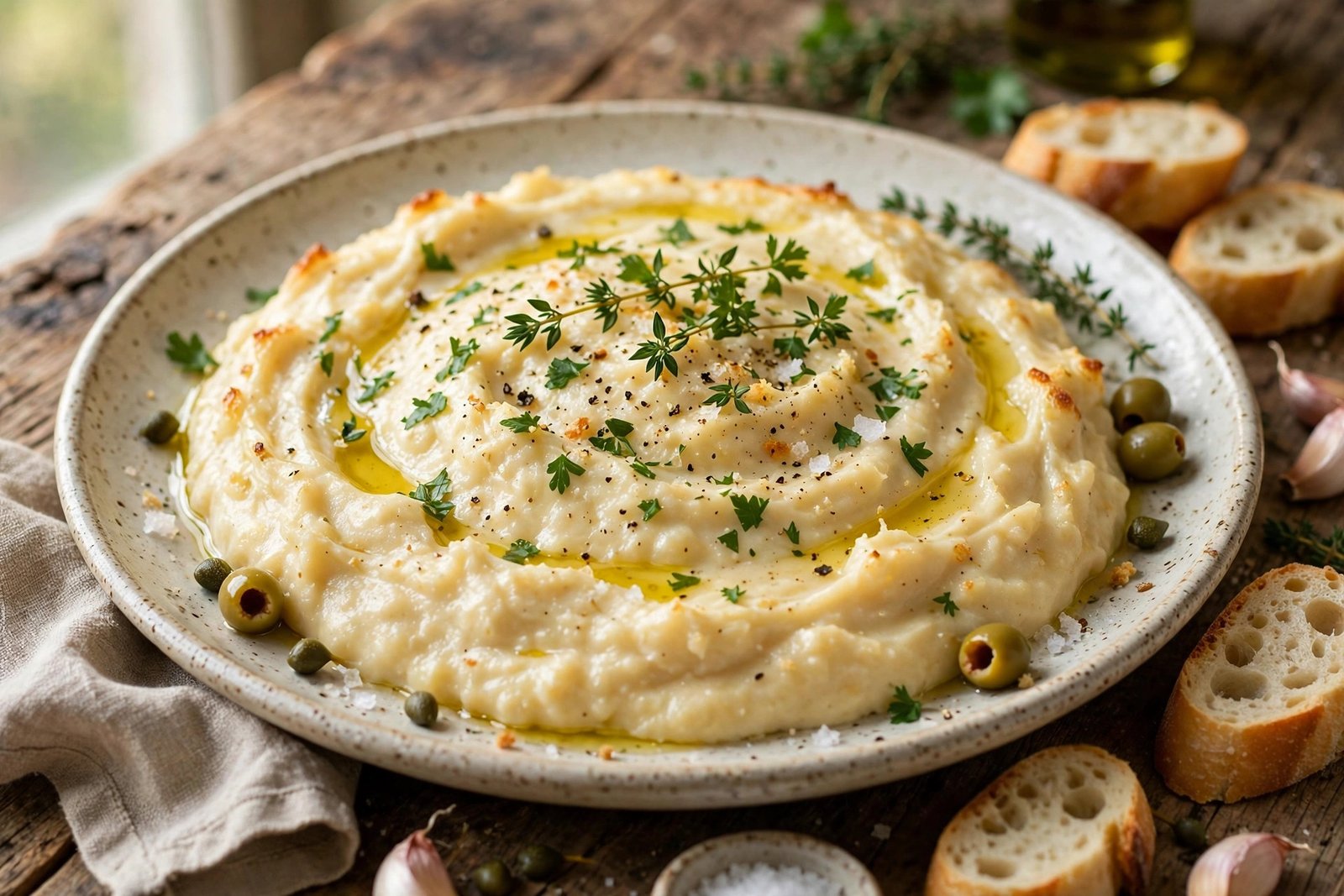
Serve beef bourguignon over mashed potatoes, creamy polenta, or buttered egg noodles, all of which soak up the sauce. A simple green salad with a sharp vinaigrette cuts the richness, and crusty bread is essential for the last of the sauce. Drink the same wine you cooked with, or another medium-bodied red. The meal is rich and slow, so keep the rest of the table simple and let the stew be the center of attention.
Getting it right
Browning is the technique this dish stands or falls on. The deep brown crust on the beef is not decoration; it is flavor, built by the Maillard reaction when meat meets very hot metal. That means the pot must be hot, the meat must be dry, and the cubes must have space. Work in batches, let each side sit undisturbed until it releases from the pot, and do not rush it. Eight to ten minutes per batch feels slow, but it is the single most important step in the whole recipe.
Heat control during the braise matters just as much. The stew should simmer lazily, with small bubbles breaking the surface now and then. A hard boil toughens the meat and clouds the sauce, while too little heat leaves the connective tissue unmelted and the beef chewy. Check it every half hour and top up with stock if the liquid drops below the meat.
The most common mistake is impatience: pulling the stew off the heat before the beef is truly tender. Chuck needs time, and if it still resists a fork at two hours, it needs another twenty or thirty minutes, not higher heat. The second mistake is adding the mushrooms and onions too early, which turns them soft and grey. Cook them separately and add them near the end so they stay golden and distinct. If the sauce ends up too thin, simmer it uncovered; if it is too thick, loosen it with stock.
Storing & reheating
Refrigerated in an airtight container, beef bourguignon keeps for up to 4 days, and it tastes even better on day two as the flavors deepen. Let it cool to room temperature before covering it, and keep the sauce and meat together so the beef stays moist. It also freezes well for up to 3 months in a sealed container, with a little headroom for expansion.
Reheat it gently in a covered pot over low heat, stirring now and then, until it is steaming all the way through. Do not boil it: high heat will toughen the beef and thin the sauce. If it has thickened in the fridge, add a splash of stock or water as it warms. Thaw frozen portions overnight in the fridge before reheating, and garnish with fresh parsley after warming, not before.
Frequently asked questions
What wine should I use for beef bourguignon?
A dry red wine you would enjoy drinking, traditionally a Burgundy (Pinot Noir). Any medium-bodied dry red works well. Avoid very tannic wines, which turn harsh over a long braise, and avoid sweet wines, which throw the sauce off balance.
Can I cook beef bourguignon in the oven?
Yes, and it is very forgiving that way. After adding the wine and stock, cover and bake at 160 C (325 F) for about 2 hours 15 minutes, then add the mushrooms and onions for the final 30 minutes uncovered. The oven gives a gentler, more even heat than the stove, so the bottom is less likely to catch.
Can I make it in a slow cooker or pressure cooker?
Yes. For a slow cooker, cook on low for 7 to 8 hours, adding the sauteed mushrooms and onions for the last 30 minutes. For a pressure cooker, cook at high pressure for 40 to 45 minutes, then reduce the sauce with the saute function. Both work well, though the oven braise gives a slightly deeper sauce.
How long do leftovers keep?
Refrigerated in an airtight container, beef bourguignon keeps for up to 4 days and tastes even better on day two. It freezes well for up to 3 months. Reheat it gently over low heat with a splash of stock, and never let it boil, or the beef will toughen and the sauce will thin.
What cut of beef is best for bourguignon?
Chuck roast is the ideal cut. Its fat and connective tissue melt slowly into the sauce over the long braise, which is what makes the meat so tender and the sauce so rich. Lean cuts like sirloin dry out long before the braise is finished, so stick with chuck, or a similar stewing cut like beef shin.
What should I serve with beef bourguignon?
Mashed potatoes, creamy polenta, or buttered egg noodles are the classic choices, because they all soak up the sauce. Add a simple green salad with a sharp vinaigrette to cut the richness, and crusty bread for the last of the sauce. Drink the same red wine you cooked with.