Rad Na Recipe
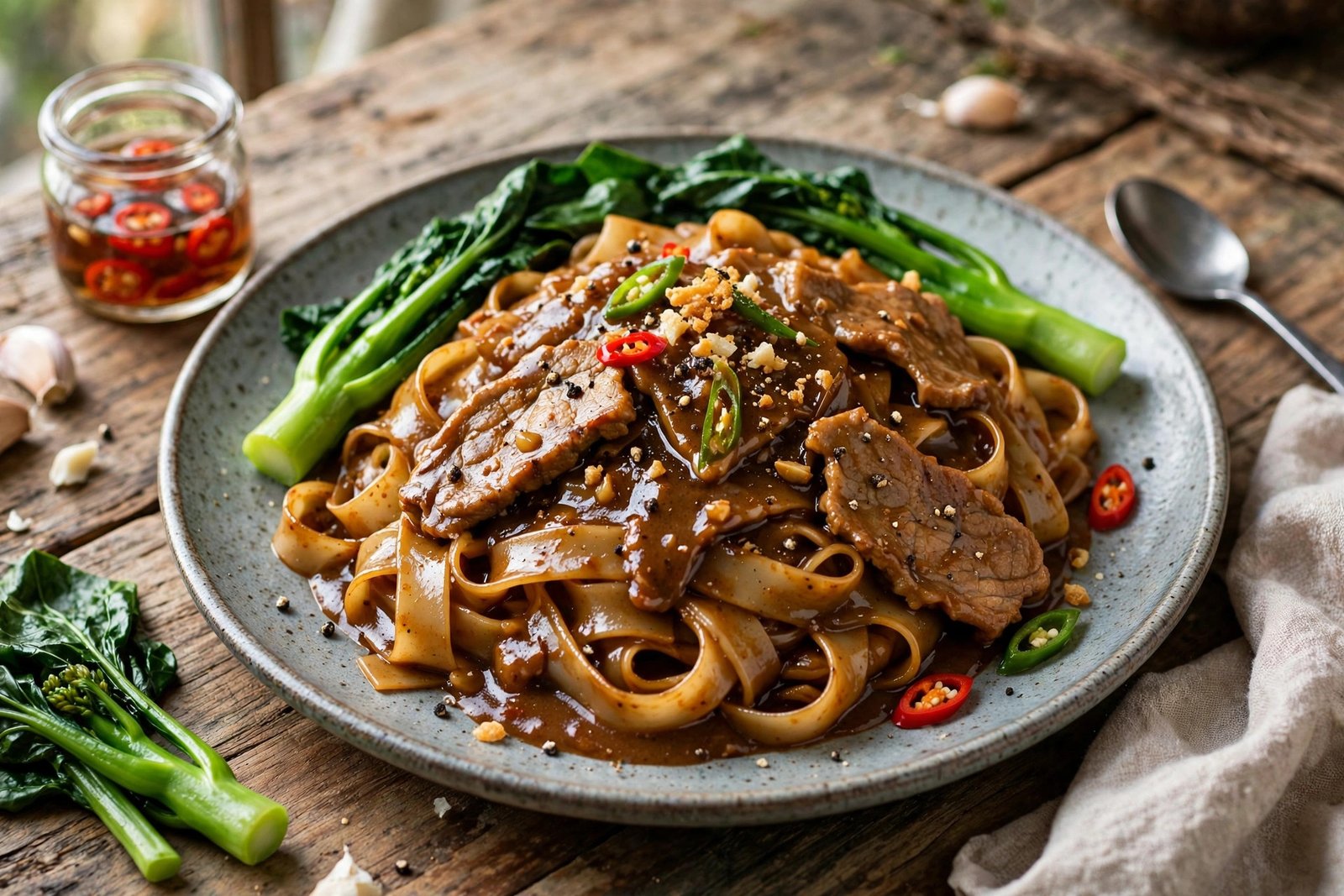
Rad Na is Thai comfort food at its best: wide rice noodles, charred at the edges, drowned in a silky, savoury gravy with tender pork and Chinese broccoli. It is rich, glossy and deeply satisfying — the dish Thai people order when they want something warm and filling.
The story behind Rad Na
Rad na is the Thai dish you order when you want comfort. Wide rice noodles, fried until lightly charred at the edges, then covered in a silky, savoury gravy with tender pork and Chinese broccoli. It is rich, glossy and deeply satisfying, and it is one of the most popular noodle dishes in Thailand.
The noodles are the foundation. Wide, flat rice noodles, fried in hot oil with dark soy sauce until they pick up a little char and a smoky flavour. The charring is important; it gives the noodles a depth that plain boiled noodles never have, and it stops them from turning soggy under the gravy.
The gravy is what makes the dish. Chicken stock, oyster sauce, fish sauce, soy sauce and sugar, thickened with cornflour until it turns silky and glossy. It should coat the back of a spoon and cling to the noodles, not run off them like water. The gravy is savoury, lightly sweet and deeply comforting.
The pork is sliced thin and cooked quickly in the wok, so it stays tender and juicy. The Chinese broccoli, or gai lan, adds a fresh, slightly bitter crunch that cuts through the richness of the gravy. Together they make the bowl complete.
What makes rad na special is the contrast. The noodles are smoky and a little chewy, the gravy is silky and rich, the pork is tender, and the broccoli is crisp. Every spoonful has a little bit of everything, and the flavours are balanced in a way that is unmistakably Thai.
Cook it when you want something warm and filling, or make it for a weeknight dinner when you need comfort food fast. The whole dish takes 25 minutes, and most of that is the gravy simmering while you prepare the noodles.
Serve it with pickled chillies on the side. The sharp, tangy chillies cut through the richness of the gravy and add a brightness that the dish needs. A squeeze of lime works too, though the chillies are the classic accompaniment.
The dish is also a good introduction to Thai gravy dishes. The cornflour thickening technique is used in many Thai recipes, and once you know it, a whole range of stir-fries and noodle dishes opens up.
In Thailand, rad na is street food and restaurant food, served at small shops and night markets across the country. Each cook has their own balance of sauces, and the dish varies from stall to stall.
The dark soy sauce is what gives the noodles their colour and a hint of sweetness. It is thicker and less salty than light soy sauce, and it is used for colour as much as for flavour. A tablespoon is enough to transform the noodles.
Make it once and you will make it again. The gravy is addictive, the noodles are satisfying, and the whole dish is the kind of comfort food that people crave on cold evenings.
- Prep time
- 15 mins
- Cook time
- 25 mins
- Total time
- 40 mins
- Servings
- 4 servings
- Calories
- 520
Ingredients
- 400 g wide flat rice noodles
- 300 g pork loin, thinly sliced
- 2 cups Chinese broccoli (gai lan), cut into pieces
- 3 cloves garlic, minced
- 2 tablespoons vegetable oil
- 1 tablespoon dark soy sauce
- 2 tablespoons light soy sauce
- 1 tablespoon oyster sauce
- 1 tablespoon fish sauce
- 1 tablespoon sugar
- 1 tablespoon cornflour mixed with 2 tablespoons water
- 500 ml chicken stock
- White pepper, to taste
Instructions
- Slice the pork loin as thin as you can, against the grain, and put it in a bowl with 1 tablespoon of light soy sauce. Toss well and leave to marinate for 10 minutes.
- Heat 1 tablespoon of oil in a large wok over high heat until it shimmers. Add the wide rice noodles and the dark soy sauce, and fry for 2 to 3 minutes, tossing often, until the noodles are lightly charred at the edges.
- Tip the noodles out onto a serving plate and set them aside. They will be covered with the gravy later, so do not worry if they cool slightly.
- Add the remaining oil to the wok and stir-fry the minced garlic for 30 seconds, until fragrant. Do not let it brown, or it will taste bitter.
- Add the marinated pork to the wok and stir-fry over high heat for 2 to 3 minutes, until the pork is just cooked through and starting to brown at the edges.
- Pour in the chicken stock, then add the oyster sauce, fish sauce, sugar and the remaining light soy sauce. Stir well and bring to a gentle simmer.
- Stir the cornflour and water together in a small bowl until smooth, then pour the mixture into the simmering stock in a slow stream, stirring constantly.
- Simmer the gravy for 2 to 3 minutes, stirring, until it thickens and turns silky and glossy. It should coat the back of a spoon and cling to the pork.
- Add the Chinese broccoli pieces to the gravy and cook for 2 minutes, until they turn bright green and are tender but still crisp. Do not overcook them.
- Taste the gravy and season with white pepper. It should be savoury, lightly sweet and well balanced, with the oyster sauce coming through.
- Spoon the pork, broccoli and gravy generously over the fried noodles. Serve immediately, with pickled chillies on the side for anyone who wants heat.
Pro tips
- Fry the noodles until lightly charred. The char gives a smoky flavour and stops the noodles from going soggy under the gravy. Pale, uncharred noodles turn mushy quickly.
- Slice the pork as thin as you can. Thin slices cook in minutes and stay tender, while thick slices turn tough. Partly freezing the pork for 20 minutes makes slicing easier.
- Stir the cornflour slurry well before adding it. Cornflour sinks to the bottom of the bowl quickly, and an unstirred slurry gives you lumps instead of a smooth gravy.
- Add the cornflour gradually, stirring constantly. Pouring it in all at once gives lumps, while a slow stream and steady stirring gives a silky, glossy sauce.
- Do not overcook the broccoli. Two minutes is enough for it to turn bright green and tender-crisp. Overcooked gai lan turns dull and limp, and it loses its fresh bite.
Variations & serving ideas
Use chicken, beef or seafood instead of pork. Chicken cooks in the same time, beef should be sliced thin and cooked quickly, and prawns need only 2 minutes in the gravy.
For a vegetarian version, use tofu and mushrooms instead of pork. Fry the tofu until golden first, then add it to the gravy with the broccoli.
Add more vegetables: sliced mushrooms, baby corn, carrots or bok choy. Add firmer vegetables with the pork and quicker ones with the broccoli.
For a spicier version, add a sliced fresh chilli with the garlic, or serve the dish with a spoonful of chilli paste. The heat cuts through the richness of the gravy.
Make a seafood rad na with prawns, squid and fish. The seafood cooks quickly in the gravy, and the dish becomes lighter and more delicate.
Add a fried egg on top for a richer version. The runny yolk mixes into the gravy and adds a luxurious quality that suits the noodles.
For a darker, smokier version, add an extra teaspoon of dark soy sauce to the noodles when frying. The noodles turn a deeper colour and pick up more char.
Use different noodles: egg noodles, udon or even spaghetti all work, though the wide rice noodles are traditional. Cook them according to the packet and fry them the same way.
Add a spoonful of sesame oil to the finished gravy for a nutty aroma. A little goes a long way, and it perfumes the whole dish.
For a lighter version, use less cornflour for a thinner gravy. The sauce will be less glossy but still flavourful, and the dish feels less heavy.
Getting it right
Frying the noodles is the key technique. High heat, a little oil, and dark soy sauce, tossed for 2 to 3 minutes until the edges char. The char gives flavour and texture, and it stops the noodles from turning soggy under the gravy.
The gravy thickening is the second skill. Cornflour mixed with cold water, added in a slow stream to the simmering stock while stirring constantly. The gravy thickens in 2 to 3 minutes and should turn silky and glossy.
The most common mistake is adding the cornflour too fast. A sudden pour gives lumps that are hard to remove, while a slow stream and steady stirring gives a smooth sauce. Patience here pays off.
Heat control matters for the pork. High heat, quick cooking, and thin slices give tender meat. Low heat or thick slices give tough, grey pork that lets the dish down.
The broccoli timing is important too. Two minutes in the hot gravy is enough. Longer and it turns dull and soft; shorter and it is raw and tough. Bright green and tender-crisp is the target.
The marinade is a small step with a big effect. Ten minutes in soy sauce seasons the pork all the way through and helps it brown. Skipping the marinade gives bland pork.
Seasoning the gravy at the end matters. Taste after the cornflour has thickened the sauce, and adjust the soy, fish sauce and sugar. The gravy should be savoury, lightly sweet and well balanced.
Storing & reheating
Rad na is best eaten immediately, while the noodles are still firm and the gravy is hot and glossy. The noodles absorb the gravy as they sit and turn soft within an hour.
Leftovers keep in the fridge for up to 2 days, but the noodles will be softer than when fresh. Reheat gently in a pan, adding a splash of stock to loosen the gravy.
The gravy on its own keeps in the fridge for 3 days and freezes well for a month. Make it ahead and fry fresh noodles when you want to eat.
Cooked noodles keep in the fridge for a day, tossed with a little oil to stop them sticking. Rinse them in hot water before serving to refresh them.
Do not freeze the finished dish. The noodles turn mushy on thawing and the broccoli loses its crunch. Freeze the gravy only, and cook fresh noodles when you want to eat.
If the gravy has thickened too much in the fridge, add stock or water when reheating and stir well. The cornflour thickens as it cools, but it loosens again with heat and liquid.
Frequently asked questions
What is gai lan?
Gai lan, or Chinese broccoli, is a leafy green vegetable with thick stems and a slightly bitter flavour. It is sold at Asian grocery stores. Regular broccoli or broccolini are good substitutes.
What are wide rice noodles?
Wide flat rice noodles are sold dried or fresh at Asian grocery stores, usually labelled as rice sticks or sen yai. They are about 2 cm wide and turn silky when cooked. Fresh noodles cook faster than dried.
Can I use chicken instead of pork?
Yes, sliced chicken breast or thigh works well. Cook it the same way, for 2 to 3 minutes, until just cooked through. The gravy and noodles stay the same.
Why is my gravy lumpy?
The cornflour slurry was not stirred well, or it was added too quickly. Mix the cornflour and water until smooth, stir again just before pouring, and add it in a slow stream while stirring constantly.
What is dark soy sauce?
Dark soy sauce is thicker, darker and slightly sweeter than light soy sauce, and it is used mainly for colour. A tablespoon gives the noodles a rich brown colour. It is sold at Asian grocery stores.
Can I make it vegetarian?
Yes. Use tofu and mushrooms instead of pork, vegetable stock instead of chicken stock, and replace the fish sauce with extra soy sauce. The gravy and noodles work just as well.