Sai Oua Recipe

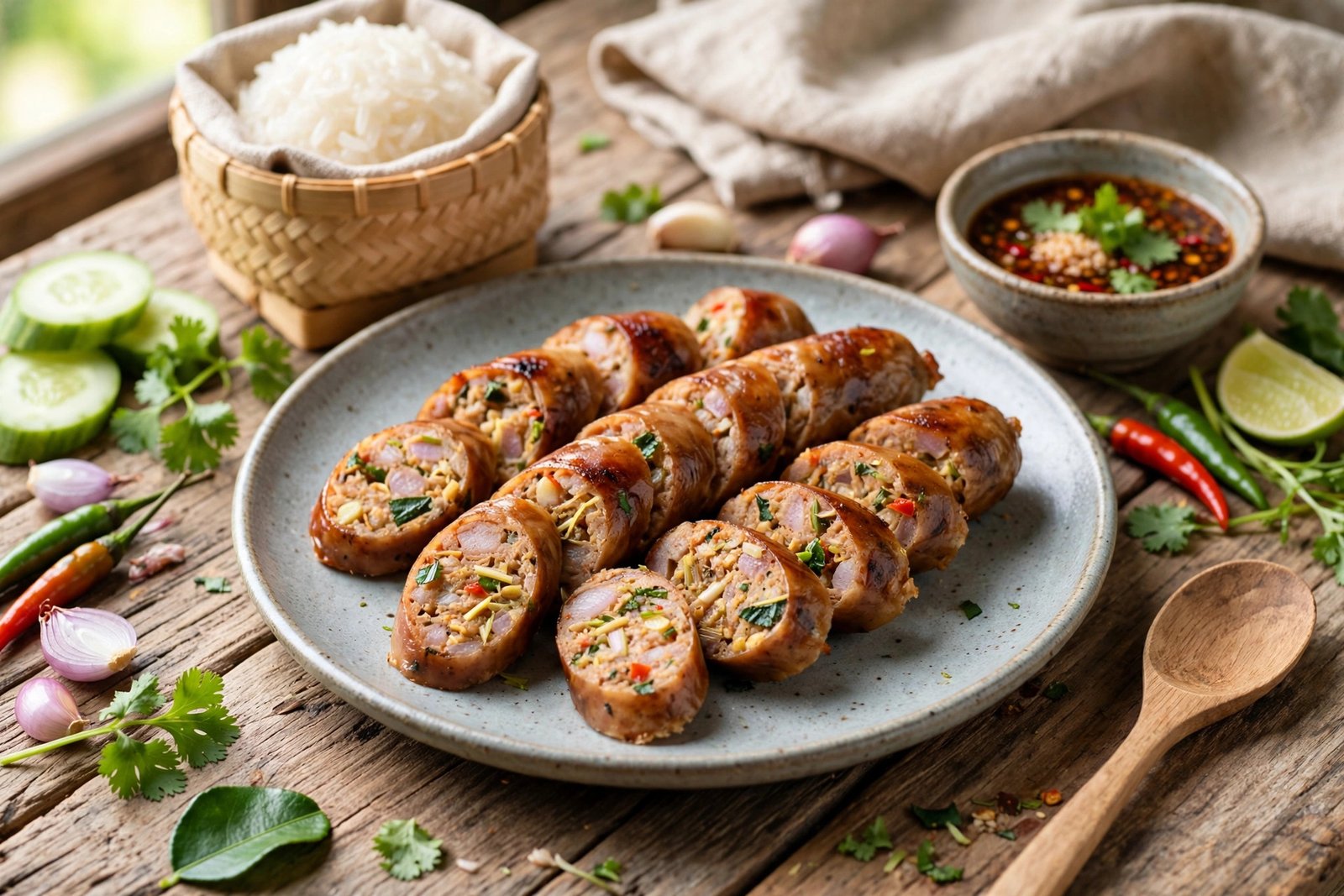
Sai oua is Northern Thailand's famous herb sausage: juicy minced pork packed with lemongrass, galangal, kaffir lime, and dried chillies. Grilled until crisp outside and fragrant inside, it is sliced and eaten with sticky rice and fresh vegetables — the sausage that smells like a Thai herb garden.
The story behind Sai Oua
Sai oua comes from the north of Thailand, from Chiang Mai and the old Lanna kingdom, and its name tells you what it is: sai means intestine, oua means stuffed. It is the north's most famous sausage, sold at markets and street stalls across the region, grilled over charcoal until the outside is crisp and golden and the inside smells of lemongrass and lime leaf. Visitors to Chiang Mai seek it out at the night markets, and locals buy it by the coil for family meals.
What makes it special is the herb paste. Unlike a Western sausage, which leans on salt, pepper and fat, sai oua is packed with aromatics: lemongrass, galangal, kaffir lime leaves, garlic, shallots and dried chillies, all pounded together and kneaded into the pork with fish sauce and turmeric. The turmeric gives it a golden colour, the lemongrass gives it a citrusy fragrance, and the kaffir lime leaves give it a sharp, floral note that no other sausage has.
In Northern Thailand, sai oua is market food and celebration food at once. It is grilled at street stalls and sliced to order, eaten with sticky rice and fresh vegetables, or bought whole to take home for a family dinner. It appears at festivals and temple fairs, and it is one of the dishes northern Thais miss most when they move away — the smell of it grilling over charcoal is the smell of home. The sausage is also a point of regional pride: southern Thai sausages are different, Chinese sausages are different again, and northern Thais will tell you that sai oua is the best of them all — fragrant, herby, and unlike any sausage you have had before.
This recipe serves four and takes about forty-five minutes, most of it pounding the paste and shaping the sausages. Casings are optional: patties made from the same mixture are just as tasty and far easier, and they grill in the same time. Make it for a barbecue, a weekend project, or any evening when you want something that tastes like Chiang Mai.
- Prep time
- 25 mins
- Cook time
- 20 mins
- Total time
- 45 mins
- Servings
- 4 servings
- Calories
- 420
Ingredients
- 600 g minced pork (not too lean)
- 3 stalks lemongrass, finely chopped
- 2 tablespoons galangal, grated
- 4 kaffir lime leaves, finely sliced
- 4 dried red chillies, soaked and chopped
- 3 garlic cloves
- 2 shallots
- 1 tablespoon fish sauce
- 1 teaspoon turmeric
- 1 teaspoon salt
- 1/2 teaspoon black pepper
- Sausage casings, soaked (optional)
- Sticky rice and fresh vegetables, to serve
Instructions
- Soak the dried red chillies in a bowl of hot water for 15 minutes, until soft and pliable. Drain them, pull off the stems, and chop them roughly. For a milder sausage, shake out most of the seeds; for a hotter one, leave them in.
- Pound the lemongrass, galangal, soaked chillies, garlic and shallots into a paste in a mortar and pestle, or blitz them in a food processor. The lemongrass is fibrous, so chop it finely first and pound it well — the paste should be fairly smooth, with no long, woody strands left. Pounding by hand gives the best fragrance, but a food processor works well too.
- Put the minced pork in a large bowl and add the paste, the finely sliced kaffir lime leaves, fish sauce, turmeric, salt and black pepper. Knead the mixture well with your hands for 3 to 4 minutes, until it feels sticky and holds together — the kneading develops the texture and distributes the paste evenly. The mixture should smell intensely fragrant.
- Cover the bowl and let the mixture rest in the fridge for 30 minutes, or overnight if you have time. The rest lets the flavours meld into the pork and firms the mixture up, which makes stuffing or shaping much easier. Fry a small piece in a pan and taste it now — this is your chance to adjust the salt or heat before the sausages are made. The mixture should smell even more fragrant after its rest, as the paste works its way through the pork.
- If using casings, rinse the soaked casings well and stuff the mixture in using a sausage stuffer or a piping bag with a wide nozzle, taking care not to overfill. Twist into links about 15 cm long. If you are skipping casings, shape the mixture into thick patties, about 2 cm thick — wet your hands so the mixture does not stick.
- Grill the sausages or patties over a medium heat for 8 to 10 minutes per side, turning once, until cooked through and the outside is crisp and golden. Medium heat is important — too hot and the outside burns before the inside is cooked; too cool and the sausages dry out. The juices should run clear when you cut into the thickest part.
- Rest the sausages for 5 minutes before slicing. The juices need time to settle back into the meat, and cutting straight off the grill lets them run out onto the board. Five minutes is enough for the sausages to stay hot and juicy.
- Slice the sausages diagonally into thick pieces and serve with sticky rice, cucumber and fresh herbs. A small bowl of nam prik noom — roasted green chilli dip — alongside is the traditional partner, though the sausage is flavourful enough to stand on its own.
Pro tips
- Pounding the paste by hand gives the best fragrance, but a food processor works well too. The mortar crushes the lemongrass and galangal more thoroughly, releasing their oils, while a processor chops them. Either way, chop the lemongrass finely first — long, woody strands are unpleasant to bite into.
- Do not use very lean pork; some fat keeps the sausage juicy on the grill. Minced pork with about 20 percent fat is ideal. Very lean pork dries out over the grill and turns tough, no matter how carefully you cook it.
- If you skip the casings, patties are an easy and equally tasty option. Shape them thick, about 2 cm, so they stay juicy inside, and grill them the same way. A meatloaf made from the same mixture, baked at 180°C for 35 minutes, is another good option.
- Let the sausage rest before slicing so the juices stay inside. Five minutes is enough. Cutting straight off the grill lets the juices run out, and the sausage dries out on the plate.
- Fry a small test piece before stuffing or shaping. A teaspoon of the mixture, fried in a pan and tasted, tells you whether the salt and heat are right — and it is the only chance you get to adjust them before the sausages are made.
Variations & serving ideas
Minced chicken makes a lighter version, though it needs a little extra fat to stay juicy — add a tablespoon of oil to the mixture, or use thigh meat rather than breast. Minced turkey works the same way. The herb paste suits poultry just as well as pork, and the turmeric gives the chicken a beautiful golden colour.
For a spicier sausage, double the dried chillies and add a teaspoon of chilli flakes to the mixture. For a milder one, use two chillies and shake out all the seeds — the lemongrass and lime leaf still carry the flavour, and children can eat it happily. A pinch of sugar in the mixture, about a teaspoon, rounds off the heat and suits the northern Thai taste. A little grated coconut in the mixture, about two tablespoons, is an occasional variation that adds richness and a faint sweetness — it is not traditional everywhere, but it works well with the lemongrass.
The shape is yours to choose. Patties are the easiest, and they grill in the same time as sausages. A meatloaf, baked in a loaf tin at 180°C for 35 minutes, slices neatly for sandwiches the next day. Or roll the mixture into small meatballs and grill them on skewers for a party — they cook in about 8 minutes, turning often.
What you serve it with matters. Sticky rice is the traditional partner, and it soaks up the juices from the sausage. Fresh vegetables — cucumber, lettuce, Thai basil, mint — provide the cool crunch that balances the rich, spicy meat. Nam prik noom, the roasted green chilli dip of the north, is the classic accompaniment, and a cold beer alongside is the traditional drink.
Getting it right
Pounding the paste is the first technique, and it decides the texture of the sausage. Lemongrass is fibrous and woody, and it must be chopped finely and pounded thoroughly, or the finished sausage will have tough strands running through it. A mortar and pestle crushes the fibres better than a food processor, but either tool works if you take the time. The paste should be smooth enough that you cannot pick out individual pieces of lemongrass. If you are using a food processor, add a tablespoon of water or oil to help the blades catch the fibrous lemongrass, and run it in short bursts, scraping down the sides between each.
Kneading the mixture is the second skill. Three to four minutes of firm kneading develops the proteins in the pork, which is what makes the sausage hold together and gives it a firm, springy bite rather than a crumbly one. Under-kneaded sausage falls apart on the grill; well-kneaded sausage slices cleanly. The mixture should feel sticky and tacky when it is ready — if it still feels loose, knead for another minute.
Grilling is the final control. Medium heat, 8 to 10 minutes per side, turning once, gives a sausage that is crisp outside and cooked through inside. Too hot and the outside burns while the middle stays pink; too cool and the sausage dries out before it browns. If you are using casings, do not overfill them — a tightly stuffed sausage bursts on the grill. Leave a little slack, and prick any air bubbles with a pin before grilling.
Storing & reheating
Cooked sai oua keeps for 3 days in the fridge in a sealed container. Reheat it gently in a frying pan over a medium heat, or in a 180°C oven for 8 to 10 minutes, until hot through. Sliced sausage reheats faster and more evenly than whole links.
It freezes well for up to 2 months, cooked or raw. Freeze raw sausages or patties in a single layer on a tray, then transfer to a bag; thaw overnight in the fridge before grilling. Cooked sausages freeze well too — thaw and reheat in a pan until crisp again. The herb flavour holds up well to freezing, which makes a double batch worth the effort.
Frequently asked questions
What is sai oua?
A Northern Thai sausage of minced pork mixed with lemongrass, galangal, kaffir lime, and chillies, then grilled. It is one of the most famous dishes of Chiang Mai, sold at markets and street stalls across the north, and eaten with sticky rice and fresh vegetables.
Can I make sai oua without casings?
Yes, shape the mixture into patties or a meatloaf and grill or pan-fry it. Patties are the easiest option and they taste just as good as sausages — the flavour is in the herb paste, not the casing.
Where do I find galangal and kaffir lime leaves?
Asian grocery stores stock them fresh or frozen; in a pinch, use ginger and lime zest. Fresh galangal and lime leaves give the best flavour, but frozen ones are a close second and keep for months in the freezer.
How long does sai oua keep?
It keeps for 3 days in the fridge and freezes well for up to 2 months, cooked or raw. Thaw frozen sausages overnight in the fridge before grilling, and reheat cooked ones in a pan until crisp again.
Can I use ginger instead of galangal?
You can, though the flavour will be different — galangal is more citrusy and piney than ginger, and it is one of the defining flavours of the dish. In a pinch, use ginger with a little lime zest to approximate it, but seek out galangal if you can.
How do I know the sausage is cooked?
Cut into the thickest part — the meat should be cooked through with no pink left, and the juices should run clear. A meat thermometer should read 71°C in the centre. If you are unsure, give it 2 more minutes; sausage forgives a little extra time. If you are unsure, give it 2 more minutes; sausage forgives a little extra time, and undercooked pork is the one mistake you cannot fix after serving.