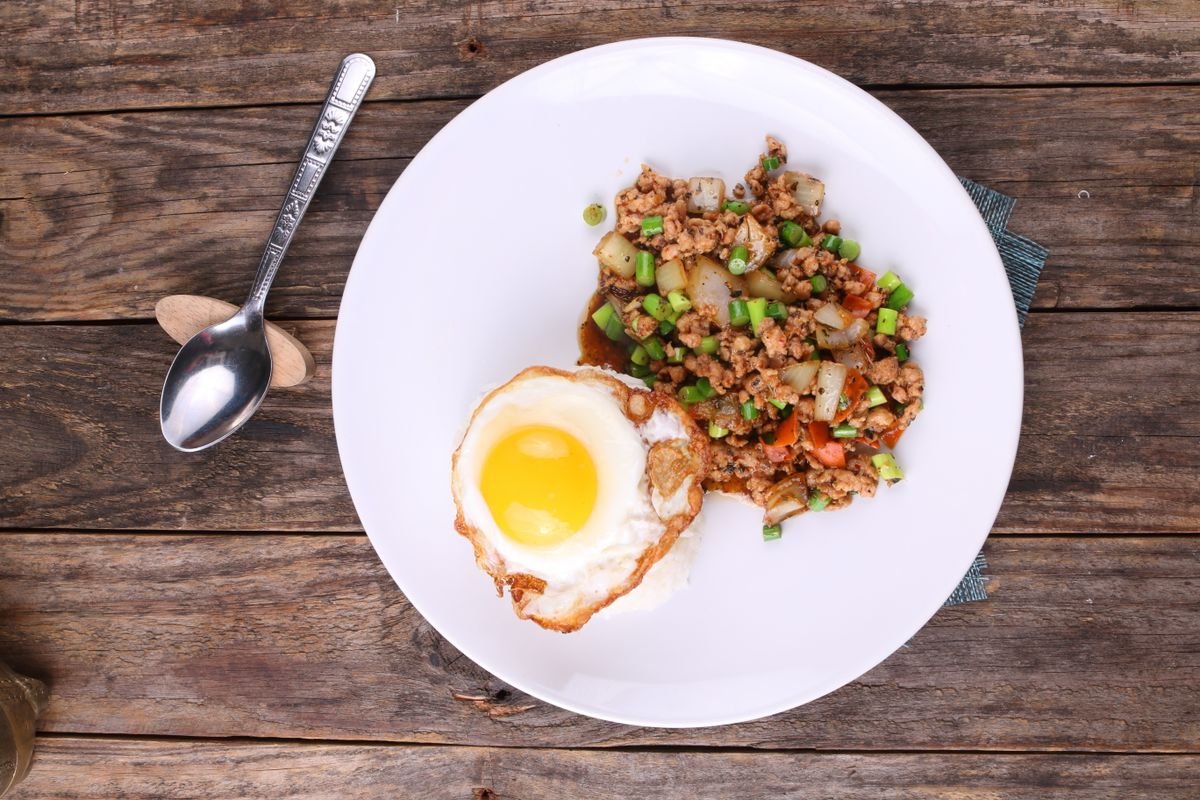
Nam Prik Ong Recipe

Nam prik ong is Northern Thailand's beloved tomato and pork dip: minced pork simmered with sweet tomatoes, garlic, and dried chillies into a rich, spoonable relish. Scooped up with sticky rice, cucumber, and cabbage, it is comfort food with a gentle, smoky heat — the dip that turns a plate of raw vegetables into dinner.
The story behind Nam Prik Ong
Nam prik — chilli dips — are at the heart of Thai eating. Almost every Thai meal includes a small bowl of nam prik on the table, something salty, spicy and sour to dip vegetables and rice into, and every region has its own. Nam prik ong comes from the north, from Chiang Mai and the old Lanna kingdom, and it is one of the most loved: minced pork and tomatoes simmered with a pounded paste of chillies, garlic, shallots and shrimp paste, until the whole thing turns thick, jammy and deeply savoury. The word nam prik means chilli water, and ong refers to the pork and tomato mixture — the name tells you exactly what is in the bowl.
What makes it special is the balance of sweet and heat. Very ripe tomatoes bring sweetness and body, the dried chillies bring a gentle, smoky warmth, and the shrimp paste brings the deep umami that makes you keep dipping. The pork gives it substance — this is a dip you can eat as a meal, not just a condiment. Simmered for twenty minutes, it turns into something between a relish and a ragu, thick enough to scoop onto sticky rice and cling to a piece of cucumber.
In Northern Thailand, nam prik ong is family food, served in a shared bowl in the middle of the table with a basket of sticky rice and a plate of raw vegetables: cucumber, cabbage, long beans, Thai eggplant. Everyone dips from the same bowl, tearing off a ball of sticky rice and scooping up the dip with their fingers. It is communal eating at its most relaxed — no plates, no fuss, just a bowl of something good and good company.
This recipe serves four and takes about forty minutes, most of it hands-off simmering. It is a good introduction to Thai cooking if you have never pounded a chilli paste before — the paste is simple, the simmering is forgiving, and the result is a dip that will change how you think about tomatoes. Make it for a light lunch, a snack with friends, or as part of a Thai spread with grilled chicken and sticky rice.
- Prep time
- 15 mins
- Cook time
- 25 mins
- Total time
- 40 mins
- Servings
- 4 servings
- Calories
- 240
Ingredients
- 300 g minced pork
- 4 large ripe tomatoes, chopped
- 4 dried red chillies, soaked
- 4 garlic cloves
- 2 shallots
- 1 tablespoon shrimp paste
- 1 tablespoon fish sauce
- 1 teaspoon sugar
- 1 tablespoon vegetable oil
- Sticky rice, cucumber, and cabbage, to serve
Instructions
- Soak the dried red chillies in a bowl of hot water for 15 minutes, until soft and pliable. Drain them and pull off the stems. For a milder dip, shake out most of the seeds; for a hotter one, leave them in. The soaking softens the chillies so they pound into a smooth paste.
- Pound the soaked chillies, garlic cloves, shallots and shrimp paste together in a mortar and pestle until you have a smooth, fragrant paste. It takes a few minutes of steady pounding — start with the chillies, then add the garlic and shallots, then the shrimp paste. A food processor works too, though the texture will be slightly less fine. The paste should smell rich and garlicky, with the shrimp paste in the background.
- Heat the vegetable oil in a wok or frying pan over a medium heat. Add the paste and fry for 2 minutes, stirring constantly, until it smells deeply fragrant and the oil turns red from the chillies. This frying step is essential — raw chilli paste tastes harsh, fried paste tastes like the dish is meant to.
- Add the minced pork and cook, breaking it up with a spoon, for 4 to 5 minutes, until it loses its pink colour and starts to brown at the edges. Break it into small pieces as it cooks so the finished dip is spoonable rather than chunky.
- Add the chopped tomatoes, fish sauce and sugar, and stir well. The tomatoes should be very ripe — soft, fragrant, and sweet. Bring the pan to a gentle simmer, then turn the heat down to low. The tomatoes should be soft enough to break apart with a spoon by the end of the simmer.
- Simmer for 20 minutes, stirring now and then, until the tomatoes have broken down completely and the dip has thickened into a jammy, spoonable relish. It should hold its shape on a spoon rather than running off. If it looks watery, turn the heat up a little and cook for 5 minutes more.
- Taste and adjust the balance. It should be savoury first, with sweetness from the tomatoes and sugar, salt from the fish sauce, and a gentle, warming heat from the chillies. Add a little more sugar if the chillies are very hot, or a splash more fish sauce if it tastes flat.
- Let the dip rest for 5 minutes off the heat, then serve warm in a bowl, with sticky rice and a plate of fresh vegetables — cucumber, cabbage, long beans, carrots — for dipping. Put it in the middle of the table and let everyone help themselves.
Pro tips
- Soak the dried chillies in hot water first so they pound into a smooth paste. Dry chillies shatter into flakes instead of blending, and the paste will be gritty. Fifteen minutes in hot water is enough to soften them properly.
- Use very ripe tomatoes; their sweetness balances the chilli and shrimp paste. Under-ripe tomatoes are sharp and watery, and they make a thin, sour dip. The tomatoes should be soft, fragrant and deeply red — the kind that smell like tomatoes before you cut them.
- Let the dip simmer until thick enough to scoop; it should not be watery. Twenty minutes is the minimum, and a few more will not hurt. The dip should hold its shape on a spoon and cling to a piece of cucumber, not run off it.
- A little extra sugar tames the heat if your chillies are very hot. Sugar does not just sweeten the dip — it rounds off the sharp edges of the chilli and the saltiness of the shrimp paste. Add it a teaspoon at a time and taste as you go.
- Pound the paste until it is genuinely smooth. A coarse paste gives a coarse dip, with bits of chilli skin and garlic that never quite blend in. Take the time with the mortar, or give the food processor an extra minute — the smoothness is worth it.
Variations & serving ideas
Minced chicken or turkey works in place of pork, though the dip will be a little leaner — add an extra tablespoon of oil when frying the paste to make up for the missing fat. Minced beef gives a richer, deeper version that suits a cold evening. Whatever meat you use, break it up small as it cooks so the finished dip is spoonable.
For a vegetarian version, use finely chopped mushrooms and crumbled firm tofu in place of the pork, and swap the shrimp paste for a tablespoon of white miso. The mushrooms bring the savoury depth, the tofu brings the substance, and the miso replaces the fermented tang of the shrimp paste. Simmer for the same 20 minutes and the result is very close to the original.
For a smokier version, char the tomatoes first: halve them and grill them cut side down until blackened at the edges, then chop and add them as usual. The char adds a deep, smoky note that suits the chillies. A pinch of smoked paprika in the paste gives a similar effect with less effort.
The serving vegetables are yours to choose. Cucumber and cabbage are traditional, but long beans, carrots, Thai eggplant, and blanched morning glory all work. The dip is also good spooned over rice noodles, or as a sauce for grilled chicken. And any leftover dip, thinned with a little stock, makes a fine base for a tomato soup. A cold beer alongside is the traditional drink, and it suits the gentle heat of the dip. For a lighter meal, serve the dip with a big plate of raw vegetables and skip the sticky rice — the dip is substantial enough on its own.
Getting it right
Pounding the paste is the first technique, and it is the foundation of the dish. A mortar and pestle gives the smoothest result, because the pounding action crushes the ingredients into each other rather than just chopping them. Start with the chillies, which are the toughest, then add the garlic and shallots, then the shrimp paste last. If you use a food processor, add a tablespoon of oil to help it blend, and run it longer than you think — a smooth paste makes a smooth dip.
Frying the paste is the second technique. Two minutes in hot oil transforms it from raw and harsh to deep and fragrant, and the oil turning red is the sign it is ready. The oil carries the flavour of the chillies into everything that follows, so do not skimp on it and do not rush this step. If the paste starts to stick, add a splash of water — it should sizzle, not scorch.
The simmer is the final skill. Twenty minutes on a low heat lets the tomatoes break down completely and the dip thicken into a jammy relish. The most common mistakes are a watery dip from too short a simmer, a bitter dip from a burnt paste, and a flat dip from under-seasoning. Taste at the end, when the dip has reduced and the flavours have concentrated, and adjust the sugar, fish sauce and heat until it tastes balanced — savoury first, sweet underneath, heat warming rather than burning. If the dip tastes too sharp from the tomatoes, a little more sugar will round it out; if it tastes too sweet, a squeeze of lime will sharpen it back up.
Storing & reheating
Nam prik ong keeps for 3 days in the fridge in a sealed container, and the flavour deepens overnight — the chillies and shrimp paste settle into the tomatoes and the dip tastes more complete the next day. It is one of those dishes that is genuinely better on day two.
It freezes well for up to 2 months in portions. Thaw overnight in the fridge and reheat gently in a pan, adding a splash of water if it has thickened too much. Serve it warm, as usual, with fresh vegetables for dipping. Do not freeze the sticky rice or the vegetables — make those fresh each time.
Frequently asked questions
What is nam prik ong?
A Northern Thai chilli dip of minced pork and tomatoes, eaten with sticky rice and raw vegetables. The pork and tomatoes are simmered with a pounded paste of chillies, garlic, shallots and shrimp paste until thick and jammy, and the dip is served warm in a shared bowl.
Is nam prik ong very spicy?
It has a gentle, warming heat. Use fewer chillies or remove the seeds for a milder version. The sweetness of the ripe tomatoes and the sugar in the recipe balance the heat, so it should warm rather than burn. The heat should build gently as you eat, not hit you all at once — if it does, your chillies were hotter than expected, and a little extra sugar will help.
What is shrimp paste?
A pungent fermented paste that adds deep umami; it is sold in Asian grocery stores. It smells strong in the jar, but once cooked into the dish it gives a rich, savoury depth that nothing else quite replaces. A little goes a long way.
Can I make it ahead?
Yes, it keeps for 3 days in the fridge and the flavour deepens overnight. It also freezes well for up to 2 months. Reheat it gently and serve warm with fresh vegetables and sticky rice.
Can I skip the shrimp paste?
You can, though the dip will lose some depth. A tablespoon of white miso is the closest substitute, or an extra splash of fish sauce. The dip will still be good — the tomatoes, chillies and pork carry most of the flavour — but it will taste a little less complex.
What vegetables do I serve for dipping?
Cucumber and cabbage are the traditional choices, cut into chunks and wedges. Long beans, carrots, Thai eggplant, and blanched morning glory all work too. The vegetables should be crisp and cool, to contrast with the warm, rich dip.