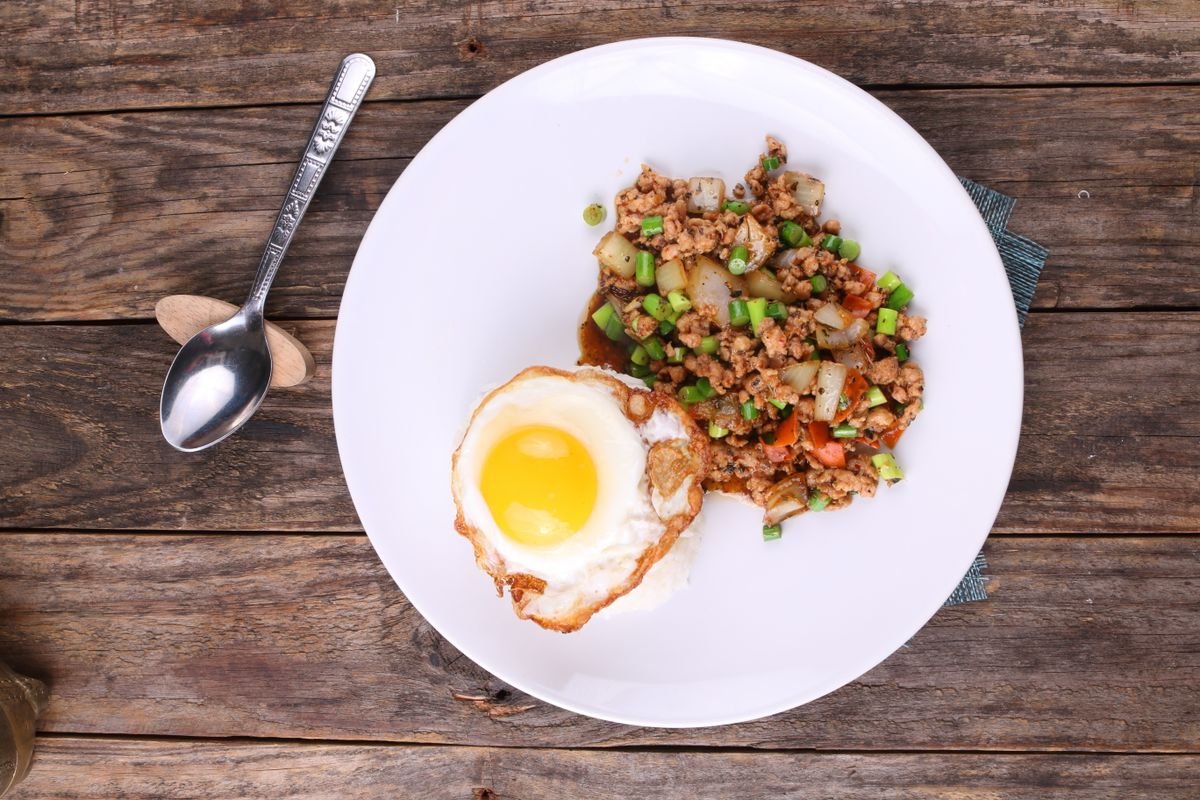
Nam Tok Moo Recipe

Nam tok moo is Isan cooking at its boldest: smoky grilled pork, sliced thin and tossed while still warm with lime juice, fish sauce, chilli and toasted rice powder. It is sour, spicy, salty and smoky all at once — and utterly addictive with sticky rice. One bite and you will understand why this dish has a cult following.
The story behind Nam Tok Moo
Nam tok means waterfall in Thai, and the name is said to describe the juices dripping from the grilled meat as it cooks. It comes from Isan, the north-eastern region of Thailand, where the food is famously bold: sour from lime, hot from chilli, salty from fish sauce, and always eaten with sticky rice. Isan cooking is the food of farmers and market stalls, built on grilling and pounding rather than long simmers, and nam tok is one of its purest expressions — meat, fire, lime, herbs.
In Isan, nam tok is everyday food and celebration food at the same time. It shows up at roadside grills where pork neck sizzles over charcoal, at family gatherings where a whole grilled neck is sliced at the table, and in Bangkok's Isan restaurants, where homesick north-easterners go for a taste of home. It is always eaten with sticky rice, rolled into a small ball and used to scoop up the meat, and almost always alongside som tam (green papaya salad) and grilled chicken. The combination is one of Thailand's great meals.
What makes nam tok special is the balance — and the toasted rice powder. The pork brings smoke and fat; the lime and fish sauce bring sour and salty; the chilli brings heat; and the khao khua, toasted sticky rice ground to a coarse powder, brings a nutty crunch and thickens the dressing so it clings to every slice. The shallots, mint and coriander go in last, so they stay bright and fresh against the warm meat. It is a salad, but a warm, meaty one, and every flavour is turned up.
Cook it when you want something fast and full of flavour — a summer evening with the grill going, or a weeknight when a plain piece of pork needs waking up. It takes about half an hour, most of it hands-off, and it eats like a feast. The only thing it really needs is sticky rice and a cold drink. Once you have made the toasted rice powder once, you will keep a jar of it in the cupboard, and nam tok becomes a fifteen-minute job.
- Prep time
- 15 mins
- Cook time
- 20 mins
- Total time
- 35 mins
- Servings
- 4 servings
- Calories
- 460
Ingredients
- 500g pork neck or shoulder, in one piece
- 1 tablespoon fish sauce
- 1 tablespoon lime juice
- 1 teaspoon sugar
- 1 teaspoon chilli flakes
- 2 tablespoons toasted rice powder (khao khua)
- 3 shallots, thinly sliced
- 2 spring onions, chopped
- 1/4 cup mint leaves
- 1/4 cup coriander leaves
- Sticky rice, to serve
Instructions
- Take the pork neck out of the fridge 20 minutes before cooking and pat it dry. Pork neck is ideal for this dish — its marbling stays juicy on the grill and the fat renders into the meat as it cooks. If you are using shoulder, choose a piece with good marbling and keep it in one piece.
- Heat your grill or griddle pan to high. You want it properly hot — the pork should sizzle hard the moment it touches the surface. If you are using a charcoal grill, wait until the coals are white-hot with a light coating of ash. Lightly oil the bars or the pan.
- Grill the pork for 8-10 minutes per side until charred at the edges and cooked through. Turn it once or twice so it colours evenly, and move it to a cooler spot if the outside is darkening too fast. The pork is done when the juices run clear and the centre reaches 63°C — or, if you are working by feel, when it feels firm but still has a little give.
- Rest the pork for 5 minutes on a warm plate. Resting lets the juices settle back into the meat instead of running out onto the board. While it rests, mix the dressing: fish sauce, lime juice, sugar and chilli flakes in a large bowl. Stir until the sugar dissolves.
- Slice the pork thinly against the grain. Thin slices are important — thick slices are chewy and do not pick up the dressing properly. Cutting against the grain shortens the muscle fibres and makes every bite tender. Keep the slices warm; the dressing goes on while the meat is still warm so it absorbs the flavours.
- Toss the warm pork slices in the dressing, turning them well so every piece is coated. Taste a slice now — it should be sour, salty and spicy in roughly equal measure. Adjust with more lime juice if it needs brightness, more fish sauce if it needs salt, or more sugar if the lime is too sharp.
- Add the toasted rice powder, thinly sliced shallots, chopped spring onions, mint leaves and coriander leaves. Toss again, gently this time, so the herbs stay whole and bright. The rice powder will thicken the dressing slightly and give the whole dish its signature nutty crunch.
- Serve immediately, while the pork is still warm, with sticky rice and fresh vegetables — cucumber, long beans or lettuce leaves for scooping. Put extra chilli flakes and lime wedges on the table so everyone can adjust their own plate.
Pro tips
- Pork neck is ideal — its marbling stays juicy on the grill. Shoulder works too, but avoid lean cuts like loin, which dry out fast over high heat. A little fat is what makes nam tok taste like nam tok.
- Slice the pork thinly and against the grain for the most tender bite. Thick slices are chewy and do not absorb the dressing. Let the meat rest first, then use a sharp knife and take your time.
- Add the herbs last so they stay bright and fresh. Hot pork wilts mint and coriander quickly, so toss them in at the very end and serve straight away. Torn mint is better than chopped — it bruises less.
- Toasted rice powder is essential — it adds a nutty crunch and thickens the dressing slightly. Make a batch and keep it in a jar; it keeps for weeks and you will use it for laab and other Isan salads too.
- Taste before you serve and adjust boldly. Nam tok should hit sour, salty and spicy all at once. If one note is missing, the dish tastes flat — a squeeze more lime or a splash more fish sauce usually fixes it.
Variations & serving ideas
The most classic variation is nam tok neua, made with beef instead of pork. Use a well-marbled cut like ribeye or flank, grill it to medium-rare, and slice it thin. The beef version is richer and a little deeper in flavour. Chicken works too — use bone-in thighs, grill until the skin is crisp, then slice. The dressing stays the same for all three.
The heat level is entirely yours to control. The recipe as written is properly fiery, the way Isan cooks like it. Start with half the chilli flakes if you are unsure, and add more at the table. Dried chilli flakes give a slow, warm heat; fresh chopped chillies give a sharper, brighter bite. Both work — use whichever you have.
For a lighter version, grill the pork, slice it, and serve the dressing on the side as a dipping sauce instead of tossing everything together. The meat stays crisp at the edges and people can dip as much or as little as they like. This also works well for a barbecue, where the sliced pork can sit on a platter and guests help themselves.
Serve nam tok the Isan way: with sticky rice, som tam, and a plate of raw vegetables — cucumber, long beans, cabbage wedges — for scooping and crunch. A cold beer is the classic drink, and a bowl of clear soup on the side makes it a full meal. It is also excellent tucked into lettuce leaves as a wrap, with a spoonful of sticky rice inside.
Getting it right
The key technique is the grill. Nam tok needs real char — the smoky, slightly bitter edges of the pork are half the flavour. That means high heat, a dry surface on the meat, and patience. Do not keep turning the pork; let each side sit long enough to develop colour before you move it. If you are cooking indoors, a ripping-hot griddle pan or a cast-iron skillet is the closest you will get to charcoal, and it works well.
The dressing is about balance, and it is worth tasting as you go. Fish sauce brings salt and depth, lime brings sour brightness, sugar rounds the edges, and chilli brings heat. The classic Isan balance is sour first, then salty, then spicy, with sweetness only in the background. Mix the dressing before the pork comes off the grill so you can toss the meat while it is still warm — warm meat drinks up the dressing in a way cold meat never does.
The toasted rice powder deserves attention of its own. Toast uncooked sticky rice in a dry pan over medium heat, stirring constantly, until golden and fragrant — about 5 minutes. Cool it completely, then grind to a coarse powder in a spice grinder or mortar. It should be gritty, not fine flour: the crunch is the point. Make more than you need; it keeps for weeks in a jar and you will reach for it again.
Storing & reheating
Nam tok is best eaten the moment it is made, while the pork is warm and the herbs are fresh. Leftovers keep in the fridge for 2 days, but the herbs will wilt and the rice powder will soften — the flavour stays good, but the texture changes. To revive leftovers, warm the pork gently in a pan and add a fresh handful of herbs and a squeeze of lime.
The components store better than the finished dish. Grilled pork keeps for 3 days in the fridge and reheats well. The dressing keeps for a week in a sealed jar. Toasted rice powder keeps for weeks in a dry jar. If you are cooking ahead, grill the pork and make the dressing, then slice, toss and add herbs just before serving. Do not freeze the finished salad — the herbs and dressing do not survive it.
Frequently asked questions
What does nam tok mean?
Nam tok means 'waterfall' in Thai, said to describe the juices dripping from the grilled meat. It is a style of Isan salad made with grilled meat, lime, chilli and toasted rice powder. The waterfall name is also a nod to the sound of the meat sizzling on the grill.
Can I make nam tok with beef or chicken?
Yes — nam tok neua (beef) is just as classic, and chicken works well too. Adjust the grilling time to the meat you use. Beef is best grilled to medium-rare and sliced thin; chicken thighs need longer and should be cooked right through.
How do I make toasted rice powder?
Dry-toast uncooked sticky rice in a pan over medium heat, stirring constantly, until golden and fragrant — about 5 minutes. Cool, then grind to a coarse powder in a spice grinder or mortar. It should be gritty, not fine. Store in a dry jar for weeks.
Is nam tok moo very spicy?
It is meant to be fiery, but you control the heat. Start with half the chilli flakes and add more to taste. Dried chilli flakes give a slow, warm heat; fresh chillies give a sharper bite. Either way, sticky rice helps tame the fire.
What is the best cut of pork for nam tok?
Pork neck (also called collar) is the best choice — it is well marbled, stays juicy on the grill, and slices beautifully. Shoulder is a good second choice. Avoid lean loin, which dries out over high heat.
Can I cook nam tok moo indoors?
Yes — a ripping-hot griddle pan or cast-iron skillet gives good char. Open a window and turn the extractor on, as there will be smoke. The pork needs 8-10 minutes per side over high heat, just as on an outdoor grill.