Khao Lam Recipe
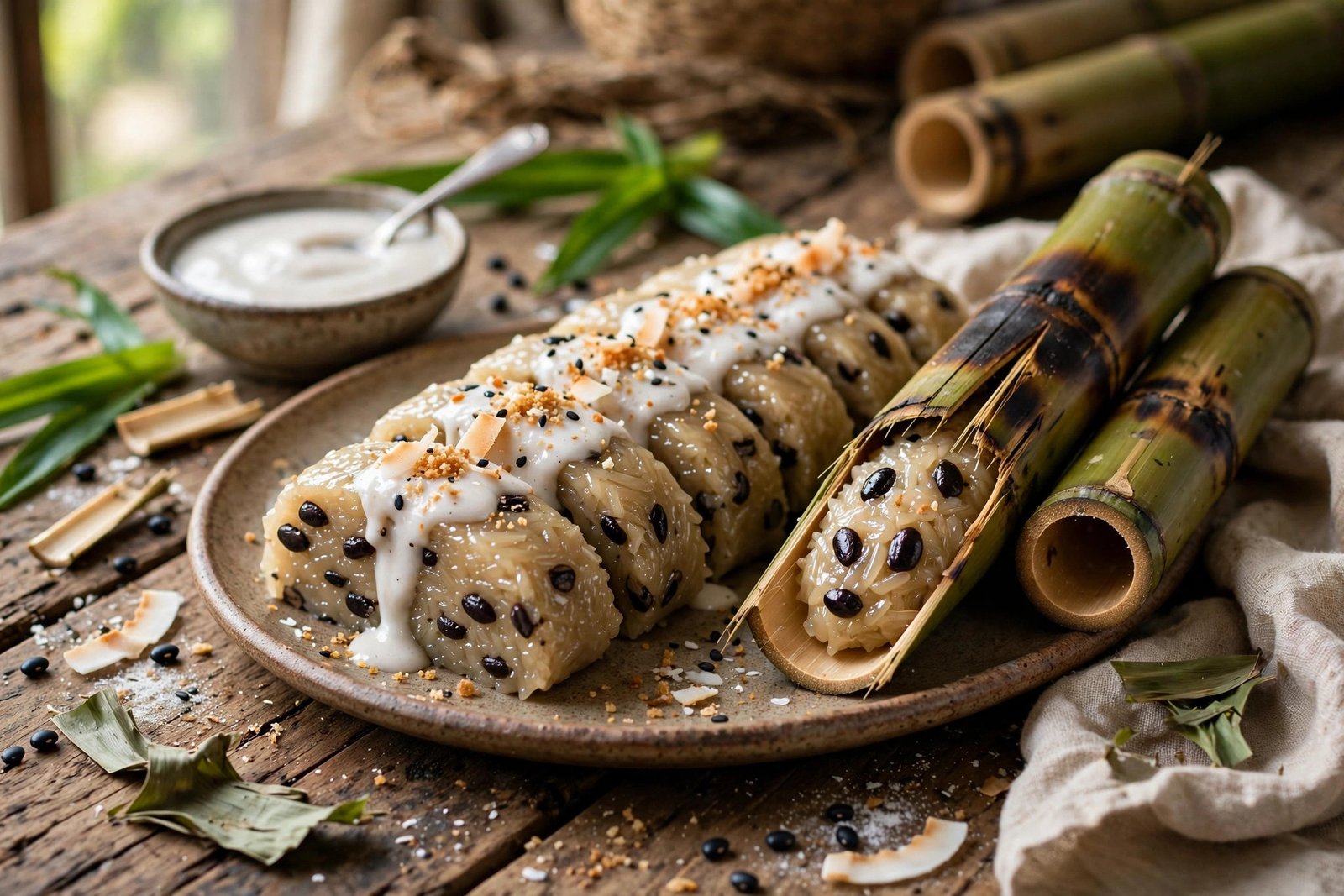
Khao Lam is Thai sticky rice slow-cooked inside bamboo tubes with rich coconut milk, black beans and a touch of sugar, giving it a gentle smokiness and a wonderfully chewy texture. Split open the bamboo and you find a warm, fragrant parcel that tastes of Thailand's countryside — sweet, nutty and deeply comforting, best eaten warm with your fingers.
The story behind Khao Lam
Khao Lam is one of Thailand's oldest ways of cooking rice: sticky rice, coconut milk and beans packed into a bamboo tube, sealed with a banana leaf, and stood upright over charcoal until the rice turns tender and fragrant. It is a dish of the countryside, sold by roadside vendors who grill the tubes in rows and split them open for buyers who eat the warm rice straight from the bamboo. The method is older than the oven, and it still works beautifully.
The bamboo does more than hold the rice. As it heats, it lends a faint smokiness and a green, woody fragrance that no pot or tin can match. The banana leaf plug steams the top of the rice, and the coconut milk soaks through the grains until they are soft, chewy and sweet. Black beans add a nutty bite and a dark speckle through the pale rice. It is a simple list of ingredients that becomes something far greater than the sum of its parts.
Khao Lam is also a dish of patience. The rice soaks for hours, the tubes cook for an hour or more, and the whole process cannot be rushed. That slowness is part of its character — it is food made for a long afternoon, for a market stall, for a family gathering where nobody is in a hurry. In Thailand it is often eaten as a snack or a dessert, bought on the road and shared on the journey.
Make it when you have a free afternoon and can find bamboo tubes, or try the loaf-tin version if you cannot. Either way, the moment of splitting the bamboo and finding the warm, fragrant rice inside is one of the great small pleasures of Thai cooking. Serve it warm, sliced into rounds, and eat it with your fingers.
The vendors who sell khao lam are part of the landscape in rural Thailand. They set up by the roadside with rows of bamboo tubes standing over charcoal, and the smell of coconut and smoke drifts across the road long before you see the stall. Buyers pull over, buy a tube or two, and eat the warm rice on the journey — splitting the bamboo with their hands, peeling it back, and sharing the fragrant log between passengers. It is street food in the truest sense: made where it is sold, eaten where it is bought, and gone within minutes.
- Prep time
- 30 mins
- Cook time
- 1 hour 30 mins
- Total time
- 2 hours
- Servings
- 4 servings
- Calories
- 420
Ingredients
- 400 g glutinous (sticky) rice
- 400 ml coconut milk
- 100 g palm sugar
- 1/2 teaspoon salt
- 100 g cooked black beans
- 4 bamboo tubes, about 30 cm long and 6 cm wide, one end closed
- Banana leaves, for plugging the open ends
- Water, for soaking
Instructions
- Rinse the sticky rice in several changes of cold water until the water runs clear, then soak it in cold water for at least 4 hours or overnight. Drain well in a colander and leave it to drip for 10 minutes — wet rice will dilute the coconut milk.
- Warm the coconut milk in a saucepan over low heat with the palm sugar and salt, stirring gently until the sugar dissolves completely. Do not boil it. Let the mixture cool slightly so it is warm, not hot, when it meets the rice.
- Mix the drained rice with the cooked black beans in a large bowl, tossing them together so the beans spread evenly through the rice. Pack the mixture into the bamboo tubes, filling each about three-quarters full — the rice swells as it cooks and needs room to expand.
- Pour the sweetened coconut milk into each tube until it just covers the rice. Leave a little space at the top — about 2 cm — for the rice to expand and for the banana leaf plug. Tap each tube gently on the counter to settle the rice and release air pockets.
- Plug the open ends with folded banana leaves, pushing them in snugly so they seal the tube. The plug should fit tightly; if it is loose, fold the leaf thicker. The seal traps steam and gives the top of the rice its soft, even texture.
- Stand the tubes upright over a charcoal grill, or in a deep oven-safe pot at 180°C (350°F), and cook for 60-90 minutes, turning them occasionally so they heat evenly. The rice is done when it is tender all the way through and the coconut milk is fully absorbed — test by pulling out a little rice from the top with a fork.
- Let the tubes rest for 10 minutes so the rice firms up slightly and is easier to slice. Split the bamboo lengthways with a sharp knife and peel it away from the rice log. Slice the log into thick rounds and serve warm.
Pro tips
- Soaking the rice overnight gives the softest, most even texture. A short soak leaves hard centres in the grains that no amount of cooking will fix.
- Do not overfill the bamboo; the rice swells as it cooks and can push the plug out. Three-quarters full is the rule, with space for the coconut milk on top.
- If you cannot find bamboo tubes, bake the same mixture in a banana-leaf-lined loaf tin covered with foil. You will miss the smoky bamboo note, but the flavour is still wonderful.
- Leftover Khao Lam reheats beautifully in the microwave with a splash of water. Cover the slices and warm them for a minute, then let them sit for a moment before eating.
- Choose bamboo tubes with one end closed and walls about 1 cm thick. Thin-walled bamboo can crack over the heat, and open-ended tubes need plugging at both ends.
Variations & serving ideas
The beans are the easiest thing to change. Red kidney beans, black-eyed peas or even sweetcorn kernels all work in place of black beans, and each gives a different colour and texture. Some Thai vendors add taro, diced small, which turns soft and sweet in the coconut milk. A few spoonfuls of shredded young coconut stirred through the rice add chew and extra coconut flavour.
The sweetness can be adjusted to taste. For a less sweet version, cut the palm sugar to 70 g — the coconut milk still gives richness, and the rice tastes more savoury. For a richer dessert, add a spoonful of coconut cream on top of each tube before plugging it. A little vanilla or a pandan leaf tucked into the coconut milk adds fragrance without changing the character of the dish.
If bamboo is out of reach, the loaf-tin version is a fine substitute: line a tin with banana leaves, pack in the rice and beans, pour over the coconut milk, cover tightly with foil and bake at 180°C for about an hour. Some cooks add a smoky note by finishing the tin under the grill for a few minutes, which browns the top slightly.
Serve Khao Lam warm as a dessert or a snack, sliced into rounds and eaten with the fingers. It pairs well with fresh mango, a cup of Thai tea, or simply on its own. At a market in Thailand it is often eaten straight from the bamboo, standing up, with the warm rice shared between friends.
For a festive version, add a layer of coconut cream and a sprinkle of toasted sesame seeds on top of the rice before plugging the tube — the cream soaks down during cooking and gives the top a richer finish. Some cooks add a few pieces of candied winter melon or a little grated coconut meat to the rice for extra texture. If you are serving khao lam at a dinner party, slice the log into neat rounds and arrange them on a banana leaf, with a small bowl of extra coconut cream for drizzling.
Getting it right
The key technique is the soak. Glutinous rice needs hours in cold water to hydrate fully — 4 hours is the minimum, overnight is better. Under-soaked rice cooks unevenly, with hard white centres that stay chalky no matter how long the tubes sit over the heat. Rinse the rice first until the water runs clear, so the excess starch does not make the finished rice gummy.
Filling the tubes is the second skill. Pack the rice firmly enough that it holds together when sliced, but not so tightly that the coconut milk cannot soak through. Three-quarters full, milk to just above the rice, and a snug banana-leaf plug — that is the formula. If the tubes are overfilled, the rice swells and pushes the plug out; if they are underfilled, the top of the rice dries out.
Heat control is the third part. Whether you use charcoal or an oven, the heat should be steady and moderate — the rice needs time to absorb the milk slowly. Turning the tubes occasionally keeps them cooking evenly, and the rest after cooking lets the rice firm up so it slices cleanly. Test a little rice from the top before you declare it done; the top is the last part to cook.
Resting the tubes after cooking is as important as the cooking itself. Ten minutes of rest lets the rice firm up and the coconut milk finish absorbing, so the log holds its shape when you split the bamboo. Cut into it too soon and the rice is soft and sticky, falling apart as you slice. If the rice still feels wet after resting, stand the split log in a warm oven for a few minutes to dry the surface slightly — the inside will stay soft and chewy.
Storing & reheating
Khao Lam keeps for 2 days in the fridge, still in its bamboo or wrapped in cling film. The rice firms up when cold, so warm slices gently before serving — a minute in the microwave with a splash of water, or a few minutes in a steamer, brings back the soft, chewy texture.
It also freezes well for up to a month. Slice the rice log into rounds, wrap them individually in cling film, and freeze in a sealed bag. Thaw overnight in the fridge and reheat with a splash of water. The texture stays good because glutinous rice holds its chew after freezing better than most rice dishes.
Frequently asked questions
What is Khao Lam?
Khao Lam is a Thai dessert of glutinous rice cooked with coconut milk, sugar and black beans inside a bamboo tube, traditionally grilled over charcoal for a subtle smoky flavour. The bamboo is split open to reveal a warm, fragrant log of rice.
Can I make Khao Lam without bamboo?
Yes. Pack the rice mixture into a foil-lined loaf tin, cover tightly with foil and bake at 180°C (350°F) for about an hour. You will miss the smoky bamboo note, but the flavour is still wonderful.
How long does Khao Lam keep?
It keeps for 2 days in the fridge, still in its bamboo or wrapped in cling film. Warm slices gently before serving. It also freezes well for up to a month — thaw overnight and reheat with a splash of water.
Can I use other beans?
Yes, red kidney beans or black-eyed peas are good substitutes for the traditional black beans. Sweetcorn kernels and diced taro also work, and each gives a different colour and texture to the finished rice.
Where can I buy bamboo tubes?
Asian grocers sometimes stock fresh bamboo tubes, and they are available from online Thai food suppliers. Look for tubes about 30 cm long and 6 cm wide with one end closed. If you cannot find them, the loaf-tin method works well.
Can I use regular rice instead of sticky rice?
No — glutinous rice is essential. It has a different starch that makes it sticky and chewy when cooked, and regular rice will not hold together in the bamboo or give the right texture. Buy it as glutinous rice or sweet rice.