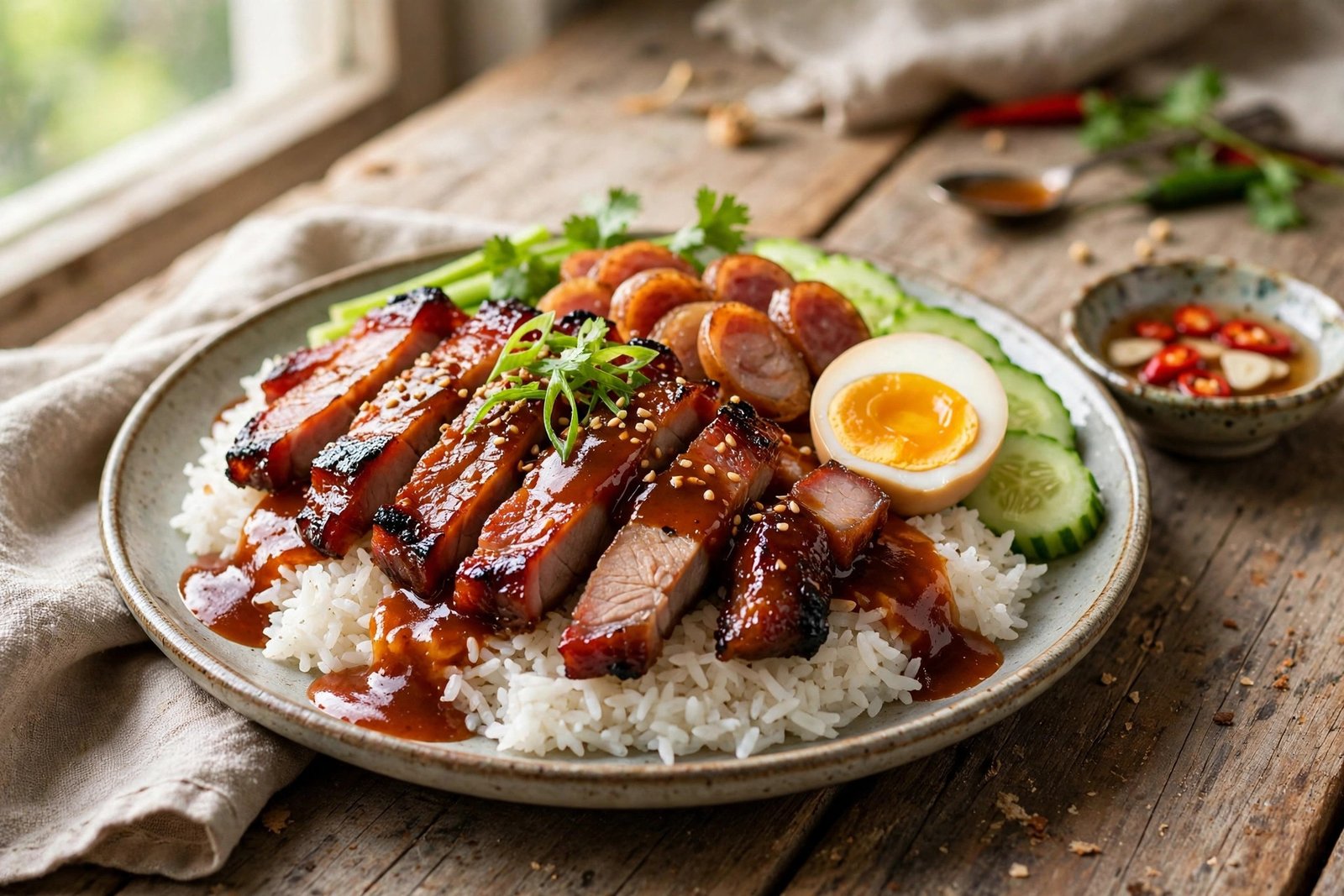
Khao Man Gai Recipe

Silky poached chicken over fragrant rice cooked in rich chicken broth, with a punchy fermented-soy dipping sauce. Khao man gai is Thailand's beloved street-food comfort plate. Simple ingredients, extraordinary comfort — and easier to make at home than you might think.
The story behind Khao Man Gai
Khao man gai is Thailand's version of Hainanese chicken rice, a dish that traveled from Hainan Island in southern China across Southeast Asia and settled into Thai street food as one of its most beloved plates. The name is simple: khao means rice, man means oily or rich, gai means chicken. The rice is the point — cooked in chicken broth with rendered chicken fat until every grain is fragrant and glossy — and the chicken is poached gently until it is silky and tender.
In Bangkok, khao man gai is sold from street carts and small shophouse restaurants, often with a single cook who has been making the same dish for decades. The setup is always the same: a pot of poaching chicken, a rice cooker full of broth-cooked rice, and a jar of dark, funky dipping sauce made from fermented soybean paste. The plate arrives with cucumber slices, a sprig of coriander, and a small bowl of clear chicken soup on the side. It is fast food in the best sense — simple, cheap, and deeply satisfying.
What makes khao man gai special is the way a handful of humble ingredients add up to something greater than themselves. The poaching broth flavors the rice; the chicken fat enriches it; the dipping sauce brings salt, sweetness, and a fermented depth that wakes the whole plate up. Nothing is fancy, but everything is considered. The chicken must be poached gently — a bare simmer, never a boil — so it stays silky. The rice must be cooked in the broth, not water, or the dish loses its soul.
Cook this when you want a comforting, unfussy dinner that feels like a small trip. It suits a weeknight when you have an hour, or a weekend lunch when you want the kitchen to smell wonderful. The ingredients are simple and the technique is forgiving — the hardest part is resisting the urge to turn the heat up. Serve it the street-food way, with the sauce, cucumber, and a bowl of broth, and let everyone build their own perfect bite.
- Prep time
- 15 mins
- Cook time
- 40 mins
- Total time
- 55 mins
- Servings
- 4 servings
- Calories
- 590
Ingredients
- 4 chicken leg quarters (about 800g)
- 2 liters water
- 4 spring onions, halved, 6 slices ginger, 4 garlic cloves, smashed
- 2 pandan leaves (optional)
- 400g jasmine rice, rinsed
- 2 tablespoons chicken fat or vegetable oil
- 1.5 teaspoons fine sea salt
- 4 tablespoons fermented soybean paste (tauco) or hoisin
- 2 tablespoons soy sauce, 2 tablespoons sugar, 2 tablespoons white vinegar
- 2 Thai chiles, minced
- 2 tablespoons minced ginger
- Cucumber slices, fresh coriander, and chicken broth, to serve
Instructions
- Bring the water to a boil in a large pot with the halved spring onions, ginger slices, smashed garlic, and pandan leaves if you are using them. Add the chicken leg quarters, return the pot to a bare simmer — just a few lazy bubbles breaking the surface — and poach for 25 minutes. The water should shimmer, not boil; a rolling boil will toughen the chicken and cloud the broth.
- Lift the chicken out with tongs and rest it under a damp towel for 10 minutes. The towel keeps the skin moist and the meat silky while the juices settle. Meanwhile, strain the poaching broth and reserve 750ml of it for the rice — this golden liquid is the heart of the dish. Save the rest; it is wonderful soup on its own.
- Render any chicken skin trimmings in a dry pan over medium heat until the fat runs out and the skin turns crisp, or heat the vegetable oil if you are not rendering fat. Add 2 smashed garlic cloves and fry until golden and fragrant — about a minute. The garlic should smell nutty, not burnt; if it darkens too fast, pull the pan off the heat.
- Add the rinsed jasmine rice to the fat and toast for 2 minutes, stirring, until the grains are glossy and smell faintly nutty. Pour in the reserved 750ml of poaching broth and the salt, stir once, then cover and cook as you would normal rice — about 15 minutes on low heat, then 10 minutes resting off the heat with the lid on. Do not lift the lid while it cooks.
- While the rice cooks, whisk the fermented soybean paste, soy sauce, sugar, white vinegar, minced Thai chiles, and minced ginger into a dipping sauce. Taste it — it should be bold and funky, salty and sweet at once, with a chili warmth that builds. Adjust to your taste: more sugar for sweetness, more vinegar for brightness, more chili for heat.
- Chop the rested chicken into bite-size pieces through the bone, the traditional street-food way, or debone it and slice it if you prefer a neater plate. Either way, the meat should be silky and juicy, with skin that glistens. If any pieces look undercooked near the bone, return them to the hot broth for a few minutes.
- Mound the fragrant rice on plates and arrange the chicken over the top. The rice should smell rich and savory — if it does not, the broth was too weak, and a drizzle of sesame oil over the top will help. Spoon a little extra broth over the rice if you like it moist.
- Serve with the dipping sauce in a small bowl, cucumber slices, fresh coriander, and a small bowl of the clear poaching broth on the side. Encourage everyone to spoon sauce over the chicken and rice, and to sip the broth between bites — it cleanses the palate and is part of the experience.
Pro tips
- Cooking the rice in the poaching broth is the entire soul of the dish. Rice cooked in water is just rice; rice cooked in broth is khao man gai.
- Keep the poach at a bare shimmer — boiling toughens the chicken and clouds the broth. Patience is the only ingredient that matters here.
- Save the extra broth; it is a wonderful soup on its own, and it makes an excellent base for noodle soup the next day.
- The dipping sauce should be bold and funky — taste and adjust. If it tastes flat, it needs more vinegar or more chili.
- Rest the chicken under a damp towel after poaching. It keeps the skin moist and the meat silky while the juices settle.
Variations & serving ideas
Chicken thighs are the most forgiving cut, and a whole leg quarter per person is ideal. Chicken breast works too, though it dries out more easily — poach it for 18 minutes instead of 25 and watch it closely. For a richer version, use a whole chicken, poached for 40 minutes, and carve it at the table. The bones add depth to the broth, and the presentation is impressive. Leftover roast chicken is not a substitute here — the poaching is the point.
If pandan leaves are hard to find, skip them — they add a lovely fragrance, but the dish works without them. A strip of lemongrass in the poaching water is a different but pleasant variation. The dipping sauce can be made with hoisin instead of fermented soybean paste, though it will be sweeter and less funky. For a milder sauce, leave out the Thai chiles or use just one, and add a squeeze of lime juice for brightness.
Serve khao man gai the street-food way: rice mounded on the plate, chicken on top, sauce in a small bowl, cucumber slices and coriander alongside, and a small bowl of clear broth to sip. A plate of blanched greens or a simple cucumber salad makes a fine addition. Keep the sides light — the plate is already rich and complete.
For drinks, iced tea or a cold beer both suit the dish. Leftover rice makes an excellent fried rice the next day — the broth-cooked grains fry up beautifully with an egg and some spring onions. Leftover chicken is good cold, sliced over a salad with the dipping sauce as a dressing.
Getting it right
The key technique is the gentle poach. The water should sit at a bare simmer — around 80 to 85°C, with just a few bubbles breaking the surface — for the full 25 minutes. At this temperature, the chicken cooks through slowly and stays silky; the proteins set gently instead of seizing up. A rolling boil does the opposite: it tightens the meat, squeezes out the juices, and clouds the broth with agitated fat. If you see vigorous bubbling, turn the heat down immediately. A thermometer helps, but the visual cue is enough — the surface should shimmer, not churn.
The rice technique matters just as much. Toasting the rinsed rice in chicken fat before adding the broth coats every grain in richness and gives the finished rice its characteristic gloss. The broth-to-rice ratio is the same as for normal rice, but the liquid is broth, not water — and that is the whole dish. Once the lid goes on, do not lift it: the steam finishes the rice, and a peek lets it escape. The 10-minute rest off the heat is part of the cooking, not an optional extra.
The most common mistake is boiling the chicken. If the meat comes out tough and stringy, the poach was too hot. The second mistake is cooking the rice in water instead of broth, which gives a plain plate that tastes like nothing in particular. If your rice turns out dry, the broth was short — add a splash of hot broth and let it steam for 5 more minutes. If the chicken is undercooked near the bone, return it to the hot broth for a few minutes; the residual heat will finish it gently.
Storing & reheating
Refrigerate the rice for up to 3 days and the chicken for up to 4 days, stored separately in sealed containers. The dipping sauce keeps in the fridge for up to a week — the flavors meld and deepen over time. The poaching broth keeps for 3 days in the fridge or 3 months in the freezer, and it is worth saving: it is the base for soup, noodle dishes, and the next batch of rice.
Reheat the chicken gently — a few minutes in a steamer, or a brief dip in hot broth — so it stays silky. Avoid the microwave, which dries it out and toughens the skin. Reheat the rice with a splash of water or broth, covered, until steaming. Assemble fresh plates with sauce, cucumber, and coriander, and the leftovers will taste almost as good as the first serving.
Frequently asked questions
Is khao man gai the same as Hainanese chicken rice?
Khao man gai is the Thai version of Hainanese chicken rice, which originated on Hainan Island in China and traveled across Southeast Asia. The Thai version has its own dipping sauce — fermented soybean paste with chili and ginger — while the Singaporean version uses chili sauce, ginger paste, and dark soy. The poached chicken and broth-cooked rice are the same at heart.
Can I use chicken thighs instead of breast?
Yes — chicken thighs stay juicier and more forgiving than breast. A whole leg quarter per person is ideal. Thighs tolerate a slightly hotter poach without drying out, which makes them the better choice for a first attempt. Breast works too, but poach it for 18 minutes instead of 25.
How long do leftovers keep?
Refrigerate the rice up to 3 days and the chicken up to 4. Warm the chicken gently so it stays silky — a steamer or a dip in hot broth works best. The dipping sauce keeps for up to a week in the fridge, and the poaching broth freezes for 3 months.
What temperature should the poaching water be?
Low and gentle — a bare simmer, around 80 to 85°C, with just a few bubbles breaking the surface. Boiling makes the chicken tough and the broth cloudy. If you see vigorous bubbling, turn the heat down at once; the surface should shimmer, not churn.
What is tauco, and where do I find it?
Tauco is Indonesian fermented soybean paste, and it is the traditional base for the khao man gai dipping sauce. Find it in Asian grocery stores, usually in a jar near the soy sauce. Hoisin sauce is the closest substitute, though it is sweeter and less funky — add a splash of vinegar to balance it.
Can I cook the rice in a rice cooker?
Yes — toast the rice in the chicken fat first, then transfer it to the rice cooker with the measured broth and salt, and cook on the normal setting. The rice cooker gives very consistent results and frees up the stove. Let it rest for 10 minutes after the cooker switches to warm before lifting the lid.