Thai Basil Eggplant Recipe
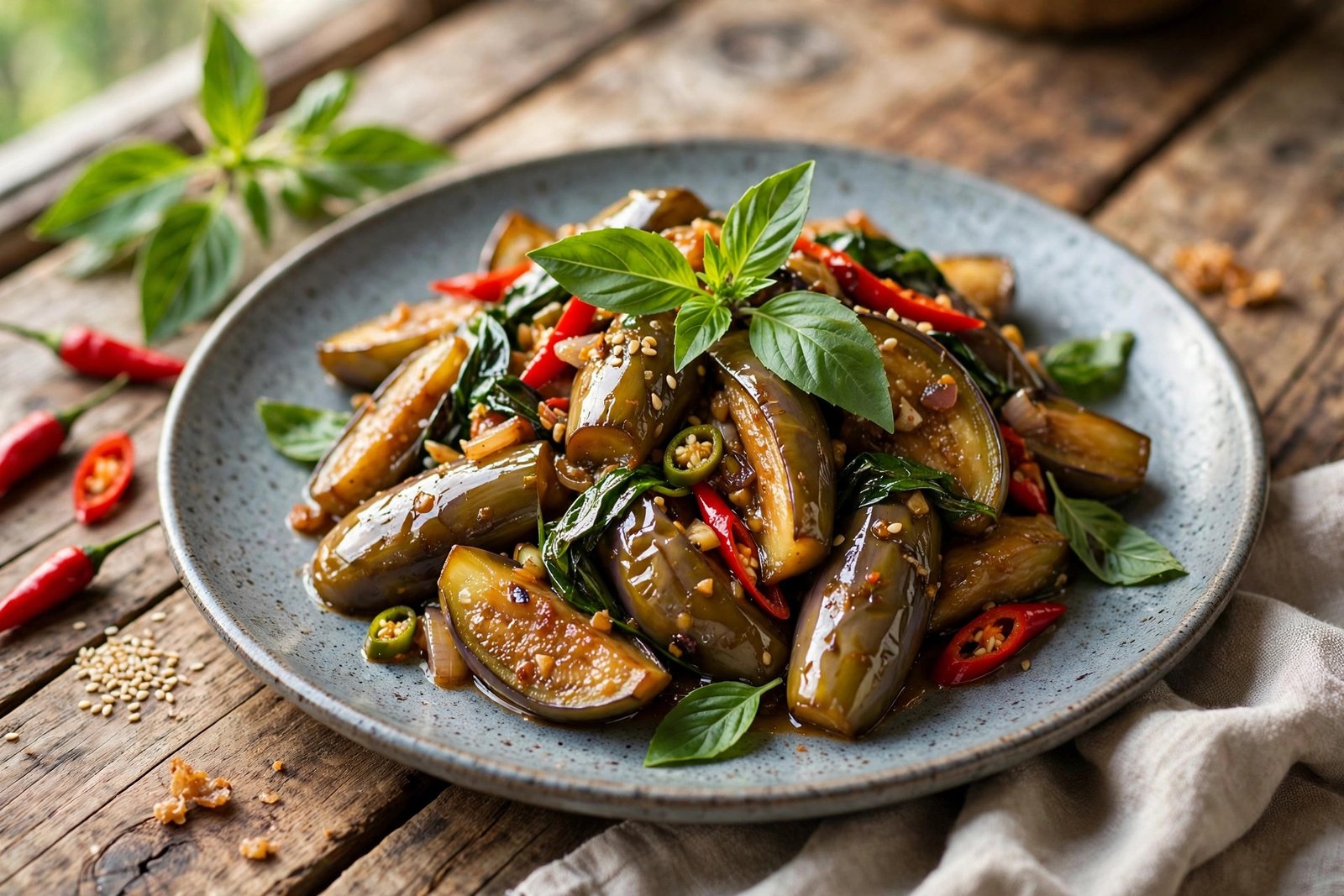
Thai basil eggplant is a fast, fragrant stir-fry: silky eggplant caramelised in a hot wok with garlic, chilli and a generous handful of Thai basil. The sauce is salty, sweet and just spicy enough. It is a brilliant weeknight dish, ready in half an hour and wonderful with jasmine rice. The eggplant turns silky inside while the outside sears to a deep gold, and the sauce clings to every piece.
The story behind Thai Basil Eggplant
Eggplant has been cooked in Thailand for centuries, and this stir-fry is one of the simplest and best ways to eat it. Thai cooks use the long, slender Asian eggplants, which are sweeter and less bitter than the big globe variety, with thin skins and few seeds. They cook fast, soak up sauce beautifully, and turn meltingly soft inside while the outside takes on a golden sear. Paired with Thai basil, garlic and chilli, they make a dish that is greater than the sum of its parts.
Thai basil is the soul of this dish. It looks a little like sweet basil, with purple stems and narrow leaves, but it tastes quite different: aniseedy, peppery and almost spicy, with a hint of liquorice. It is one of the defining flavours of Thai cooking, along with holy basil, and it wilts into hot food in seconds, releasing its perfume the moment it hits the wok. You will find it in Thai grocery shops and increasingly in supermarkets, and it is worth seeking out rather than substituting.
The sauce is a classic Thai balance: salty soy sauce, rich oyster sauce, a spoonful of sugar for sweetness, and fish sauce for depth. None of them dominates. The sugar helps the eggplant caramelise and rounds out the salt, while the chilli brings a gentle heat that builds as you eat. It is the kind of sauce that makes you want to spoon every last drop over your rice. The balance is everything: salty, sweet and hot in equal measure, with the basil tying it all together.
This is weeknight cooking at its best. The whole dish takes about half an hour from start to finish, most of which is just waiting for the eggplant to salt. It is light enough for a hot evening, filling enough with rice to count as dinner, and it scales easily if you are feeding more people. Once you have made it once, you will find yourself reaching for it whenever you spot good eggplants at the market. It is also a good dish to cook for friends, since it comes together in minutes and always gets eaten fast.
- Prep time
- 15 mins
- Cook time
- 15 mins
- Total time
- 30 mins
- Servings
- 4 servings
- Calories
- 220
Ingredients
- 2 medium Asian eggplants, cut into chunks
- 3 tablespoons vegetable oil
- 4 garlic cloves, sliced
- 2 red chillies, sliced
- 2 tablespoons soy sauce
- 1 tablespoon oyster sauce
- 1 tablespoon sugar
- 1 teaspoon fish sauce
- 1 large handful Thai basil leaves
- 2 spring onions, sliced
- Jasmine rice, to serve
Instructions
- Cut the eggplants into chunky pieces, roughly 4 cm across, and toss them with a good pinch of salt in a bowl. Set them aside for 10 minutes. The salt draws out a little moisture and helps the eggplant brown instead of steaming, so do not skip this step even if you are in a hurry.
- While the eggplant rests, get everything else ready. Slice the garlic and chillies, mix the soy sauce, oyster sauce, sugar and fish sauce together in a small bowl, and pick the Thai basil leaves from their stems. Stir-frying moves fast, and you will want every ingredient within arm's reach before the wok gets hot.
- Pat the eggplant chunks dry with a clean tea towel or paper towels. Any surface moisture will spit in the hot oil and slow down the browning, so take a moment to dry them properly. A dry surface is the difference between golden and grey.
- Heat the vegetable oil in a wok or large frying pan over high heat until it shimmers and just begins to smoke. Add the eggplant in a single layer, leaving space between the pieces. If your pan is small, cook it in two batches rather than crowding it.
- Fry the eggplant for 4 to 5 minutes, turning the pieces every minute or so, until they are golden on the outside and tender inside. You will hear a good sizzle and see the edges start to caramelise. A piece should give easily when you press it with a spoon. Lift the eggplant out onto a plate.
- Turn the heat down to medium and add the garlic and chillies to the same wok. Fry for about 30 seconds, stirring constantly, until the garlic turns pale gold and the kitchen smells incredible. Garlic burns fast at high heat, so keep it moving and do not walk away.
- Return the eggplant to the wok and pour in the sauce. Toss everything together and stir-fry for 2 minutes, letting the sauce bubble and coat every piece. The eggplant should look glossy and dark, with the sauce clinging to it rather than pooling at the bottom of the pan.
- Take the wok off the heat and fold in the Thai basil leaves and spring onions. Toss gently for 30 seconds until the basil just wilts and turns a deeper green. The leaves will perfume the whole dish in moments, so work quickly and get it off the heat fast.
- Spoon the stir-fry into a serving dish and serve immediately with steamed jasmine rice. The sauce will soak into the rice beautifully, so put the rice down first and pile the eggplant on top.
Pro tips
- Use Asian eggplants, which are sweeter, less bitter and have thinner skins than globe eggplants. If you can only find globe eggplants, peel them and cut them a little smaller so they cook through evenly. They also cook faster, which means less time over a hot wok.
- Keep the wok very hot so the eggplant sears instead of steaming. If the pieces sit in a crowded pan, they will release water and go soft and grey instead of golden.
- Pat the eggplant dry after salting. Wet eggplant spits in the oil and refuses to brown. A quick press with a tea towel makes a real difference to the final colour and texture.
- Add the basil at the very end, off the heat, so it stays bright and fragrant. Basil that cooks for more than a minute turns dark and loses the aniseedy perfume that makes this dish special.
- Adjust the chillies to your preferred heat level. Two red chillies give a gentle warmth; leave the seeds in for more fire, or add a third chilli if you like things properly spicy.
Variations & serving ideas
The easiest variation is to add protein. A handful of minced pork or chicken, stir-fried until browned before the eggplant goes back in, turns this into a heartier main dish. Tofu works beautifully too: press firm tofu, cube it, and fry it until golden before you start the eggplant. Prawns are another good option; add them in the last two minutes so they stay juicy and do not overcook in the sauce. If you add meat, season it lightly first and brown it well before the eggplant goes back in.
If you want a vegan version, swap the oyster sauce for a vegetarian mushroom oyster sauce, which is widely available in Asian grocery shops, and replace the fish sauce with a splash of soy sauce and a pinch of sugar. The dish loses none of its punch. You can also add vegetables: a handful of green beans, sliced peppers or mushrooms all stir-fry well alongside the eggplant, though you should add them early enough to cook through.
The heat level is easy to tune. Bird's eye chillies will give the dish a serious kick, while a single mild red chilli keeps it gentle enough for children. A drizzle of chilli oil at the table lets everyone adjust their own bowl. If you find the sauce too salty, a squeeze of lime juice at the end brightens everything and balances the soy sauce without adding more sugar.
Serve it the way Thai street stalls do: piled over a mound of jasmine rice, with a fried egg on top if you want something extra. It also works well as part of a larger Thai spread, alongside a green curry or a papaya salad. A cold beer or a glass of iced tea is the perfect drink with it, and any leftovers are excellent the next day, reheated quickly in a hot wok. A simple cucumber salad on the side is a cooling contrast to the chilli heat.
Getting it right
The key technique in this dish is searing the eggplant properly. Eggplant is a sponge: it soaks up oil and water, and if you cook it gently it turns soft and grey. What you want is a hot wok, enough oil to coat the pan, and dry eggplant pieces with space between them. The high heat drives off surface moisture fast, lets the outside caramelise, and leaves the inside silky. If the pieces are crowded, they steam in their own moisture and never brown. Cook in batches if you have to; it is worth the extra two minutes.
Heat control is a balancing act between the eggplant and the garlic. The eggplant wants the highest heat your stove can give, but the garlic wants medium heat and thirty seconds of attention. Garlic goes from golden to bitter in a matter of seconds at wok temperature, so turn the heat down before it goes in, keep it moving, and have the eggplant and sauce ready to follow immediately. The sauce itself only needs a couple of minutes of high heat to bubble, reduce slightly and coat everything in a glossy layer.
The most common mistake is adding the basil too early. Thai basil wilts in seconds and its flavour fades fast with heat, so it goes in off the heat at the very end. Another common problem is a watery stir-fry, which usually means the eggplant was not dried after salting, or the pan was overcrowded. If your sauce looks thin, let it bubble for an extra minute before adding the basil. And if the eggplant is still firm after five minutes, your pieces may be too big; cut the next batch smaller and give them an extra minute in the wok.
Storing & reheating
Leftover Thai basil eggplant keeps in the fridge for up to 3 days in a sealed container. The basil will darken and the eggplant will soften further, but the flavour actually deepens overnight, so it makes a good next-day lunch. Keep the rice separate and reheat the two together or separately.
Reheat it in a hot wok or frying pan for 2 to 3 minutes, stirring gently, rather than microwaving it, which can make the eggplant mushy. A splash of water or soy sauce will loosen the sauce if it has thickened. Freezing is not ideal, as the eggplant turns watery and soft when thawed, so it is best eaten within a few days. A fresh handful of basil stirred in after reheating brings the fragrance back.
Frequently asked questions
What is Thai basil eggplant?
It is a Thai stir-fry of eggplant cooked in a hot wok with garlic, chilli, soy sauce, oyster sauce and fish sauce, finished with a generous handful of Thai basil. The eggplant turns silky inside and golden outside, and the sauce is salty, sweet and lightly spicy.
Can I make Thai basil eggplant vegan?
Yes, easily. Use a vegetarian mushroom oyster sauce in place of the regular oyster sauce, and replace the fish sauce with an extra splash of soy sauce. The dish keeps all of its flavour, and you can add tofu for protein if you like.
Do I need to salt the eggplant first?
It helps, and it only takes 10 minutes. Salting draws out moisture, which lets the eggplant brown instead of steaming in the wok. If you are short on time you can skip it, but be sure to pat the pieces dry before frying.
What is the difference between Thai basil and sweet basil?
Thai basil has narrow leaves, purple stems and an aniseedy, peppery flavour with a hint of liquorice. Sweet basil is milder and more floral. You can substitute sweet basil in a pinch, but the dish will taste noticeably different.
Can I use globe eggplant instead of Asian eggplant?
Yes, but peel it first and cut it into smaller pieces, as globe eggplant has thicker skin and more seeds. It also holds more water, so salt it well and pat it very dry before frying to get a good sear.
What should I serve with Thai basil eggplant?
Steamed jasmine rice is the classic choice and soaks up the sauce beautifully. A fried egg on top makes it a fuller meal, and it also works well as one dish in a larger Thai spread with a curry or a salad.