Tonjiru Recipe
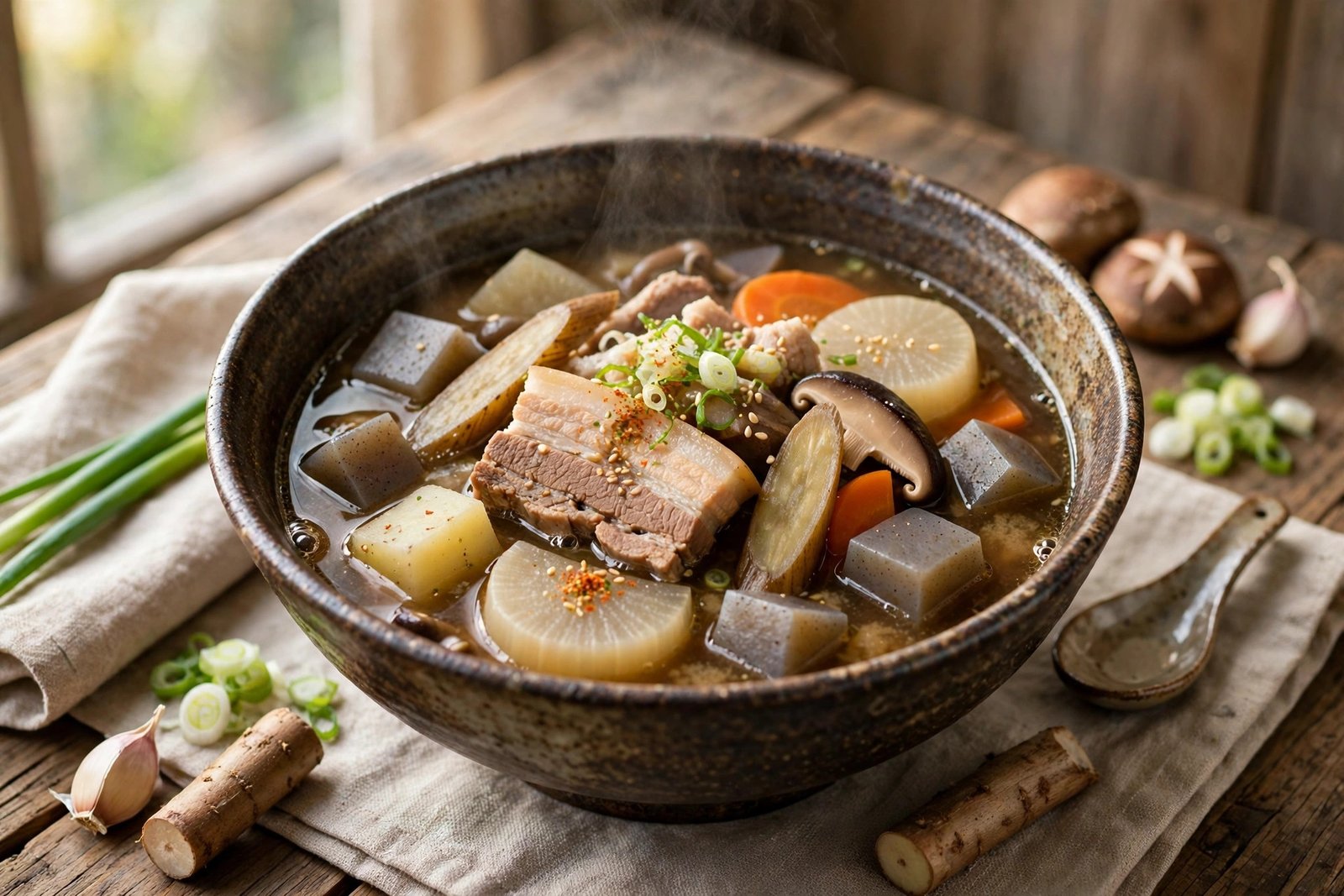
Tonjiru is miso soup grown up into a meal: pork and a tumble of root vegetables simmered until tender, then enriched with miso until the broth turns deep and comforting. It is the kind of rustic, home-style soup Japanese families make on cold nights, when dinner needs to warm you from the inside out.
The story behind Tonjiru
Tonjiru means pork soup, and it is exactly what it sounds like — miso soup made hearty enough to be dinner. Where a classic miso soup is light and spare, a few cubes of tofu and a scatter of seaweed, tonjiru is loaded: pork, potatoes, carrots, daikon, onion, and whatever else the cook has on hand. It comes from the home kitchen, not the restaurant, and every family makes it a little differently.
This is winter food in Japan. It shows up on cold evenings, after a day in the cold, when the family gathers around a steaming pot. The pork fat enriches the broth, the root vegetables turn sweet and tender, and the miso gives it that deep savoury warmth. It is the soup you make when someone needs feeding properly.
What makes tonjiru special is how it balances richness and lightness. The pork belly gives the broth body, but the miso and ginger keep it from feeling heavy. The vegetables each bring something — the potato turns creamy, the daikon goes sweet, the carrot holds its colour. A bowl of tonjiru with rice is a complete meal, and it asks for nothing else.
Cook it when the weather turns cold, or whenever you want a one-pot dinner that mostly looks after itself. It takes 50 minutes, most of it hands-off simmering, and it tastes even better the next day. Make a big pot — you will want seconds, and then you will want it for lunch tomorrow.
Miso itself deserves a word, because it is the soul of this soup. It is made from fermented soybeans, salt and koji — a mould culture that does the slow work of turning simple ingredients into something deep and complex. White miso ferments for a short time and stays mild and sweet, while red miso ferments for months and turns dark, salty and intense. Different regions of Japan favour different miso, and families often have a brand they have used for years. Good miso keeps for months in the fridge, and a tub of it turns a plain pot of vegetables into dinner.
- Prep time
- 20 mins
- Cook time
- 30 mins
- Total time
- 50 mins
- Servings
- 4 servings
- Calories
- 420
Ingredients
- 300 g pork belly or shoulder, thinly sliced
- 1 litre dashi stock
- 3 tablespoons miso paste
- 2 potatoes, cubed
- 1 carrot, sliced
- 1/2 daikon radish, sliced
- 1 onion, sliced
- 100 g konnyaku, sliced (optional)
- 1 tablespoon sesame oil
- 2 spring onions, sliced
- 1 teaspoon grated ginger
- Shichimi togarashi, to serve
Instructions
- Prepare the vegetables first. Peel and cube the potatoes, slice the carrot into half-moons, cut the daikon into thin slices, and slice the onion. Try to keep the pieces roughly the same size so they cook evenly — the potato cubes should be about the same size as the daikon slices. Rinse the konnyaku if you are using it.
- Heat the sesame oil in a heavy pot over a medium-high heat. Add the thinly sliced pork and fry for about 3 minutes, breaking up the slices with a spoon, until the pork is lightly browned at the edges. The pork does not need to be cooked through yet — it will finish in the soup — but the browning adds flavour to the broth.
- Add the onion, carrot, daikon and potatoes to the pot and stir for 2 minutes, letting the vegetables pick up a little of the oil and pork fat. This brief fry deepens the flavour of the finished soup and helps the vegetables hold their shape during the simmer.
- Pour in the dashi stock and bring it to a gentle boil over a high heat. As the soup comes up to temperature, skim off any foam or scum that rises to the surface with a spoon. Skimming keeps the broth clear and clean-tasting rather than cloudy.
- Turn the heat down to a gentle simmer and cook for 20 minutes, with the lid slightly ajar. The vegetables should be tender when pierced with a chopstick, and the potatoes should be soft but not falling apart. If the soup reduces too much, add a splash of hot water.
- Now add the miso — but never just drop it into the pot. Ladle a little of the hot broth into a small bowl, add the miso paste, and whisk until it is completely smooth with no lumps. Pour this back into the pot and stir gently to combine. Dissolving the miso separately is the secret to a smooth soup.
- Add the grated ginger and the konnyaku if using, and warm the soup through for 2 minutes. Do not let it boil hard after the miso goes in — a vigorous boil dulls the miso's aroma and makes the flavour flat. A bare simmer is all it needs.
- Taste the soup and adjust. Miso pastes vary in saltiness, so you may want a little more miso for depth, or a splash of soy sauce. The soup should taste rich and savoury with a gentle sweetness from the vegetables. Add a pinch of sugar if the miso is very salty.
- Ladle the tonjiru into deep bowls, making sure each bowl gets a good mix of pork and vegetables. Top with sliced spring onions and a pinch of shichimi togarashi for those who like a little heat. Serve immediately, with steamed rice on the side if you want a fuller meal.
Pro tips
- Never boil miso soup vigorously after adding the miso, or its aroma dulls and the flavour turns flat. A gentle warmth is all it needs — the miso dissolves and the soup is ready. If you need to reheat leftovers, do it slowly over a low heat.
- Cut the vegetables into similar sizes so they cook evenly. A big chunk of potato next to a thin slice of daikon means one is raw while the other falls apart. Aim for bite-sized pieces, roughly the same size across the board.
- Tonjiru tastes even better the next day as the flavours deepen overnight. The vegetables soak up the miso broth and the pork turns even more tender. If you can, make it a day ahead and reheat gently.
- Add mushrooms or burdock root for an even more rustic version. Shiitake mushrooms add a deep earthy flavour, and burdock root, gobo, is a classic addition that brings a sweet, earthy note. Both go in with the other vegetables.
- Use pork belly for the richest soup, or shoulder for a leaner version. Belly gives the broth a silky body from its fat, while shoulder stays tender and meaty. Thinly sliced pork cooks faster and soaks up more flavour than chunks.
Variations & serving ideas
Chicken thigh makes a lighter version of this soup, and it works well — the thigh stays juicy through the simmer and the flavour is cleaner. Some cooks use a mix of pork and chicken, or add a few meatballs to the pot. The cooking method stays exactly the same, whatever protein you choose.
The vegetables are flexible too. Sweet potato adds a lovely sweetness, kabocha squash turns creamy and golden, and taro gives the soup a silky body. Burdock root is a classic addition, and mushrooms — shiitake, shimeji or enoki — add depth. Use what is in season and what you have in the fridge.
Miso choice changes the character of the soup. White miso is milder and sweeter, giving a lighter, gentler soup. Red miso is deeper and saltier, and makes a bolder, more rustic bowl. Many cooks use a mix of the two. The amount matters too — start with 3 tablespoons and add more to taste.
Toppings are a small thing that makes a big difference. Spring onions are essential, and shichimi togarashi adds warmth. A drizzle of chilli oil, a spoonful of grated daikon, or a soft-boiled egg all work. Some people stir in a little butter at the end for richness — a Hokkaido touch that is surprisingly good.
Serve tonjiru with steamed rice and a small plate of pickles for a complete Japanese home meal. It also works beautifully as part of a larger spread — alongside grilled fish, a salad, and a bowl of rice, it is the soup course that anchors everything. On its own, it is a satisfying one-bowl dinner.
Tonjiru also works beautifully poured over noodles. Cook a portion of udon separately, put it in a deep bowl, and ladle the hot soup over the top — the thick miso broth clings to the noodles and turns the soup into a noodle dish. Some cooks add a spoonful of chilli bean paste for a spicy version, and others stir in a little soy sauce at the end for extra depth. A soft-boiled egg on top makes it richer still, and a handful of beansprouts adds crunch.
Getting it right
The key technique is how you handle the miso. Miso is a living fermented food, and boiling it hard kills its aroma and flattens its flavour. Always dissolve it in a little hot broth first, stir it back into the pot, and keep the soup below a boil from that point on. This one habit is the difference between a fragrant soup and a flat one.
Cutting the vegetables evenly matters more than it seems. Tonjiru is a soup of distinct pieces, not a mash, and each vegetable should be tender at the same moment. Cut the potatoes into cubes, the daikon into half-moons, and the carrots into rounds of similar size. If the daikon is very thick, halve the slices so they cook through.
The simmer should be gentle and steady. A hard boil breaks the potatoes apart and clouds the broth, while too low a heat leaves the vegetables hard. A few lazy bubbles breaking the surface is right. Skim the foam in the first few minutes for a clear broth, and taste before serving — miso varies, and the soup may need a little more.
Storing & reheating
Tonjiru keeps well in the fridge for up to 3 days in a covered container, and many people say it tastes better the next day. The vegetables absorb the miso broth overnight and the flavours deepen. Reheat it gently over a low heat, stirring now and then, and do not let it boil hard or the miso will lose its aroma.
It freezes well for up to a month, though the potatoes can go slightly grainy after thawing — if you plan to freeze it, consider leaving the potatoes out and adding freshly cooked ones when you reheat. Freeze in portions, thaw overnight in the fridge, and warm through slowly. Add fresh spring onions when serving.
Frequently asked questions
How is tonjiru different from miso soup?
Tonjiru is a hearty meal soup loaded with pork and root vegetables, while miso soup is usually lighter with just a few ingredients like tofu and seaweed. Tonjiru is substantial enough to be dinner on its own, served with rice, while miso soup is usually a small side bowl.
Can I use chicken instead of pork?
Yes, chicken thigh works well, though pork gives the classic richness. Cut the thigh into bite-sized pieces and fry it the same way. The soup will be lighter and cleaner-tasting, which some people prefer. Chicken breast can dry out, so thigh is the better choice.
What miso should I use?
White miso is milder and sweeter, giving a gentler soup. Red miso gives a deeper, saltier flavour and a more rustic result. A mix of the two is a good middle ground. Start with the amount in the recipe and add more to taste, as miso brands vary in saltiness.
Can I freeze tonjiru?
Yes, it freezes well for up to a month. Reheat gently without a hard boil. The potatoes may go slightly grainy after freezing, so if that bothers you, leave them out before freezing and add freshly cooked potato when reheating.
What is konnyaku?
Konnyaku is a firm, jelly-like cake made from the konjac yam. It has almost no flavour of its own but a chewy, bouncy texture that adds interest to soups. Rinse it well before using, and slice it thinly. It is optional — the soup is complete without it.
Why does my miso soup taste flat?
The most likely cause is boiling the miso too hard, which kills its aroma. Dissolve the miso in hot broth off the boil, stir it in, and keep the soup at a gentle warmth. Old miso paste can also lose its punch, so check the date on your tub.