Goya Champuru Recipe
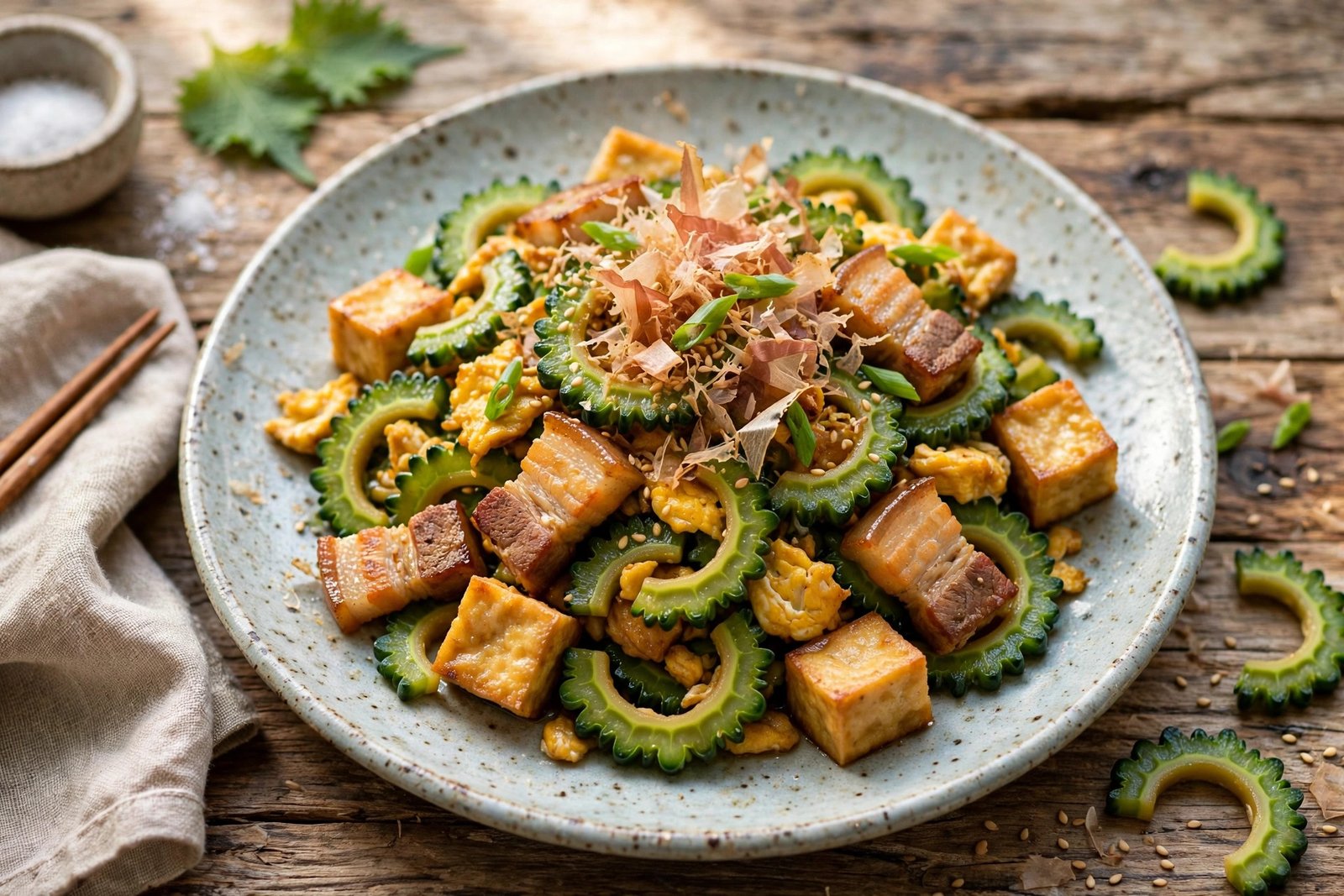
Bitter melon, golden tofu and fluffy egg come together in this Okinawan classic. Goya champuru is savoury, healthy and full of the island's famous longevity spirit — and the bitterness, once tamed, is the whole point.
The story behind Goya Champuru
Okinawa, Japan's southernmost islands, is famous for its long-lived people — one of the world's Blue Zones, where centenarians are common and diet is given much of the credit. Goya, the bitter melon, is at the centre of that diet: a warty, bright green fruit, bitter enough to make a first-timer wince, and beloved in Okinawa for exactly that bitterness. Champuru means mixed in the Okinawan dialect, and goya champuru is the island's signature stir-fry: bitter melon, tofu, egg and pork, mixed together in a hot pan.
What makes it special is the bitterness itself. Bitter melon is not bitter by accident — its bitterness is its character, and Okinawan cooking does not try to remove it, only to tame it. Salted, rinsed and stir-fried, the bitterness softens into a pleasant, bracing edge, like dark leafy greens or good coffee, and the egg and pork and tofu balance it out. It is a flavour that grows on you, and people who learn to love goya become devoted to it.
The bitter melon deserves an introduction. Goya, also called bitter gourd, is a knobbly green fruit with a warty skin, white flesh, and seeds in a spongy pith. It is rich in vitamins and low in calories, and it has been used in traditional medicine across Asia for centuries. Choose one that is firm and bright green — a soft, yellowing goya is overripe and more bitter, not less. The seeds and pith are scooped out and discarded; the flesh is sliced thin and salted before cooking.
In Okinawa, champuru is a whole family of dishes, not just one: tofu champuru, fu champuru (with wheat gluten), and goya champuru are the most common, and they are all built the same way — tofu, vegetables, egg, and a little meat, stir-fried together and seasoned with soy and dashi. Goya champuru is served with steamed rice and miso soup, at home and at small restaurants, and it is the dish that Okinawans miss most when they leave the island.
This recipe serves four and takes thirty minutes, most of it preparing the goya and tofu. It needs bitter melon, firm tofu, pork belly, and eggs — the ingredients are simple, and the cooking is fast. Make it when you want something healthy and different, or when you want to taste what Okinawa tastes like. A plate of goya champuru is a small lesson in loving bitter flavours.
- Prep time
- 15 mins
- Cook time
- 15 mins
- Total time
- 30 mins
- Servings
- 4 servings
- Calories
- 420
Ingredients
- 1 bitter melon (goya), about 300 g
- 300 g firm tofu
- 2 eggs, beaten
- 150 g thinly sliced pork belly
- 1 small onion, sliced
- 2 tbsp soy sauce
- 1 tbsp sake
- 1 tsp dashi granules
- 1 tbsp sesame oil
- 1 tsp salt
- 1/2 tsp sugar
- Bonito flakes, to serve (optional)
Instructions
- Halve the bitter melon lengthways, then scoop out the seeds and the white pith with a spoon. The pith is the most bitter part, so scrape it out thoroughly — a teaspoon works well for getting into the ridges. Slice the halved melon thinly, into half-moons about 3 mm thick.
- Toss the bitter melon slices with the salt and sugar in a bowl, and rest them for 10 minutes. The salt draws out some of the bitterness and softens the slices slightly. After 10 minutes, rinse the slices under cold water and squeeze them dry in a clean tea towel — squeezing out the water also squeezes out some of the bitterness.
- Press the firm tofu between paper towels, with a plate on top, for 10 minutes, to remove as much water as you can. Then tear the tofu into rough chunks by hand, rather than cutting it — torn tofu has craggy edges that crisp up beautifully in the pan, while cut tofu has smooth faces that stay soft.
- Heat the sesame oil in a large frying pan or wok over a medium-high heat. Fry the tofu chunks for 5 to 6 minutes, turning them occasionally, until they are golden on all sides. Do not crowd the pan, or the tofu will steam instead of frying. Set the golden tofu aside on a plate.
- In the same pan, fry the thinly sliced pork belly for 3 to 4 minutes, until cooked through and lightly browned. The pork will release its own fat into the pan, which flavours everything that follows. Add the sliced onion and the bitter melon, and stir-fry for 3 minutes, until the onion softens and the melon is bright green and just tender.
- Return the fried tofu to the pan. Add the soy sauce, sake and dashi granules, and stir for 1 minute, so everything is coated and the seasonings are absorbed. The pan should smell savoury and fragrant, and the sauce should be just enough to coat — this is a stir-fry, not a stew.
- Pour in the beaten eggs, and stir gently with a spatula, lifting and folding the mixture, until the eggs are just set — about 1 minute. Take the pan off the heat while the eggs are still soft and glossy, because they keep cooking in the residual heat. Overcooked eggs go rubbery and dry, and they spoil the dish.
- Serve the champuru at once, spooned onto plates or into bowls, with a scattering of bonito flakes on top if you like. The bonito flakes will dance in the heat of the food. Serve with steamed rice and miso soup, and eat it hot — champuru is at its best straight from the pan.
Pro tips
- Salting the bitter melon tames its bitterness without removing its character. Ten minutes with salt and a little sugar, then a rinse and a squeeze, takes the harsh edge off while keeping the pleasant bitterness that makes goya worth eating. Do not skip this step — unsalted goya is punishingly bitter.
- Tear the tofu by hand for craggy edges that crisp up beautifully. Torn tofu has rough, uneven surfaces that catch the heat and turn golden and crisp, while cut tofu has smooth faces that stay soft. Press the tofu first, to remove as much water as you can, so it fries instead of steaming.
- Cook the eggs last and take them off the heat while still soft; they keep cooking in the pan. The eggs should be just set, glossy and soft, when the pan comes off the heat — a minute in the residual heat will finish them. Eggs cooked until dry in the pan are overcooked by the time they reach the plate.
- A hot pan and quick cooking keep the melon crisp and bright green. The bitter melon should be stir-fried for 3 minutes, no more — it should still have bite, and it should still be bright green. Overcooked goya goes limp and olive-coloured, and it loses its freshness.
- Choose a bitter melon that is firm and bright green, with no soft spots or yellowing. A firm goya is fresh and less bitter; a soft, yellowing goya is overripe and more bitter, not less. The skin should be warty and tight, and the melon should feel heavy for its size.
Variations & serving ideas
For a vegetarian version, leave out the pork and add extra tofu or mushrooms. Sliced shiitake mushrooms, stir-fried with the onion, add an earthy depth that replaces the pork surprisingly well. Use kombu dashi instead of bonito dashi for a fully vegetarian dish, and the champuru loses nothing.
Spam champuru is an Okinawan classic, born of the American military presence on the island: diced Spam, fried until crisp, replaces the pork belly. It sounds unlikely, but it works — the salty, fatty Spam suits the bitter melon, and it is a dish that Okinawans love without apology. Try it once before judging it.
Other proteins work too: thinly sliced chicken, stir-fried with the onion, or a handful of small shrimp, added with the tofu. The champuru method — fry the protein, add the vegetables, return the tofu, season, add the egg — stays the same, and the protein is yours to choose.
More vegetables can join the pan: sliced carrots, bean sprouts, or shredded cabbage, added with the bitter melon. The vegetables should be cut thinly so they cook in the same 3 minutes, and they should not crowd the pan — a champuru is a stir-fry, and a crowded pan steams instead of frying.
For a milder version, blanch the bitter melon slices in boiling water for 1 minute after salting, then rinse and squeeze dry. The blanching removes more of the bitterness, and the melon becomes gentler — a good first step for someone trying goya for the first time, before graduating to the salted-only version.
Getting it right
Taming the bitterness is the first technique, and it is the whole skill of cooking goya. Salt and sugar, rested for 10 minutes, then rinsed and squeezed dry, draw out the bitter compounds and soften the melon. Scraping out the white pith thoroughly helps too — the pith is the most bitter part. The goal is not to remove the bitterness entirely, but to bring it down to a pleasant, bracing level.
The tofu is the second skill. Press it to remove water, tear it by hand for craggy edges, and fry it in a hot pan until golden before anything else goes in. Tofu that is not pressed releases water into the pan and steams instead of frying; tofu that is cut, not torn, has smooth faces that never crisp. Golden, craggy tofu is the texture that makes the dish work.
The most common mistakes are a too-bitter melon, soggy tofu, and rubbery eggs. Too-bitter melon means the salting was skipped or too brief — salt it for the full 10 minutes and squeeze it dry. Soggy tofu means it was not pressed or the pan was crowded — press it well and fry it in batches. And rubbery eggs mean they were cooked too long — add them last, stir gently, and take the pan off the heat while they are still soft.
Storing & reheating
Goya champuru is best eaten fresh, straight from the pan, while the bitter melon is still crisp and bright green and the eggs are still soft. It does not improve with keeping — the melon softens, the eggs firm up, and the dish loses its freshness.
Leftovers keep for 2 days in the fridge in a sealed container. Reheat them gently in a frying pan over a medium heat, stirring, until hot — do not microwave them, or the eggs go rubbery. The bitter melon will be softer on reheating, but the dish is still good. Do not freeze champuru; the tofu and eggs do not survive freezing.
Frequently asked questions
What does bitter melon taste like?
It is distinctly bitter, like dark leafy greens, but salting and stir-frying soften it. The egg and pork balance it out. The bitterness, once tamed, becomes a pleasant, bracing edge — like good coffee or dark chocolate — and people who learn to love it become devoted to it.
Can I make this vegetarian?
Yes, leave out the pork and add extra tofu or mushrooms. Use kombu dashi instead of bonito for a fully vegetarian version. Sliced shiitake mushrooms, stir-fried with the onion, add an earthy depth that replaces the pork surprisingly well.
Where do I buy bitter melon?
Asian grocery shops usually stock it, often labelled goya or bitter gourd. Choose one that is firm and bright green, with no soft spots or yellowing. It is also sometimes available at farmers' markets in summer, when it is in season.
Is goya champuru healthy?
Very. Bitter melon is rich in vitamins and low in calories, and the dish is a staple of Okinawa, famous for its long-lived people. Tofu adds protein, the egg adds richness, and the whole dish is light, savoury, and full of vegetables.
Can I use less bitter melon?
Yes — use half a bitter melon and add more tofu and vegetables to make up the volume. It is a good first step if you are new to goya, and you can increase the amount as you get used to the bitterness. The dish still works with less melon.
What does champuru mean?
Champuru means mixed in the Okinawan dialect, and it describes a family of stir-fried dishes: tofu, vegetables, egg, and a little meat, all mixed together in a hot pan. Goya champuru, tofu champuru, and fu champuru are the most common, and they are all built the same way.