Gyudon Recipe
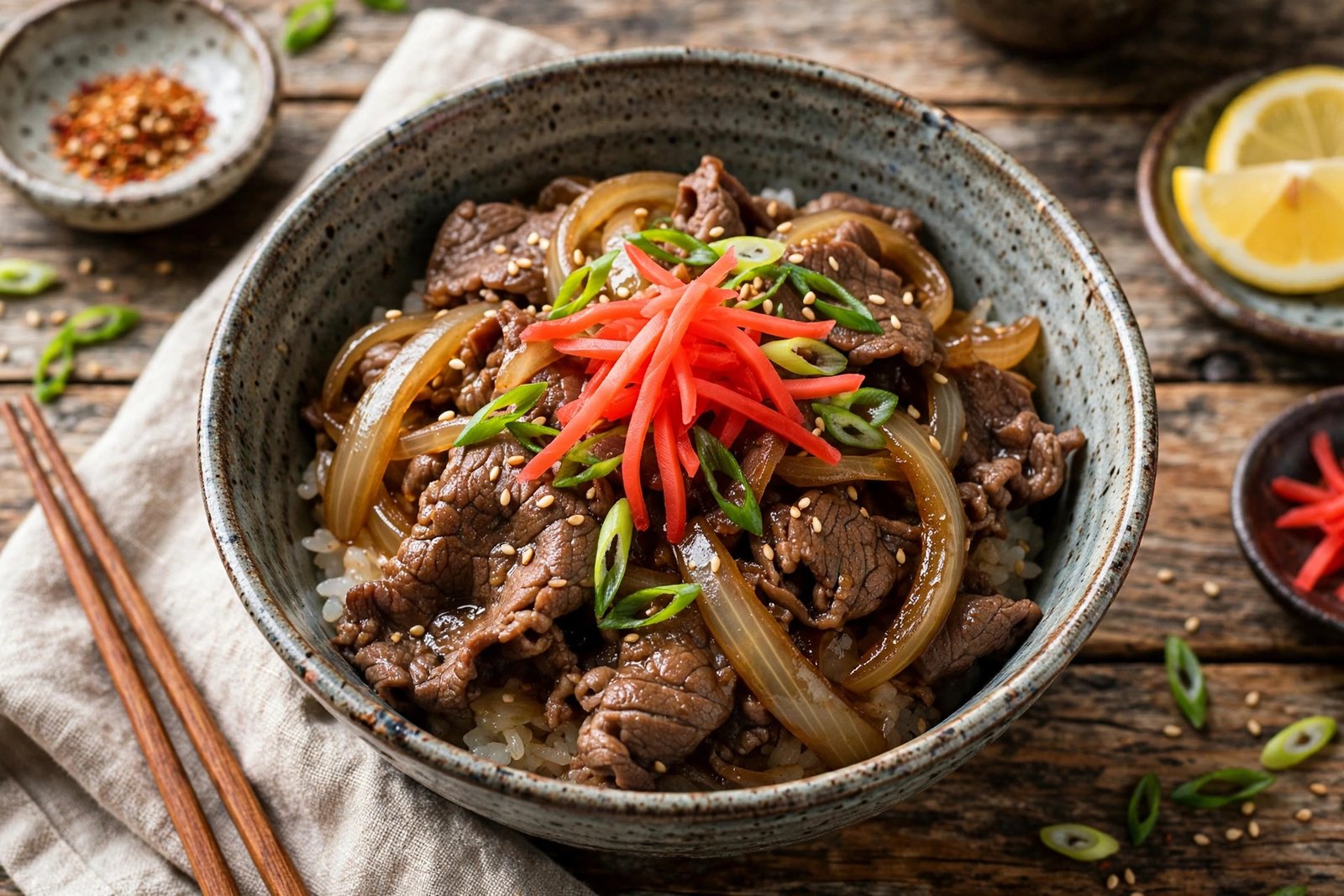
Gyudon is Japan's ultimate comfort bowl: paper-thin beef and sweet onion simmered in a soy, mirin and dashi sauce, spooned over hot rice. It is fast, cheap and deeply satisfying, the kind of meal that takes twenty minutes and tastes like it took hours. A soft egg on top makes it complete.
The story behind Gyudon
Gyudon is Japan's fast food, and it is better than most fast food anywhere. Thin slices of beef and onion, simmered in a sweet-savoury sauce of dashi, soy, mirin and sugar, served over a bowl of hot rice. It takes twenty minutes to make, costs very little, and satisfies completely. In Japan it is sold by chains like Yoshinoya and Sukiya, where office workers and students eat it standing at the counter, and it is made at home just as often.
The dish dates back to the Meiji era, in the late 1800s, when Japan opened to the West and beef became more widely available. Before then, beef was rarely eaten in Japan. Gyudon, and its cousin sukiyaki, were among the first dishes to make beef a normal part of Japanese cooking. The name simply means beef bowl: gyu is beef, don is a bowl of rice with something on top. It is one of a family of donburi dishes that includes chicken and egg, pork cutlet, and tempura bowls.
What makes it special is the sauce. Dashi, soy sauce, mirin and sugar combine into a broth that is sweet, salty and deeply savoury, and the beef and onion soak it up as they simmer. The onions turn soft and sweet, the beef stays tender, and the sauce pools into the rice underneath, flavouring every grain. A raw or soft-cooked egg on top, broken over the beef, adds richness and ties the whole bowl together.
Make it whenever you need dinner fast. It is a natural choice for a weeknight, a late supper, or a meal for one that still feels like a proper dinner. It scales easily, and the topping can be made ahead and reheated, which makes it good for meal prep. It is also one of the cheapest satisfying meals you can cook.
The dish is also a good introduction to Japanese home cooking. It teaches dashi, the fundamental Japanese stock, and the balance of soy, mirin and sugar that underpins so many Japanese dishes. Master gyudon and you have the base for nikujaga, sukiyaki and a dozen other simmered dishes.
In Japan, gyudon is also a late-night food, eaten after work or after a night out, when something hot, fast and satisfying is called for. The big chains stay open around the clock, and a bowl of gyudon at midnight is a familiar ritual for many Japanese workers. At home, it is the dish you make when the fridge is nearly empty and you still want a proper dinner: beef, onion, sauce and rice, nothing more.
- Prep time
- 15 mins
- Cook time
- 20 mins
- Total time
- 35 mins
- Servings
- 4 servings
- Calories
- 590
Ingredients
- 400 g very thinly sliced beef
- 2 onions, thinly sliced
- 240 ml dashi stock
- 3 tbsp soy sauce
- 2 tbsp mirin
- 1 tbsp sugar
- 1 tbsp sake (optional)
- 400 g cooked short-grain rice
- Pickled ginger and spring onions, to serve
Instructions
- Make the sauce: put the dashi stock, soy sauce, mirin, sugar and sake if using in a wide pan or shallow pot. Stir until the sugar dissolves. The sauce should taste sweet and salty, with the dashi in the background. It will taste a little strong on its own, but it mellows as the beef and onion cook in it.
- Add the thinly sliced onions to the sauce and bring to a gentle simmer over medium heat. Cook for 5-6 minutes, until the onions are soft and translucent and starting to turn sweet. The onions should be tender but not falling apart. They will continue cooking with the beef.
- Add the thinly sliced beef to the pan, a handful at a time, separating the slices as you go so they do not clump together. The beef is sliced paper-thin, so it cooks in 2-3 minutes. Stir gently to make sure every slice is coated in sauce and submerged.
- Simmer for 3-4 minutes, until the beef is cooked through and has absorbed the sauce. The beef should be tender and glossy, with no pink remaining. Do not overcook it: thin beef goes tough if simmered too long. The sauce should have reduced slightly and be clinging to the beef and onions.
- Taste the sauce and adjust: add a little more soy sauce if it needs salt, or a pinch more sugar if it tastes too sharp. The finished topping should be sweet and savoury, with enough sauce to spoon over the rice. If the sauce has reduced too much, add a splash of dashi or water.
- Divide the hot cooked rice between four deep bowls. The rice should be freshly cooked and steaming: cold or lukewarm rice makes the whole dish feel flat. Use short-grain rice if you can, as it is stickier and holds the sauce better than long-grain.
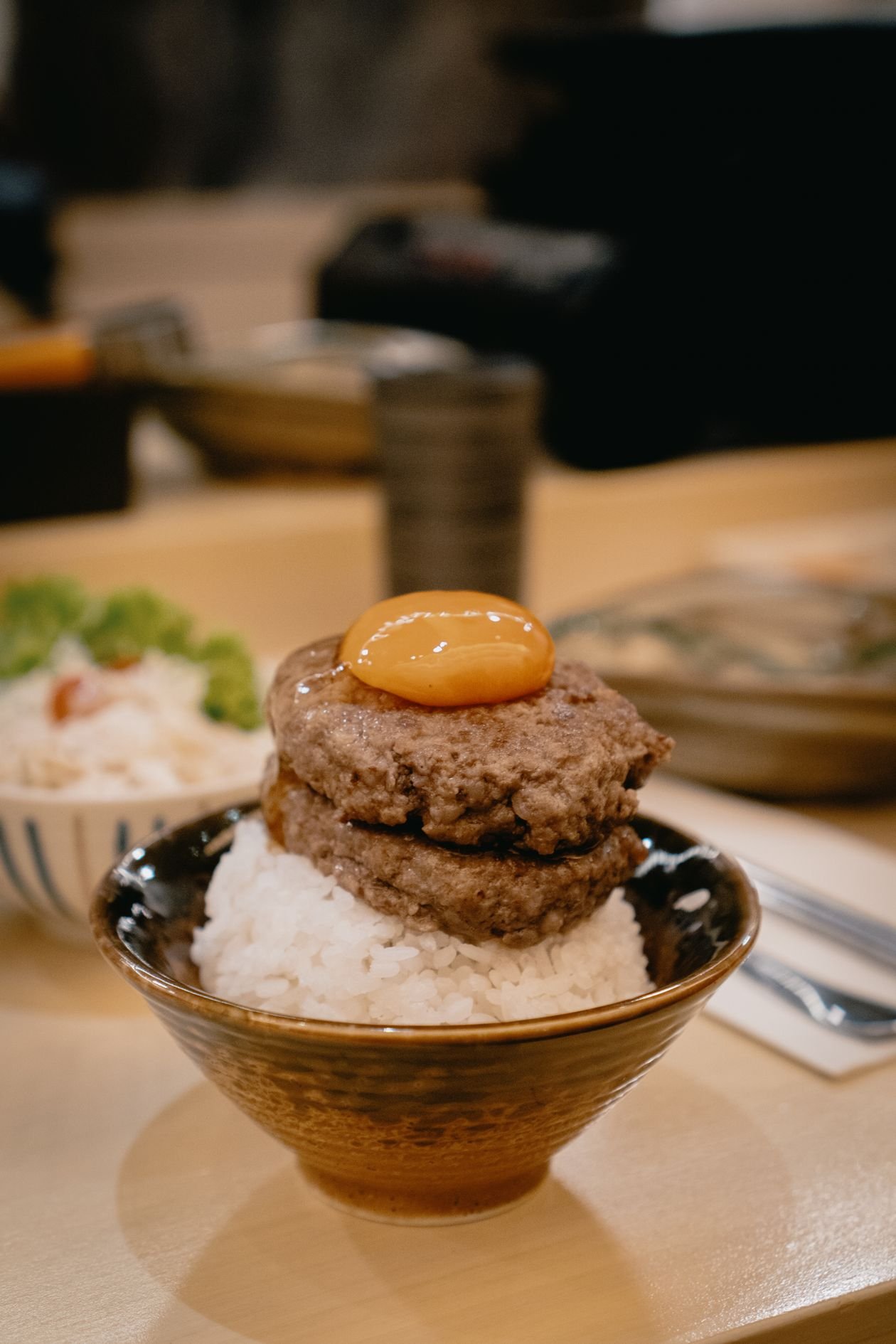
- Spoon the beef and onion topping generously over the rice, along with plenty of sauce. The sauce should pool into the rice, flavouring it as you eat. If you like, crack a raw egg over the top, or add a soft-poached egg, and let the heat of the beef cook it slightly.
- Garnish with pickled ginger and sliced spring onions. Serve at once, with chopsticks and a spoon. Mix the egg through the beef and rice as you eat, and add a little extra pickled ginger on the side for sharpness.
Pro tips
- Slice the beef very thin. Paper-thin slices cook in minutes and stay tender. The easiest way is to freeze the beef for 30-45 minutes until firm, then slice against the grain with a sharp knife. Many Asian butchers and supermarkets sell pre-sliced beef for hotpot, which is perfect for gyudon.
- Do not overcook the beef. Thin slices need only 2-3 minutes in the simmering sauce. Longer and they turn tough and dry. Add the beef last, after the onions are soft, and take the pan off the heat as soon as the beef is cooked through.
- Use good dashi. The dashi is the base of the sauce, and its flavour carries the whole dish. Instant dashi powder, dissolved in hot water, is fine for a weeknight. Homemade dashi, from kombu and bonito flakes, is better if you have time. Avoid plain water: the dish will taste flat.
- Cook the onions until soft and sweet. The onions need 5-6 minutes of simmering before the beef goes in. Undercooked onions stay sharp and crunchy, which fights the soft, savoury character of the dish. They should be tender and translucent, almost melting into the sauce.
- Serve over hot rice. The rice should be freshly cooked and steaming. Cold or reheated rice makes the dish feel tired, and the sauce does not soak in properly. Time the rice so it is ready just as the topping finishes cooking.
Variations & serving ideas
The protein can change easily. Chicken thigh, sliced thin, makes toridon, a lighter version that cooks the same way. Pork, thinly sliced, makes butadon, which is slightly richer. For a vegetarian version, use firm tofu, sliced and simmered in the sauce, or a mix of mushrooms, especially shiitake and enoki, which absorb the sauce beautifully.
Cheese gyudon is a popular variation in Japan, where a slice of melted cheese is laid over the beef before serving. The cheese melts into the hot topping and adds a rich, creamy note. It is not traditional, but it is very popular with children and in gyudon chains. A fried egg, with a runny yolk, is another common addition.
Kimchi gyudon adds a Korean twist: a spoonful of kimchi on top of the beef, with its sourness and heat cutting through the sweetness of the sauce. Pickled ginger is the standard accompaniment, but pickled cucumber or a simple green salad on the side also work well.
For a spicier version, add a teaspoon of chilli flakes to the sauce, or a drizzle of chilli oil at the table. Shichimi togarashi, Japanese seven-spice blend, sprinkled over the top, adds warmth and complexity without overwhelming the dish. A little grated ginger in the sauce adds a fresh, aromatic note.
Getting it right
Thin slicing is the technique that defines gyudon. The beef must be sliced paper-thin, so it cooks in minutes and stays tender. Freezing the beef for 30-45 minutes firms it up enough to slice thinly with a sharp knife. Always slice against the grain: cutting with the grain gives you long, tough fibres, while cutting against it gives you short, tender pieces. If you can buy pre-sliced hotpot beef, use it: it saves time and gives a perfect result.
Simmering, not boiling, is the second key. The sauce should be at a gentle simmer when the beef goes in, not a rolling boil. Boiling toughens thin beef and makes the sauce reduce too fast. A gentle simmer cooks the beef in 2-3 minutes and lets it absorb the sauce without drying out. The onions go in first, so they have time to soften and sweeten before the beef joins them.
Sauce balance is the last thing to get right. The classic ratio is roughly equal parts dashi, soy and mirin, with sugar to taste. The sauce should be sweet and salty, with the dashi providing depth. Taste it before adding the beef, and adjust: more soy for salt, more sugar for sweetness, more mirin for a rounder flavour. The sauce will reduce slightly as it simmers, so it should taste a touch strong at the start.
Storing & reheating
The beef and onion topping keeps in the fridge for up to 3 days in a sealed container, and it reheats well. Warm it gently in a pan over medium heat, adding a splash of dashi or water if the sauce has thickened. The topping also freezes well for up to 2 months: thaw overnight in the fridge and reheat gently.
Cook the rice fresh each time. Reheated rice is fine, but freshly cooked rice makes a noticeable difference to the dish. Store the topping and rice separately, and assemble the bowls just before serving. The pickled ginger and spring onions should always be fresh.
Frequently asked questions
What beef is best for gyudon?
Thinly sliced beef, ideally ribeye or sirloin, cut against the grain. The key is thinness, not the cut: paper-thin slices cook in minutes and stay tender. Pre-sliced hotpot beef from an Asian supermarket is perfect. If slicing yourself, freeze the beef for 30-45 minutes first to firm it up.
Can I make gyudon without dashi?
Dashi is the base of the sauce, and the dish is much better with it. Instant dashi powder, dissolved in hot water, is a good shortcut and is sold in Asian groceries. In a pinch, use a light chicken stock, though the flavour will be different. Plain water makes a flat, one-dimensional sauce.
Is the egg raw in gyudon?
Traditionally, yes: a raw egg is cracked over the hot beef and mixed through, and the heat of the topping cooks it slightly. If you prefer, use a soft-poached egg or a fried egg with a runny yolk instead. Use very fresh eggs if eating them raw, and skip the egg entirely if you are uncomfortable with it.
Can I make gyudon ahead of time?
Yes, the topping keeps in the fridge for up to 3 days and freezes well for up to 2 months. Reheat gently with a splash of dashi or water. Cook the rice fresh each time and assemble the bowls just before serving. It is good for meal prep.
What rice should I use?
Short-grain Japanese rice is ideal: it is slightly sticky and holds the sauce well. Long-grain rice works too, though it is less sticky. The rice should be freshly cooked and hot. Brown rice is a healthier option, though it changes the texture and the sauce does not soak in as well.
What do I serve with gyudon?
Pickled ginger is the classic accompaniment, along with sliced spring onions. A small bowl of miso soup and a simple salad complete the meal. In Japan, gyudon is often served with a raw egg on top and a side of kimchi. It is a complete meal in one bowl on its own.