Dorayaki Recipe
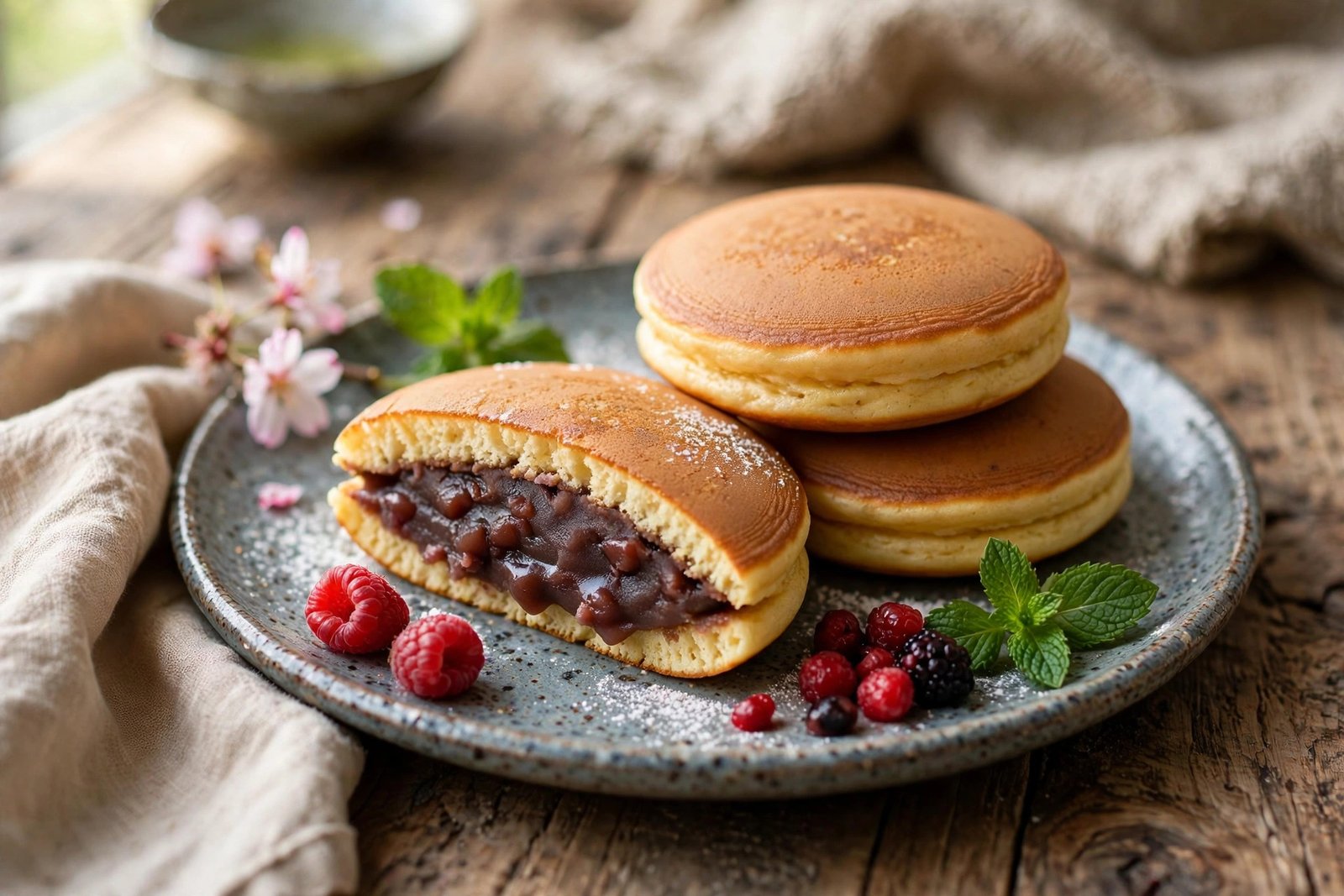
Fluffy golden dorayaki pancakes sandwich a sweet red bean paste in these beloved Japanese treats. Soft, honey-sweet, and wonderfully portable, they are Doraemon's favourite snack — and they are just as good in your kitchen as they are in a Tokyo sweet shop.
The story behind Dorayaki
Dorayaki is one of Japan's most beloved sweets — two small, golden pancakes sandwiched around a filling of sweet red bean paste. The name comes from dora, the Japanese word for gong, because the round, flat shape resembles a gong. It has been made in Japan for over a century, and it is sold in sweet shops, convenience stores, and street stalls across the country.
The pancakes themselves are the heart of dorayaki. They are not like Western pancakes — they are smaller, thicker, and more cake-like, with a fine, even crumb and a deep golden colour. Honey in the batter gives them a gentle sweetness and helps them brown beautifully. The texture should be soft and springy, with a surface that is smooth and unblemished — the mark of a well-made dorayaki is a perfectly even golden-brown face.
The filling is anko, sweet red bean paste, made from adzuki beans cooked with sugar until soft and smooth. It is earthy, sweet, and deeply satisfying — a flavour that is central to Japanese sweets. This recipe uses ready-made anko, which is sold in cans and pouches at Asian grocery stores, but you can make your own if you have the time and the inclination.
Dorayaki are famously the favourite food of Doraemon, the robotic cat from the beloved manga and anime, and that alone has made them famous around the world. But they do not need a cartoon to recommend them — soft, sweet, portable, and endlessly comforting, they are the kind of treat that disappears fast from any plate.
- Prep time
- 25 mins
- Cook time
- 20 mins
- Total time
- 45 mins
- Servings
- 4 servings
- Calories
- 280
Ingredients
- 150 g all-purpose flour
- 2 large eggs
- 100 g granulated sugar
- 1 tbsp honey
- 1 tsp baking powder
- 80 ml water
- Vegetable oil, for the pan
- 250 g sweet red bean paste (anko)
- 1 tsp vanilla extract (optional)
Instructions
- Whisk the eggs and sugar together in a large bowl until pale and slightly thick — about 2 minutes by hand. The mixture should look creamy and fall in a slow ribbon from the whisk. Stir in the honey and the vanilla extract if using. The honey adds sweetness and helps the pancakes brown evenly.
- Sift the flour and baking powder over the egg mixture and fold gently with a spatula, just until combined. Do not overmix — a few small lumps are fine, and overmixing makes the pancakes tough. Add the water and fold again to make a smooth, thick batter. It should fall slowly from a spoon in a thick ribbon.
- Rest the batter for 20 minutes at room temperature. Resting lets the flour hydrate and the baking powder start working, which gives the pancakes a lighter, fluffier texture. While it rests, set out a wire rack for cooling and have the red bean paste ready.
- Heat a non-stick pan over medium-low heat and wipe it with a very thin film of oil — use a folded paper towel to spread it, then wipe off any excess. Too much oil makes the pancakes blotchy; a barely-there film gives a smooth, even golden surface. The pan should be hot enough that a drop of water sizzles gently.
- Pour 2 tablespoons of batter per pancake into the pan, letting it spread into a neat round about 8 cm across. Do not spread it with the spoon — let it settle on its own for the smoothest surface. Cook for 1 to 2 minutes, until bubbles appear on the surface and the edges look set. The underside should be an even golden brown.
- Flip each pancake carefully with a spatula and cook for 30 seconds more on the second side. The second side will be paler than the first — that is normal, since the beautiful golden side faces outward in the finished sandwich. Transfer to a wire rack to cool. Repeat with the remaining batter. You should have 16 pancakes for 8 sandwiches.
- Cool the pancakes completely on the wire rack before filling. Warm pancakes make the bean paste runny and the sandwich falls apart. Once cool, spread a generous spoonful of red bean paste on the flat, paler side of one pancake — about 2 tablespoons — mounding it slightly in the centre.
- Top with a second pancake, golden side out, and gently press the edges together to seal. The paste should peek out slightly at the edges. Serve immediately, or wrap individually in cling film for later. Dorayaki are best eaten the day they are made, when the pancakes are still soft and springy.
Pro tips
- Rest the batter for the full 20 minutes. Resting lets the flour hydrate and the baking powder activate, which gives lighter, fluffier pancakes. Skipping the rest gives denser, flatter dorayaki that do not rise properly in the pan.
- Use a barely-there film of oil in the pan. Too much oil makes the pancake surface blotchy and uneven. Wipe the pan with an oiled paper towel between batches, and wipe off any excess — the surface should look almost dry.
- Cook over medium-low heat, not high. The pancakes need 1 to 2 minutes per side to cook through and brown evenly. High heat burns the outside before the inside sets, giving you a dark, raw-centred pancake. Patience gives the even golden colour.
- Let the batter spread on its own. Pour it in the centre of the pan and let it settle into a round naturally — do not spread it with the spoon. A naturally spread pancake has a smooth, even surface; a pushed one has ridges and uneven thickness.
- Cool the pancakes completely before filling. Warm pancakes soften the bean paste and make the sandwich slide apart. Cool pancakes hold the filling neatly and give the sandwich its structure. A wire rack lets air circulate so the bottoms do not go soggy.
Variations & serving ideas
Matcha dorayaki adds a teaspoon of matcha powder to the batter, giving the pancakes a pale green colour and a gentle, slightly bitter tea flavour that pairs beautifully with the sweet red bean filling. Dust the finished sandwiches with a little extra matcha for a striking presentation.
For a custard dorayaki, replace the red bean paste with a thick vanilla custard or pastry cream. The creamy, cool custard against the soft, warm pancakes is a different kind of delicious, and it appeals to anyone who is not yet a red bean convert. Add a few fresh strawberries for colour and freshness.
Chocolate dorayaki uses a chocolate spread or ganache as the filling — Nutella works well, or a simple chocolate buttercream. The combination of honey-sweet pancakes and rich chocolate is deeply comforting, and it is a version that children especially love. A dusting of cocoa on top finishes it.
The pancakes themselves can vary. Add a little grated lemon zest to the batter for brightness, or a spoonful of brown sugar instead of white for a deeper, more caramel-like sweetness. Serve dorayaki with green tea, as they do in Japan, or with a glass of cold milk for a simple afternoon treat.
A savoury dorayaki is an unusual but delicious idea — fill the pancakes with a spoonful of sweetened egg salad, or with cream cheese and a little smoked salmon, for a tea-sandwich style snack. The honey-sweet pancakes against a savoury filling is a surprising combination that works much better than it sounds. It is the kind of thing to try once you have mastered the basic pancake.
Getting it right
The technique that defines dorayaki is the pancake. The batter — eggs, sugar, honey, flour, baking powder, and water — is whisked until smooth, rested for 20 minutes, and cooked in a nearly dry non-stick pan over medium-low heat. The goal is a pancake with a perfectly even golden-brown face, smooth and unblemished, with a soft, springy interior. The even colour comes from the right heat, the right amount of oil, and letting the batter spread on its own.
Heat control is the second skill. Medium-low heat gives the pancakes 1 to 2 minutes per side to cook through and brown evenly. Too hot and they burn on the outside while staying raw inside. Too cool and they do not brown at all, staying pale and flat. The first pancake is always a test — adjust the heat based on how it turns out, and the rest will follow.
The most common mistake is too much oil in the pan, which makes the surface blotchy and uneven. Wipe the pan with an oiled paper towel and then wipe off the excess — the surface should look almost dry. The second mistake is overmixing the batter, which develops the gluten and makes the pancakes tough. Fold gently, just until combined, and let the rest do the work.
The first pancake is always a test. Use it to judge your heat — if it browns too fast, turn the heat down; if it stays pale after 2 minutes, turn it up slightly. Once you find the right setting, the rest of the batch will be consistent. Do not be discouraged by a blotchy first pancake; even experienced cooks sacrifice the first one.
Storing & reheating
Dorayaki are best eaten the day they are made, when the pancakes are soft and springy. Store them at room temperature for up to 1 day, wrapped individually in cling film to keep them from drying out. The filling keeps them moist, but the pancakes firm up over time.
Unfilled pancakes keep in a sealed container at room temperature for 2 days, or in the freezer for up to a month — layer them with baking paper. Thaw at room temperature and fill just before serving. The red bean paste keeps in the fridge for a week once opened.
Frequently asked questions
What is anko, and where do I find it?
Anko is sweet red bean paste, made from adzuki beans cooked with sugar. It is sold in cans, pouches, and tubs at Asian grocery stores, in smooth (koshian) and chunky (tsubuan) versions. Either works for dorayaki — smooth is more refined, chunky is more rustic. You can also make it at home from dried adzuki beans, though it takes a couple of hours.
Why are my dorayaki pancakes blotchy?
Too much oil in the pan. Wipe the pan with an oiled paper towel and then wipe off the excess — the surface should look almost dry. A thin film of oil gives an even golden surface; a pool of oil gives blotches. Also, let the batter spread on its own rather than pushing it with the spoon.
Can I make dorayaki without honey?
Yes. Replace the honey with an extra tablespoon of sugar, or use maple syrup or golden syrup. The honey adds a gentle floral sweetness and helps the pancakes brown, but the recipe works without it. The pancakes will be slightly paler and a little less fragrant.
Why are my pancakes flat and dense?
The batter was overmixed, or it was not rested. Fold the flour in gently, just until combined — overmixing develops gluten and makes tough, flat pancakes. Rest the batter for 20 minutes so the flour hydrates and the baking powder activates. Also check that your baking powder is fresh — old baking powder loses its lift.
Can I freeze dorayaki?
Yes. Freeze the unfilled pancakes in a single layer, then transfer to a freezer bag with baking paper between them, for up to a month. Thaw at room temperature and fill just before serving. Filled dorayaki can also be frozen, but the texture of the pancakes softens slightly on thawing.
What should I serve with dorayaki?
Green tea is the traditional partner — the slight bitterness of the tea balances the sweetness of the pancakes. A glass of cold milk is also good, especially for children. Dorayaki are a snack, not a dessert course, so serve them in the afternoon with tea, or pack them for a picnic.