Egg Curry Recipe
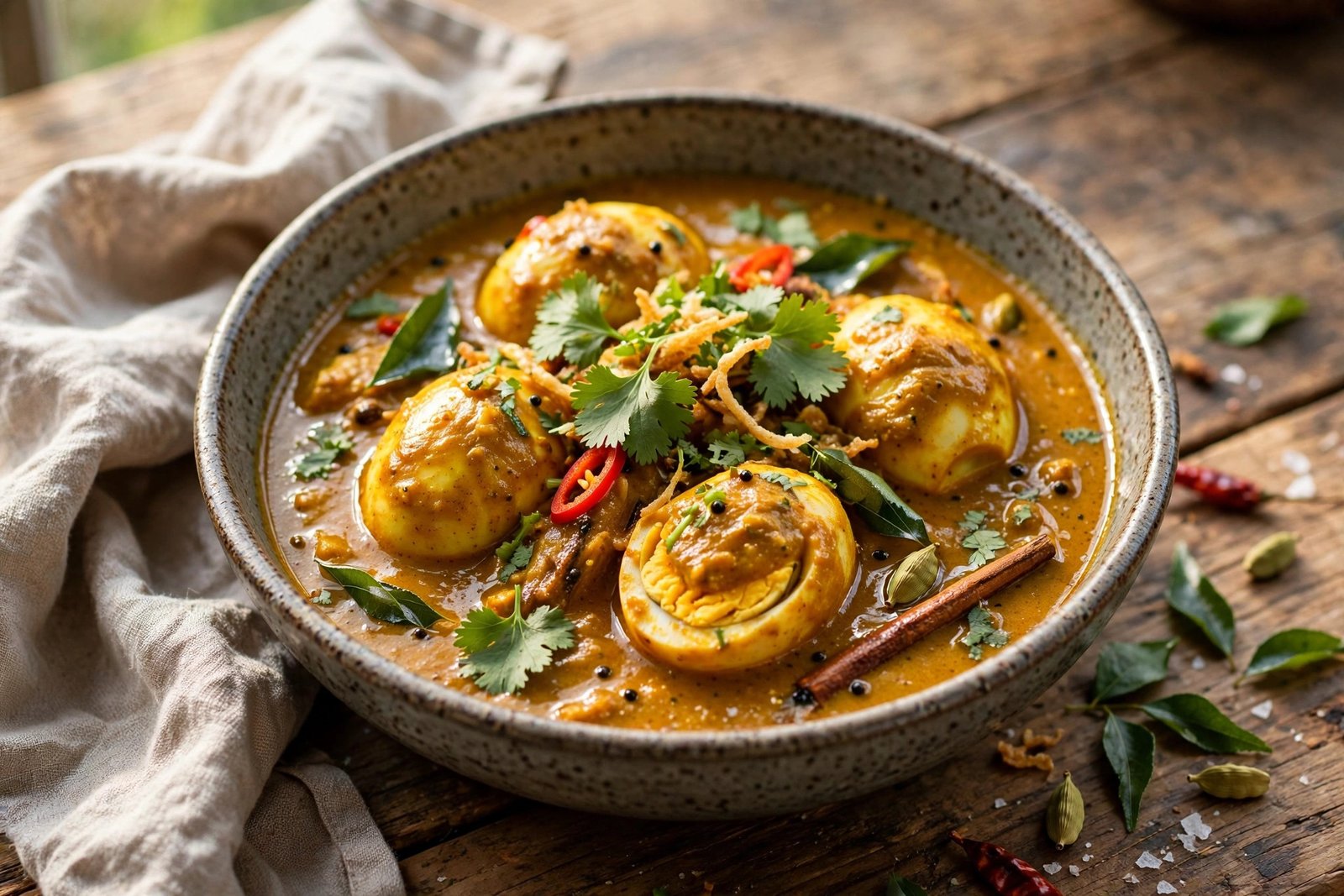
Egg Curry is the weeknight hero of Indian home cooking: hard-boiled eggs gently simmered in a rich, spiced onion-tomato gravy. It is quick, inexpensive and deeply satisfying. The eggs soak up the masala beautifully, and a final swirl of cream makes it feel special.
The story behind Egg Curry
Egg curry is the weeknight hero of Indian home cooking, and it is one of the most comforting dishes in the repertoire. Hard-boiled eggs, gently simmered in a rich, spiced onion-tomato gravy, until the eggs soak up the masala and the gravy turns silky. It is quick, inexpensive and deeply satisfying — the kind of dish that turns a handful of pantry ingredients into dinner.
The dish appears across India, in countless regional versions. In the north, the gravy is rich with cream and garam masala. In the south, coconut milk and curry leaves give it a different character. In Bengal, the eggs are fried until golden before they go into the gravy. Each version reflects the region that made it, and each one is delicious.
What makes egg curry special is the way the eggs absorb the gravy. The scored eggs sit in the masala and drink it in, so every bite is flavoured through. The gravy itself is the heart of the dish — onions cooked until golden, tomatoes and spices simmered until the oil separates, and a final swirl of cream that makes it feel special.
Make it on a weeknight when you want something fast and satisfying. It takes 45 minutes, uses one pan, and feeds a family generously. Serve it with basmati rice or warm roti, and it is a complete meal. The leftovers are even better the next day.
Indian egg dishes are a world of their own. Egg bhurji is scrambled eggs with spices, egg masala is eggs in a dry spice mix, and egg curry is the gravy version. Each one is a staple of home cooking, each one is quick and affordable, and each one proves that eggs are one of the great ingredients.
- Prep time
- 15 mins
- Cook time
- 30 mins
- Total time
- 45 mins
- Servings
- 4 servings
- Calories
- 420
Ingredients
- 6 large eggs
- 2 onions, finely chopped
- 2 tomatoes, pureed
- 3 tablespoons vegetable oil
- 1 teaspoon cumin seeds
- 1 tablespoon ginger-garlic paste
- 1 teaspoon turmeric powder
- 1 teaspoon red chilli powder
- 1 teaspoon garam masala
- 1 teaspoon coriander powder
- 100 ml cream or coconut milk
- Fresh coriander leaves, to serve
- Salt to taste
Instructions
- Start by boiling the eggs. Put the eggs in a saucepan, cover with cold water, and bring to a boil. Boil for 10 minutes, then drain and cool in cold water. Peel the eggs carefully and lightly score each one with a knife — 2 or 3 shallow cuts around the egg. The scoring lets the gravy flavour soak into the eggs.
- While the eggs cool, prepare the masala base. Finely chop the onions — they should be in small, even pieces so they cook down into the gravy. Puree the tomatoes in a blender until smooth. Measure out the spices and have the ginger-garlic paste ready. The cooking moves fast once the pan is hot.
- Heat the vegetable oil in a large pan or kadhai over a medium-high heat. Add the cumin seeds and let them sizzle for 30 seconds, until they darken slightly and smell fragrant. The cumin seeds crackling in hot oil is the first flavour of the dish — it sets the tone for everything that follows.
- Add the finely chopped onions to the pan and cook for 8 to 10 minutes, stirring often, until they turn a deep golden brown. The onions should be soft, sweet and caramelised — this is the foundation of the gravy. Do not rush the onions; pale onions make a pale gravy. Golden onions make a rich one.
- Add the ginger-garlic paste and fry for 1 minute, stirring constantly, until the raw smell disappears and the paste turns fragrant. The paste should sizzle and darken slightly. One minute is enough — the paste burns quickly if left too long.
- Add the tomato puree and the spices — turmeric, red chilli powder, garam masala and coriander powder. Stir well and cook for 8 to 10 minutes, stirring often, until the masala thickens and the oil separates at the edges. The oil separating is the sign that the masala is cooked — the tomatoes have lost their rawness and the spices have bloomed.
- Pour in 200 ml of water and stir well, scraping up any masala from the bottom of the pan. The gravy should be thick and rich, a deep orange-red colour. Bring it to a gentle simmer and taste — it should be savoury, warmly spiced and well seasoned. Add salt to taste.
- Add the scored eggs to the gravy, gently tucking them into the sauce. Spoon the gravy over the eggs so they are coated. Simmer gently for 10 minutes, turning the eggs once, so they absorb the masala. The gravy thickens slightly and the eggs take on the colour of the spices.
- Stir in the cream or coconut milk and simmer for 2 minutes more. The cream softens the heat and enriches the gravy, turning it silky and smooth. Do not boil the gravy hard after the cream goes in — a gentle simmer is enough. The gravy should be glossy and fragrant.
- Garnish the egg curry with fresh coriander leaves and serve hot, with steamed basmati rice, roti or naan. The rice soaks up the gravy, and the roti is for scooping. Serve it straight from the pan, with the eggs tucked in the rich, red gravy.
Pro tips
- Scoring the eggs helps the gravy flavour soak into them. Two or 3 shallow cuts around each egg let the masala penetrate the white. Unscored eggs stay bland inside, no matter how long they simmer. The scoring takes a minute and it transforms the dish.
- Fry the peeled eggs briefly in a little oil for a golden skin. A minute in hot oil gives the eggs a golden, slightly crisp exterior that holds up in the gravy and adds texture. It is a Bengal technique, and it makes the eggs look and taste wonderful.
- Cook the masala until the oil separates — that is when the flavours are ready. The oil separating at the edges of the pan is the sign that the tomatoes have lost their rawness and the spices have bloomed. An undercooked masala tastes raw and flat; a cooked one tastes deep and rich.
- Adjust the chilli to your taste; the cream softens the heat. The recipe as written is mildly spiced. Add more chilli powder for heat, or more cream for gentleness. The cream is a safety valve — it tames the heat without dulling the flavour.
- Cook the onions until deeply golden for a rich gravy. Pale onions make a pale, thin gravy; golden onions make a rich, sweet one. Eight to 10 minutes of patient cooking is the investment that pays off in the finished dish.
Variations & serving ideas
A South Indian egg curry uses coconut milk instead of cream, with curry leaves and mustard seeds in the tempering. The coconut milk gives the gravy a rich, tropical flavour, and the curry leaves add a distinctive aroma. It is a completely different dish, and it is wonderful with appam or steamed rice.
A Bengal egg curry fries the eggs until golden before they go into the gravy, and uses potatoes in the masala. The potatoes absorb the gravy and add substance, turning the dish into a complete meal. It is the version served at family lunches in Kolkata, with rice and a squeeze of lime.
Extra vegetables make the curry heartier. Diced potatoes, added with the water, cook in the gravy and turn soft and flavourful. Peas add sweetness and colour. Spinach, wilted in at the end, adds freshness. The eggs remain the star, but the vegetables make the dish more substantial.
A spicy egg curry adds extra chilli powder, a diced green chilli with the onions, and a pinch of cayenne. The heat builds slowly and pairs well with the richness of the cream. Serve it with cooling raita on the side. The recipe as written is mild, so there is plenty of room to turn up the fire.
A dry egg masala skips the water and the cream, and cooks the eggs in the thick masala until it clings to them. The result is a dry, intensely flavoured dish that works as a side or a sandwich filling. It is a different way to enjoy the same flavours.
Serve egg curry with a cucumber raita on the side — yoghurt, grated cucumber, cumin and mint. The cool raita balances the warm spices of the curry. A simple salad of onion, tomato and lemon completes the meal. It is a dinner that satisfies everyone.
Getting it right
The key technique is cooking the masala properly. Onions until golden, ginger-garlic paste until fragrant, tomatoes and spices until the oil separates. Each stage builds on the last, and the oil separating is the sign that the masala is ready. An undercooked masala tastes raw; a cooked one tastes deep and rich.
The onions are the second skill. Eight to 10 minutes of patient cooking, stirring often, until they turn a deep golden brown. The onions are the foundation of the gravy — their sweetness and depth come from the slow caramelisation. Pale onions make a pale gravy. Golden onions make a rich one.
Scoring the eggs is the third piece. Two or 3 shallow cuts around each egg let the masala penetrate the white. The eggs simmer in the gravy for 10 minutes, absorbing the flavour through the cuts. Unscored eggs stay bland inside. The scoring is a small step with a big result.
The cream is the fourth skill. It goes in at the end, after the eggs have simmered, and it simmers gently for 2 minutes. The cream softens the heat and enriches the gravy. Boiling the gravy hard after the cream goes in can split it — a gentle simmer is enough. The gravy should be glossy and smooth.
Seasoning gradually is the final piece. Salt goes in with the gravy, and the chilli is adjusted to taste. The cream softens the heat, so taste the gravy before the cream goes in and after — the balance changes. A well-seasoned egg curry is warmly spiced, savoury and rich.
Storing & reheating
Egg curry keeps in the fridge for up to 2 days in a covered container, and the flavour deepens overnight as the eggs absorb more of the masala. The gravy thickens slightly — add a splash of water when reheating. It is an ideal make-ahead dish for a busy week.
To reheat, warm the curry gently in a pan over a low heat, stirring often, until heated through. The microwave works for a single portion. Do not boil the curry hard — the eggs toughen and the cream can split. A gentle reheat keeps the eggs tender and the gravy smooth.
Do not freeze egg curry. The eggs go rubbery and watery on thawing, and the cream sauce separates. It is a dish to make fresh and eat within a couple of days. The masala base, without the eggs and cream, can be frozen for a quick start.
Frequently asked questions
What is egg curry?
Egg curry is an Indian dish of boiled eggs simmered in a spiced tomato and onion gravy. The eggs absorb the masala, and the gravy is enriched with cream or coconut milk. It is a staple of Indian home cooking.
Can I make egg curry ahead?
Yes, it keeps for 2 days in the fridge and the flavour deepens overnight as the eggs absorb the masala. Reheat gently in a pan with a splash of water. Do not freeze it — the eggs go rubbery.
Is egg curry spicy?
It is mildly spiced. Use less chilli powder and more cream for a gentler version, or add more chilli for heat. The cream softens the heat without dulling the flavour.
What should I serve with egg curry?
Steamed basmati rice, roti or naan all work wonderfully with the rich gravy. The rice soaks up the sauce, and the roti is for scooping. A cucumber raita on the side is a lovely cooling contrast.
Why score the eggs?
Scoring lets the gravy flavour soak into the eggs. Two or 3 shallow cuts around each egg allow the masala to penetrate the white. Unscored eggs stay bland inside, no matter how long they simmer.
Can I use coconut milk instead of cream?
Yes, coconut milk gives the curry a South Indian character, with a rich, tropical flavour. Use the same amount, and add curry leaves to the tempering for an authentic South Indian taste.