Fish Moilee Recipe
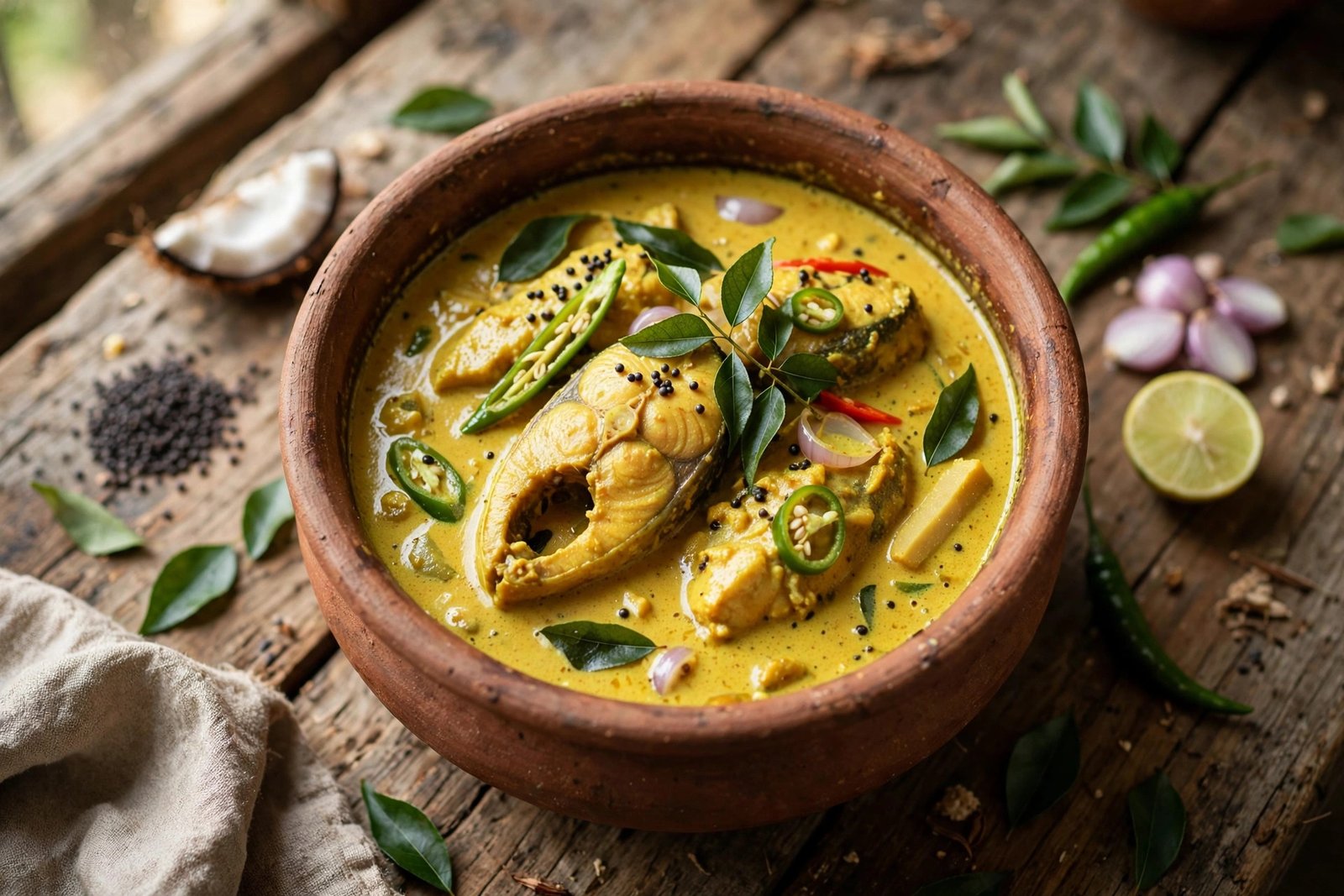
Fish Moilee is a gentle Kerala curry of fish poached in a silky coconut milk sauce with turmeric, green chilli and curry leaves. Creamy, lightly spiced and beautifully delicate, it is the kind of curry that tastes like the coast — fresh, fragrant and quietly luxurious.
The story behind Fish Moilee
Fish moilee — also spelled molee — is a signature dish of Kerala, the lush coastal state in south-west India where coconut palms line every road and the fishing boats come in at dawn. It is a curry of remarkable gentleness: fish poached in coconut milk with turmeric, green chillies and curry leaves, with no heavy spices and no fierce heat.
The dish has a fascinating history. It is said to have been influenced by Portuguese cooking during the colonial era — the word moilee may come from the Portuguese molho, meaning sauce. The result is a curry that feels both Indian and European: coconut milk and curry leaves meet a gentle, creamy technique.
What makes it special is its delicacy. The coconut milk is never boiled hard — it simmers gently, so it stays silky and does not split. The fish poaches in the sauce, absorbing the flavour of turmeric and ginger while staying moist and flaky. The whole dish is light, fragrant and elegant.
Turmeric is the spice that defines the colour and much of the flavour. Half a teaspoon turns the sauce a soft, golden yellow and adds an earthy warmth. It is not a hot curry — the green chillies add a gentle heat, but the overall feeling is mild and soothing.
Curry leaves are the aromatic backbone. Fried briefly in coconut oil with mustard and fenugreek seeds, they release a fragrance that is unmistakably South Indian — citrusy, nutty and warm. They are not a garnish; they are a main flavour.
The fish should be firm and white — kingfish, seer fish, pomfret or cod all work well. The pieces are cut into chunks, seasoned with turmeric and salt, and left for 10 minutes before cooking. That brief rest firms the flesh and helps it hold together in the sauce.
Fish moilee is traditionally served with appam — the lacy, bowl-shaped rice pancakes from Kerala — whose soft centres soak up the coconut sauce beautifully. It is also lovely with steamed rice or idiappam (string hoppers).
Cook it when you want a curry that is light rather than fiery — a summer evening, a lunch with friends, or any day when you fancy fish cooked with care. It takes 45 minutes and the result is quietly spectacular.
The economy is generous. A firm white fish, a tin of coconut milk and a handful of spices make a curry that feeds four and tastes like a coastal holiday. It is proof that gentle cooking can be just as memorable as bold cooking.
Fish moilee endures because it is a dish of balance — creamy but not heavy, spiced but not hot, simple but not plain. Every cook adjusts the chillies and the coconut to their own taste, and every pot is slightly different.
The Portuguese influence on Kerala cooking is a reminder of how food travels. Traders and colonists brought new ingredients and techniques, and local cooks absorbed them into their own traditions. Fish moilee is the result — a curry that feels both familiar and surprising, Indian and European at once.
- Prep time
- 15 mins
- Cook time
- 30 mins
- Total time
- 45 mins
- Servings
- 4 servings
- Calories
- 380
Ingredients
- 600 g firm white fish fillets, cut into chunks
- 400 ml coconut milk
- 1 onion, thinly sliced
- 1 tablespoon ginger, finely chopped
- 2 green chillies, slit
- 1/2 teaspoon turmeric and 1/2 teaspoon crushed black peppercorns
- 10 curry leaves
- 1 tablespoon coconut oil
- 1 teaspoon mustard seeds
- 1/2 teaspoon fenugreek seeds
- 1 tomato, sliced
- 1 tablespoon lemon juice
- 1 teaspoon salt, or to taste
- Fresh coriander, to garnish
Instructions
- Sprinkle the fish pieces with half the turmeric and the salt, and set aside for 10 minutes. This brief rest seasons the fish and firms the flesh slightly, which helps the pieces hold together in the sauce.
- Heat the coconut oil in a wide pan over medium heat. Add the mustard seeds and fenugreek seeds and let them pop for 30 seconds — the mustard seeds will crackle and the fenugreek will turn a shade darker. Do not let the fenugreek burn, or it will taste bitter.
- Add the sliced onion, chopped ginger, slit green chillies and curry leaves. Fry gently for 5 minutes, stirring often, until the onion softens but does not brown. You want sweetness, not colour — the onion should turn translucent and soft.
- Add the remaining turmeric, crushed black peppercorns and sliced tomato. Cook for 2 minutes, until the tomato begins to soften and the turmeric stains the oil a soft golden yellow.
- Pour in the coconut milk and bring it to a gentle simmer — never a rolling boil, or the coconut milk may split and turn grainy. The surface should tremble gently, with small bubbles at the edges.
- Slide the fish pieces into the sauce in a single layer, cover the pan, and poach on low heat for 8 to 10 minutes, until the fish flakes easily with a fork. Do not stir roughly — the fish is delicate and will break apart.
- Stir in the lemon juice, taste for salt, and adjust the seasoning. The lemon brightens the rich coconut sauce and lifts the whole dish.
- Garnish with fresh coriander and serve hot with appam, steamed rice or idiappam. Spoon the sauce generously over the fish — it is too good to leave in the pan.
Pro tips
- Never boil coconut milk hard. A gentle simmer keeps it silky; a rolling boil makes it split and turn grainy.
- Season the fish and rest it for 10 minutes before cooking. The salt firms the flesh and helps the pieces hold their shape.
- Do not brown the onion. This is a gentle curry — the onion should soften and turn translucent, not caramelise.
- Use full-fat coconut milk. Light coconut milk is too thin and will not give the sauce its silky, coating texture.
- Add the lemon juice at the very end, off the heat. Lemon juice cooked for a long time turns dull and bitter.
Variations & serving ideas
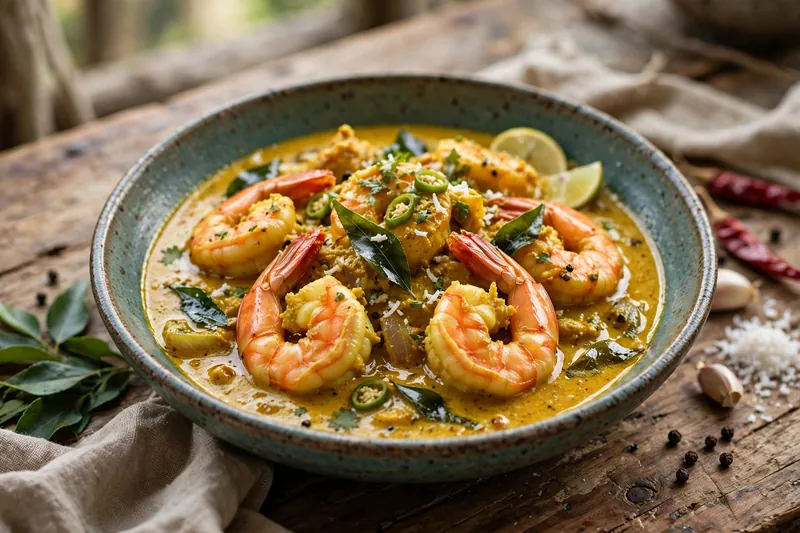
Use prawns instead of fish for a quicker version — they poach in just 3 to 4 minutes and their sweetness pairs beautifully with the coconut milk. Add them in the last few minutes so they stay tender.
Make it with chicken for a heartier curry — use boneless thigh pieces and simmer them in the coconut milk for 15 minutes. The gentle spices suit chicken just as well as fish.
For a vegetarian version, use cauliflower, potatoes and green beans, simmered in the coconut milk until tender. The vegetables absorb the turmeric and ginger beautifully, and the dish stays light and fragrant.
Add a handful of spinach leaves in the last 2 minutes for extra colour and iron. The spinach wilts into the sauce and turns the curry a deeper green-gold.
For a richer sauce, add a spoonful of coconut cream at the end. The cream thickens the sauce and adds a luxurious silkiness — it is not traditional, but it is delicious.
Serve with appam for the classic Kerala experience, or with basmati rice and a simple cucumber salad. The cool, crunchy salad contrasts nicely with the warm, creamy curry.
For drinks, a glass of tender coconut water or a light lager pairs well. The coconut water echoes the flavours in the sauce, and the beer cuts through the richness.
Leftover moilee sauce makes an excellent base for a quick soup — thin it with a little stock, add noodles and vegetables, and you have a fragrant, golden soup in minutes.
Double the sauce and freeze half — it works as a poaching liquid for any firm fish or chicken. Thaw it, bring it to a gentle simmer, and add your protein.
In summer, serve the moilee with a big salad and plenty of lemon. In winter, add a little more ginger and serve it with steaming rice for a warming, comforting meal.
For a tangier version, add a tablespoon of tamarind pulp to the coconut milk. The sour note cuts through the richness and gives the curry a different character — closer to a Goan fish curry, but still unmistakably Keralan.
Getting it right
Poaching in coconut milk is the technique that defines this dish. The milk must be at a gentle simmer — hot enough to cook the fish, cool enough not to split. The surface should tremble, not bubble violently. If the sauce starts to boil hard, lift the pan off the heat for a few seconds.
The tempering — mustard seeds, fenugreek and curry leaves in coconut oil — sets the flavour base. The seeds must pop, which means the oil must be properly hot, but the fenugreek must not burn. Thirty seconds is enough; any longer and the fenugreek turns bitter.
The most common mistake is overcooking the fish. Eight to 10 minutes is enough for most fillets — the fish should flake easily but still be moist. Overcooked fish turns dry and falls apart in the sauce, so check early.
A wide pan is better than a deep pot — the fish sits in a single layer and cooks evenly, and the sauce reduces gently. A crowded pan steams the fish instead of poaching it.
Sourcing good fish matters. Look for firm, white fillets with no fishy smell — fresh fish should smell clean and mild. Frozen fish works well too; thaw it completely and pat it dry before seasoning.
Storing & reheating
Cool and refrigerate in a sealed container for up to 2 days. Fish curries do not keep as long as meat curries, so eat it promptly. The coconut sauce may thicken as it cools — loosen it with a splash of water when reheating.
Do not freeze fish moilee. Freezing changes the texture of the fish and the coconut milk can separate on thawing. Make only as much as you will eat within a couple of days.
Reheat very gently on the stove over low heat until just warmed through — do not boil. A fresh squeeze of lemon and a scattering of coriander will help revive the flavour.
Leftover sauce can be strained and used as a base for a vegetable curry or a soup. The coconut, turmeric and ginger flavours carry well into a second dish.
Frequently asked questions
What is fish moilee?
Fish moilee is a Kerala curry of fish poached in a gentle coconut milk sauce with turmeric, green chillies, ginger and curry leaves. It is creamy, lightly spiced and delicate — quite different from the fiery curries of North India. The name may come from the Portuguese word molho, meaning sauce.
What fish is best for moilee?
A firm white fish that holds together when poached — kingfish, seer fish, pomfret, cod or halibut all work well. The pieces should be cut into chunks and seasoned with turmeric and salt before cooking. Avoid very delicate fish, which may fall apart in the sauce.
Why does my coconut milk split?
Coconut milk splits when it boils hard. Keep it at a gentle simmer — the surface should tremble, not bubble violently. If it does split, whisk in a spoonful of cold coconut milk off the heat, which sometimes brings it back together.
Can I use light coconut milk?
Full-fat coconut milk is strongly recommended — light coconut milk is too thin and will not give the sauce its silky, coating texture. The richness of the coconut milk is essential to the dish.
Is fish moilee spicy?
No — it is one of the mildest Indian curries. The green chillies add a gentle warmth, but the overall flavour is creamy, fragrant and soothing. If you want more heat, add an extra chilli or a pinch of black pepper.
What do I serve with fish moilee?
Appam — lacy rice pancakes from Kerala — is the classic pairing, since the soft centres soak up the coconut sauce. Steamed rice, idiappam (string hoppers) and a simple salad all work well too.