Revithia Soupa Recipe
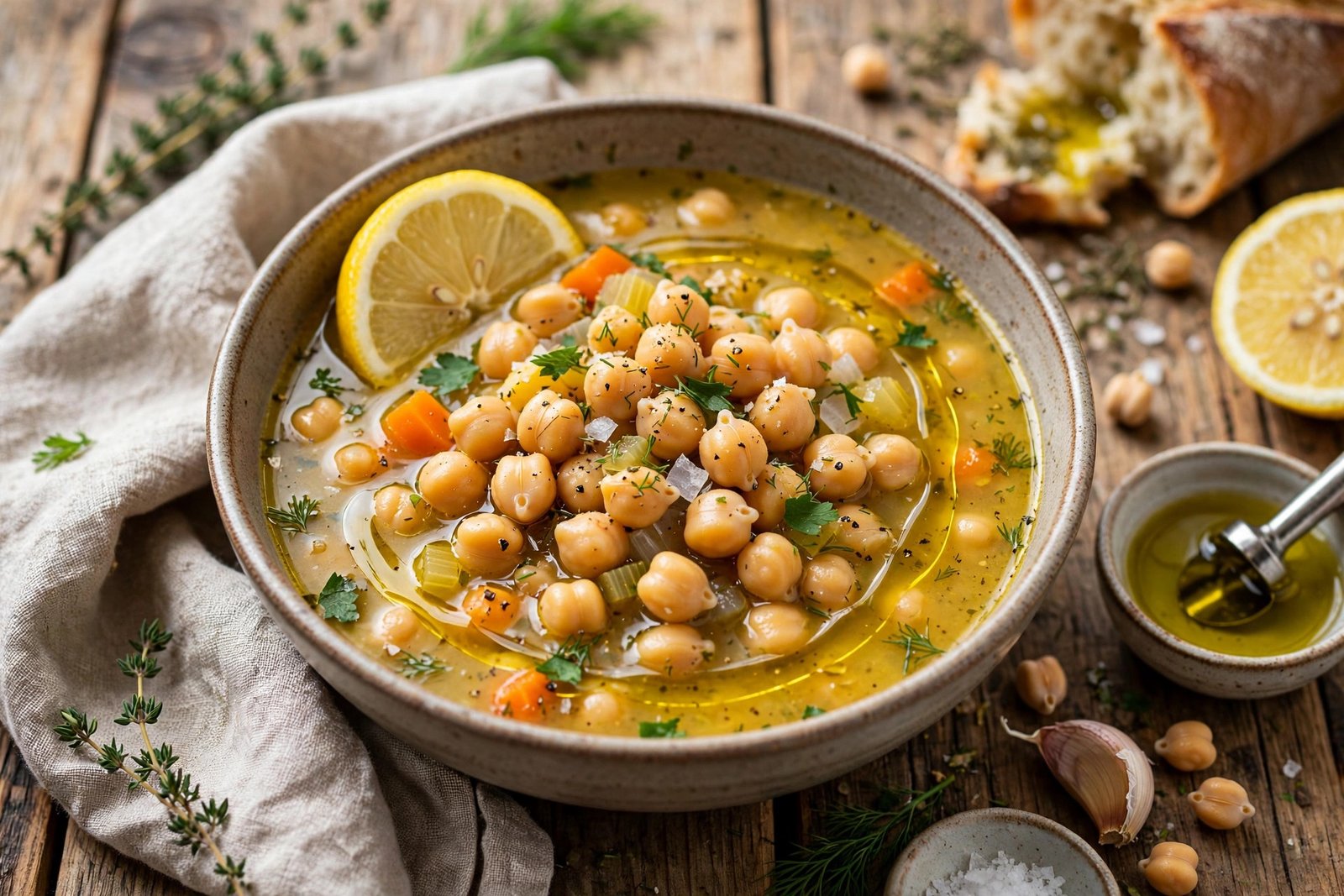
Revithia soupa is the Greek answer to a cold day: chickpeas simmered until meltingly soft in a fragrant broth of onion, garlic and bay, finished with lemon juice and a generous pour of olive oil. Simple, warming and honest, it is the kind of soup that tastes like it took all day.
The story behind Revithia Soupa
Revithia soupa is one of the oldest soups in Greece, a dish that belongs to the fasting days of the Orthodox calendar, when meat and dairy were set aside and the kitchen turned to beans, olive oil and lemon. On the island of Sifnos it is baked overnight in a clay pot in a wood oven, emerging thick and golden; on the mainland it simmers on the stove, but the spirit is the same — a few humble ingredients, given time, turning into something far greater than the sum of their parts.
The chickpea is the hero here, and it is treated with respect. Dried chickpeas, soaked overnight, cook down until they are soft enough to crush between your fingers, and a few mashed against the pot wall give the soup its body. There is no stock cube doing the heavy lifting: the flavour comes from onion, garlic, bay and a good olive oil, with lemon added at the very end to wake everything up.
What makes it special is how little it asks of the cook and how much it gives back. It is naturally vegan, cheap, and filling in the way only beans can be. The lemon is not a garnish — it is the finishing touch that keeps the soup from feeling heavy, cutting through the richness of the oil and brightening every spoonful.
Cook it when the weather turns, or when you want a quiet, nourishing meal that asks almost nothing of you. It is the kind of soup that suits a slow evening, a crusty loaf on the side, and a second bowl before you even think about it.
There is a reason this soup has survived for centuries without changing much. It needs no special equipment, no expensive ingredients and no great skill — just dried chickpeas, water, oil and patience. In village kitchens it was often cooked in the embers of the bread oven, and in city flats it simmers happily on the smallest burner. The recipe travels well because it asks so little and gives so much, and every Greek cook seems to have a version learned from someone who learned it from someone else.
- Prep time
- 15 mins
- Cook time
- 1 hour
- Total time
- 1 hour 15 mins
- Servings
- 4 servings
- Calories
- 380
Ingredients
- 300 g dried chickpeas, soaked overnight
- 1.5 litres water
- 1 onion, finely chopped
- 3 garlic cloves, minced
- 2 bay leaves
- 60 ml extra-virgin olive oil, plus more to serve
- 1 teaspoon sea salt
- 1/2 teaspoon black pepper
- 1 lemon, juiced
- 1 teaspoon dried oregano
- 2 tablespoons chopped flat-leaf parsley
- 1 pinch red pepper flakes (optional)
Instructions
- The night before, put the dried chickpeas in a large bowl, cover with plenty of cold water and leave to soak for 8 to 12 hours. They will nearly double in size, so use a big bowl and plenty of water — cramped chickpeas soak unevenly.
- Drain the soaked chickpeas and tip them into a large pot with the water, chopped onion, garlic and bay leaves. The water should cover the chickpeas by several centimetres — they will swell further as they cook.
- Bring the pot to a boil over high heat. As foam rises to the surface, skim it off with a spoon. This keeps the broth clear and sweet-tasting rather than cloudy and bitter.
- Turn the heat down to a gentle simmer and cook for 50 to 60 minutes, with the lid slightly ajar. The chickpeas should grow steadily softer; stir occasionally and add a splash of hot water if the level drops too low.
- When the chickpeas are very soft — a squeezed one should collapse easily — fish out the bay leaves. Take a ladleful of chickpeas and mash it against the side of the pot, then stir it back in. This is what thickens the soup into something spoon-coating rather than watery.
- Stir in the olive oil, sea salt, black pepper and oregano, and let the soup simmer for 5 more minutes so the flavours marry. Taste and adjust the salt — chickpeas need a firm hand with seasoning.
- Take the pot off the heat and stir in the lemon juice. Adding it now, off the boil, keeps its flavour bright and fresh instead of flat and cooked.
- Ladle the soup into warm bowls and finish each one with a drizzle of your best olive oil, a scattering of chopped parsley and a pinch of red pepper flakes if you like a little warmth. Serve at once with crusty bread.
Pro tips
- Soak the chickpeas for a full 8 to 12 hours — under-soaked chickpeas stay gritty in the middle no matter how long you simmer them. Change the water once if you remember, though it is not essential.
- Skim the foam in the first minutes of boiling. It takes a minute and makes a real difference to the broth's flavour. A wide spoon works best, and the foam stops appearing after a few minutes.
- Do not add the lemon until the end. Lemon juice cooked for a long time turns dull and bitter. Roll the lemon firmly on the counter before juicing to get more out of it.
- Use a good olive oil for finishing. The soup is so simple that the oil's flavour actually shows — this is the bottle to reach for. The same goes for the oregano — dried Greek oregano has a stronger, earthier flavour.
- If the soup is too thin, mash more chickpeas. If it is too thick, loosen it with a splash of hot water. Blending a ladleful and stirring it back in works just as well as mashing.
Variations & serving ideas
For the Sifnos version, bake the soup instead: tip everything into a clay pot or heavy lidded casserole, add a little more water, and bake at 160 C for about 3 hours. The slow oven gives the chickpeas a deeper, almost roasted flavour. It is a weekend project, but a rewarding one.
Add vegetables to make it heartier — a diced carrot and a stick of celery with the onion give the soup more body and sweetness, and a handful of spinach stirred in at the end wilts in seconds. A chopped potato, cooked with the chickpeas, breaks down and thickens the soup beautifully.
For a richer finish, stir in a spoonful of tahini with the lemon juice, or top each bowl with a crumble of feta and a few olives. Neither is traditional, but both are delicious, and the salty feta plays well against the lemon.
Serve it with warm pitta or a thick slice of sourdough for mopping up, and a simple salad of tomato, cucumber and red onion on the side. A glass of dry white wine would not be out of place either, though the soup needs no company to shine.
For a Lenten table, keep it strictly as written — no dairy, no meat, just beans and oil. For a weekday supper, a slice of grilled halloumi on the side adds salt and squeak, and a spoonful of chilli oil instead of plain olive oil gives the bowl a gentle warmth. The soup also works blended completely smooth, served as a starter in small cups with a swirl of oil on top, which feels almost elegant despite its humble roots.
Getting it right
The whole dish rests on getting the chickpeas properly soft. Dried chickpeas are stubborn, and the only reliable route is a long soak followed by a long, gentle simmer. Test them by squeezing one between your fingers — it should crush with almost no resistance. If the centre is still firm, give them another 15 minutes; there is no shortcut past this point.
Thickening comes from the chickpeas themselves. Mashing a ladleful against the pot wall releases their starches into the broth, and the soup turns from watery to silky in seconds. Mash a little at a time and stir between rounds so you can stop when it reaches the texture you like — some prefer it brothy, others almost stew-like.
The most common mistake is seasoning too early or too lightly. Salt added at the start can toughen chickpea skins, so wait until they are soft, then season generously and taste again after the lemon goes in — the acid changes how salty the soup tastes, and you will often want another pinch.
Heat control matters more than speed. A furious boil will break the chickpeas apart before they are properly tender, leaving you with a grainy soup and hard centres. A gentle simmer, with the lid slightly ajar so the steam can escape, cooks them through evenly. If your chickpeas are old — and dried chickpeas can sit in a cupboard for years — expect them to take longer, and do not be shy about adding another 20 minutes.
One last detail: the olive oil goes in twice — once during cooking, once at the table. The cooking oil carries flavour through the soup, but the finishing drizzle is where you taste the oil itself, so make it a good one. A fruity, peppery extra-virgin oil will change the whole bowl. Taste the soup after the final drizzle and adjust the salt once more, since fat softens the perception of salt.
Storing & reheating
Cool the soup and refrigerate in a sealed container for up to 4 days. It thickens as it sits, so you may want to loosen it with a splash of water when reheating. It also freezes well for up to 3 months — freeze without the lemon juice and parsley, and add them fresh after reheating.
Reheat gently on the stove over medium heat, stirring often, until it is steaming all the way through. A squeeze of fresh lemon and a new drizzle of olive oil at serving will bring it back to life.
The soup also makes an excellent base for another meal: thin it with stock and add pasta for a quick minestra, or spoon it over rice with a fried egg on top. A pot of revithia in the fridge is the start of three different dinners, not just one.
Frequently asked questions
Do I have to soak the chickpeas overnight?
Yes, for the best result — dried chickpeas need 8 to 12 hours in cold water to cook evenly. A quick soak works in a pinch: cover them with boiling water and leave for an hour, but expect a longer simmer and a slightly less creamy texture.
Can I use canned chickpeas?
You can, and the soup will be ready in about 25 minutes — use three 400 g cans, drained and rinsed, and simmer them in 1 litre of water with the aromatics. The texture is good, though dried chickpeas give a richer, thicker broth.
Why add the lemon juice at the end?
Lemon juice loses its bright flavour when it boils for a long time and can turn bitter. Stirring it in off the heat keeps it fresh and lively, which is exactly what this simple soup needs to lift the richness of the olive oil.
Is revithia soupa vegan?
Yes — chickpeas, olive oil, onion, garlic, lemon and herbs are all plant-based, and the soup is naturally vegan and gluten-free. It is also a traditional fasting dish in Greece, made for days when animal products were avoided.
What is the Sifnos version?
On the island of Sifnos, revithia is baked overnight in a clay pot in a wood oven, with the chickpeas, onion and oil going in together and emerging thick, golden and deeply flavoured. You can imitate it at home by baking the soup in a lidded casserole at 160 C for about 3 hours.
How do I thicken the soup without flour?
Mash some of the chickpeas against the side of the pot and stir them back in — their starch thickens the broth naturally. You can also blend a ladleful of soup and return it to the pot. Avoid flour or cornflour, which would dull the clean flavour.