Horiatiki Salad Recipe
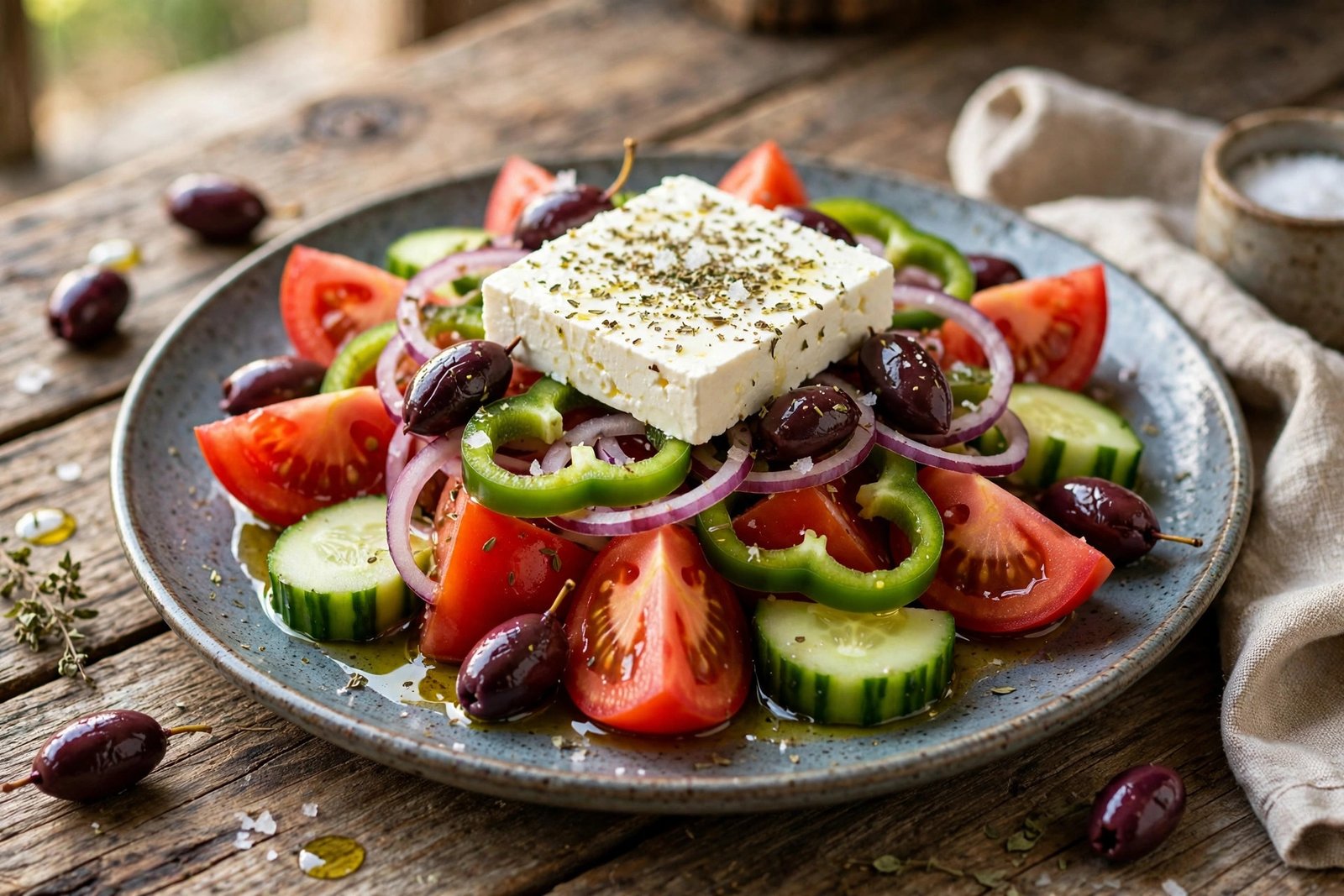
Horiatiki, the Greek village salad, is summer in a bowl: ripe tomatoes, cool cucumber, red onion, green peppers, Kalamata olives and a proud slab of feta, dressed with nothing more than good olive oil and oregano. There is no lettuce in a true horiatiki, and there is no need for it — the vegetables, the cheese and the oil are the whole dish.
The story behind Horiatiki Salad
Horiatiki — the Greek village salad — is one of the simplest and most perfect dishes in the world. It is what Greek farmers ate in the fields: tomatoes, cucumber, onion, green pepper, olives and feta, dressed with olive oil and oregano, eaten with bread. There is no lettuce, no fancy dressing, no complicated technique. Just good ingredients, cut into generous pieces, and served at room temperature so every flavour shines.
The salad is a product of the Greek summer, when tomatoes are at their sweetest and the sun is high. In Greece, horiatiki appears at every table from June to September, served as a side dish, a light lunch, or a meze among many small plates. It is the dish that Greeks abroad miss most, and the dish that visitors to Greece remember longest — because it tastes of the place itself, of sun-warmed tomatoes and good olive oil.
What makes it special is the quality of the ingredients. There is nowhere to hide in a horiatiki — every element is visible, and every element must be good. The tomatoes must be ripe and sweet, the cucumber cool and crisp, the onion sharp and fresh, the olives briny and rich, the feta creamy and salty, and the olive oil fruity and golden. A mediocre tomato will ruin the salad; a great one will make it unforgettable.
The feta is served in a single proud slab, placed in the centre of the salad and sprinkled with oregano — not crumbled, not cubed, but whole. Each person breaks off a piece with their fork, and the feta softens slightly in the tomato juices and olive oil. It is a small detail, and it is the mark of an authentic horiatiki. The bread is essential too — crusty bread for mopping up the juices at the bottom of the bowl, which are the best part.
Make horiatiki in summer, when tomatoes are at their peak. It takes fifteen minutes, needs no cooking, and it is the kind of dish that makes a simple meal feel like a holiday. Serve it at room temperature, with bread and a glass of white wine, and eat it slowly in the sun.
The bread served with horiatiki is not an afterthought — it is part of the dish. Crusty village bread, torn into pieces and used to mop up the juices at the bottom of the bowl, is how the salad is meant to be finished. The juices — tomato, olive oil, feta brine, oregano — are the best part of the salad, and a good loaf of bread is the tool for getting every last drop. In Greece, a table without bread is a table without manners, and a horiatiki without bread is a salad only half eaten.
- Prep time
- 15 mins
- Cook time
- 0 mins
- Total time
- 15 mins
- Servings
- 4 servings
- Calories
- 280
Ingredients
- 4 ripe tomatoes, cut into wedges
- 1 large cucumber, peeled and sliced
- 1 red onion, thinly sliced
- 1 green pepper, deseeded and sliced
- 150 g Kalamata olives
- 200 g feta cheese, in one slab
- 1 teaspoon dried oregano
- 60 ml extra-virgin olive oil
- 1 tablespoon red wine vinegar
- Salt and black pepper
- Crusty bread, to serve
Instructions
- Cut the tomatoes into generous wedges — not too small, so they hold their shape and their juice. A tomato cut into six or eight wedges is about right. Put them in a large, shallow bowl, letting the juices fall into the bowl as you cut.
- Peel the cucumber, slice it into rounds or half-moons, and add it to the bowl. The cucumber should be cool and crisp — if it has been in the fridge, let it come to room temperature for a few minutes, as cold dulls the flavour of the vegetables.
- Add the thinly sliced red onion and the sliced green pepper to the bowl. The onion should be sliced thin enough to soften slightly in the tomato juices, and the pepper should be cut into strips that are easy to eat with a fork.
- Season the vegetables generously with salt and black pepper and toss them gently with your hands, so the salt draws out the tomato juices and starts to form the dressing. Do not toss roughly — the tomato wedges should stay intact, not collapse into a pulp.
- Scatter the Kalamata olives over the top of the salad, distributing them evenly. The olives should be whole, with their pits in if you like — pitted olives are easier to eat, but whole olives have a better texture and a more authentic feel.
- Place the slab of feta in the centre of the salad, on top of the vegetables. Do not crumble it — the slab is the traditional presentation, and each person breaks off their own piece. The feta will soften slightly in the tomato juices.
- Sprinkle the dried oregano over everything, especially the feta — the oregano on the feta is the classic touch. Drizzle generously with the extra-virgin olive oil and the red wine vinegar, if using. Serve immediately, at room temperature, with crusty bread for mopping up the juices.
Pro tips
- Use the ripest tomatoes you can find; they make the salad. A horiatiki is only as good as its tomatoes, and underripe ones will give a salad that tastes of nothing — wait for summer, or buy the ripest tomatoes in the shop.
- Keep the feta in one slab, as the Greeks do, and let everyone break off pieces. Crumbled feta disappears into the salad, while a slab stays proud in the centre and softens beautifully in the juices.
- Do not refrigerate the salad; cold dulls the flavour of the tomatoes. Serve it at room temperature, within an hour of making it, so every flavour is at its fullest.
- A splash of vinegar is optional; many Greeks use oil alone. The tomatoes provide enough acidity on their own, and the vinegar is a matter of taste — add it if you like a sharper dressing, leave it out if you prefer the pure tomato and oil flavour.
- Cut the vegetables into generous pieces. Small, fussy chopping turns the salad into a salsa, while large wedges and slices give the rustic, village character that horiatiki is known for.
Variations & serving ideas
The salad can be varied with what is in season. In spring, add a few radishes, sliced thin, for crunch and colour. In autumn, add a handful of capers for a salty, briny note. A few leaves of fresh mint or basil scattered over the top add fragrance. The core of the salad — tomatoes, cucumber, onion, pepper, olives, feta — stays the same, and the additions are garnish, not substance.
The cheese can change. A slab of halloumi, grilled until golden and placed on top, makes a heartier version. A soft goat's cheese, crumbled over the salad, gives a tangy alternative. But feta is the traditional choice, and its salty, creamy flavour is what makes horiatiki taste like Greece — other cheeses make a good salad, but not a horiatiki.
For a fuller meal, add a piece of grilled chicken, fish or halloumi on top of the salad, or serve it alongside grilled meats as part of a larger spread. A few boiled potatoes, still warm, tossed through the salad make it more substantial. The salad is versatile, and it suits almost any main course.
Serve horiatiki as a side dish with grilled fish, chicken or lamb, or as a light lunch on its own with bread. It is the classic partner for a Greek barbecue, and it appears on every taverna table in Greece. For drinks, a cold white wine — an Assyrtiko or a Moschofilero — suits the tomatoes and feta, and sparkling water with lemon is a fine non-alcoholic partner.
For a party, make the salad in a large, shallow bowl and let guests serve themselves. Prepare the vegetables an hour ahead, but add the feta, oil and oregano just before serving, so the salad stays fresh and the feta stays firm. The juices at the bottom of the bowl are the best part — put out plenty of bread for mopping them up.
Getting it right
The key technique is the cut, and its secret is generosity. The vegetables should be cut into large, rustic pieces — tomato wedges, cucumber rounds, pepper strips, onion slices — not diced small. A horiatiki is a village salad, not a fine dining dish, and the large pieces give it character and texture. The tomatoes should be cut last, so their juices fall into the bowl and start the dressing.
Seasoning needs a confident hand. The salt goes on the vegetables before the oil, so it draws out the tomato juices and starts to form the dressing. The pepper should be freshly ground, and the oregano should be sprinkled generously — especially over the feta, where it is the classic finishing touch. Taste the salad before serving and adjust the salt; the feta and olives are salty, but the tomatoes need seasoning of their own.
The oil is the dressing, and its quality matters more than anything else in the dish. Use a good extra-virgin Greek olive oil — fruity, golden, and fresh. Drizzle it generously, in a slow stream, over the whole salad. The oil should pool slightly at the bottom of the bowl and mix with the tomato juices to form a dressing that is worth mopping up with bread. A poor oil will flatten the salad; a good one will make it sing.
The feta deserves a moment of care. Buy a block of good feta, kept in brine, and cut a single slab for the salad — the slab should be thick enough to hold its shape and proud enough to sit in the centre of the bowl. Pat it dry gently before placing it, so it does not water down the salad, and sprinkle the oregano directly onto the feta, where it clings to the surface and perfumes the cheese. The feta will soften in the tomato juices, and each person breaks off their own piece.
Storing & reheating
Horiatiki is best eaten immediately, within an hour of making it, at room temperature. The tomatoes release their juices, the feta softens, and the flavours meld — but left too long, the vegetables go soft and the salad loses its freshness.
If you must store it, keep the cut vegetables in the fridge for up to a day, undressed, and add the feta, oil and oregano just before serving. The dressed salad does not keep well — the salt draws water from the tomatoes and the salad turns soggy. Make only what you plan to eat, and enjoy it fresh. The ingredients are simple enough that a fresh salad takes only fifteen minutes.
Frequently asked questions
Does horiatiki contain lettuce?
No. Authentic horiatiki never contains lettuce; that is a tourist addition. The salad is tomatoes, cucumber, onion, green pepper, olives and feta — no leaves, no lettuce, and no need for them.
Can I use black olives instead of Kalamata?
Kalamata olives are traditional and give the best flavour, but any good brined olive works. Avoid canned black olives, which are mild and flavourless — a good brined olive, whatever the variety, is what the salad needs.
What olive oil should I use?
A good extra-virgin Greek olive oil. It is the main dressing, so quality matters — a fruity, golden oil will make the salad sing, while a poor oil will flatten it. Use it generously.
Can I make horiatiki ahead?
Prepare the vegetables an hour ahead, but add the feta, oil and oregano just before serving. The dressed salad goes soggy if left too long, so assemble it at the last moment for the freshest result.
Why is there no lettuce in a true horiatiki?
Horiatiki is a village salad, made from what Greek farmers grew in their gardens — tomatoes, cucumber, peppers, onions and olives. Lettuce was not part of the traditional garden salad, and it dilutes the flavours that make horiatiki special.
Can I add vinegar to horiatiki?
A splash of red wine vinegar is optional — many Greeks use oil alone, as the tomatoes provide enough acidity. Add vinegar if you like a sharper dressing, or leave it out for a purer tomato and olive oil flavour.