Horta Vrasta Recipe
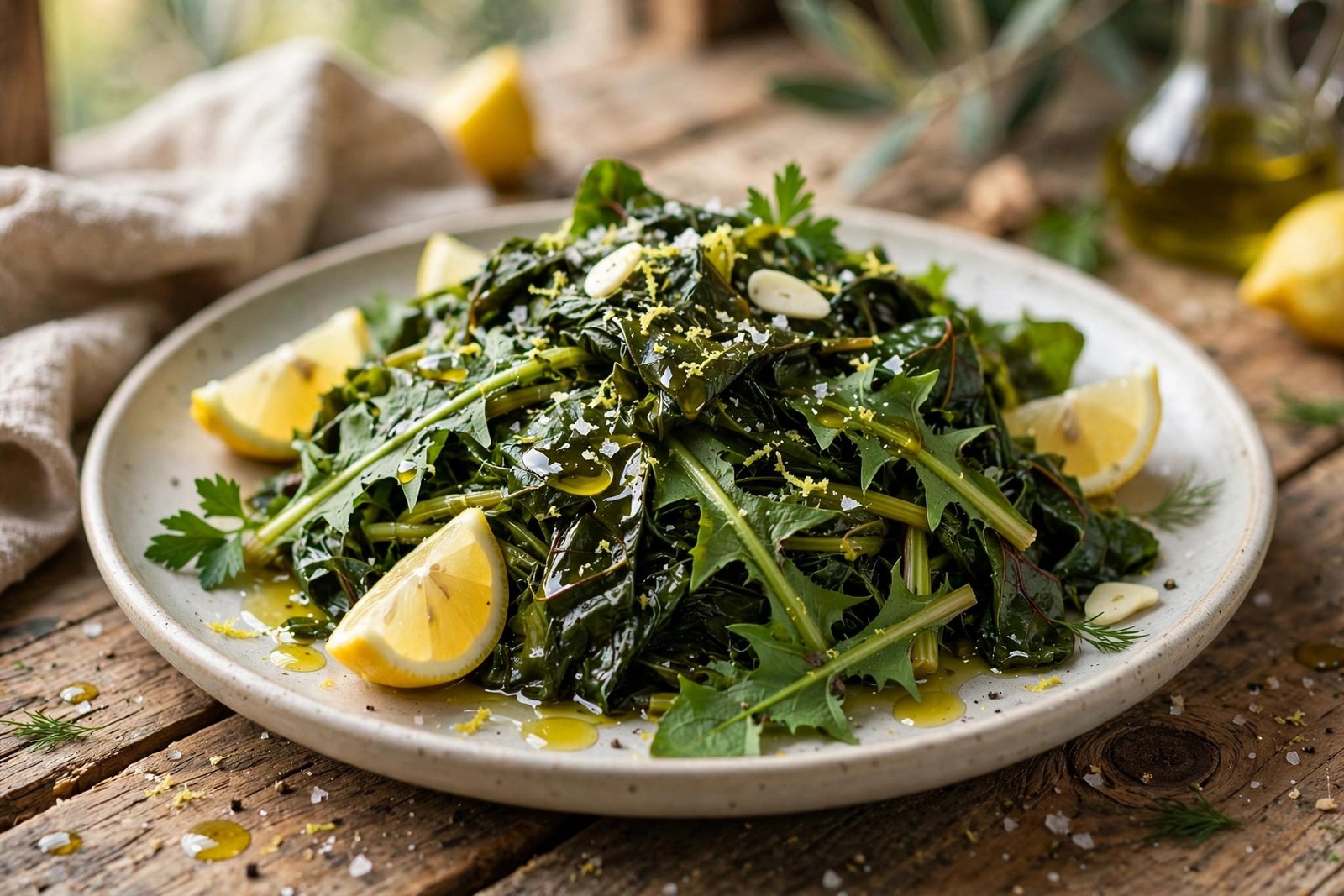
Horta vrasta is one of the oldest dishes in Greece: wild greens boiled until tender, then dressed with good olive oil, lemon and sea salt. It is simple, honest and deeply nourishing — the taste of a Greek village table, where the greens were gathered that morning and lunch was whatever the hillside offered. Serve it warm or at room temperature, with crusty bread and perhaps a piece of grilled fish.
The story behind Horta Vrasta
Horta vrasta is older than almost anything else on the Greek table. Long before restaurants and cookbooks, people in the Greek countryside gathered wild greens — horta — from hillsides, field edges and roadside verges, boiled them in salted water and dressed them with the olive oil and lemons they had at home. It was food born of necessity and knowledge: knowing which leaves were good to eat, which were bitter, which needed a longer boil. That knowledge passed from parent to child, and the dish itself barely changed for centuries.
In Greece, horta is not a side dish you forget about. It shows up at village tavernas, at family lunches, at Lenten tables when meat is off the menu. Gathering the greens is still a spring ritual in many places — baskets in hand, a knife for cutting stems, a good eye for dandelion, chicory, wild mustard and the many local leaves that fall under the name horta. What lands on the plate depends on the season and the patch of ground, so no two plates are ever quite the same.
What makes it special is its honesty. There is nowhere to hide in horta vrasta: three or four ingredients, no sauce, no garnish tricks. The bitterness of the greens, the peppery bite of good olive oil, the sharpness of lemon — each one has to be right, because each one is fully on show. It is the kind of dish that teaches you how good simple food can be when the ingredients are good and the cooking is careful.
Cook it when you want something light but genuinely satisfying, or when you have a glut of greens and no plan for them. It works beautifully alongside grilled fish, roast chicken or a plate of fried eggs, and it holds up well at room temperature, which makes it a natural fit for a mezze spread or a picnic. In spring, when the first bitter greens appear, there is hardly a better way to eat them.
- Prep time
- 15 mins
- Cook time
- 20 mins
- Total time
- 35 mins
- Servings
- 4 servings
- Calories
- 150
Ingredients
- 600 g mixed wild greens (dandelion, chicory or chard)
- 1 litre water
- 1 teaspoon sea salt, plus more to serve
- 60 ml extra-virgin olive oil
- 1 lemon, juiced
- 2 garlic cloves, thinly sliced (optional)
- 1/2 teaspoon red pepper flakes (optional)
- Crusty bread, to serve
Instructions
- Fill a large bowl or your clean sink with cold water and wash the greens thoroughly, lifting them out rather than pouring the water away, so the grit stays at the bottom. Repeat in two or three changes of water until you cannot feel a single grain of sand between your fingers. This step is not glamorous, but gritty horta is ruined horta.
- Shake off the excess water and pick through the greens, trimming any tough stems or yellowed leaves. If some leaves are much bigger than others, tear the large ones roughly in half so everything cooks at the same pace. A pile of roughly even leaves is what you are after.
- Bring a large pot of water to a rolling boil and add the teaspoon of sea salt. You want plenty of water — the greens should be able to move freely rather than packed in tight. When the water is properly bubbling, add the greens in handfuls, pushing them down gently with tongs or a wooden spoon.
- Cook for 12 to 15 minutes, uncovered, until the greens are tender all the way through but still holding their colour. Taste a stem after 12 minutes: it should give easily when you bite it, with no fibrous tug. The leaves will have darkened and shrunk to a fraction of their raw volume — that is normal.
- Drain the greens in a colander and let them sit for a minute or two, then press them gently with the back of a spoon to squeeze out the excess water. Do not wring them dry like a cloth; you want them moist, not swimming. Save a cup of the cooking water if you like — it makes a light, nutritious broth.
- Tip the drained greens into a serving bowl and loosen them with a fork so they are not clumped together. While they are still warm, pour over the 60 ml of olive oil and the lemon juice, and toss gently so every leaf gets a gloss of oil.
- Season with sea salt to taste — the greens need more salt than you might expect, so taste and adjust. If you are using the garlic, scatter the thin slices over the top, along with the red pepper flakes. The residual heat will soften the garlic just enough.
- Serve warm or at room temperature with plenty of crusty bread for mopping up the lemony oil at the bottom of the bowl. If you are serving it as part of a mezze, a wedge of lemon on the side lets everyone add more brightness to their own portion.
Pro tips
- Wash the greens very well — grit is the enemy of this simple dish, and one sandy mouthful will undo all your good work. Three changes of water is not excessive.
- Do not overcook them. Tender, not mushy, is the goal: the leaves should be soft enough to cut with a fork but still have a little life in them.
- Use your best olive oil. It is the main flavour here, so a peppery, fruity extra-virgin oil makes a real difference — this is the bottle to reach for, not the everyday cooking oil.
- Save the cooking water. It is full of minerals from the greens and makes a light, nutritious broth — drink it warm with a squeeze of lemon, or use it as the base for a soup.
- Serve at room temperature if you are short on time. Horta is one of those rare dishes that is just as good cool as warm, so it never needs to be rushed to the table.
Variations & serving ideas
The classic version is greens, oil, lemon and salt — but once you know the base, you can play with it. A scattering of crumbled feta over the warm greens turns it into a light lunch on its own, and the salty cheese is a natural partner for the bitter leaves. A few halved cherry tomatoes and a sliced spring onion make it feel more like a salad, especially in summer when the greens are at their most tender.
If wild greens are hard to find where you live, do not let that stop you. Chard, spinach, kale and mustard greens all work well, and a mix of two or three gives you the same range of flavours as a foraged bunch. Spinach cooks much faster than dandelion or chicory, so check it after 5 or 6 minutes rather than waiting the full 12. Frozen leafy greens are a last resort — they work, but the texture is softer and the flavour flatter.
For serving, horta vrasta is at home next to almost anything from the grill: whole grilled fish, sardines, lamb chops, or a thick slice of halloumi fried until golden. It also makes a fine bed for a fried or poached egg, and it is a natural part of any mezze spread alongside tzatziki, olives and warm pitta.
The dressing is where you can nudge the flavour in different directions. A splash of red wine vinegar instead of lemon gives a deeper, rounder acidity. A little grated lemon zest alongside the juice adds fragrance. And if you like heat, a pinch of chilli flakes or a finely chopped fresh chilli wakes the whole bowl up without fighting the greens.
Getting it right
The single most important technique in horta vrasta is the wash. Wild greens grow close to the ground, and they carry soil, sand and the occasional tiny insect. The trick is to lift the leaves out of the water rather than tipping the bowl — grit sinks, so pouring the water off just washes the grit back over the leaves. Run your fingers through the leaves in the water, lift them out, and repeat until the water at the bottom of the bowl is clear.
Heat and timing matter more than they seem to in a dish this plain. The water must be at a full, rolling boil before the greens go in — dropping them into lukewarm water turns them drab and overcooked before they are even tender. Cook them uncovered so the steam escapes, which helps them keep their colour, and start tasting at 12 minutes. The window between tender and mushy is narrow, and the difference is a matter of a minute or two.
The most common mistake is under-seasoning. Greens absorb a surprising amount of salt, and the lemon and oil need a good pinch of it to tie together. Taste after dressing, not before — the oil and lemon change how the salt reads. The second mistake is dressing cold, wet greens: too much water left on the leaves dilutes the oil and lemon into a thin wash instead of a glossy coat. Press gently, dress while warm, and the oil will cling the way it should.
Storing & reheating
Horta vrasta keeps well in the fridge for up to 3 days in a sealed container. It is best stored undressed if you plan to keep it that long — the lemon juice will dull the greens over time, so dress only what you are about to eat and keep the rest plain. The cooking water, saved separately, keeps for 2 days in the fridge and makes a good light broth or soup base.
To reheat, warm the greens gently in a pan with a splash of water or a drizzle of olive oil for 2 to 3 minutes — just until warm through. The microwave works too, in short bursts, but do not overheat them or they will turn soft and grey. Once reheated, dress them fresh with oil and lemon. Freezing is not recommended: thawed boiled greens go limp and lose the texture that makes the dish worth eating.
Frequently asked questions
What is horta vrasta?
Horta vrasta is a Greek dish of boiled wild greens — horta — dressed with olive oil, lemon juice and sea salt. It is one of the oldest dishes in Greek cooking, made from foraged leaves like dandelion, chicory and wild mustard, and served warm or at room temperature.
Which greens are used for horta?
Dandelion, chicory, wild mustard and chard are traditional, but any bitter leafy green works. If you cannot find wild greens, a mix of chard, kale, mustard greens or spinach gives a similar result — just shorten the cooking time for softer leaves like spinach.
Is horta vrasta healthy?
Yes, very much so. The greens are rich in vitamins, minerals and fibre, and the dish is naturally low in calories at around 150 per serving. The olive oil adds healthy fats, and the lemon helps your body absorb iron from the greens.
What do you serve with horta vrasta?
Grilled fish is the classic partner, but it works just as well with roast chicken, lamb chops, fried eggs or halloumi. Crusty bread is almost essential for mopping up the lemony oil, and it sits happily on a mezze table with tzatziki and olives.
Why is my horta gritty?
Grit means the greens were not washed thoroughly enough. Wild greens grow close to the ground and trap soil between their leaves. Wash them in several changes of cold water, lifting the leaves out each time so the grit stays at the bottom of the bowl.
Can I make horta vrasta ahead of time?
Yes. Cook the greens up to 3 days ahead and keep them undressed in the fridge, then dress with fresh oil and lemon just before serving. It is also good at room temperature, so you can cook it in the morning and serve it at lunch without reheating.