Briam Recipe
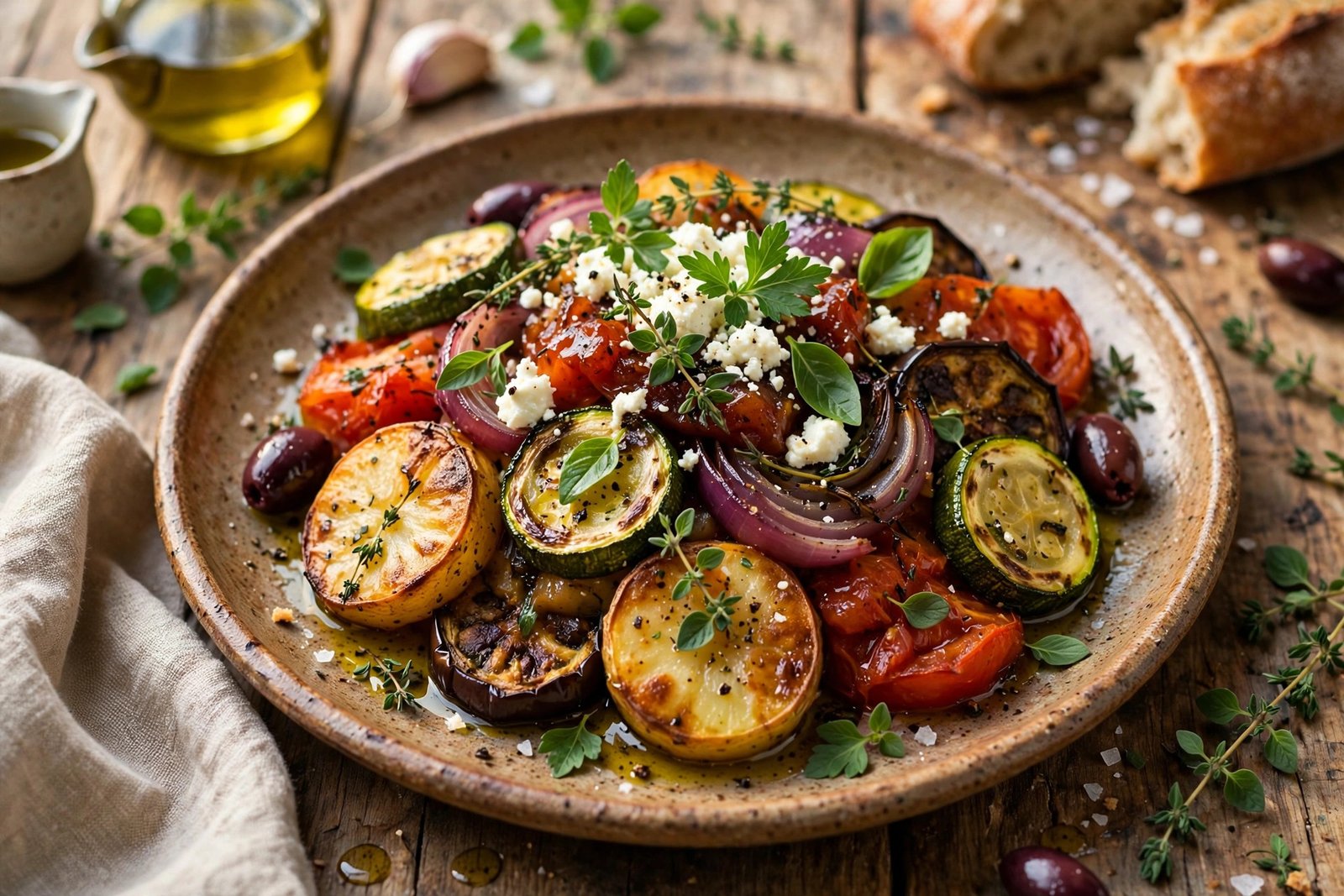
Briam is Greece's beloved tray of roasted vegetables: courgettes, aubergines, potatoes and tomatoes slow-roasted with garlic, oregano and generous olive oil until they collapse into each other. It is humble, healthy and deeply flavourful — the kind of dish that tastes like a Greek summer, warm or at room temperature.
The story behind Briam
Briam is one of the great dishes of the Greek summer table, and it is as simple as cooking gets: vegetables, olive oil, garlic, oregano, and time. It belongs to the ladera family of Greek dishes — vegetables cooked in generous olive oil — and it is the dish Greek cooks make when the garden is overflowing and the tomatoes are at their peak. Courgettes, aubergines, potatoes, peppers and tomatoes go into a tray, and an hour in the oven turns them into something soft, jammy and deeply flavoured.
The olive oil is not just a cooking medium here — it is an ingredient in its own right. Greek cooks are famously generous with it, and briam uses a full 120 ml for a single tray. The oil carries the garlic and oregano through the vegetables, helps them caramelise at the edges, and forms a rich sauce with the tomato juices that is as prized as the vegetables themselves. This is the oil you want to mop up with bread, and nobody at a Greek table leaves it behind. The garlic in briam is used generously — four cloves, sliced rather than minced, so they soften into sweet, golden ribbons instead of disappearing into the sauce. Sliced garlic roasts gently in the olive oil and turns mellow and almost creamy, while minced garlic would brown too fast and turn bitter over the long roast. It is a small detail, but it is the difference between garlic that perfumes the dish and garlic that bites.
Briam is also a dish about patience. The vegetables are not roasted quickly at high heat — they are slow-roasted at 190°C for an hour, until they soften and collapse into each other. The potatoes turn creamy, the aubergine melts, the tomatoes break down into a sauce, and the whole tray becomes something greater than the sum of its parts. It is the opposite of crisp, snappy roasted vegetables, and that is exactly the point.
Cook briam when summer vegetables are at their best and cheapest, and serve it warm or at room temperature. It is a main course on its own with bread and feta, a side dish with grilled fish or chicken, and a staple of Greek fasting cooking, when no animal products are eaten. Make a big tray — the leftovers are even better the next day.
- Prep time
- 20 mins
- Cook time
- 60 mins
- Total time
- 80 mins
- Servings
- 4 servings
- Calories
- 340
Ingredients
- 2 courgettes, sliced into half-moons
- 1 large aubergine, cubed
- 3 potatoes, sliced
- 4 ripe tomatoes, chopped
- 1 red onion, sliced
- 1 red pepper, sliced
- 4 garlic cloves, sliced
- 120 ml extra-virgin olive oil
- 1 tablespoon dried oregano
- 1 teaspoon salt
- 1/2 teaspoon black pepper
- Fresh parsley, chopped
- Crumbled feta, to serve (optional)
- Crusty bread, to serve
Instructions
- Heat the oven to 190°C. Prepare the vegetables: slice the courgettes into half-moons, cube the aubergine, slice the potatoes thinly, chop the tomatoes, slice the red onion and red pepper, and slice the garlic. The potato slices should be thinner than the other vegetables — potatoes take longest to cook, and thin slices keep everything finishing at the same time.
- Put all the vegetables and garlic into a large roasting tray — the biggest you have. Pour over the extra-virgin olive oil, sprinkle with the dried oregano, salt and black pepper, and toss everything together with your hands so every piece is coated in oil and seasoning. The oil should glisten on every surface.
- Spread the vegetables into a single layer across the tray. Do not pile them up — crowded vegetables steam instead of roasting, and you want the edges to caramelise. If the tray looks dry, add a splash of water, about 3 tablespoons, which helps create steam and stops the vegetables catching before the tomatoes release their juices.
- Give the tray a final check before it goes in the oven: the vegetables should be in one even layer, with the potato slices tucked in among the rest so they roast in the tomato juices rather than drying out on top. A drizzle of extra olive oil over any bare patches helps them brown.
- Spread the vegetables into a single layer across the tray. Do not pile them up — crowded vegetables steam instead of roasting, and you want the edges to caramelise. If the tray looks dry, add a splash of water, about 3 tablespoons, which helps create steam and stops the vegetables catching before the tomatoes release their juices.
- Roast for 45 minutes, stirring once halfway through, until the vegetables are soft and starting to caramelise at the edges. The tomatoes will have broken down into a sauce, the potatoes should be tender when pierced with a knife, and the aubergine should be soft and creamy.
- Continue roasting for 15 more minutes if you like a deeper, jammy texture — the vegetables will collapse further and the sauce will thicken and darken. This extra time is what turns good briam into great briam: the edges go golden, the flavours concentrate, and the whole tray takes on a rich, roasted depth.
- Rest the briam for 10 minutes out of the oven, then scatter with chopped fresh parsley and crumbled feta if using. Serve warm or at room temperature, with crusty bread to mop up the juices. The olive oil and tomato sauce at the bottom of the tray are the best part — make sure everyone gets some.
Pro tips
- Do not crowd the tray; the vegetables should roast, not steam. Use the largest tray you have, and spread the vegetables in a single layer. If they are piled up, they will steam in their own juices and turn soft without ever caramelising.
- Cut the potatoes thinner than the other vegetables so everything cooks evenly. Potatoes are the slowest to cook, so thin slices — about 3 mm — keep them finishing at the same time as the courgettes and aubergine.
- Briam tastes even better the next day, once the flavours have mingled. The olive oil settles into the vegetables and the garlic and oregano deepen overnight. Make it in the evening and serve it at room temperature for lunch the next day.
- Use ripe tomatoes; they create the sauce the vegetables roast in. Pale, underripe tomatoes give a thin, acidic sauce. In winter, when fresh tomatoes are poor, use a tin of chopped tomatoes instead — they give a richer, more consistent result.
- Do not skimp on the olive oil. It is the soul of the dish — it carries the flavour, creates the sauce, and gives briam its characteristic richness. 120 ml is the right amount for this quantity of vegetables, and good extra-virgin oil makes a real difference.
Variations & serving ideas
The vegetables are yours to choose. Okra, green beans and carrots all work well — just keep the total volume similar so the cooking time stays the same. Sweet potatoes swap in for regular potatoes and add a gentle sweetness. In spring, add broad beans or artichoke hearts. In autumn, add chunks of butternut squash or pumpkin. The rule is simple: anything that roasts well can go in the tray.
For a heartier version, add a tin of chickpeas, drained, to the tray before roasting — they soak up the tomato sauce and turn the dish into a complete meal. A handful of olives, scattered over the top for the last 15 minutes, adds a salty punch. A few spoonfuls of tomato paste stirred through the vegetables deepens the sauce. A scattering of capers over the finished briam adds a briny punch that cuts through the richness of the olive oil. For a smoky version, add a teaspoon of smoked paprika with the oregano — it gives the vegetables a warm, almost grilled flavour that suits the dish surprisingly well.
The herbs can shift too. Fresh thyme or rosemary, scattered over the tray before roasting, add an aromatic depth. A pinch of chilli flakes brings warmth. A squeeze of lemon juice and a handful of fresh mint over the finished dish brightens everything up and gives it a summery lift.
Serve briam as a main course with crusty bread and feta, or as a side with grilled fish, chicken or lamb. It is also wonderful as part of a mezze spread, alongside hummus, tzatziki and olives, or spooned over rice or pasta for a quick vegetarian dinner. A glass of chilled white wine — something Greek like Assyrtiko — is the natural partner.
Getting it right
The key technique is the slow roast, and the detail that matters is the single layer. Briam needs space: vegetables spread in one layer across a large tray, each piece touching the hot metal, so the edges caramelise and the juices reduce into a sauce. Crowded vegetables steam in their own moisture and turn soft without ever browning — edible, but missing the depth that makes briam special. Use the biggest tray you have, or two trays if needed.
Heat control is about patience. 190°C for an hour is the right zone — hot enough to caramelise, gentle enough that the vegetables soften gradually without burning. The stir halfway through is important: it turns the vegetables so they brown evenly and redistributes the sauce. The final 15 minutes, if you take them, are where the jammy texture develops — the vegetables collapse, the sauce thickens, and the flavours concentrate. The stir halfway through is the moment to check the liquid level: if the tray looks dry, add a splash of water, but if it looks wet, leave the foil off and let the oven do its work. The sauce should be rich and glossy by the end, not watery.
The most common mistake is under-seasoning. Vegetables absorb a lot of salt, and a full tray of briam needs more than you might think — season generously, and taste the sauce at the end. The second mistake is cutting the potatoes too thick, which leaves them hard in the centre while everything else is done. Slice them thin, about 3 mm, and they will finish at the same time as the courgettes.
Storing & reheating
Briam keeps well in the fridge for four to five days in a sealed container, and it genuinely tastes better the next day, once the flavours have mingled. Let it cool to room temperature before refrigerating, and store it with its sauce — the oil and tomato juices keep the vegetables moist. It also freezes reasonably well for up to two months, though the courgettes will be softer on thawing.
To reheat, warm it in a 160°C oven for 15 to 20 minutes, until heated through — the oven revives the roasted edges better than a microwave. A microwave works for single portions. You can also serve leftover briam at room temperature, as the Greeks often do, with bread and feta. It makes an excellent packed lunch, straight from the fridge, with no reheating needed at all.
Frequently asked questions
What is briam?
Briam is a traditional Greek dish of mixed summer vegetables roasted slowly in olive oil with garlic and herbs. It belongs to the ladera family of Greek cooking — vegetables cooked in generous olive oil — and it is a staple of the Greek summer table, served warm or at room temperature.
Is briam vegan?
Yes, without the feta it is fully vegan and a staple of Greek fasting cooking. The vegetables, olive oil, garlic and herbs are all plant-based, and the dish is traditionally eaten during Lent and other fasting periods when no animal products are consumed.
Can I add other vegetables?
Yes, okra, green beans and carrots all work well; just keep the total volume similar. Sweet potatoes, butternut squash, broad beans and artichoke hearts are all good additions. Cut harder vegetables thinner so everything finishes cooking at the same time.
What do I serve with briam?
Crusty bread and feta are classic, and it also pairs beautifully with grilled fish or chicken. It works as a main course on its own, as a side dish, or as part of a mezze spread with hummus, tzatziki and olives.
Why are my vegetables soggy?
Usually the tray was too crowded, or the oven was too cool. Spread the vegetables in a single layer on the largest tray you have, and make sure the oven is fully preheated to 190°C. Stirring halfway through also helps the vegetables brown evenly.
Can I make briam in advance?
Yes, and it is better for it — briam tastes even better the next day, once the flavours have mingled. Make it a day ahead, refrigerate, and serve it at room temperature or gently reheated. It is an ideal dish for entertaining because the work is done the day before.