Dakos Recipe
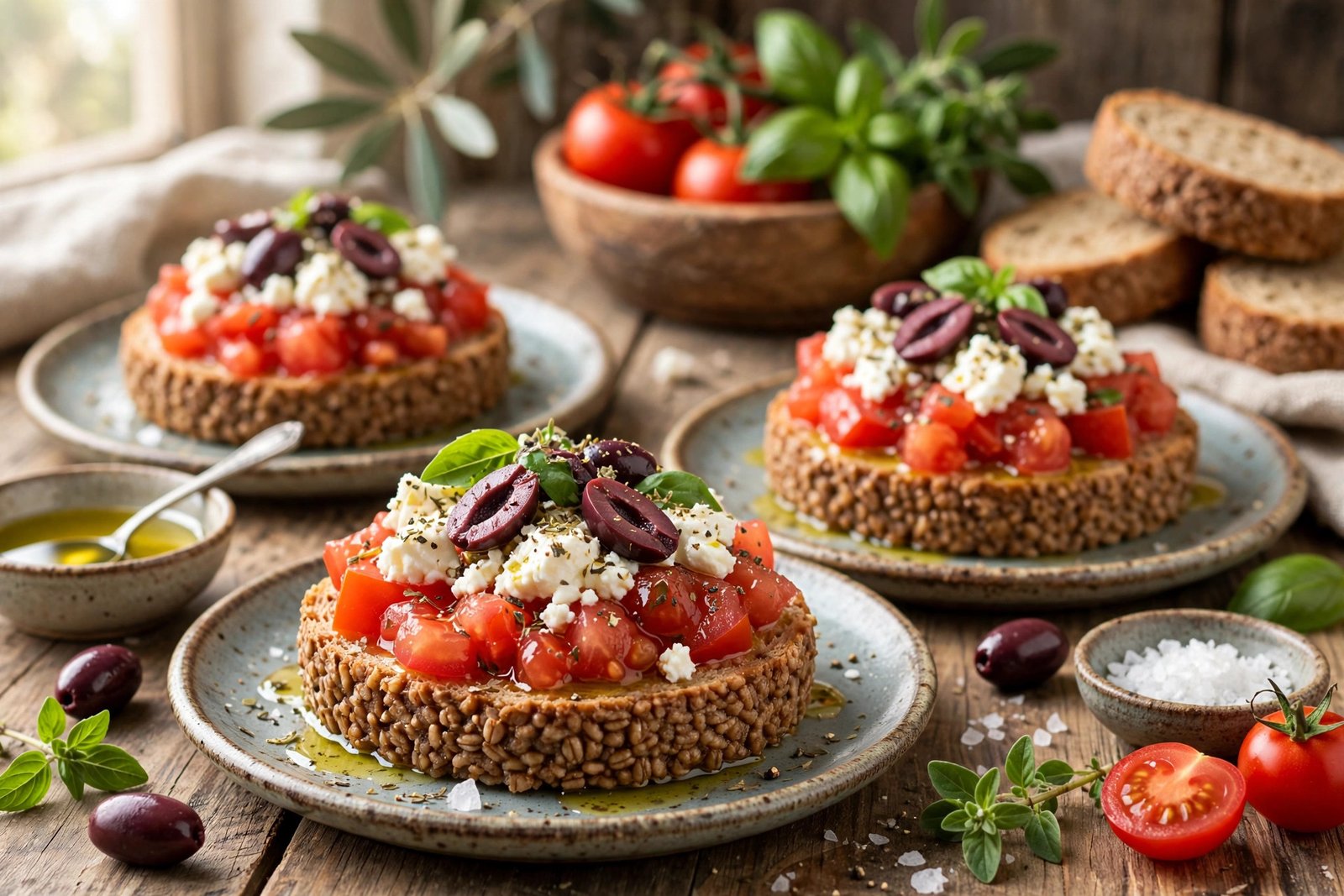
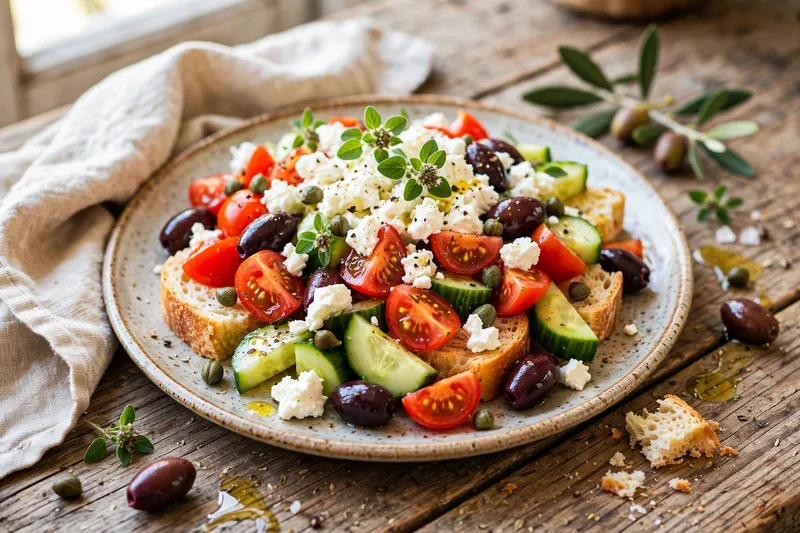
Dakos is Crete's most beloved salad: crunchy barley rusks softened with tomato juices, piled with ripe tomatoes, creamy feta, olives, and capers, and finished with peppery olive oil and oregano. It is rustic, fresh, and ready in fifteen minutes with no cooking at all. Serve it as a light lunch or a meze, and let the rusks soak up every drop.
The story behind Dakos
Dakos comes from Crete, where barley rusks, called paximadia, have been a staple for centuries. Twice-baked until bone dry, rusks kept for months without spoiling, which made them essential food for shepherds, sailors, and farming families. Dakos was the clever way to eat them: sprinkle the rusk with water, pile on grated tomato, and let the juices soften the hard bread into something tender and flavourful. What began as practical food became one of the great dishes of Greek cooking.
The dish is named after the rusk itself, and in Crete you will find it everywhere, from beach tavernas to family kitchens. The ingredients are the classic Cretan pantry: tomatoes at their ripest, feta or the local soft cheese called mizithra, olives, capers, oregano, and olive oil. Crete produces some of the best olive oil in the world, and dakos is one of the dishes that shows it off, because the oil is not cooked or hidden but poured over the top, where you can taste it directly.
What makes dakos special is the texture. The rusk starts hard and crunchy, but the tomato juices and olive oil soften it just enough that it yields to the fork while still holding its shape. It is not bread and it is not salad but something in between, and the contrast between the softened rusk, the juicy tomatoes, and the creamy feta is what keeps people coming back. Every bite should have a little of everything.
This is a dish for summer, for ripe tomatoes, and for meals that do not need a stove. It takes fifteen minutes to assemble, and it is best eaten outdoors, with the sun on the table and a glass of something cold. Make it when the tomatoes are at their best, because they are the soul of the dish. A dakos made with pale, watery tomatoes is a shadow of the real thing, while one made with sun-ripened tomatoes is unforgettable.
- Prep time
- 15 mins
- Cook time
- 0 mins
- Total time
- 15 mins
- Servings
- 4 servings
- Calories
- 320
Ingredients
- 4 large barley rusks (paximadia)
- 4 large ripe tomatoes, grated or finely chopped
- 1/2 small red onion, thinly sliced
- 7 oz (200 g) feta cheese, crumbled
- 1/4 cup extra-virgin olive oil
- 1 tablespoon red wine vinegar
- 1 teaspoon dried oregano
- 12 Kalamata olives, pitted
- 1 tablespoon capers, rinsed
- Salt and black pepper to taste
- Fresh basil leaves, to serve
Instructions
- Choose 4 large barley rusks and place them on a serving platter, flat-side down. If your rusks are very small, use two per person. The rusks are the foundation, so pick sturdy ones that will not fall apart when they get wet.
- Sprinkle each rusk with a little water, just a tablespoon or two, and a pinch of salt. You want to soften the surface slightly, not soak the rusk through. It should still feel firm and crunchy in the middle when you press it.
- Grate the 4 large ripe tomatoes on the coarse side of a box grater, or chop them very finely. Grating gives you more juice, which is what the rusks need, and a softer texture that sits well on the bread. Season the tomatoes with a pinch of salt.
- Spoon the grated tomatoes generously over each rusk, making sure to include plenty of juice. Let the juices run down and pool around the base of the rusks; they will soak in as the dish rests.
- Scatter the thinly sliced red onion, the tablespoon of rinsed capers, and the 12 pitted Kalamata olives over the tomatoes. Spread them out so every rusk gets a little of each. The olives and capers bring a salty, briny note that balances the sweetness of the tomato.
- Crumble the 200 g of feta over the top in generous chunks. Do not crumble it too finely; big pieces give you pockets of creamy saltiness and look better on the plate. If you can find mizithra, the soft Cretan cheese, use it instead for the most traditional version.
- Drizzle the quarter cup of extra-virgin olive oil generously over everything, letting it run down the sides of the rusks. Use your best olive oil here; it is a main flavour, not a background note. Follow with the tablespoon of red wine vinegar.
- Sprinkle with the teaspoon of dried oregano, rubbing it between your fingers as you scatter it to release the oils. Season with salt and black pepper to taste, going easy on the salt since the feta, olives, and capers are already salty.
- Rest the dakos for 5 minutes before serving. This is when the magic happens: the rusks absorb the tomato juices and olive oil, softening just enough while keeping their crunch. Do not skip the rest, and do not rest it for much longer, or the rusks will go soggy.
- Top with fresh basil leaves and serve immediately. Eat with a knife and fork, cutting through the softened rusk and scooping up the tomatoes and feta together. The juices at the bottom of the plate are the best part, so have bread ready to mop them up.
Pro tips
- Use the ripest tomatoes you can find. Dakos lives or dies on tomato quality, and pale, underripe tomatoes will give you a watery, flavourless result.
- Sprinkle the rusks with water, do not soak them. A light sprinkle softens the surface; a soak turns them to mush before the tomatoes even go on.
- Rest for 5 minutes, no more. The rusks need time to absorb the juices, but much longer and they lose their crunch entirely and fall apart.
- Use your best olive oil. It is poured over the top and tasted directly, so a good peppery extra-virgin oil makes a real difference here.
- Go easy on the salt. Feta, olives, and capers are all salty, so season the tomatoes lightly and taste before adding more.
Variations & serving ideas
The cheese is the easiest variation. Feta is the most common choice outside Crete, but the traditional cheese is mizithra, a soft, mild whey cheese that is creamier and less salty. Goat cheese works well too, and a soft, fresh ricotta gives a gentler version. For a dairy-free dakos, leave the cheese off entirely and add extra olives and capers; the tomatoes and oil carry the dish on their own.
The toppings can change with the season. In summer, add diced cucumber or a handful of cherry tomatoes alongside the grated tomato. In spring, a few thin slices of radish add crunch and a peppery bite. Sun-dried tomatoes, chopped fine, deepen the tomato flavour in winter when fresh tomatoes are not at their best. A few anchovy fillets, laid over the top, add a salty depth that works beautifully with the feta.
The rusks themselves matter. Barley rusks are traditional and have a nutty, earthy flavour, but whole wheat rusks or even thick slices of toasted sourdough work as substitutes. If you cannot find rusks at all, use a thick slice of rustic bread, toasted until very crisp, and sprinkle it with water the same way. It will not be quite the same, but the spirit of the dish survives.
Serve dakos as a light lunch on its own, or as part of a meze spread with tzatziki, grilled vegetables, and olives. It pairs naturally with grilled fish or lamb, where its freshness cuts through the richness, and it is wonderful next to a glass of cold white wine or a Greek beer. For a bigger meal, add a boiled egg or a piece of grilled halloumi on top.
If you are making dakos for a crowd, assemble it on a large platter rather than individual plates, with the rusks arranged in a single layer and the toppings scattered generously over the top. It looks abundant and rustic, and people can help themselves, cutting through the softened rusks and scooping up the tomatoes and feta. One practical tip for a large platter: sprinkle the rusks with water and spoon the tomatoes on just ten minutes before serving, not earlier, or the rusks at the bottom will go soggy while you wait. If you are serving dakos as part of a meze spread, make it last, after the cooked dishes are ready, so it arrives at the table fresh and the rusks still have their crunch. The tomatoes are worth seeking out: in summer, buy them from a market if you can, and choose the ones that smell like tomatoes when you lift them to your nose. A tomato with no smell will have no taste, and no amount of olive oil will save it. If you are making dakos in winter, when fresh tomatoes are disappointing, use a mix of fresh and sun-dried tomatoes, chopped fine, which gives you the sweetness and depth that out-of-season tomatoes lack. And if you have leftover grated tomato, it makes a wonderful base for a quick pasta sauce the next day.
One more practical note: if your rusks are very large, break them in half before topping them, so each portion is easy to eat with a knife and fork. A whole large rusk can be awkward on a small plate, and halves are easier to handle. If you are serving dakos as a starter, one half-rusk per person is enough, with the rest of the meal to follow; as a light lunch, a whole rusk per person is right. And if you cannot find barley rusks, look for them online or at a Greek deli; they are worth the effort, because their nutty, earthy flavour is part of what makes dakos taste like Crete.
Getting it right
The key technique is managing the moisture. The rusks need enough liquid to soften, but not so much that they collapse. The sprinkle of water starts the process, the tomato juices continue it, and the five-minute rest finishes it. The timing matters: too short a rest and the rusks are still hard in the middle, too long and they turn to mush. Five minutes is the sweet spot, and it is worth setting a timer rather than guessing.
The tomato preparation is the second technique. Grating the tomatoes on a coarse grater gives you a juicy, pulpy mixture that spreads evenly and soaks into the rusks, while chopping gives you distinct pieces that sit on top. Either works, but grating is better for dakos, because the juice is doing half the work. Season the grated tomato with salt and let it sit for a minute before spooning it on; the salt draws out even more juice.
Common mistakes are easy to fix. Soggy rusks mean too much water or too long a rest; sprinkle lightly and serve after five minutes. Rusks that stay rock hard mean not enough tomato juice or not enough rest; use juicier tomatoes and give them the full five minutes. A bland dakos usually means the tomatoes were not ripe enough or the olive oil was not good enough; both are worth investing in. And if the dish tastes too salty, the feta, olives, and capers were not balanced by enough tomato, so add more tomato next time.
Storing & reheating
Dakos is best eaten fresh, within minutes of assembling, and it does not store well once made. The rusks continue to absorb liquid and will turn soggy within an hour, so make only what you will eat in one sitting. If you must hold it, keep the components separate and assemble just before serving.
The individual parts keep well on their own. Grated tomatoes can be refrigerated for a day in a sealed container, and the feta, olives, and capers keep for days. Barley rusks last for months in a sealed bag in a dry cupboard, which is why they were a staple food in the first place. Assemble fresh each time, and the dish will always be at its best.
Frequently asked questions
What is dakos?
Dakos is a Cretan salad of crunchy barley rusks topped with grated tomato, feta cheese, olives, capers, olive oil, and oregano. The rusks are sprinkled with water and left to absorb the tomato juices, softening just enough to eat with a knife and fork. It is a rustic, fresh dish and a staple of Cretan cooking.
What are barley rusks?
Barley rusks, called paximadia, are twice-baked barley bread, dried until very hard and crunchy. They keep for months and are a traditional Cretan staple. You can find them at Greek or Mediterranean grocery shops, or use thick slices of toasted sourdough as a substitute.
How long should dakos rest before serving?
Five minutes is ideal. That is enough time for the rusks to absorb the tomato juices and soften slightly while keeping their crunch. Much longer and they turn soggy and fall apart, so assemble the dakos just before you are ready to eat.
Can I use a different cheese?
Yes. Mizithra, the soft Cretan whey cheese, is traditional, and feta is the most common substitute. Goat cheese or fresh ricotta also work well. For a dairy-free version, leave the cheese off and add extra olives and capers.
What tomatoes are best for dakos?
The ripest, most flavourful tomatoes you can find. Dakos depends on tomato quality, so use sun-ripened tomatoes in summer. In winter, when fresh tomatoes are pale, add a few chopped sun-dried tomatoes to deepen the flavour.
Can I make dakos ahead of time?
Not assembled, as the rusks will go soggy. Prepare the components ahead and assemble just before serving. Grated tomatoes keep for a day in the fridge, and the rusks last for months in a sealed bag, so the dish comes together in minutes.