Tourte de Blettes Recipe
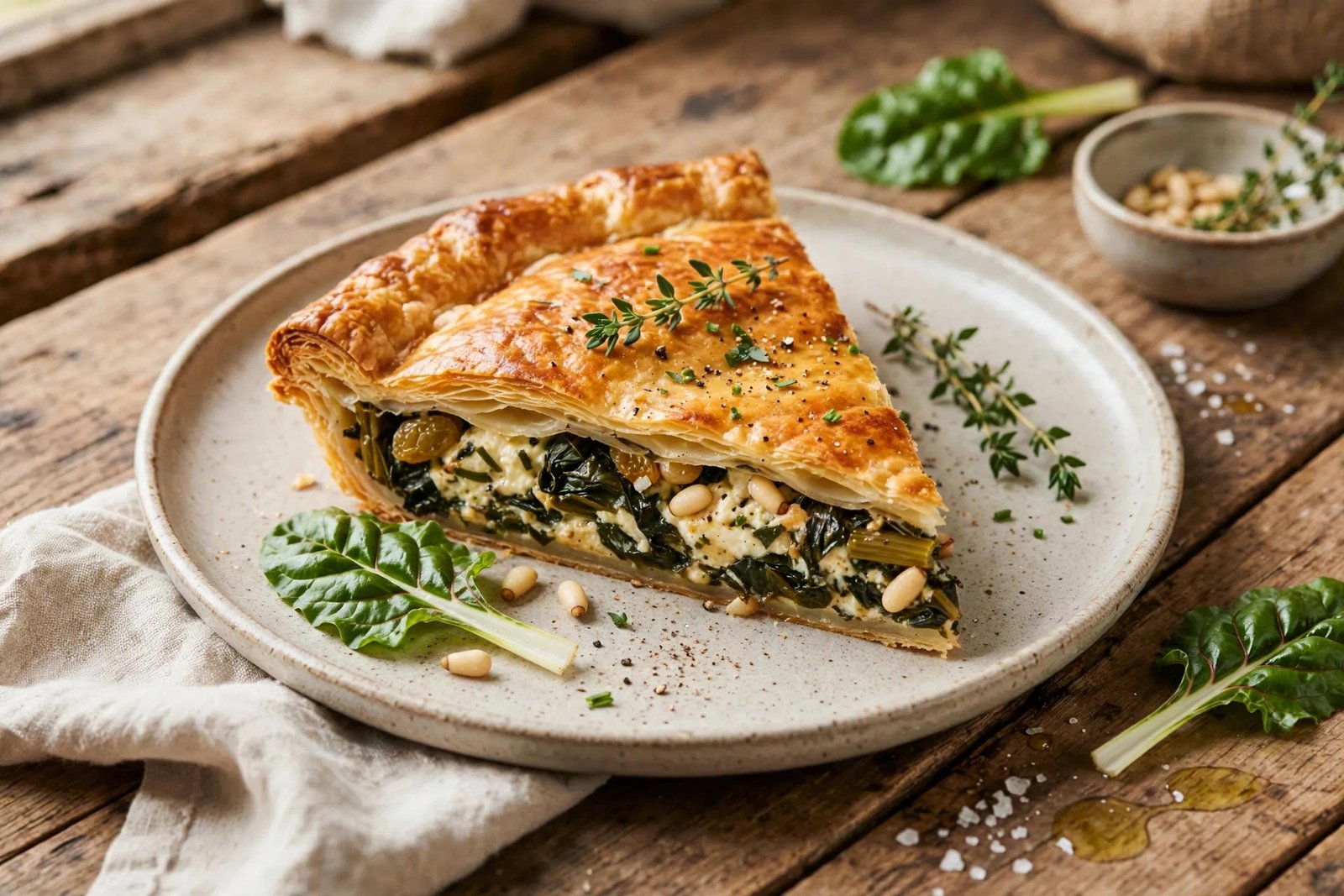
A sweet-savoury Swiss chard tart from Nice, with chard, raisins, pine nuts and a hint of orange. The filling is delicate and fragrant, the pastry is golden and crisp, and the combination of sweet and savoury is surprising and delicious. It is a Provençal classic, wonderful warm or cold.
The story behind Tourte de Blettes
Tourte de blettes is one of the most surprising dishes in French cooking. It is a tart made with Swiss chard, and it is both sweet and savoury: the chard and pine nuts meet sugar, raisins and orange zest in a pastry case, dusted with icing sugar. It sounds strange until you taste it, and then it makes perfect sense.
The dish comes from Nice, on the French Riviera, where Swiss chard grows in abundance and the cooking has a Mediterranean character. It is a speciality of the region, sold in bakeries and markets, and it is eaten as a dessert, a snack, or a light lunch with a green salad. The sweet-savoury combination is traditional, not a mistake, and it is what makes the tart famous.
The chard is the key. Swiss chard has a mild, earthy flavour and a tender texture when cooked, and it pairs beautifully with sweet ingredients. The leaves are blanched, squeezed very dry, and chopped, then mixed with eggs, sugar, orange zest, raisins and pine nuts. The result is a filling that is fragrant, delicate and unlike anything else.
The pine nuts add a buttery crunch, and toasting them lightly brings out their flavour. The raisins add sweetness and a chewy texture, and the orange zest gives a bright, citrusy note that lifts the whole filling. The vanilla adds warmth, and the pastry holds it all together in a golden, flaky case.
This is a dish that rewards an open mind. If you have never tried a sweet vegetable tart, the first bite is a surprise, and the second is a delight. The flavours are balanced and subtle, and the tart is light enough to eat at any time of day.
It takes just over an hour to make, and most of that is the pastry baking in the oven. The filling comes together quickly, and the tart is just as good cold as it is warm, which makes it a good dish to make ahead for a picnic or a lunchbox.
The icing sugar on top is the finishing touch. It melts slightly into the warm pastry and gives the tart a delicate sweetness that signals it is a dessert, not a savoury pie. A light dusting is enough; too much will overpower the subtle flavours of the filling.
If you cannot find Swiss chard, spinach works well as a substitute, though the flavour is a little milder. Use the same amount, blanch it the same way, and squeeze it very dry. The tart will still be delicious, and the sweet-savoury balance will be just as surprising.
- Prep time
- 25 mins
- Cook time
- 45 mins
- Total time
- 1 hour 10 mins
- Servings
- 4 servings
- Calories
- 380
Ingredients
- 500 g Swiss chard, leaves only
- 2 sheets shortcrust pastry
- 1/2 cup raisins
- 1/4 cup pine nuts, toasted
- 2 eggs
- 1/3 cup sugar
- 1 tablespoon orange zest
- 1 teaspoon vanilla extract
- 2 tablespoons olive oil
- 1 onion, finely chopped
- 1/2 teaspoon salt
- 1 egg yolk, for glazing
- Icing sugar, for dusting
Instructions
- Blanch the Swiss chard leaves in a large pot of boiling water for 2 minutes until wilted and bright green. Drain in a colander and rinse under cold water to stop the cooking. Then squeeze the chard very dry with your hands, a handful at a time, wringing out as much water as you can. Chop it roughly.
- Heat the olive oil in a frying pan over medium heat and cook the finely chopped onion for 4 minutes until soft and translucent. Add the chopped chard and cook for 2 more minutes, stirring, so the chard and onion mix together. The mixture should be dry, not watery; if there is liquid in the pan, cook until it evaporates.
- Whisk the eggs with the sugar, orange zest, vanilla extract and salt in a large bowl until well combined and slightly frothy. The sugar should dissolve into the eggs, and the mixture should smell fragrant from the orange and vanilla.
- Stir the chard and onion mixture into the egg mixture, along with the raisins and toasted pine nuts. Mix well so everything is evenly distributed. The filling should be thick and spoonable, with the chard, raisins and pine nuts visible throughout.
- Preheat the oven to 180 C. Line a tart tin with one sheet of shortcrust pastry, pressing it gently into the corners and leaving a little overhang. Spoon the filling into the pastry case and spread it evenly, smoothing the top.
- Cover the filling with the second pastry sheet, pressing the edges together to seal. Trim the overhang and crimp the edges with your fingers or a fork. Cut a small steam hole in the centre of the top pastry so steam can escape during baking.
- Brush the top pastry generously with the beaten egg yolk. The yolk gives a deep golden shine and helps the pastry brown evenly. Make sure to cover the whole surface, including the crimped edges.
- Bake at 180 C for 35 minutes until the pastry is deep golden and the filling is set. The tart should smell fragrant and the top should be firm to the touch. If the edges brown too fast, cover them loosely with foil for the last 10 minutes.
- Cool the tart slightly on a wire rack for 15 minutes before slicing. The filling needs a little time to set, and the tart is easier to slice when it is warm rather than piping hot. Dust generously with icing sugar just before serving.
- Serve warm or at room temperature, in slices, with a green salad for a light lunch or on its own as a dessert. The tart is just as good cold the next day, and it travels well for a picnic.
Pro tips
- Squeeze the chard very dry or the filling will be watery. Wring it out a handful at a time until no more water comes out; wet chard makes a soggy tart.
- Toast the pine nuts lightly; they burn quickly, so watch them. A minute or two in a dry pan is enough, and they should be golden, not dark brown.
- The sweet-savoury flavour is traditional; trust the combination. It sounds unusual, but the sugar, raisins and orange work beautifully with the chard.
- Serve as a dessert or a light lunch with a green salad. The tart is versatile, and it suits both sweet and savoury occasions.
- Cut a steam hole in the top pastry so the filling does not make it soggy. The hole lets steam escape and keeps the top crust crisp.
Variations & serving ideas
The greens can change. Spinach works well and is easier to find than Swiss chard, though the flavour is milder. Use the same amount and squeeze it very dry. Beetroot leaves, if you can find them, give a slightly earthier flavour and a beautiful colour. A mix of chard and spinach is a good compromise.
The dried fruit can vary too. Sultanas or currants work in place of raisins, and chopped dried apricots add a tangy sweetness. A few chopped dates give a rich, caramel-like note. Just keep the total amount the same so the filling stays balanced.
The nuts can change as well. Toasted almonds, chopped roughly, give a firmer crunch than pine nuts. Walnuts add a slightly bitter, earthy note that suits the chard. Hazelnuts, toasted and chopped, bring a warm, nutty flavour that pairs well with the orange zest.
For a richer version, add a spoonful of ricotta cheese to the filling, which makes it creamier and more substantial. A little grated Parmesan stirred in adds a savoury depth that balances the sweetness. And a pinch of cinnamon alongside the orange zest gives a warm, spicy note.
Serve it as a dessert with a spoonful of cream or a scoop of vanilla ice cream, or as a light lunch with a green salad and a glass of white wine. It is also good at room temperature as part of a picnic, cut into small squares and eaten by hand.
For a festive version, add a splash of orange blossom water to the filling and a scattering of flaked almonds on top before baking. The orange blossom gives a fragrant, floral note that suits the Provençal character of the dish, and the almonds turn golden and crisp in the oven.
A little candied orange peel, chopped finely and stirred into the filling, adds a bright, chewy sweetness that pairs beautifully with the orange zest. It is a small addition that makes the citrus flavour more pronounced, and it gives the filling a little extra texture. Use a small amount, as candied peel is very sweet.
Getting it right
Squeezing the chard dry is the most important technique in this dish. Chard holds a surprising amount of water, and if it goes into the filling wet, the tart will be soggy and the pastry will never crisp. Blanch it, rinse it cold, then wring it out a handful at a time until no more water comes out. It takes a few minutes, but it is essential.
The pastry needs to be sealed well. Press the edges of the top and bottom pastry together firmly and crimp them, so the filling does not leak out during baking. A small steam hole in the centre lets steam escape without letting the filling out. If the edges are not sealed, the filling will bubble out and burn on the baking tray.
Baking needs a moderate oven and patience. Thirty-five minutes at 180 C is enough for the pastry to turn golden and the filling to set. The tart should feel firm when you press the top gently, and the pastry should be deep golden, not pale. If the top is browning too fast, cover it loosely with foil.
The most common mistake is a watery filling, and it almost always comes from chard that was not squeezed dry enough. Take the time to wring it out properly, and cook the chard and onion together for a few minutes to drive off any remaining moisture before mixing the filling.
Storing & reheating
Tourte de blettes keeps for 2 days in the fridge, covered loosely. Serve it at room temperature or warm it gently in a low oven for 10 minutes. The pastry will soften slightly in the fridge, but the flavour stays good.
It also freezes well for up to 2 months. Wrap the cooled tart tightly in cling film and foil, thaw overnight in the fridge, and reheat in a moderate oven for 15 minutes to crisp the pastry. Dust with icing sugar fresh each time you serve it.
Frequently asked questions
Is tourte de blettes sweet or savoury?
It is both, a famous sweet-savoury speciality of Nice. The chard and pine nuts meet sugar, raisins and orange zest. The result is delicate and fragrant, and it works as a dessert or a light lunch.
Can I use spinach instead of chard?
Yes, spinach works well. Use the same amount and squeeze it very dry. The flavour is a little milder than chard, but the sweet-savoury balance is just as good.
Can I make it without sugar?
You can reduce the sugar, but the sweet note is part of the traditional character of the dish. Without any sugar, the tart tastes flat and the raisins and orange lose their purpose.
How long does it keep?
It keeps for 2 days in the fridge. Serve at room temperature or warm it gently. It also freezes well for up to 2 months; thaw overnight and reheat to crisp the pastry.
What is Swiss chard?
Swiss chard is a leafy green with broad leaves and thick stems, sold at greengrocers and supermarkets. The leaves are mild and earthy when cooked. Use the leaves only for this recipe, and save the stems for a stir-fry.
Can I use ready-made pastry?
Yes, ready-rolled shortcrust pastry works well and saves time. Make sure it is fully thawed before using, and keep it cold until you are ready to line the tin.