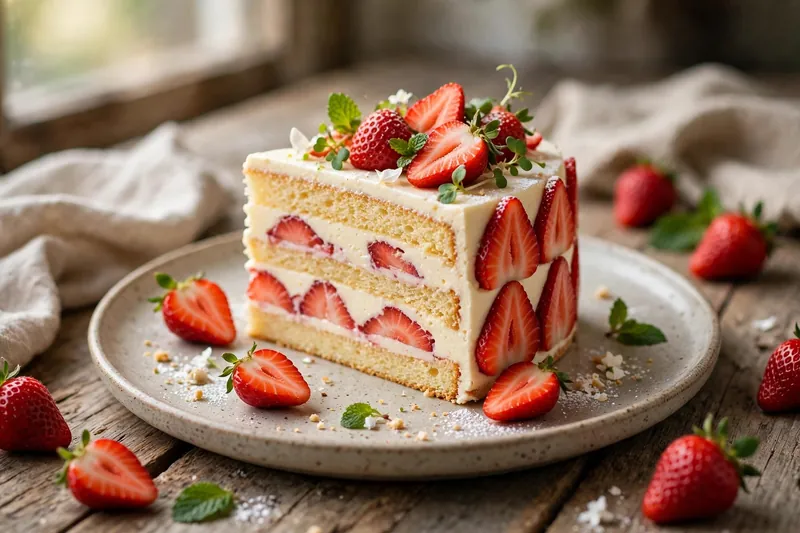
Financiers Recipe

Financiers are the elegant little almond cakes of Parisian patisseries: golden and crisp at the edges, soft and buttery inside, with a delicate nutty flavour. Made with brown butter and ground almonds, they are deceptively simple and endlessly delicious. They are perfect with afternoon coffee. They take half an hour from start to finish and use ingredients you probably already have.
The story behind Financiers
Financiers are small cakes with a big reputation. They come from Paris, where they have been a patisserie staple since the late 19th century. Their shape is the giveaway: a neat little rectangle with gently sloped sides, said to resemble a gold ingot. That is where the name comes from, along with the story that they were popular with financiers working near the Paris stock exchange, who wanted a cake they could eat without cutlery and without crumbs on their suits.
The cake itself is a simple thing done well. Ground almonds give it a soft, moist crumb. Brown butter gives it a deep, nutty flavour that plain melted butter never manages. Egg whites, rather than whole eggs, keep it light and help the edges crisp in the oven. There is no leavening agent doing heavy work here; the rise comes from the egg whites and the heat, so the cakes stay dense in the best way: rich, moist and satisfying. The batter is barely more than butter, almonds, sugar and egg whites, which is why the quality of each one matters. Good butter, freshly ground almonds and real vanilla make a noticeable difference in such a simple cake.
What makes a financier special is the contrast. The outside should be golden and slightly crisp, with a caramelised edge where the batter meets the tin. The inside stays soft and buttery, with the almond flavour running all the way through. A raspberry on top adds a sharp, juicy note that cuts the richness, and flaked almonds give a gentle crunch.
Financiers are the kind of baking that rewards a quiet half hour in the kitchen. They are quick to make, they use ingredients you probably already have, and they are at their best eaten the same day, still slightly warm from the oven, with a cup of coffee. They also make a lovely gift: a box of golden financiers, dusted with nothing at all, needs no further decoration. Financiers are also a wonderful way to use up leftover egg whites. If you have made custard or ice cream and have whites sitting in the fridge, this is the recipe to reach for. Three whites, a handful of almonds and a knob of butter are all it takes.
- Prep time
- 15 mins
- Cook time
- 15 mins
- Total time
- 30 mins
- Servings
- 8 servings
- Calories
- 170
Ingredients
- 100 g unsalted butter
- 100 g icing sugar
- 60 g plain flour
- 80 g ground almonds
- 3 egg whites
- 1 teaspoon vanilla extract
- 1 pinch of salt
- 8 raspberries or flaked almonds, to top
Instructions
- Start with the brown butter, which is the heart of the flavour. Melt the butter in a small light-coloured pan over medium heat. It will foam, then the foam will subside and the milk solids will start to turn golden. Swirl the pan and watch closely; you want a deep amber colour and a nutty smell. Take it off the heat immediately and pour it into a bowl to stop it cooking.
- While the butter cools slightly, whisk the icing sugar, plain flour, ground almonds and salt together in a large bowl. Break up any lumps in the icing sugar with the back of a spoon so the batter ends up smooth. The dry ingredients should be evenly mixed, with the almonds distributed throughout.
- Add the egg whites and the vanilla extract to the dry ingredients and whisk until just combined. The mixture will be thick and paste-like at this stage, which is fine. Do not whisk it into a froth; you want the whites mixed in, not aerated, or the cakes will rise and then sink.
- Pour the warm brown butter into the bowl, including the little browned bits at the bottom, which carry most of the flavour. Stir with a spatula until the batter is smooth and glossy, scraping the sides of the bowl as you go. The batter should flow slowly from the spatula in a thick ribbon.
- Rest the batter for 10 minutes while the oven preheats to 200°C (400°F). This short rest lets the flour hydrate and the batter thicken slightly, which helps the cakes hold their shape in the tin. Use the time to grease your financier tin or mini muffin tin well.
- Spoon the batter into the tin, filling each mould about three-quarters full. The cakes will rise a little but not much, so you can fill them generously. Place a raspberry in the centre of each one, or scatter over a few flaked almonds, pressing them in lightly so they stick.
- Bake for 12 to 15 minutes, until the financiers are deeply golden at the edges and spring back when you press them gently. The tops should look set and slightly domed, and the kitchen will smell of toasted almonds and butter. A skewer inserted into the centre should come out clean.
- Cool the financiers in the tin for 5 minutes, then turn them out onto a wire rack. They are delicate when hot, so be gentle. They are at their best eaten the same day, while the edges are still crisp, but they will keep for a day or two in a sealed tin.
Pro tips
- Brown butter is the key flavour, so watch it closely. It goes from golden to burnt in seconds, and burnt butter tastes bitter rather than nutty. Use a light-coloured pan so you can see the colour change, and pour it out the moment it turns amber.
- Do not overmix once the flour is added, or the cakes will be tough. Stir just until the batter is smooth and stop. The egg whites should be mixed in, not whisked into a foam.
- Financiers are best eaten the same day, while the edges are crisp. They soften overnight, though they are still delicious, and a few minutes in a warm oven will bring back some of the crispness. A few minutes in a warm oven will bring back some of the crispness.
- Freeze the batter in the tin for make-ahead baking. Fill the greased moulds, freeze until solid, then pop the frozen cakes out and store them in a bag. Bake from frozen, adding 2 to 3 minutes to the time.
- Use room-temperature egg whites if you can. Cold whites do not mix as smoothly into the dry ingredients, and the batter can end up lumpy. A few minutes on the counter is enough.
Variations & serving ideas
The topping is the easiest place to vary financiers. A raspberry is the classic, but a blueberry, a slice of fig, or a few flaked almonds all work beautifully. A small square of dark chocolate pressed into the centre melts into a soft pocket as the cakes bake. For a citrus version, add the zest of a lemon or orange to the dry ingredients; it lifts the nutty butter flavour without overpowering it.
You can also change the nut. Ground hazelnuts give a deeper, almost chocolatey flavour, while ground pistachios make a beautiful green-tinted cake with a more delicate taste. A mix of almonds and hazelnuts is a good middle ground. Whatever nut you use, make sure it is finely ground so the crumb stays smooth and even.
The shape is flexible too. Traditional financier tins are rectangular, but mini muffin tins work just as well, and small silicone moulds are fine if that is what you have. You can even bake the batter in a single small loaf tin and slice it, though you will lose the crisp edges that make individual cakes so good. Mini financiers, baked for 8 to 10 minutes, make lovely petit fours.
Serve financiers with afternoon coffee or tea, or as a light dessert with a scoop of ice cream and a few berries. They pair well with anything that has a little acidity, since the cakes themselves are rich. A glass of dessert wine or a cup of Earl Grey both work. They also travel well, which makes them a good choice for picnics and lunchboxes. For a chocolate version, replace a tablespoon of the flour with cocoa powder and press a square of dark chocolate into each cake before baking. The chocolate melts into the centre and pairs beautifully with the brown butter.
Getting it right
The key technique in financiers is browning the butter properly. This is where almost all the flavour comes from. As the butter melts and the water evaporates, the milk solids sink to the bottom and start to toast. You want them to reach a deep amber colour, with a smell like roasted hazelnuts. The window between perfect and burnt is narrow, so stay at the stove, swirl the pan, and use a light-coloured pan so you can judge the colour. The moment it smells nutty and looks amber, pour it into a cool bowl to stop the cooking.
The second thing to get right is the mix. Financiers use egg whites, not whole eggs, and the whites should be stirred in, not whisked into peaks. If you whip them, the batter traps too much air and the cakes rise in the oven, then collapse as they cool. Stir the whites into the dry ingredients until just combined, then fold in the butter. The batter should be smooth and thick, with no lumps of flour and no streaks of egg white.
The most common mistakes are overbaking and underbaking. Financiers should be deeply golden, not pale; pale cakes taste doughy and lack the caramelised edge that makes them special. But they go from golden to dry quickly, so start checking at 12 minutes. The edges should be crisp and browned, the centre should spring back when pressed, and a skewer should come out clean. If your cakes stick to the tin, you probably did not grease it well enough; a thorough brushing with softened butter, or a light dusting of flour after buttering, solves it.
Storing & reheating
Financiers are best eaten the same day, while the edges are crisp and the inside is soft. If you have leftovers, store them in an airtight tin at room temperature for up to 2 days. They will soften as they sit, but a few minutes in a warm oven at 160°C will bring back some of the crispness.
The batter freezes well, which is handy for make-ahead baking. Fill a greased tin, freeze the cakes solid, then transfer them to a freezer bag for up to a month. Bake from frozen, adding 2 to 3 minutes to the time. Baked financiers can also be frozen for up to a month; thaw at room temperature and warm briefly in the oven before serving. If you freeze the batter, label the bag with the date and the baking time so you do not have to guess later.
Frequently asked questions
What are financiers?
Financiers are small French almond cakes made with brown butter, ground almonds, egg whites and icing sugar. They are golden and crisp at the edges, soft and buttery inside, and traditionally baked in small rectangular tins that resemble gold ingots.
Why are they called financiers?
The name comes from their shape, which is said to resemble a gold ingot, and from a story that they were popular with financiers working near the Paris stock exchange in the late 19th century, who wanted a cake they could eat without cutlery.
Can I make financiers without a special tin?
Yes. A mini muffin tin works well and gives round cakes with the same crisp edges. Small silicone moulds are also fine. Just grease the tin well and fill each mould about three-quarters full.
How long do financiers keep?
They are best eaten the same day, while the edges are crisp. They keep for up to 2 days in an airtight tin at room temperature, though they soften. The batter freezes well for up to a month, and baked financiers can be frozen too.
What is brown butter and why does it matter?
Brown butter is butter cooked until the milk solids turn golden and nutty. It gives financiers their deep, toasted flavour, which plain melted butter cannot match. Watch it closely as it browns, as it can burn quickly.
Can I use whole eggs instead of egg whites?
Egg whites are what give financiers their light texture and crisp edges, so whole eggs will change the result. The cakes will be richer and denser, more like a pound cake. If you have leftover yolks, save them for custard or pastry cream.