Qorma Recipe
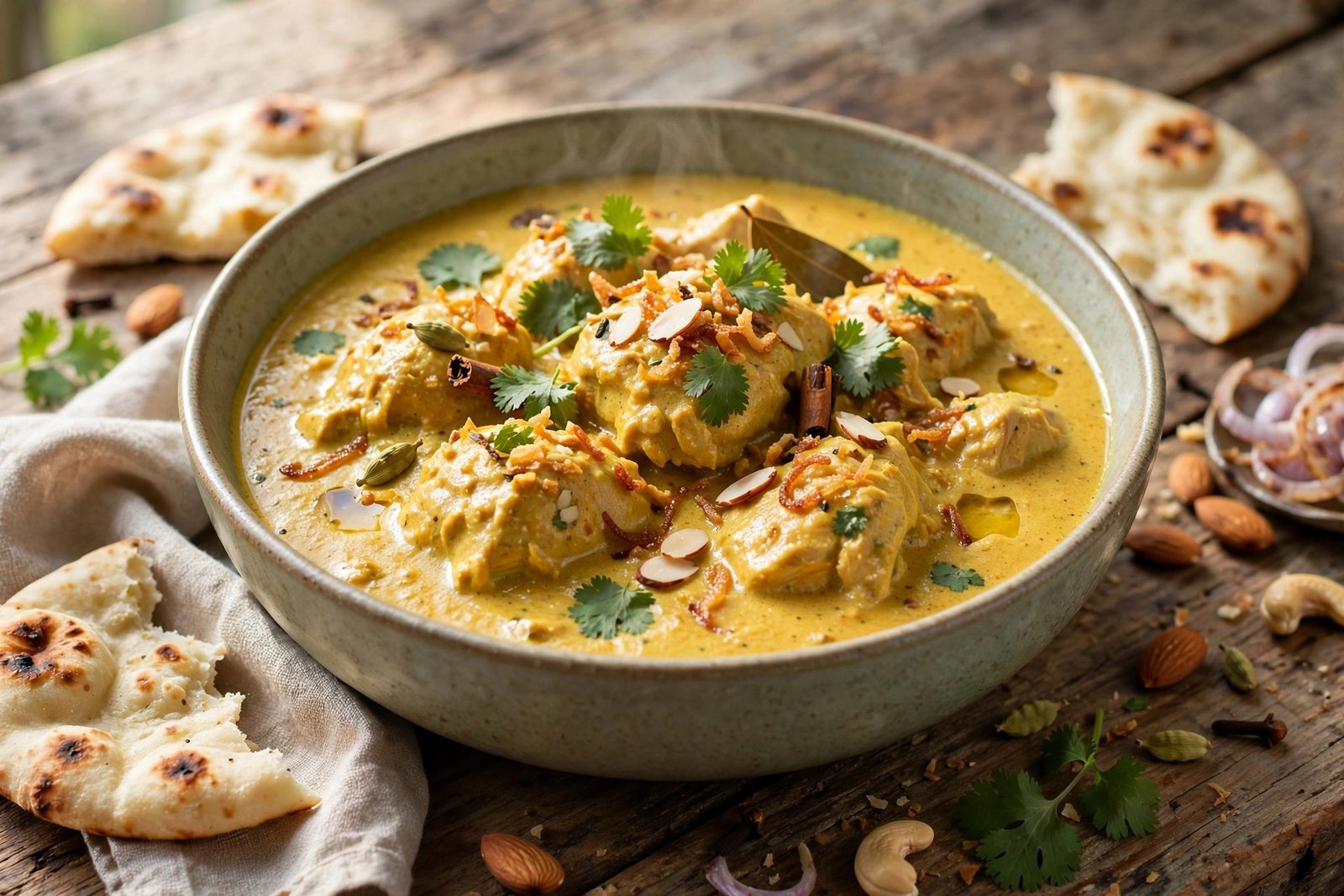
A royal desi qorma of slow-cooked meat in a rich, fragrant gravy of fried onions, yoghurt and warm spices. The gravy is velvety and smooth, the meat turns meltingly tender, and the whole dish tastes like a celebration. It is the centrepiece of a special meal, served with naan or sheermal and shared at the table.
The story behind Qorma
Qorma is one of the great dishes of Mughlai cooking, and it has been served at royal tables and family celebrations for centuries. The name comes from the Turkic word for braising, and the dish is exactly that: meat braised slowly in a rich gravy until it is tender enough to fall apart. It is food for a special occasion, made with care and patience.
The gravy is built on two things: deeply browned onions and yoghurt. The onions are fried slowly until they turn a dark golden brown, and their sweetness becomes the heart of the dish. Half are crushed into a paste that thickens the gravy and gives it a silky texture. The yoghurt is added slowly, on low heat, so it blends into the sauce without splitting, and it gives the qorma a gentle tang that balances the richness.
The whole spices are the third pillar. Green cardamom, black cardamom, bay leaves and cinnamon are fried briefly in the hot oil to wake them up, and they perfume the gravy as it simmers. The ground spices, chilli, coriander and turmeric, add warmth and colour. Together they create a fragrance that is complex without being hot; qorma is aromatic, not fiery.
What makes a qorma different from an ordinary curry is the texture of the gravy. It should be smooth, velvety and rich, coating the meat in a glossy layer, not thin and watery. The oil rising to the surface when the dish rests is a sign that it is done properly; it means the gravy has cooked long enough for the fat to separate, and it is what gives the qorma its characteristic sheen.
Qorma is traditionally made with mutton or beef, bone-in, because the bones add flavour to the gravy as it simmers. Chicken qorma is a faster version that cooks in about 30 minutes, and it is just as delicious for a weeknight. Either way, the method is the same, and the result is a dish that tastes like it took all day.
It is a dish for gathering people around a table. Serve it with naan or sheermal, the soft, slightly sweet bread that is the traditional partner, and a simple salad or raita on the side. The gravy is for scooping, the meat is for sharing, and the meal is for lingering over.
The resting time matters more than people expect. Ten minutes off the heat lets the oil rise to the surface and the flavours settle, and the qorma tastes better for it. If you serve it straight from the pot, the gravy is still a little unsettled and the flavours have not quite come together. Patience at the end is as important as patience at the start.
- Prep time
- 25 mins
- Cook time
- 1 hour
- Total time
- 1 hour 25 mins
- Servings
- 4 servings
- Calories
- 620
Ingredients
- 1 kg mutton or beef, bone-in pieces
- 3 onions, thinly sliced
- 1 cup yoghurt, whisked
- 2 tablespoons ginger garlic paste
- 1 teaspoon red chilli powder
- 1 teaspoon coriander powder
- 1/2 teaspoon turmeric
- 4 green cardamom pods
- 2 black cardamom pods
- 2 bay leaves
- 1 cinnamon stick
- 1/2 cup oil or ghee
- 1 teaspoon salt
- 1/4 cup chopped coriander
Instructions
- Heat the oil or ghee in a heavy pot over medium heat and add the thinly sliced onions. Fry for 10 minutes, stirring often, until they turn a deep golden brown. This is the most important step; the onions need to be properly browned, not just softened, because their sweetness is the heart of the qorma.
- Remove half the fried onions with a slotted spoon and crush them into a paste with a little water, using a mortar or a small blender. The paste should be smooth and thick. Set it aside; it goes back into the pot later and thickens the gravy.
- Add the whole spices, the green cardamom pods, black cardamom pods, bay leaves and cinnamon stick, to the pot with the remaining onions and fry for 30 seconds. The spices will crackle and release their aroma into the oil. Do not let them burn, as burnt spices turn bitter.
- Add the ginger garlic paste and the bone-in meat pieces, and brown for 6 minutes, turning the pieces so they colour on all sides. The meat should pick up a little golden colour and the paste should lose its raw smell. The pot should be sizzling, not steaming.
- Stir in the red chilli powder, coriander powder, turmeric and salt, and cook for 30 seconds, stirring constantly. The ground spices bloom in the hot oil and turn fragrant. Keep them moving so they do not catch on the bottom of the pot.
- Turn the heat down to low and add the whisked yoghurt a little at a time, stirring constantly after each addition. The heat must be low, or the yoghurt will split and turn grainy. Take your time; this step cannot be rushed, and a smooth yoghurt base is what makes the gravy velvety.
- Stir in the onion paste and 1 cup of hot water, then cover the pot with a tight-fitting lid. The onion paste thickens the gravy and the water gives the meat room to braise. The liquid should come about halfway up the meat, not cover it completely.
- Simmer gently on the lowest heat for 50 minutes, checking every 15 minutes and stirring gently so the gravy does not stick. The meat is done when it is very tender and almost falling from the bone, and the gravy is thick, glossy and rich. If the gravy is too thin, simmer uncovered for the last 10 minutes.
- Take the pot off the heat and let the qorma rest for 10 minutes with the lid on. The oil will rise to the surface, which is a sign of a well-made qorma, and the flavours will settle. Do not stir the oil back in; it is part of the dish.
- Finish with the chopped coriander and serve hot with naan or sheermal. Spoon the gravy generously over each portion, making sure everyone gets a share of the oil on top. The qorma should be rich, fragrant and glossy, with the meat falling from the bone.
Pro tips
- Brown the onions deeply; their sweetness is the heart of a good qorma. Pale onions give a pale, flat gravy, while deep golden onions give sweetness and depth.
- Add the yoghurt on low heat and stir well so it does not split. High heat curdles yoghurt in seconds, and a split gravy cannot be fixed once it has happened.
- A slow, gentle simmer gives the meat time to turn tender and the gravy silky. Rushing the simmer gives tough meat and a thin, unsettled sauce.
- Rest the qorma for 10 minutes before serving so the oil rises to the top. The resting time lets the flavours settle and gives the dish its characteristic sheen.
- Use bone-in meat for the best flavour. The bones release gelatin and flavour into the gravy as it simmers, giving it a richness that boneless meat cannot match.
Variations & serving ideas
The meat is the easiest thing to change. Mutton and beef are traditional, but chicken qorma cooks in about 30 minutes and is perfect for a weeknight. Use bone-in chicken pieces for the best flavour, and reduce the simmering time so the chicken stays moist. Goat meat gives a richer, slightly gamey flavour that many people prefer.
The gravy can be enriched with ground almonds or cashews, blended into a paste and stirred in with the onion paste. This gives the qorma a thicker, creamier texture and a subtle nutty flavour that suits the warm spices. A spoonful of cream stirred in at the end adds richness for a more indulgent version.
The spices can shift too. A pinch of mace or nutmeg adds a warm, floral note, and a few strands of saffron soaked in warm milk give the qorma a golden colour and a luxurious aroma. For more heat, add a sliced green chilli with the whole spices, or serve with extra chilli flakes on the side.
For a lighter version, use less oil and skim the fat from the surface before serving. The gravy will be a little less rich, but the flavours stay the same. You can also use low-fat yoghurt, though full-fat yoghurt is less likely to split and gives a better texture.
Serve it with naan, sheermal or steamed basmati rice, and a simple kachumber salad or raita on the side. A glass of lassi or a cup of green tea pairs well with the rich gravy. The qorma is also wonderful the next day, when the flavours have deepened further.
For a special occasion, garnish the qorma with slivered almonds, a little julienned ginger and a scattering of fresh coriander. The garnish adds colour and texture, and it makes the dish look as festive as it tastes. Serve it in a large dish at the centre of the table and let everyone help themselves.
Getting it right
Browning the onions is the technique that defines this dish, and it needs patience. Ten minutes over medium heat, stirring often, until the onions turn a deep golden brown. They go through stages: soft, then golden, then deep brown. The deep brown stage is what you want, because that is where the sweetness lives. Pale onions give a pale gravy, and there is no way to add that sweetness back later.
The yoghurt step is the most delicate. Yoghurt splits when it hits high heat, turning grainy and ruining the texture of the gravy. The pot must be on the lowest heat, and the yoghurt must go in a little at a time, stirred constantly. Whisk the yoghurt smooth before adding it, and make sure it is at room temperature, not cold from the fridge. Cold yoghurt shocks the pot and splits more easily.
The simmer needs to be gentle and long. Fifty minutes on the lowest heat, with the lid on, lets the meat turn tender and the gravy thicken slowly. A hard boil tightens the meat and makes the gravy thin and greasy. Check every 15 minutes and stir gently, scraping the bottom so nothing sticks.
The most common mistake is rushing the onions. It is tempting to turn the heat up to speed them along, but high heat burns the onions before they brown properly, giving a bitter taste. Medium heat and patience are the only way. If the onions are browning too fast on the edges, turn the heat down and stir more often.
Storing & reheating
Qorma keeps beautifully in the fridge for up to 3 days in a sealed container. The flavours deepen overnight, and many cooks say the second day is better than the first. The oil will solidify on the surface when cold; this is normal, and it melts back into the gravy as it warms.
To reheat, warm it gently in a covered pot over low heat, stirring occasionally, until the meat is hot through. Add a splash of water if the gravy has thickened too much. It also freezes well for up to 3 months; thaw overnight in the fridge and reheat the same way. Add fresh coriander each time you serve it.
Frequently asked questions
What is the difference between qorma and curry?
Qorma is a richer, slower-cooked dish built on browned onions and yoghurt, with a smooth, velvety gravy rather than a thin sauce. It is aromatic rather than fiery, and the meat is braised until it falls from the bone.
Can I use chicken for qorma?
Yes, chicken qorma cooks in about 30 minutes. Use bone-in pieces for the best flavour, and reduce the simmering time so the chicken stays moist. The method is exactly the same.
Can I use a pressure cooker for qorma?
Yes, pressure cook the meat for 20 minutes after adding the yoghurt, then simmer uncovered for 10 minutes to thicken the gravy. The flavour is very close to the slow version.
Can I make qorma ahead?
Yes, it keeps for 3 days in the fridge and tastes even better the next day. Reheat gently and add fresh coriander before serving. It also freezes well for up to 3 months.
Why did my yoghurt split?
The heat was probably too high, or the yoghurt was added too quickly. Always use the lowest heat, add the yoghurt a little at a time, and stir constantly. Room-temperature yoghurt splits less easily than cold yoghurt.
What bread goes best with qorma?
Naan and sheermal are the traditional partners. Sheermal is a soft, slightly sweet bread that soaks up the gravy beautifully. Steamed basmati rice is also a good choice if you prefer rice.


