Saag Aloo Recipe

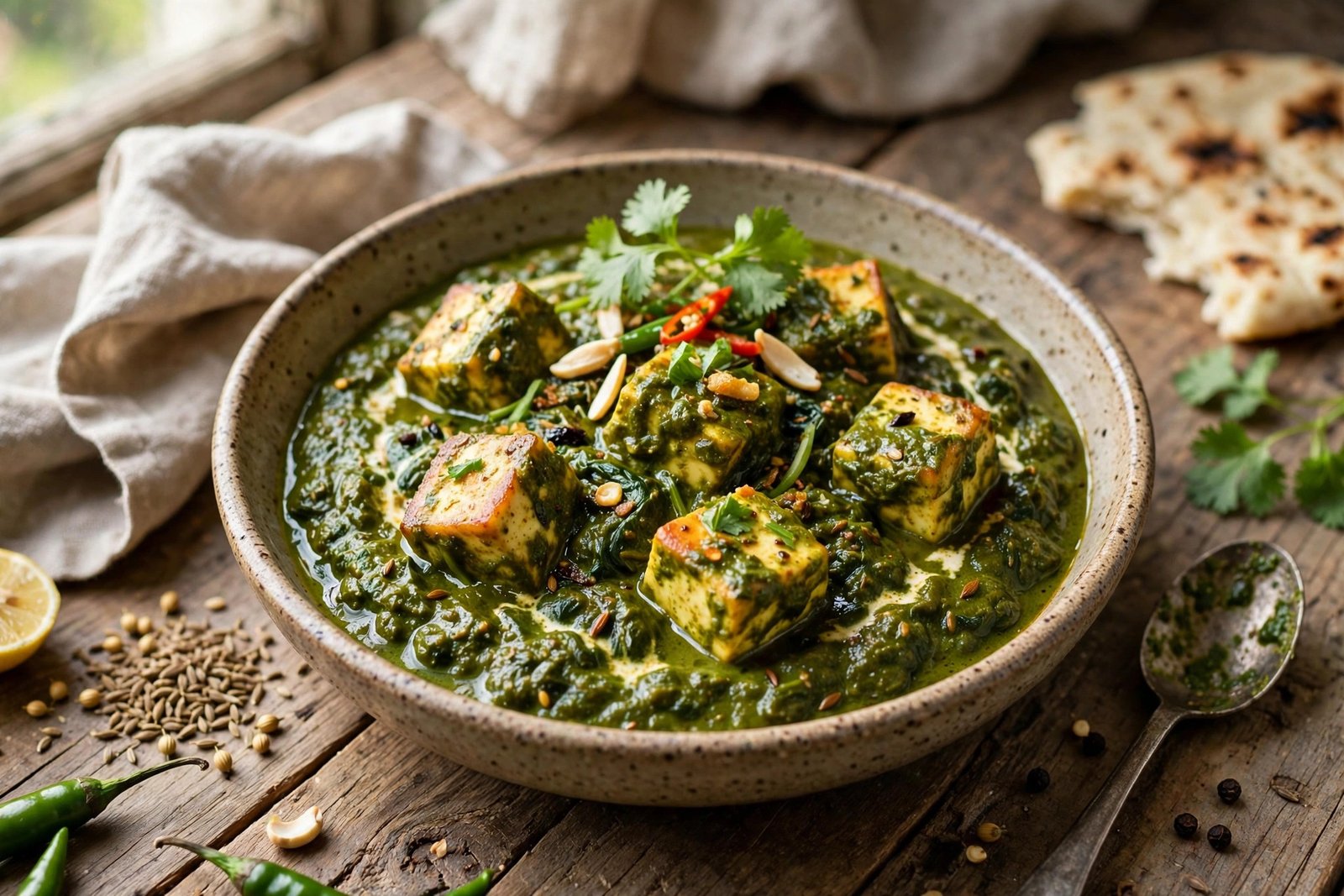
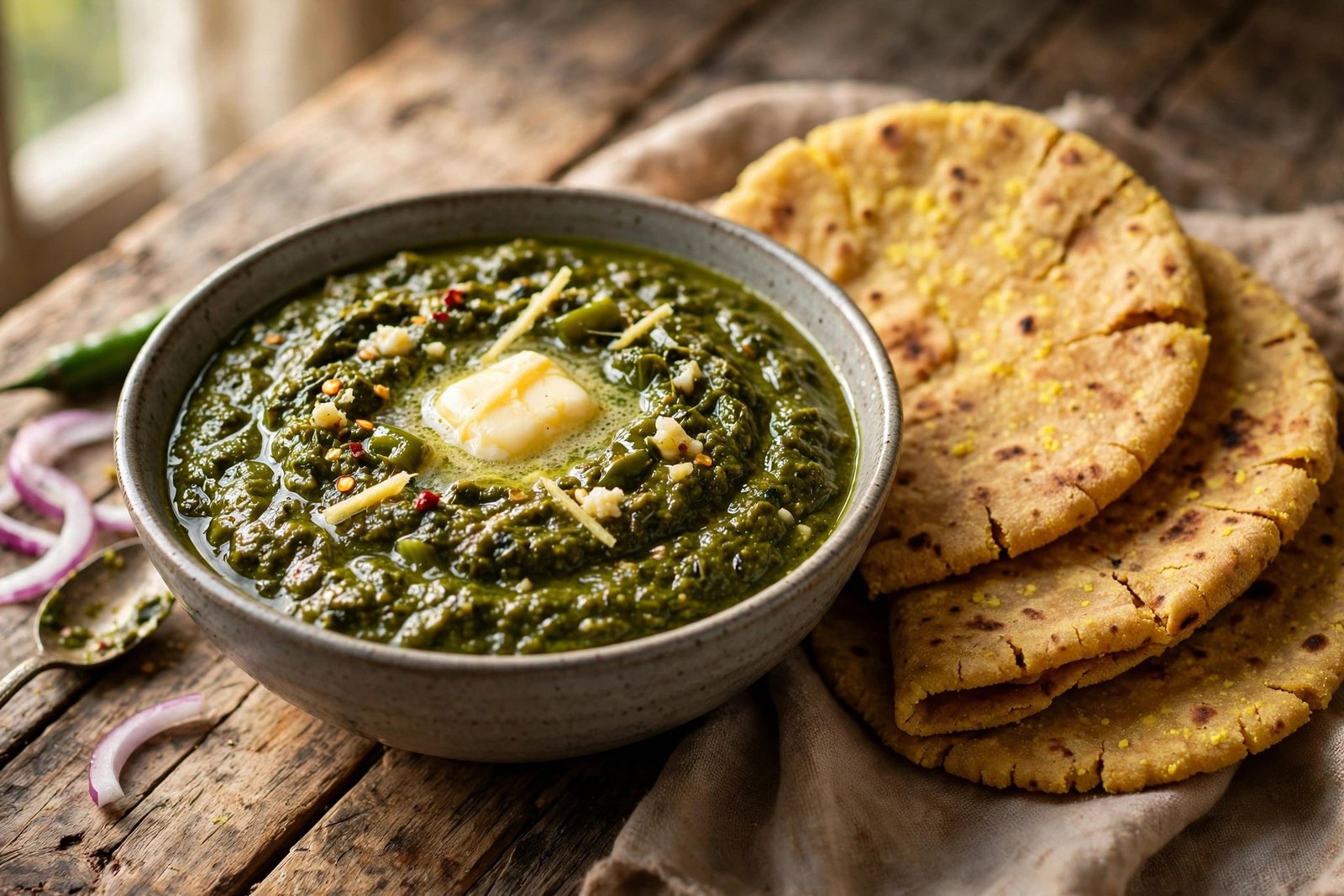
Saag aloo is a desi classic that turns two humble ingredients into something wonderful: golden potatoes folded into silky, garlicky spinach with cumin, ginger and a touch of chilli. Earthy, comforting and endlessly versatile, it works as a side for a curry feast or a satisfying main with warm roti.
The story behind Saag Aloo
Saag aloo sits at the heart of the desi home kitchen, the kind of dish that appears on the table several times a month without anyone ever tiring of it. Saag simply means leafy greens, and aloo is potato — together they make one of the most forgiving curries there is. Every household has its own version: some keep the spinach coarse and rustic, others blend it smooth; some lean on green chilli for heat, others on ginger for warmth.
The dish comes from the Punjab, where spinach grows easily and potatoes are a staple, but it has travelled everywhere the desi diaspora has gone. It is the curry that turns up at family dinners, at community meals, and on restaurant menus under a dozen spellings. Its appeal is straightforward: it is cheap, it is nourishing, and it tastes like home.
What makes it special is the balance. The spinach brings earthiness and a deep green colour; the potatoes add soft, starchy comfort; the cumin, garlic and ginger give it warmth without heaviness. A squeeze of lemon at the end lifts everything, and the fresh coriander scattered on top adds a clean, herbal note.
Cook it when you want something wholesome and quick — a weeknight dinner, a side for a bigger spread, or a lighter main when you fancy vegetables done properly. It is ready in 40 minutes, and it reheats so well that a double batch is never a mistake.
Ask a desi cook about saag aloo and you will get a story about their kitchen — the size of the potato cubes, whether the spinach is blended smooth or left coarse, how much ginger is enough. Those small differences are the whole point. The dish is a template as much as a recipe, and it bends to whatever the cook has on hand. That flexibility is why it has lasted: it is never exactly the same twice, and it is always good.
- Prep time
- 15 mins
- Cook time
- 25 mins
- Total time
- 40 mins
- Servings
- 4 servings
- Calories
- 280
Ingredients
- 500 g potatoes, peeled and cubed
- 300 g fresh spinach, washed
- 3 tablespoons vegetable oil or ghee
- 1 teaspoon cumin seeds
- 1 onion, finely chopped
- 3 garlic cloves, minced
- 1 tablespoon grated fresh ginger
- 2 green chillies, finely chopped
- 2 tomatoes, chopped
- 1 teaspoon ground coriander
- 1/2 teaspoon turmeric powder
- 1/2 teaspoon red chilli powder
- 1 tablespoon lemon juice
- 2 tablespoons chopped fresh coriander
Instructions
- Get everything ready before you start: peel and cube the potatoes, wash the spinach, chop the onion and tomatoes, and measure out the spices. This curry moves quickly once the pan is hot, and having everything within reach keeps it calm.
- Put the cubed potatoes into a pan of salted water, bring to the boil and cook for 8 minutes until just tender — a knife should slide in with a little resistance. Drain and set aside. Parboiling now means the potatoes hold their shape in the curry instead of falling apart.
- Bring a second pan of water to the boil and blanch the spinach for 2 minutes, just until it wilts and turns a deep green. Drain well, squeeze out as much water as you can, then blend to a coarse puree. You want texture, not baby food — a few flecks of leaf are a good thing.
- Heat the oil or ghee in a wide pan over medium heat. Add the cumin seeds and let them crackle for 30 seconds until they smell nutty. Add the chopped onion and cook for 5 minutes, stirring often, until golden at the edges.
- Stir in the garlic, ginger and green chillies and cook for 1 minute, until the raw smell disappears and the pan smells warm and fragrant. Keep stirring so the garlic does not catch.
- Add the chopped tomatoes, ground coriander, turmeric and red chilli powder. Cook for 5 minutes, stirring now and then, until the tomatoes soften and the oil starts to separate at the edges — that separation is the sign the masala is properly cooked.
- Tip in the parboiled potatoes and the spinach puree, stir gently so the potatoes are coated, and simmer for 8 minutes. The curry should be thick enough to cling to a spoon; if it looks dry, add a splash of hot water.
- Finish with the lemon juice and chopped fresh coriander, taste and adjust the salt, then serve hot with roti or naan. A knob of butter stirred in at the very end adds a lovely richness if you fancy it.
Pro tips
- Parboil the potatoes separately so they stay in neat cubes — boiling them in the spinach turns them to mush. Cut the cubes roughly the same size, about 2 cm, so they cook evenly.
- Do not overcook the spinach. Two minutes of blanching is enough; any longer and it loses its bright colour and turns muddy. The water should be at a rolling boil before the spinach goes in.
- Squeeze the blanched spinach dry before blending. Extra water makes the curry thin and dilutes the flavour. A clean tea towel works better than your hands for wringing out the last drops.
- Cook the tomato masala until the oil separates at the edges. That is the sign the raw taste is gone and the spices have properly bloomed. Listen for the sizzle to change — when the oil separates, the sound softens.
- Frozen spinach works fine — thaw it fully and squeeze it dry, then use it exactly as you would fresh. Squeeze thawed frozen spinach even harder than fresh, since it holds more water.
Variations & serving ideas
Swap the greens to suit the season: mustard greens (sarson) give a peppery depth, kale holds its texture well, and a mix of spinach and fenugreek (methi) is a classic combination. Each green changes the character of the dish slightly, and all of them work with the same spice base.
For a richer version, stir in a spoonful of cream or a knob of butter at the end, or add cubes of paneer with the potatoes for extra protein. A handful of chickpeas, tinned and drained, turns it into a heartier main that needs nothing but bread.
Adjust the heat to your table: leave the green chillies whole for a milder curry you can fish out later, or add an extra chilli and a pinch more red chilli powder if you like it fiery. The lemon juice at the end is not optional — it wakes the whole dish up.
Serve it as a side alongside dal and rice, or make it the main event with warm roti, a dollop of yoghurt and a simple kachumber salad. It also works cold the next day, scooped onto toast for a quick lunch.
For a richer, restaurant-style finish, swirl in two tablespoons of double cream and a knob of butter just before serving, and finish with a pinch of garam masala. The cream softens the spices and gives the spinach a silky sheen. If you are cooking for children, leave the chillies whole so they can be lifted out, and let the adults add chilli flakes at the table.
Getting it right
The key skill here is managing the spinach. Fresh spinach is mostly water, and if you skip the blanch-and-squeeze step, that water ends up in your curry and thins it out. Blanch briefly, squeeze hard, and blend coarsely — you want a puree with character, not a smooth green paste.
The masala base deserves patience. Cooking the onion until genuinely golden, then the tomatoes until the oil separates, builds the deep flavour that separates a good saag aloo from a bland one. Rushing this stage leaves the spices tasting raw and the tomatoes sharp.
The most common mistake is overcooking the potatoes in the curry. They are already parboiled, so they only need 8 minutes in the spinach to absorb flavour. Any longer and they crumble into the sauce. If your potatoes are on the large side, cut them smaller so they cook through in the parboil.
Timing is the quiet skill in this dish. The potatoes need 8 minutes in boiling water and 8 minutes in the curry — no more. The spinach needs 2 minutes of blanching and a hard squeeze. The masala needs a full 5 minutes with the tomatoes. Each stage has its own clock, and if you rush one of them the dish notices. Set a timer if it helps; there is no shame in it, and the result is worth the discipline.
One more thing worth knowing: spinach wilts to almost nothing, so 300 g of fresh leaves looks like a mountain in the pan and a modest pile once blanched. Do not be tempted to add less — the volume is an illusion, and the full amount is what gives the curry its deep green colour and earthy flavour. If anything, add a handful more.
Storing & reheating
Cool and refrigerate in a sealed container for up to 3 days. The flavours deepen overnight, so it often tastes better the next day. It freezes well for up to 2 months — freeze in portions and thaw overnight in the fridge.
Reheat gently in a pan over medium-low heat, adding a splash of water if it has thickened. Stir in a little fresh lemon juice and coriander after reheating to brighten it back up. Avoid boiling it hard, which dulls the green colour.
Saag aloo also freezes well in flat freezer bags, which thaw faster than tubs. Label each bag with the date and use within 2 months. Thaw overnight in the fridge and reheat gently, adding a squeeze of lemon and a little fresh coriander to wake it up.
Frequently asked questions
What is saag aloo?
Saag aloo is a desi dish of spinach (saag) and potatoes (aloo) cooked with garlic, ginger, cumin and chilli. It comes from the Punjab and is one of the most popular vegetarian curries in South Asian cooking, served as a side or a main with roti or naan. The name is simple and descriptive — saag for the greens, aloo for the potato — and the dish is a staple across the Punjab and beyond.
Is saag aloo vegan?
Yes, if you use oil instead of ghee. The dish is naturally vegan and gluten-free as written. A knob of butter at the end is optional — skip it for a fully plant-based version, or use a dairy-free spread.
Can I use frozen spinach?
Yes — thaw it completely and squeeze it very dry before blending. Frozen spinach is already blanched, so you can skip that step. Use about 300 g of frozen spinach to match the fresh quantity in the recipe. Pat the thawed spinach with kitchen paper after squeezing to remove the last of the moisture.
Why is my saag aloo watery?
The usual cause is spinach that was not squeezed dry after blanching. Spinach holds a surprising amount of water, and it all ends up in the curry. Squeeze the blanched leaves hard in a clean cloth or with your hands before blending. If the curry is already watery, simmer it uncovered for a few minutes to reduce, or stir in a spoonful of gram flour mixed with cold water.
Can I use other greens?
Yes. Mustard greens, kale, chard and fenugreek all work well — just blanch and squeeze them the same way. Mustard greens are more peppery, so you may want to mix them half and half with spinach for a gentler flavour.
What do I serve with saag aloo?
Warm roti or naan is the classic pairing, and it is also lovely with basmati rice. As part of a bigger spread, serve it alongside dal, a meat curry and a simple salad. A spoonful of plain yoghurt on the side cools the chilli nicely. A cooling raita made with yoghurt, cucumber and a pinch of cumin is especially good alongside it.