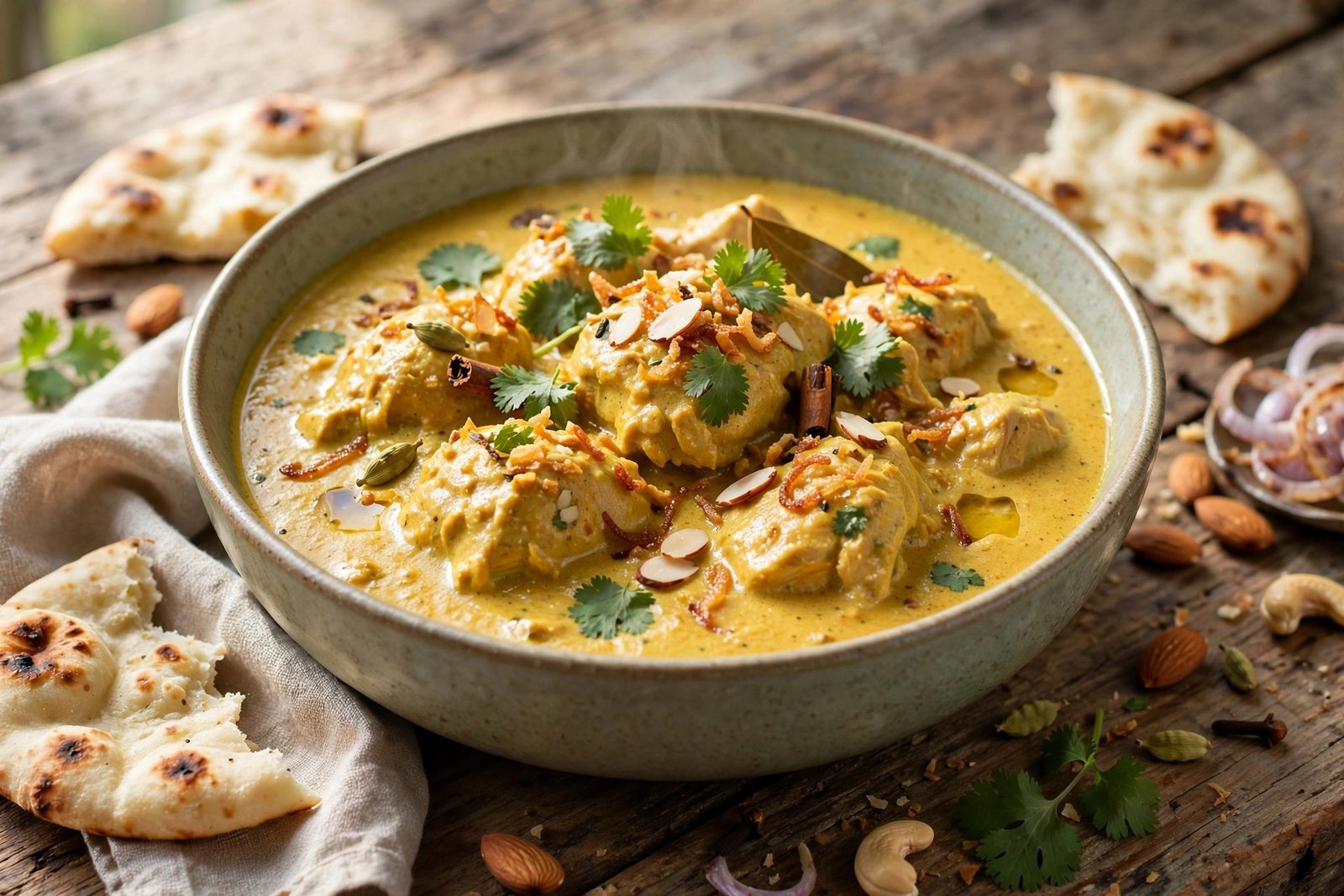
Paye Recipe

Paye is the slow food of Pakistani Sundays: trotters simmered for hours until the meat falls from the bone and the broth turns silky and rich with collagen. Served with naan and a shower of ginger and green chillies, it is a labour of love worth every hour — and the broth alone is worth the wait.
The story behind Paye
Paye — from paaya, the Urdu word for feet — is one of the oldest dishes in South Asian cooking. Trotters have been slow-cooked in the region since Mughal times, when the imperial kitchens turned the humblest cuts into the richest food. In Lahore and Delhi, paye became the great Sunday breakfast: a pot started the night before or in the early hours, simmering until the meat fell from the bone and the broth turned silky with collagen, then eaten with hot naan at a leisurely morning table.
What makes it special is the broth. Trotters are mostly bone, skin and connective tissue, and a long, slow simmer melts all of it into the liquid. The result is a broth that is naturally thick and slightly sticky, coating the spoon and the lips, rich in a way that no stock cube can match. The meat itself, when it is done, barely needs chewing — it falls from the bone at the touch of a spoon. Whole spices, ginger and garlic perfume everything, and the garnish of fresh ginger, green chillies and coriander cuts through the richness.
In Pakistan, paye is celebration food and comfort food at once. It appears at Eid breakfasts, at family gatherings, and at the dhabas that open before dawn to serve it to early risers. It is the dish a family makes when people are coming home, and the smell of it simmering — ginger, cardamom, cinnamon — is the smell of a house preparing for guests. A glass of lassi alongside is the traditional partner, cool and tangy against the rich broth.
This recipe serves four and asks for about three hours of mostly hands-off simmering, though a pressure cooker can cut it to 45 minutes. It is a weekend project, and it rewards patience the way all slow cooking does. Start it in the morning and eat it for lunch, or make it the day before — like most slow-cooked dishes, it tastes even better the next day, when the flavours have settled and the broth has thickened further.
- Prep time
- 20 mins
- Cook time
- 180 mins
- Total time
- 200 mins
- Servings
- 4 servings
- Calories
- 520
Ingredients
- 1 kg goat or cow trotters, cleaned and cut
- 2 onions, sliced
- 3 tablespoons ginger-garlic paste
- 2 tomatoes, chopped
- 1/2 cup yogurt
- 4 tablespoons ghee or oil
- 2 bay leaves, 4 green cardamoms, 2 black cardamoms, and 1 cinnamon stick
- 1 teaspoon each red chilli powder, turmeric, and coriander powder
- 1 teaspoon garam masala
- 1.5 litres water
- Salt to taste
- Fresh ginger juliennes, green chillies, and coriander, to garnish
- Naan, to serve
Instructions
- Start with the trotters. Ask your butcher to clean and cut them — trotters need a thorough wash before cooking, and a good butcher will singe off any remaining hair and cut them into manageable pieces. At home, wash them well under running water, scrubbing any rough patches, and drain them.
- Heat the ghee in a large, heavy pot over a medium heat. Add the sliced onions and fry for about 8 minutes, stirring often, until deep golden and sweet-smelling. Do not rush this step — the onions should be properly golden, not just soft, because their colour and sweetness are the foundation of the broth.
- Add the ginger-garlic paste and the whole spices — bay leaves, green cardamoms, black cardamoms and the cinnamon stick — and cook for 2 minutes, stirring, until the kitchen smells warm and fragrant. The spices will bloom in the hot ghee and release their oils.
- Add the trotters and fry for 5 minutes, turning them so they colour a little on all sides. Then stir in the chopped tomatoes and cook for 4 to 5 minutes, until the tomatoes soften and break down into the masala. The pot should look rich and reddish-gold by now.
- Whisk the yogurt until smooth, then stir it in along with the red chilli powder, turmeric, coriander powder and salt. Cook for 5 to 6 minutes, stirring often, until the oil starts to separate at the edges of the masala. That separation is the sign the base is properly cooked — if you skip this step, the broth will taste raw.
- Pour in the water and bring the pot to a boil, scraping the bottom to lift up any browned bits. Turn the heat down to the very lowest setting, put the lid on, and simmer for 3 hours. Check every 30 minutes or so, giving it a stir and making sure the liquid is not reducing too fast — add a splash of water if it gets very thick before the meat is tender.
- After 3 hours, test the meat: it should be falling off the bone, and the broth should be rich, slightly sticky and glossy from the collagen. If the meat still resists, give it another 30 minutes — trotters forgive extra time far more easily than too little. Stir in the garam masala and taste for salt.
- Let the paye rest for 10 minutes off the heat, then serve hot in deep bowls, garnished generously with ginger juliennes, sliced green chillies and fresh coriander. Put hot naan on the table for tearing and dipping, and a glass of lassi alongside if you have it.
Pro tips
- Ask your butcher to clean and cut the trotters; they need a thorough wash before cooking. A good butcher will singe off any hair and cut them into pieces that fit the pot. At home, wash them well and pick over them for any rough patches before they go in.
- A pressure cooker shortens the cooking to about 45 minutes, but slow simmering gives the best broth. The pressure cooker is a fine shortcut for a weeknight, but the slow pot gives a silkier, more deeply flavoured broth that is worth the wait on a weekend.
- The broth should be rich and slightly sticky from the collagen; add water only if it gets too thick. A paye broth that runs like water is undercooked — it needs the full three hours for the collagen to melt into it. The stickiness on your lips is the sign it is done.
- Paye tastes even better the next day, so make it ahead when you can. An overnight rest lets the flavours settle and the broth thicken further. Reheat it gently, adding a splash of water if it has set too thick.
- Skim the fat if you like. A layer of golden fat will rise to the top as the paye cooks; some cooks leave it, some skim it off. Leaving it gives a richer broth, skimming gives a cleaner one — the choice is yours, and both are right.
Variations & serving ideas
Goat trotters are the most common choice, with a slightly gamier flavour and meat that falls off the bone beautifully. Cow trotters give a richer, heavier broth and larger pieces of meat, and they need the full three hours — sometimes a little more. Either way, ask the butcher to cut them into pieces that fit comfortably in the pot and on the plate.
A pressure cooker version is the practical one: follow the recipe through the masala stage, then pressure cook on medium heat for 45 minutes and let the pressure release naturally. The meat will be tender and the broth will be good, though not quite as silky as the slow-simmered version. If the broth is thin after pressure cooking, simmer it uncovered for 10 minutes to reduce it.
For a richer, nihari-style paye, cook the masala longer before adding the water, and add a tablespoon of browned flour — atta toasted in ghee until golden — stirred in at the end to thicken the broth. This gives a deeper, more complex sauce that clings to the meat. A spoonful of browned onion, ground to a paste, stirred in at the end does the same job.
What you serve it with matters. Hot naan is the classic partner, torn and used to scoop up the meat and broth. Sheermal, the soft, slightly sweet bread, is a traditional alternative. A glass of sweet or salted lassi alongside is the classic drink, and a simple kachumber salad — onion, tomato, cucumber, lemon — cuts through the richness. For a spicier version, add an extra teaspoon of red chilli powder and serve with extra green chillies on the side.
Getting it right
Browning the onions is the first technique, and it sets the colour and sweetness of the whole dish. The onions need a full 8 minutes over a medium heat, stirring often, until they are deep golden — not just soft, not browned to a crisp, but a rich gold that smells sweet. Pale onions make a pale broth; burnt onions make a bitter one. Patience here pays for itself in the finished pot.
Adding the yogurt is the step that catches people out. Yogurt added to a hot pot can curdle, leaving white flecks through the broth. Whisk it smooth first, take the pot off the highest heat, and stir it in gradually, stirring constantly. Cook it for a few minutes until the oil separates — that separation is the sign the yogurt has cooked into the masala properly and will not split later.
The long simmer is the final skill, and it is about low, steady heat. The pot should barely bubble, with the lid on, for three hours. A hard boil toughens the meat and clouds the broth; a bare simmer lets the collagen melt slowly into the liquid. The most common mistakes are too little time, which leaves the meat tough and the broth thin, and too much heat, which does the same. If the meat is still firm after three hours, give it another 30 minutes — trotters only get better with more time.
Storing & reheating
Paye keeps for 3 to 4 days in the fridge in a sealed container, and it tastes even better the next day. The broth will set into a jelly in the fridge — that is the collagen, and it is a sign of a good paye, not a problem. It melts back into a rich broth as soon as it is reheated.
It freezes well for up to 2 months. Portion it into tubs with plenty of broth, label with the date, and thaw overnight in the fridge. Reheat gently on the hob, adding a splash of water if the broth is too thick. Add the fresh garnish — ginger, chillies, coriander — only when you serve it, not before storing.
Frequently asked questions
What is paye?
Paye is a traditional Pakistani curry of slow-cooked trotters, usually eaten as a special breakfast with naan. The trotters simmer for hours until the meat falls from the bone and the broth turns silky and rich with collagen.
How long does paye take to cook?
About 3 hours on the stove, or 45 minutes in a pressure cooker, until the meat is completely tender. The slow simmer gives the best broth, but the pressure cooker is a fine shortcut. The meat is done when it falls off the bone at the touch of a spoon.
Can I freeze paye?
Yes, it freezes well for up to 2 months; reheat gently and add a splash of water. The broth will set into a jelly in the fridge or freezer — that is the collagen, and it melts back into a rich broth on reheating.
What is served with paye?
Hot naan, fresh ginger juliennes, green chillies, lemon, and a side of lassi. Sheermal, the soft, slightly sweet bread, is a traditional alternative to naan, and a simple kachumber salad cuts through the richness.
Where do I buy trotters?
A halal butcher is the best source — ask them to clean and cut the trotters for you. Asian grocery stores with a meat counter often stock them too. Goat trotters are the most common, and cow trotters give a richer broth.
Is paye healthy?
It is rich in collagen and protein, and the slow-cooked broth is deeply nourishing, which is why it is a traditional food for recovery and celebration. It is also rich, so it is a dish for occasions rather than every day — a small portion with naan and salad is the traditional way to eat it.