Mutton Qeema Recipe
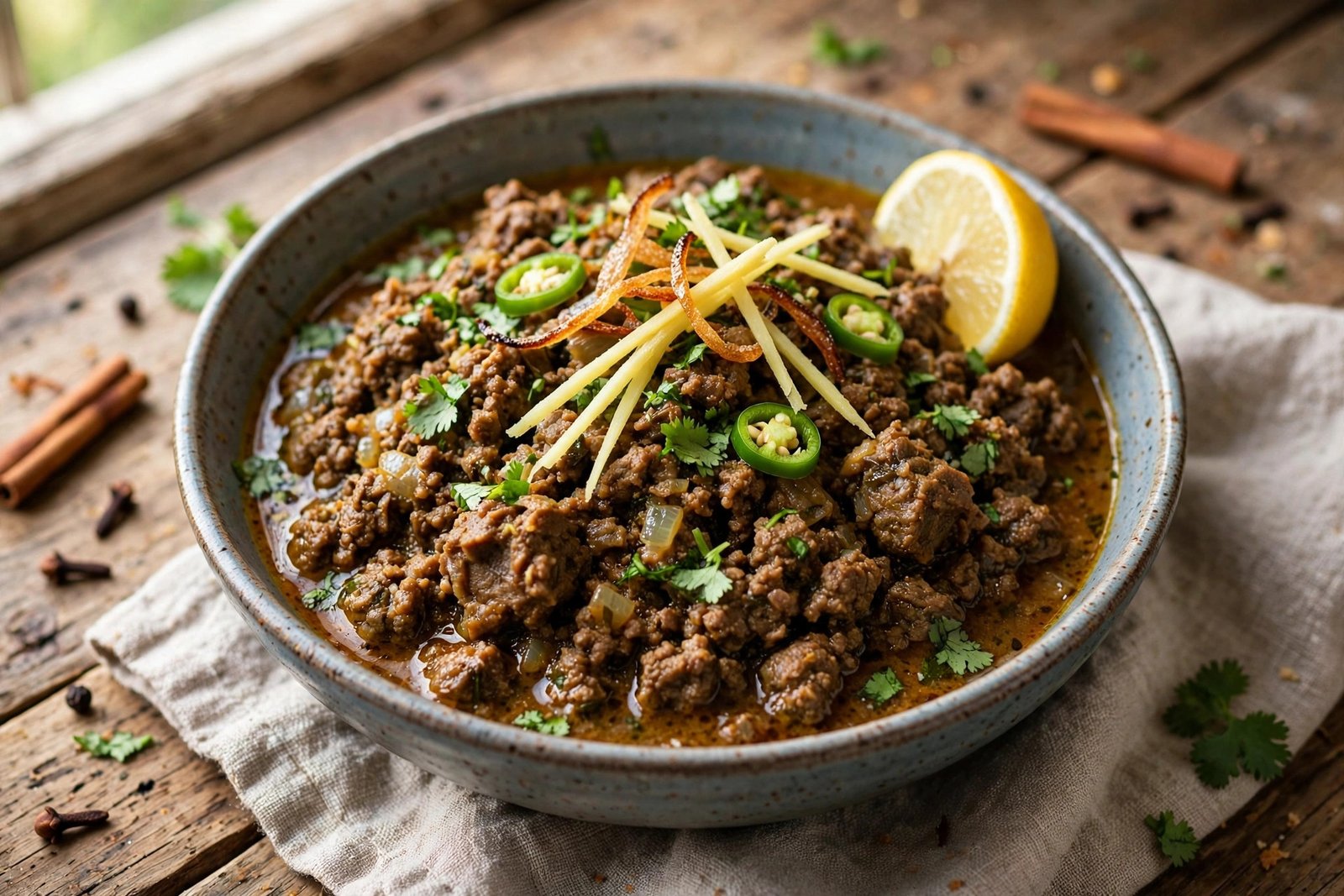
Mutton Qeema is a desi staple: minced lamb cooked down with onions, tomatoes and a warm spice mix until rich and slightly dry. It is the kind of dish that anchors a family meal — spooned over roti, tucked into parathas, or eaten straight from the pan with a fried egg on top.
The story behind Mutton Qeema
Mutton qeema is the dish that desi families make when they want something quick, hearty and deeply satisfying. Minced lamb, cooked with onions and tomatoes and a warm spice mix, until the meat is browned and the oil separates from the masala. It is everyday food, but it never tastes ordinary.
The mince is the key. Mutton mince, with a little fat in it, browns beautifully and stays juicy through the cooking. Lean mince dries out and turns grainy, while mince with some fat gives a rich, succulent result. The fat renders out as the meat cooks and carries the flavour of the spices.
The onions need to be golden. Cooked slowly in ghee until they turn deep golden brown, they give the qeema its sweetness and its colour. Pale onions give a pale, bland qeema, while well-browned onions give a rich, savoury depth that is the foundation of the dish.
The tomatoes cook down into the masala, adding acidity and body. They should be cooked until they break down completely and the oil starts to separate from the sauce. That separation is the sign that the masala is ready, and it is the moment when the dish comes together.
What makes qeema special is its versatility. It is a main course with roti or rice, a filling for parathas and samosas, a topping for toast, and a breakfast with a fried egg on top. One pot of qeema can become three different meals, and it is good in every one of them.
The peas add colour and sweetness, and they go in near the end so they stay bright green and slightly firm. The green chillies add freshness and a gentle heat, and the garam masala at the end gives a warm, aromatic finish.
Cook it on a weeknight when you need dinner fast, or make a big batch on the weekend and use it through the week. It reheats beautifully, and the flavour deepens overnight.
Serve it with roti, naan or rice, and a simple salad or raita on the side. The meal is complete with very little else, and the qeema is the star.
In desi homes, qeema is often the first curry that young cooks learn to make. The technique is simple, the ingredients are few, and the result is forgiving. It is a good dish for building confidence in the kitchen.
The lemon juice at the end is not optional. It brightens the rich, savoury meat and cuts through the ghee, and it makes the whole dish taste fresher and lighter.
Make it once and it will become a regular. The flavours are warm and familiar, the cooking is quick, and the result is the kind of food that makes people ask for seconds.
- Prep time
- 15 mins
- Cook time
- 40 mins
- Total time
- 55 mins
- Servings
- 4 servings
- Calories
- 520
Ingredients
- 600 g mutton mince (qeema)
- 2 onions, finely chopped
- 2 tomatoes, finely chopped
- 3 tablespoons ghee or oil
- 1 tablespoon ginger-garlic paste
- 1 teaspoon cumin seeds
- 1 teaspoon turmeric powder
- 1 teaspoon red chilli powder
- 1 teaspoon garam masala
- 1 cup green peas
- 2 green chillies, slit
- Fresh coriander and mint, chopped
- 1 tablespoon lemon juice
- Salt to taste
Instructions
- Heat the ghee or oil in a large pan over medium heat. Add the cumin seeds and let them crackle for about 30 seconds, until they smell warm and nutty.
- Add the finely chopped onions and cook for 8 to 10 minutes, stirring often, until they turn deep golden brown. This takes patience, but the colour of the onions is the colour of the finished dish.
- Add the ginger-garlic paste and fry for 1 minute, stirring constantly, until the raw smell disappears and the paste turns fragrant.
- Add the mutton mince to the pan and cook on high heat, breaking it up with a wooden spoon, until it browns all over. This takes about 8 minutes, and the meat should be well browned, not just grey.
- Stir in the finely chopped tomatoes, turmeric, red chilli powder and salt. Cook for 5 minutes, stirring often, until the tomatoes break down and the oil starts to separate from the masala.
- Turn the heat down to medium, cover the pan with a lid, and cook for 20 minutes, stirring occasionally. The mince will cook through and the flavours will come together.
- Check the mince after 20 minutes. It should be tender and well coated in the masala, with the oil visible at the edges. If it looks dry, add a splash of water.
- Add the green peas and the slit green chillies and cook for 10 more minutes, uncovered, until the peas are tender and the oil separates again.
- Stir in the garam masala, lemon juice and chopped coriander and mint. The garam masala goes in at the end so its fragrance stays fresh.
- Taste and adjust the salt, chilli and lemon. The qeema should be savoury, warmly spiced and lightly tangy, with the herbs coming through.
- Serve hot with roti, naan or rice, and a simple salad or raita on the side. The qeema should be rich and slightly dry, not saucy.
Pro tips
- Brown the mince properly. High heat, a wide pan, and patience give you browned meat that tastes rich and savoury. Grey, steamed mince tastes flat and dull.
- Cook the onions until deep golden. Pale onions give a pale qeema, while well-browned onions give depth, sweetness and colour. Do not rush this step.
- Break the mince up as it cooks. Large clumps cook unevenly and give a lumpy texture, while well-broken mince cooks evenly and absorbs the masala properly.
- Wait for the oil to separate. When the oil appears at the edges of the masala, the tomatoes are cooked and the spices have bloomed. This is the sign of a well-made qeema.
- Add the garam masala at the end. Cooking it for too long dulls its fragrance, while adding it last keeps the warm, aromatic flavour fresh and lively. Fresh garam masala makes a difference.
Variations & serving ideas
Add diced potatoes with the tomatoes for a qeema aloo, a classic combination. The potatoes absorb the masala and make the dish more substantial.
For a spicier version, add an extra teaspoon of red chilli powder and more green chillies. Serve with yoghurt on the side to cool it down.
Use the qeema as a filling for parathas, samosas or stuffed peppers. The dry texture makes it ideal for stuffing, and it holds its shape well.
Add a handful of spinach with the peas for a greener, more nutritious version. The spinach wilts into the mince and adds colour without changing the flavour much.
For a richer version, add a spoonful of cream or yoghurt at the end. The cream softens the spices and gives the qeema a luxurious, silky quality.
Make a qeema pav by serving the mince in soft bread rolls with onions and lemon. It is a popular street food, and the soft bread soaks up the masala beautifully.
Add a diced aubergine with the tomatoes for a qeema baingan. The aubergine turns soft and creamy and adds a smoky depth to the dish.
For a breakfast version, make a well in the qeema and crack in a few eggs, then cover and cook until the eggs are set. The runny yolks mix through the mince and make a magnificent breakfast.
Use beef mince instead of mutton for a milder flavour. The cooking time stays the same, and the dish is just as satisfying.
Add a pinch of dried fenugreek leaves with the garam masala for a bittersweet note. The fenugreek adds depth and a distinctive flavour that suits the lamb.
Getting it right
Browning the mince is the key technique. High heat, a wide pan, and breaking the meat up as it cooks give you browned, flavourful mince. A crowded pan or low heat steams the meat instead, and the result is grey and tasteless.
The onion browning is the foundation. Eight to ten minutes of patient cooking, stirring often, until the onions are deep golden. This is not a step to rush, and the colour you achieve here determines the colour of the finished dish.
Cooking the tomatoes until the oil separates is the third skill. The tomatoes need time to break down completely and lose their raw taste. When the oil appears at the edges, the masala is ready.
The most common mistake is adding water too early. The mince releases its own juices as it cooks, and adding water makes the dish soupy instead of rich and slightly dry. Add water only if the pan looks completely dry.
Heat control matters throughout. High heat for browning the mince, medium heat for the covered cooking, and a gentle simmer at the end. Each stage needs a different heat, and adjusting as you go is the skill.
The garam masala goes in last, off the heat or nearly so. Its volatile oils give the fragrance, and long cooking drives them off. A final stir through the hot qeema is all it needs.
Seasoning in layers is the final technique. Salt with the tomatoes, lemon at the end, and taste before serving. The dish should be savoury, warmly spiced and lightly tangy.
Storing & reheating
Mutton qeema keeps in the fridge for up to 3 days in a sealed container, and it tastes even better the next day when the flavours have settled. Reheat gently with a splash of water.
It freezes well for up to 2 months. Freeze in portions, thaw overnight in the fridge, and reheat until piping hot. The texture holds up well and the flavour deepens.
Leftover qeema is versatile: use it as a paratha filling, a sandwich filling, a pasta sauce, or a topping for baked potatoes. It works in almost any format.
The cooked mince can be refrigerated and used cold in wraps or salads, though it is best reheated. A little fresh coriander and lemon juice revive it.
Do not leave cooked mince at room temperature for more than 2 hours. Cool it quickly and refrigerate, and only reheat the portion you plan to eat.
If the qeema has dried out in the fridge, add a splash of water and a little ghee when reheating. The moisture and fat bring back the richness.
Frequently asked questions
Can I use beef mince instead of mutton?
Yes, beef mince works well and gives a milder flavour. Lamb mince is richer and more traditional, but beef is a good substitute and easier to find. The cooking time stays the same.
What does it mean when the oil separates?
When the tomatoes are fully cooked and the water has evaporated, the oil that was mixed into the masala appears at the edges of the pan. This is the sign that the masala is properly cooked and the spices have bloomed.
Can I make qeema ahead?
Yes, it keeps in the fridge for 3 days and freezes well for 2 months. The flavour improves overnight, so making it a day ahead is a good idea. Reheat gently with a splash of water.
Is qeema spicy?
With 1 teaspoon of red chilli powder and 2 green chillies, it has a gentle warmth rather than real heat. Adjust the chilli to your taste, and serve yoghurt on the side for anyone who wants it milder.
What do I serve with qeema?
Roti, naan or rice are the classic accompaniments, with a simple salad or raita on the side. It is also excellent as a filling for parathas, or with a fried egg on top for breakfast.
Can I add vegetables?
Yes. Potatoes, peas, spinach, aubergine and carrots all work. Add firmer vegetables with the tomatoes and quicker ones near the end, so everything cooks evenly. The vegetables absorb the masala as they cook, so they taste seasoned all the way through.


