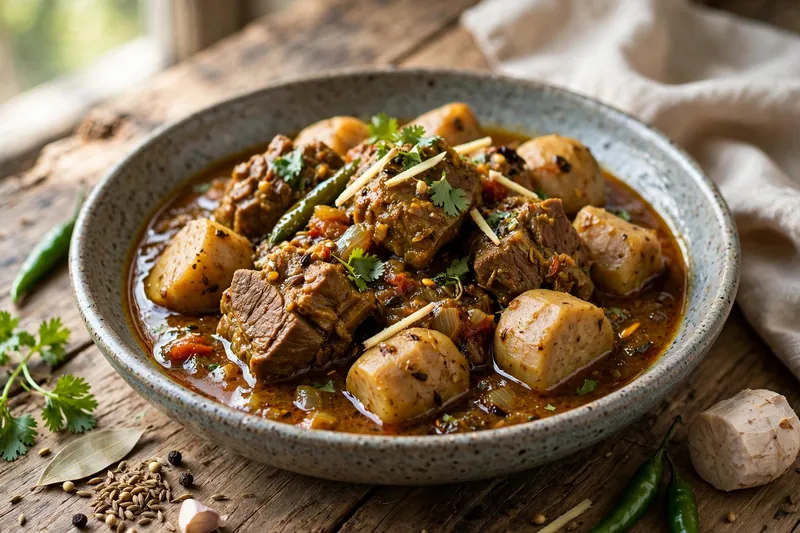
Aloo Gosht Recipe

Aloo gosht is the weeknight hero of desi kitchens — tender beef simmered in a tomato-onion gravy with warm spices, finished with golden potatoes that soak up all that flavour. Simple, filling, and endlessly moppable with fresh roti, it tastes like home in a bowl. One pot, a little over an hour, and a gravy that only gets better the next day.
The story behind Aloo Gosht
In most Pakistani and North Indian homes, aloo gosht is not a special-occasion dish — it is the dish that shows up on an ordinary Tuesday, made without a second thought, and eaten without a word of complaint. Beef and potatoes, onion and tomato, a handful of ground spices: nothing fancy, nothing rare, just the everyday ingredients of a desi kitchen turned into something deeply satisfying. It is the kind of cooking that runs on habit and feel rather than measuring spoons, passed down by watching rather than by written recipes.
The name is plain — aloo means potato, gosht means meat — and the dish is plain in the best way. What makes it special is time: a slow simmer that lets tough beef turn tender and lets the spices bloom into the gravy until the oil rises to the surface in a thin, fragrant layer. That layer, the glistening oil at the edges, is how a cook knows the masala has been fried properly and the curry is ready.
Every household has its own small rules: how dark the onions should go, when the potatoes go in, whether the gravy should coat the meat or pool around it. Some cooks add a slit green chilli for fresh heat, others finish with a pinch of garam masala and a shower of cilantro. Meat on the bone gives the gravy a body that boneless cubes never quite match, which is why butchers in Pakistan cut gosht with the bone in.
Cook it when you want a proper family dinner without fuss, or make it on Sunday and eat it through the week — it genuinely tastes better on day two. Serve it with hot roti, torn and used to scoop, or with plain steamed rice and a simple salad of onion and lemon. It is humble food, but it is the food people ask for by name.
- Prep time
- 20 mins
- Cook time
- 55 mins
- Total time
- 1 hr 15 mins
- Servings
- 6 servings
- Calories
- 520
Ingredients
- 1 1/2 lbs (680 g) beef, cut into 1 1/2-inch cubes
- 3 medium potatoes, peeled and quartered
- 3 tablespoons oil
- 2 large onions, finely chopped
- 2 teaspoons ginger-garlic paste
- 2 medium tomatoes, pureed
- 2 teaspoons red chili powder and 1 teaspoon turmeric
- 2 teaspoons coriander powder
- 1 teaspoon cumin powder
- 1 teaspoon salt, or to taste
- 2 green chilies, slit
- 1 teaspoon garam masala
- 1/2 cup fresh cilantro, chopped
- 4 cups water
Instructions
- Heat the oil in a heavy pot over medium heat and fry the chopped onions, stirring often, until they turn a deep golden brown — about 10 to 12 minutes. Don't rush this: pale onions make a pale, flat gravy, while well-browned onions give it depth and colour. If they start to catch, turn the heat down and keep stirring.
- Add the ginger-garlic paste and cook for 1 minute until the raw smell disappears and the paste turns fragrant. Stir in the tomato puree and keep cooking, scraping the bottom of the pot, until the oil starts to separate at the edges and the mixture looks darker and glossy. This is the masala telling you it is ready.
- Add the red chili powder, turmeric, coriander powder, cumin powder, and salt. Splash in 2 tablespoons of water so the spices don't scorch, and cook the masala for 3 minutes, stirring constantly. The water helps the spices bloom without burning, and the masala should smell warm and rounded, not sharp.
- Add the beef cubes and sear them, turning, for 6 to 8 minutes until browned on all sides. The meat will release some liquid at first — keep the heat up and let it cook off so the cubes actually brown rather than steam. Browned meat gives the gravy a richness that pale meat never will.
- Pour in the 4 cups of water, give the pot a good stir to lift anything stuck to the bottom, and bring it to a boil. Then cover, turn the heat to low, and simmer for 40 minutes until the beef is nearly tender. Check now and then and top up with a little hot water if the level drops too far.
- Add the quartered potatoes and the slit green chilies. Cover and cook 20 to 25 minutes more, until the potatoes are soft all the way through and the gravy has thickened. The potatoes should hold their shape but yield easily to a fork — if they start to fall apart, the heat is too high.
- Stir in the garam masala and half the chopped cilantro, then simmer for 2 minutes. The garam masala goes in at the end so its aroma stays bright instead of cooking away. Taste the gravy now and add salt if it needs it — the potatoes will have soaked up some of the seasoning.
- Let the curry rest off the heat for 5 minutes, then garnish with the remaining cilantro and serve hot with roti or steamed rice. A short rest lets the gravy settle and the flavours come together, so don't skip it even when everyone is hungry.
Pro tips
- Brown the onions properly — pale onions make a pale, flat gravy, while well-browned ones give depth and color. This one step decides more about the final flavour than any spice you add later.
- If the gravy looks thin at the end, simmer uncovered for 5 minutes rather than adding flour or starch. Reducing concentrates the flavour; flour just dulls it.
- Quarter the potatoes rather than dicing small so they survive the simmer and still soak up the gravy. Small pieces turn to mush long before the meat is done.
- Aloo gosht tastes even better the next day — make it ahead and reheat gently for maximum flavor. The spices settle into the gravy overnight and the meat gets more tender.
- Don't add the potatoes too early. They go in only after the meat is nearly tender, in the last 20 to 25 minutes — any sooner and they disintegrate into the gravy.
Variations & serving ideas
Mutton or lamb makes a richer version of the same dish — use the same method, but give the meat a little more simmering time before the potatoes go in, since mutton can be tougher than beef. Bone-in cuts are best for either meat: the bones add body to the gravy and keep the meat from drying out over the long cook.
For a faster weeknight version, use boneless chicken instead of beef. The masala is exactly the same, but the chicken only needs about 20 minutes of simmering before the potatoes go in, and the whole dish is done in under an hour. It is lighter, but the flavour of the gravy carries it.
The pressure cooker is your friend here. Cook the meat for 15 minutes under pressure after the masala is browned, then release, add the potatoes, and pressure cook 5 more minutes. The gravy won't have quite the same slow-cooked depth, but it is close — and it turns a weekend dish into a Tuesday one.
To change the heat, adjust the red chili powder and the green chilies, not the other spices. One chili powder less and no green chilies makes a mild pot children will eat; an extra chili or two and a pinch of chili flakes makes it properly fiery. A squeeze of lemon at the table brightens a rich pot without adding heat.
Serve it the classic way, with hot roti and a simple salad of sliced onion, tomato, and lemon, or spoon it over plain steamed rice so the gravy soaks in. A spoonful of yogurt on the side cools the heat, and a few extra cilantro leaves on top make the bowl look as good as it tastes.
Getting it right
The technique that matters most is bhunna — frying the masala until the oil separates. Onions go first, fried until genuinely golden, then ginger-garlic, then tomato puree, cooked until the mixture darkens and the oil shows at the edges. Each stage takes a few minutes and each one builds flavour. Cooks who skip this and throw everything in together get a curry that tastes raw and flat, no matter how good the spices are.
Heat control is the second skill. The simmer should be low and steady — a bubble breaking the surface every few seconds, not a rolling boil. Hard boiling toughens the meat and reduces the gravy too fast, leaving you with dry beef and a thin sauce. Keep the lid on but slightly ajar so steam escapes slowly, and check the water level every 15 minutes or so.
The most common mistake is the potatoes. Added too early, they dissolve into the gravy and leave you with meat in a starchy soup. Added too late, they stay hard in the middle while the gravy over-reduces. Quartered potatoes in the last 20 to 25 minutes is the rule, and a fork test — soft all the way through, holding its shape — tells you they are done. The other common slip is under-salting: potatoes soak up salt, so taste again after they have cooked.
Storing & reheating
Aloo gosht keeps in the fridge for 3 to 4 days in a sealed container, and it genuinely improves overnight as the spices settle into the gravy. The potatoes will soften a little more on reheating, which is normal. Let it cool before refrigerating, and keep the garnish cilantro off until you serve.
Reheat it gently in a pot over low heat with a splash of water, stirring until the gravy loosens and the meat is hot all the way through. The microwave works too, but use short bursts and stir between them so the potatoes don't go gluey. It also freezes well for up to 3 months — portion it into containers, thaw overnight in the fridge, and reheat as above.
Frequently asked questions
Which cut of beef is best for aloo gosht?
Chuck, shin, or shoulder all work beautifully because their connective tissue melts into the gravy during the long simmer. Avoid very lean cuts, which can turn dry and stringy. Bone-in meat is even better — the bones add body and flavour to the gravy.
When should I add the potatoes?
Potatoes go in only after the meat is nearly tender. Add them too early and they disintegrate; add them in the last 20 to 25 minutes and they come out soft, holding their shape, and full of gravy flavour. Quartered potatoes survive the simmer best.
Can I reduce the oil without losing flavor?
Spoon off the excess oil that rises to the top after cooking, or chill the curry overnight and lift off the solidified fat the next day. You can also start with 2 tablespoons of oil instead of 3 — the masala will still fry properly if the heat is right.
Can I make this in a pressure cooker?
Yes — pressure cook the meat for 15 minutes after the masala is browned, then add the potatoes and pressure cook 5 more minutes. Release the pressure naturally if you can, and simmer the finished curry uncovered for a few minutes if the gravy needs thickening.
Can I use lamb or mutton instead of beef?
Yes, mutton is the classic choice in many homes. Use the same recipe and give the meat a little more simmering time before the potatoes go in — bone-in mutton can need 10 to 15 extra minutes to turn tender. The gravy will be richer and slightly deeper in flavour.
Why is my gravy too thin?
Usually the lid was on too tight or the heat too low to reduce it. Simmer the finished curry uncovered for 5 to 10 minutes and it will thicken on its own — the potatoes release a little starch too. Don't add flour: it dulls the flavour and makes the gravy pasty.