Moo Shu Pork Recipe
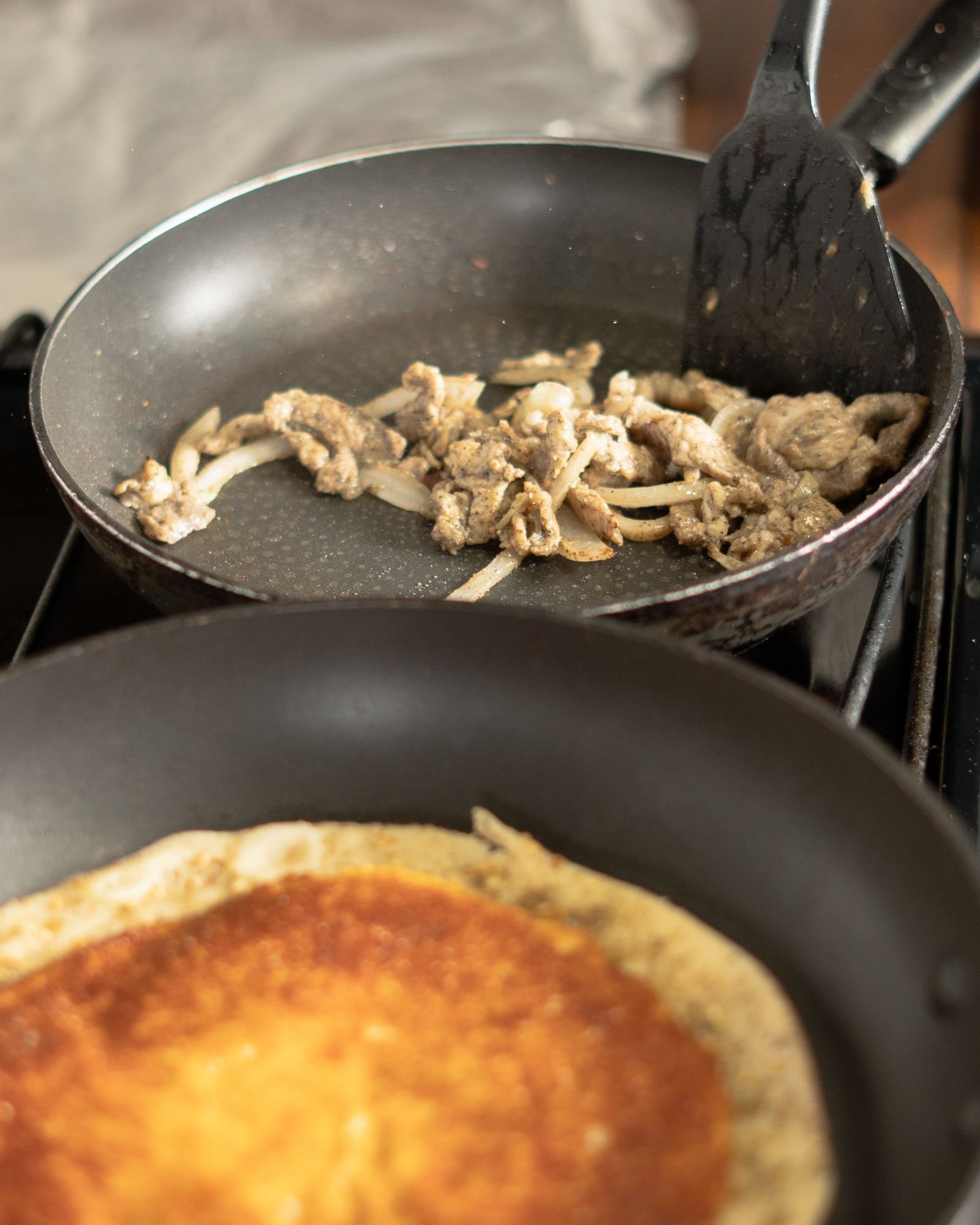
Thin strips of pork, egg and cabbage stir-fried in a savoury hoisin sauce, wrapped in soft, warm pancakes with spring onion. Moo shu pork is a northern Chinese classic: quick, smoky and fun to eat at the table. Roll it up yourself, add a little extra sauce, and enjoy every bite.
The story behind Moo Shu Pork
Moo shu pork comes from the north of China, where wheat pancakes are daily bread and stir-frying is the fastest way to cook. The name is said to come from the scrambled egg in the dish, which looks like the petals of the osmanthus flower, called mu xi in Chinese. The dish travelled from Shandong and Beijing kitchens to America, where it became one of the best-known Chinese restaurant dishes, and from there to kitchens around the world.
In northern Chinese homes moo shu is a family meal, cooked in one wok and eaten together at the table. Everyone builds their own wraps, which makes it a sociable dish: the pancakes, the filling and the sauce sit in the middle, and people roll their own. It is the kind of meal that suits a busy evening, because the cooking is fast and the eating is relaxed. The pancakes are often bought ready-made, so the whole meal comes together in under half an hour.
What makes moo shu pork special is the mix of textures in each wrap. The pork is tender and savoury, the egg is soft and rich, the cabbage stays crisp, and the wood ear mushrooms add a slippery crunch that is hard to describe until you taste it. The hoisin sauce ties it together with a gentle sweetness, and the warm pancake holds it all like a soft pocket. No single part is complicated, but together they make a meal that is hard to stop eating.
Cook moo shu pork when you want a quick, fun dinner that everyone builds at the table. It suits a Sunday lunch in the UK, when friends are over and you want food that feels like an occasion without hours of cooking. Set everything in the middle, let people roll their own pancakes, and enjoy the meal together. It also works well as a weeknight supper, since the cooking takes less than 10 minutes once everything is chopped.
- Prep time
- 25 mins
- Cook time
- 30 mins
- Total time
- 55 mins
- Servings
- 4 servings
- Calories
- 430
Ingredients
- 400 g pork tenderloin, sliced into thin strips
- 2 eggs, beaten
- 2 cups shredded green cabbage
- 1 cup wood ear mushrooms, soaked and sliced
- 1/2 cup bamboo shoots, sliced
- 4 spring onions, sliced
- 2 cloves garlic, minced
- 1 tablespoon fresh ginger, grated
- 2 tablespoons soy sauce, 1 tablespoon Shaoxing wine and 1 teaspoon cornflour
- 3 tablespoons hoisin sauce, 1 tablespoon oyster sauce and 1 teaspoon sesame oil
- 2 tablespoons vegetable oil
- 8 mandarin pancakes, warmed, with extra hoisin sauce to serve
Instructions
- Put the pork strips in a bowl with 1 tablespoon of soy sauce, the Shaoxing wine and the cornflour. Mix well with your hands so every strip is coated, then leave to marinate for 15 minutes. The cornflour coating protects the pork in the hot wok, keeping it tender instead of dry. While it marinates, get everything else chopped and the sauces measured, because stir-frying moves fast.
- Heat a wok or large frying pan over high heat until it is smoking hot. Add a teaspoon of oil and pour in the beaten eggs. Swirl the pan so the egg spreads into a thin layer, and cook for about 30 seconds until just set. Slide the egg out onto a board, roll it up and slice it into thin strips. Set aside; the egg goes back in at the end.
- Add the rest of the oil to the same wok over high heat. When the oil shimmers, add the pork in a single layer and leave it alone for a minute so it sears. You should hear a loud sizzle and see the edges turn brown. Stir-fry for 2 to 3 minutes until the pork is cooked through and lightly browned, then lift it out and set it aside.
- Turn the heat back up and add the garlic and ginger to the wok. Stir-fry for 20 seconds until they smell fragrant, but do not let them burn. Add the cabbage, wood ear mushrooms and bamboo shoots, and stir-fry for 2 to 3 minutes. The vegetables should be hot and slightly softened but still crisp, with the cabbage just starting to wilt at the edges.
- Return the pork to the wok with the egg strips and the spring onions. Pour in the remaining soy sauce, the hoisin sauce, the oyster sauce and the sesame oil. Toss everything together for 1 to 2 minutes over high heat until the sauce coats the pork and vegetables and the pan is almost dry. The filling should be glossy and savoury, not swimming in sauce.
- Taste and adjust. Add a little more hoisin if you want it sweeter, or a splash of soy sauce if it needs salt. The balance should be savoury with a gentle sweetness from the hoisin. Take the wok off the heat and let the filling rest for a minute while you warm the pancakes.
- Warm the mandarin pancakes in a steamer for 2 minutes, or in a dry pan for 20 seconds a side, until soft and pliable. Keep them covered with a clean cloth so they stay warm and do not dry out. Cold, stiff pancakes crack when you roll them, so do not skip this step.
- Serve the filling in a bowl in the middle of the table with the warm pancakes, extra hoisin sauce and more spring onion on the side. To eat, spread a little hoisin on a pancake, spoon on some filling, add spring onion, and roll it up like a small wrap. Eat it at once, while the pancake is warm and the filling is hot.
Pro tips
- Slice the pork thin and across the grain. Thin strips cook in minutes and stay tender, while thick chunks dry out in the hot wok. Partially freezing the pork for 20 minutes makes it much easier to slice thin.
- Marinate the pork, even if only for 15 minutes. The soy sauce, wine and cornflour coat each strip and keep it juicy in the wok. Skip the marinade and the pork will be tougher and less flavourful.
- Get everything ready before you turn on the heat. Stir-frying moves fast, and there is no time to chop cabbage while the pork is in the pan. Have the vegetables chopped, the sauces measured and the pancakes ready to warm.
- Use the highest heat your stove can manage. A hot wok gives the pork a browned edge and keeps the vegetables crisp. If your stove is weak, cook in smaller batches so the pan stays hot.
- Warm the pancakes properly. A steamer is best, but a dry pan for 20 seconds a side works well too. Keep them covered with a clean cloth so they stay soft and pliable, and roll the wraps as soon as they are filled.
Variations & serving ideas
The classic version uses pork, but chicken is the most common swap and cooks the same way. Slice it thin, marinate it the same way, and stir-fry it for 3 to 4 minutes until cooked through. Beef also works, but slice it very thin across the grain so it stays tender. For a vegetarian version, use firm tofu or extra mushrooms and egg, and add a little more hoisin for flavour.
If you cannot find wood ear mushrooms, use shiitake or button mushrooms instead. The texture will be different, but the dish still works. Bamboo shoots can be swapped for water chestnuts, which add a similar crunch. For a spicier version, add a teaspoon of chilli sauce or a sliced fresh chilli to the wok with the garlic and ginger.
Serve moo shu pork with warm mandarin pancakes and extra hoisin sauce, which is the traditional way. Small flour tortillas work as a quick swap for the pancakes, and lettuce leaves make a lighter, low-carb wrap. A simple cucumber salad on the side adds freshness, and a pot of jasmine tea rounds out the meal.
This dish pairs well with other Chinese dishes. Serve it beside fried rice or a bowl of egg drop soup for a bigger meal, or as part of a spread with spring rolls and dumplings. Leftover filling is good the next day spooned over rice or noodles, and it makes a tasty filling for a sandwich or a wrap for lunch.
Getting it right
The skill in moo shu pork is stir-frying hot and fast. The wok must be smoking hot before the pork goes in, so the meat sears instead of steaming. Cook the pork in a single layer and leave it alone for a minute before you stir, which gives it a browned edge. If you crowd the pan, the temperature drops and the pork turns grey and soggy. Cook in batches if your wok is small.
Heat control matters with the vegetables too. The cabbage should be hot and slightly wilted but still crisp, which takes only 2 to 3 minutes over high heat. Add the sauce at the very end, so it coats the filling instead of pooling in the pan. The filling should be glossy and almost dry, not swimming in liquid. If the pan looks wet, turn the heat up and toss for another minute.
The most common mistake is adding everything to the pan at once, which steams the food instead of frying it. Cook the egg first and set it aside, then the pork, then the vegetables, and bring it all together at the end. Another common fault is cold, stiff pancakes that crack when rolled. Warm them properly in a steamer or a dry pan, and keep them covered with a cloth until you serve them.
Storing & reheating
The cooked moo shu filling keeps well in the fridge for up to 2 days in a sealed container. It tastes good reheated, though the cabbage softens a little more. Store the pancakes separately, wrapped in cling film, because they go stale fast once they are warm. Do not store filled, rolled pancakes, because the sauce soaks through and they fall apart.
Reheat the filling in a hot wok or frying pan for 2 minutes, adding a splash of water if it looks dry. A microwave works too: heat in short bursts and stir between each one. Warm fresh pancakes in a steamer or a dry pan for 20 seconds a side, and build the wraps fresh each time so they stay soft and hold together.
Frequently asked questions
Can I make moo shu with chicken instead?
Yes, and chicken is the most common swap. Slice it thin, marinate it the same way, and stir-fry it for 3 to 4 minutes until cooked through. Beef also works, but slice it very thin across the grain so it stays tender. The sauce and vegetables stay the same.
What are mandarin pancakes?
Mandarin pancakes are thin, soft wheat pancakes, similar to a very thin flour tortilla. You can buy them frozen in Chinese supermarkets, or use small flour tortillas as a quick swap. Warm them in a steamer or a dry pan before serving.
Why is my moo shu pork soggy?
The most likely cause is a pan that is not hot enough, or too much food in the pan at once. Use the highest heat your stove can manage, cook in small batches, and do not add the sauce until the end. The pork should sizzle the moment it hits the oil.
Is moo shu pork a quick meal?
Yes, it is a quick stir-fry, which is why it is a weeknight favourite. Have everything chopped and the sauce mixed before you turn on the heat, because the cooking takes less than 10 minutes. The pancakes can be warmed while the pork rests.
Can I make moo shu pork ahead of time?
Yes, the cooked filling keeps for 2 days in the fridge, but the pancakes go stale fast. Store the filling separately and warm fresh pancakes when you serve it. Reheat the filling in a hot wok for 2 minutes, adding a splash of water if it looks dry.
Is moo shu pork healthy?
Yes, it is a balanced meal with lean pork, egg, cabbage and mushrooms. The hoisin sauce adds sugar, so keep it to the recipe amount and serve with plenty of vegetables. Use less oil in the wok and choose lean pork tenderloin for a lighter version.