Red Braised Pork Recipe
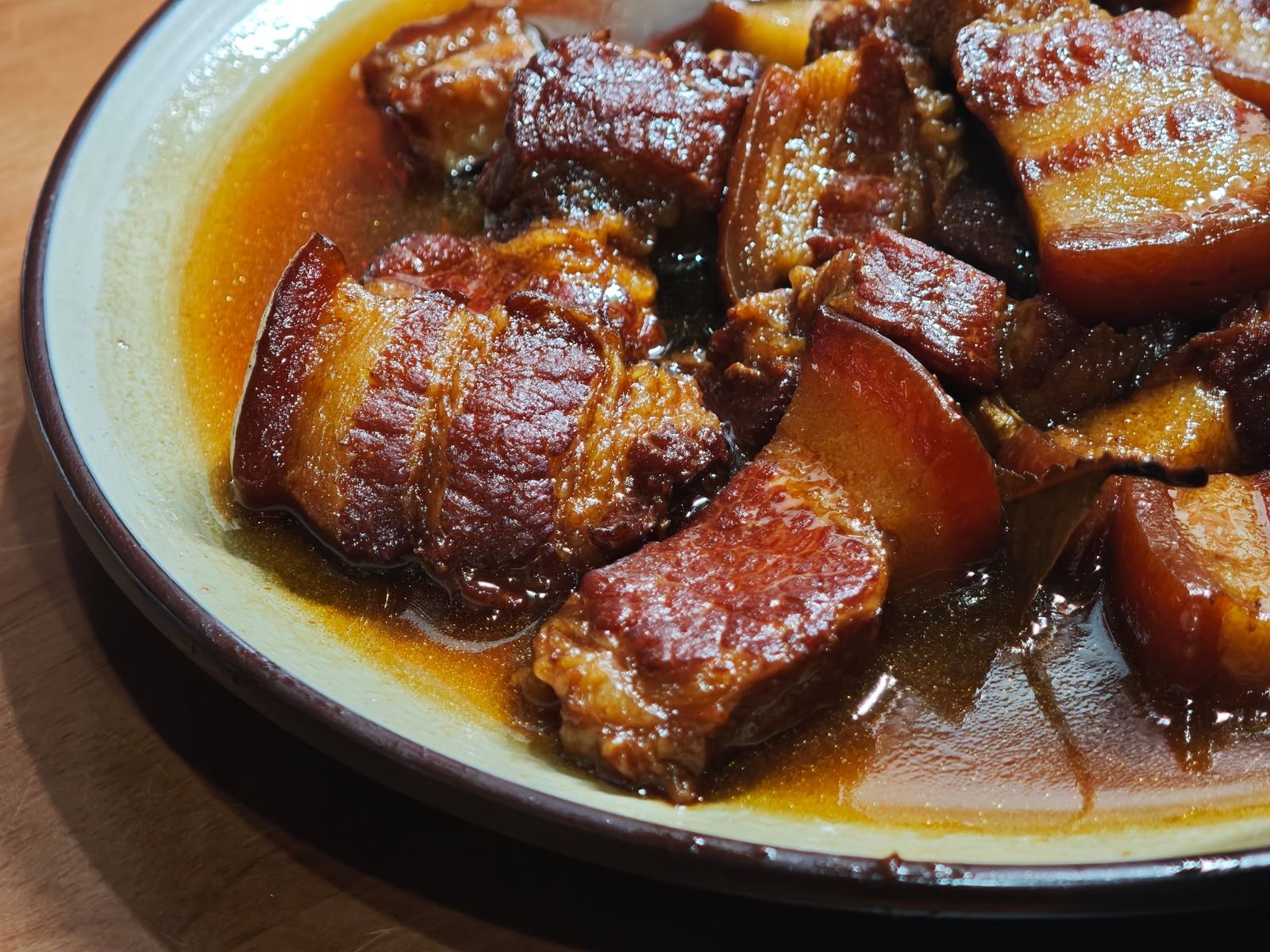
Red braised pork, or hong shao rou, is the dish that turns a humble cut of pork belly into something worth planning a whole evening around. Cubes of pork simmer slowly in soy sauce, rock sugar, star anise and Shaoxing wine until the fat turns silky and the sauce clings like lacquer. It is sweet, salty and deeply savory all at once. Serve it over a mound of steamed rice and let the sauce do the talking.
The story behind Red Braised Pork
Hong shao rou comes from China, and its most famous association is with Hunan province, where it is often called Mao-style red braised pork after Mao Zedong, who was said to love the dish. The name itself tells you the method: hong shao means red-cooked, a slow braise in soy sauce and sugar that gives the meat its deep mahogany color. It is a dish of patience rather than skill, and it has been cooked in Chinese home kitchens for generations, passed down through families who each guard their own balance of sweet and salty.
In Chinese homes this is celebration food and comfort food at the same time. It shows up at Lunar New Year tables, at family reunions, and at any meal where the cook wants to show love without saying a word. A pot of red braised pork on the table means someone took the time. The pork is usually served family-style in the middle of the table, with everyone reaching in for their favorite piece, and the sauce is spooned over rice until the bowl is clean.
What makes the dish special is the way it treats pork belly. The cut has alternating layers of fat and lean meat, and a long, gentle braise melts the fat into the sauce while the lean meat stays tender instead of drying out. Rock sugar gives the glaze a shine and a round sweetness that white sugar cannot match, and the spices stay in the background, warming the dish without shouting. When it is done right, you can cut a cube with the side of a spoon.
Cook this on a slow weekend afternoon, or as a Sunday dinner in the US when you want the house to smell amazing for hours. It needs very little hands-on time once the pot is simmering, so you can set it going and get on with your day. Make a double batch if your pot allows it, because the leftovers are the real prize, and a box of this pork in the fridge makes Monday dinner feel like a gift. Keep the pot nearby for seconds.
- Prep time
- 20 mins
- Cook time
- 1 hr 30 mins
- Total time
- 1 hr 50 mins
- Servings
- 4 servings
- Calories
- 680
Ingredients
- 800 g skin-on pork belly, cut into 4 cm cubes
- 2 tablespoons Shaoxing wine
- 3 slices fresh ginger
- 2 spring onions, cut into long pieces
- 60 g rock sugar
- 3 tablespoons light soy sauce
- 1 tablespoon dark soy sauce
- 2 star anise
- 1 cinnamon stick, about 5 cm
- 2 bay leaves
- 3 cups hot water
- 1 teaspoon toasted sesame oil
- Steamed rice and blanched greens, to serve
Instructions
- Put the pork cubes in a cold pot, cover with water, and bring to a boil over high heat. Let it bubble for 3 minutes, skimming off the grey foam that rises, then drain the pork and rinse it under hot water. This blanching step removes the strong porky smell and keeps the final sauce clean and clear.
- Set a heavy pot or wok over medium heat and add the rock sugar with 2 tablespoons of water. Stir it gently as it melts, then watch closely as it turns from pale gold to a deep amber, about 3 to 4 minutes. If it starts to smell burnt, take the pot off the heat at once.
- Tip the blanched pork into the caramel and toss quickly so every cube gets coated. The sugar will seize and harden on the cold meat at first, so keep stirring over the heat until it melts again and the pork turns a glossy chestnut brown. This takes about 2 minutes.
- Add the ginger, spring onions, star anise, cinnamon and bay leaves, and stir for 30 seconds until the spices smell warm and fragrant. Pour in the Shaoxing wine and let it bubble for a few seconds, scraping up any sticky caramel from the bottom of the pot. Then add the light and dark soy sauces and stir to coat everything evenly.
- Pour in the hot water until the pork is just covered, bring the pot to a boil, then turn the heat down to the lowest setting that keeps a lazy bubble. Put the lid on slightly ajar and let it simmer for 1 hour and 15 minutes, turning the pork once or twice so it colors evenly.
- Lift the lid and check the sauce. It should be reduced to a thin, dark layer that coats the bottom of the pot. If it still looks watery, turn the heat up to medium and simmer uncovered for 10 to 15 minutes, stirring now and then, until the sauce thickens and clings to the pork in a shiny glaze.
- Fish out the star anise, cinnamon, bay leaves and ginger, and taste the sauce. Add a small splash of soy sauce if it needs more salt, or a pinch of sugar if it tastes too sharp. Drizzle in the sesame oil and stir once.
- Let the pork rest in the pot for 10 minutes off the heat so the glaze settles and the meat firms up just enough to hold its shape. Spoon the cubes into a serving bowl with plenty of sauce, and scatter the blanched greens around the edge. Serve at once with steamed rice.
- To eat it the classic way, place a cube or two over a mound of rice and spoon over extra sauce. The rice soaks up the glaze, the fat melts into the grains, and the greens cut through the richness. Keep the pot on the table so everyone can help themselves to seconds.
Pro tips
- Pick pork belly with even layers of fat and lean meat, and ask the butcher to leave the skin on. The skin turns soft and sticky in the braise and holds the cubes together. Skinless belly works too, but it falls apart more easily.
- Do not rush the caramel. Rock sugar needs a few minutes to reach a deep amber color, and that color is what gives the dish its red-brown shine. If you add the pork while the sugar is still pale, the sauce will look grey and taste flat.
- Keep the simmer truly gentle, with only a bubble or two breaking the surface. A hard boil will toughen the meat and cloud the sauce, while a slow simmer lets the fat melt gradually into the liquid.
- If the sauce gets too thick before the pork is tender, add a splash of hot water and keep cooking. It is much easier to reduce a thin sauce at the end than to rescue dry, overcooked pork.
- Make it a day ahead when you can. The pork tastes better after a night in the fridge, and the fat sets on top so you can lift it off easily before reheating gently on the stove.
Variations & serving ideas
The simplest change is the cut of pork. Pork shoulder works well if you cannot find belly, though it gives a leaner, less silky result, so add an extra 15 minutes to the braise and a spoonful of oil to keep it moist. Some cooks add hard-boiled eggs to the pot for the last 30 minutes, and the eggs soak up the sauce until they turn a deep brown, which makes the dish stretch further for a crowd. Pork neck also works, though it needs a longer braise, and the meat shreds more easily once it is fully tender.
For a spicier version, add two or three dried red chillies and a teaspoon of Sichuan peppercorns with the spices. The heat stays in the background and sharpens the sweetness instead of taking over. A Hunan-style version leans harder on the chillies and uses less sugar, while a Shanghai-style version is sweeter and lighter on the spices. Try both over time and see which one your table prefers. A splash of dark soy sauce deepens the color further, while a few slices of fresh ginger in the braise keep the flavors bright and clean.
Serving is part of the dish. In the US, this pork is a natural fit for a slow Sunday dinner, spooned over steamed jasmine rice with a pile of garlicky greens or a simple cucumber salad on the side. It also works beautifully tucked into steamed buns with pickled vegetables, which turns leftovers into a completely different meal. Keep the accompaniments simple and fresh so the rich pork stays the star. Leftover pork also makes a fine filling for steamed buns, with a spoonful of pickled mustard greens to cut the richness.
For pairing, think clean and light. Steamed rice is the classic partner because it soaks up the sauce, and blanched bok choy or broccoli adds color and a fresh bite. A light lager or a pot of green tea cuts through the richness, and a small bowl of pickled vegetables on the side gives the meal a sharp note that keeps you going back for another cube.
Getting it right
The key technique in this dish is the sugar caramel, and it is the one step that decides how the finished pork looks and tastes. Rock sugar melts more slowly than white sugar, which gives you a wider window before it burns, but you still need to watch it. The right moment is when the syrup turns the color of dark honey and smells like toffee. Add the pork the second it reaches that point, and the meat will pick up a rich brown coat that deepens as it braises.
Heat and timing control matter most during the long simmer. The pot should sit on the lowest heat that keeps the liquid moving, with the lid slightly open so the sauce reduces slowly. Check it every 30 minutes and turn the pork so the pieces color evenly. If the liquid drops below the pork, add hot water, never cold, because cold water shocks the meat and tightens it. The pork is done when a chopstick slides in with no resistance and the fat feels soft, not rubbery.
The most common mistake is impatience at the end. Cooks turn the heat up to reduce the sauce quickly and the pork dries out while the sugar burns. Keep the heat low, give the reduction its 10 to 15 minutes, and stir often so the glaze coats evenly. Another common slip is skipping the blanch, which leaves a strong smell in the sauce. Three minutes of blanching at the start saves the whole dish.
Storing & reheating
Let the pork cool in its sauce, then store it in a sealed container in the fridge for up to 4 days. The sauce will set into a jelly as it cools, which is a good sign, and the fat will rise to the top in a pale layer you can lift off if you want a lighter result. Keep the pork and sauce together so the meat stays moist.
To reheat, warm it gently in a covered pot over low heat for about 10 minutes, adding a splash of water if the sauce is too thick. It also freezes well for up to 3 months in a freezer-safe container. Thaw it overnight in the fridge and reheat the same way, and it will taste almost as good as the day you made it.
Frequently asked questions
What is red braised pork?
Red braised pork, or hong shao rou, is a Chinese dish of pork belly cubes slow-cooked in soy sauce, rock sugar and spices until tender. The name comes from the red-brown color the soy sauce and caramelized sugar give the meat and sauce.
Can I make red braised pork without rock sugar?
Yes, you can use white sugar or brown sugar instead, but the result will be slightly different. Rock sugar gives a cleaner sweetness and a shinier glaze. If you use white sugar, use a little less and watch the caramel closely because it darkens faster.
Should I keep the skin on the pork belly?
Skin-on pork belly is the classic choice because the skin turns soft and sticky in the braise and helps the cubes hold their shape. Skinless belly works too, but handle it gently at the end because it falls apart more easily.
Why is my sauce thin and pale?
The sauce was probably not reduced enough, or the sugar was added while still pale. Simmer the pork uncovered over medium heat for 10 to 15 minutes at the end, stirring often, until the sauce thickens into a shiny glaze that coats the meat.
Can I cook red braised pork in a slow cooker?
Yes. Blanch the pork and make the caramel on the stove first, then transfer everything to a slow cooker with the water and spices. Cook on low for 4 to 5 hours, then reduce the sauce in a pan on the stove for the final glaze.
What do I serve with red braised pork?
Steamed jasmine rice is the classic partner, with blanched bok choy or broccoli for freshness. The pork is also good in steamed buns with pickled vegetables, and a light lager or green tea helps cut through the richness. Keep the pot on the table so everyone can help themselves to more sauce.