Mongolian Beef Recipe

Tender strips of beef, crisp at the edges and glossed in a dark, sweet-savoury garlic-soy sauce with scallion and a whisper of chilli. It is sticky, bold, and on the table in twenty-five minutes, faster than takeout and better. The cornstarch crust is the secret: it fries up crisp, then drinks in just enough sauce to turn glossy without going soggy. Serve it over steaming jasmine rice.
The story behind Mongolian Beef
Despite the name, Mongolian beef is not from Mongolia. It is a Chinese-American restaurant dish, invented in Taiwan-style barbecue restaurants and popularised in the United States, where it became a takeout staple alongside sweet and sour pork and General Tso's chicken. The name is a nod to Mongolian barbecue, the stir-fry style it borrowed, but the dish itself was built for American tastes: sweet, savoury, and fast. That is no knock on it. Some of the best-loved dishes in the world were born far from the places they are named after, and Mongolian beef has earned its place on the menu.
In American Chinese restaurants, Mongolian beef sits on the menu next to beef with broccoli, ordered by people who want something rich and saucy over rice. It is weeknight food, the kind of dish that turns a plain bowl of rice into dinner and a quiet evening into something worth sitting down for. At home, it has become a favourite for cooks who want takeout flavour without the wait, the delivery fee, or the mystery of what went into the pan. It rewards a screaming-hot wok more than any fancy equipment, and it forgives a cook who is still learning.
What makes it work is contrast: crisp-edged beef against a glossy, sticky sauce, sweet brown sugar against salty soy, the sharp bite of garlic and scallion cutting through the richness. The cornstarch coating does double duty, frying up crisp in the wok and then thickening the sauce just enough to cling. Every strip comes out lacquered, dark and shining, and the sauce pools at the bottom of the bowl in the best possible way. It is the kind of dish where people mop the plate with the last of the rice.
This is a Tuesday-night dish, ready in twenty-five minutes from the moment you start slicing, and it is one of the fastest routes from raw ingredients to a genuinely satisfying dinner. It is also a great one for feeding a crowd, since the recipe doubles easily and the sauce comes together in minutes. Cook it when you want something bold and fast, when the rice is already on, and when nobody in the house wants to wait for delivery.
- Prep time
- 10 mins
- Cook time
- 15 mins
- Total time
- 25 mins
- Servings
- 4 servings
- Calories
- 580
Ingredients
- 450g flank steak, thinly sliced against the grain
- 60g cornstarch
- 80ml vegetable oil
- 4 spring onions, cut into 5cm pieces
- 5 garlic cloves, thinly sliced
- 2 dried red chiles (optional)
- 80ml soy sauce
- 60ml brown sugar
- 60ml water
- 1 tablespoon Shaoxing wine
- 1 teaspoon toasted sesame oil
- 1/2 teaspoon freshly ground black pepper
- Cooked jasmine rice, to serve
- 1 tablespoon toasted sesame seeds, to garnish
Instructions
- Toss the beef slices in the cornstarch until every piece is lightly and evenly coated, then shake off the excess. The coating should be a thin, dusty layer, not a thick batter. Let the coated beef sit for 5 minutes so the starch grips the meat, because it fries up crisper that way and the coating is less likely to slide off in the oil.
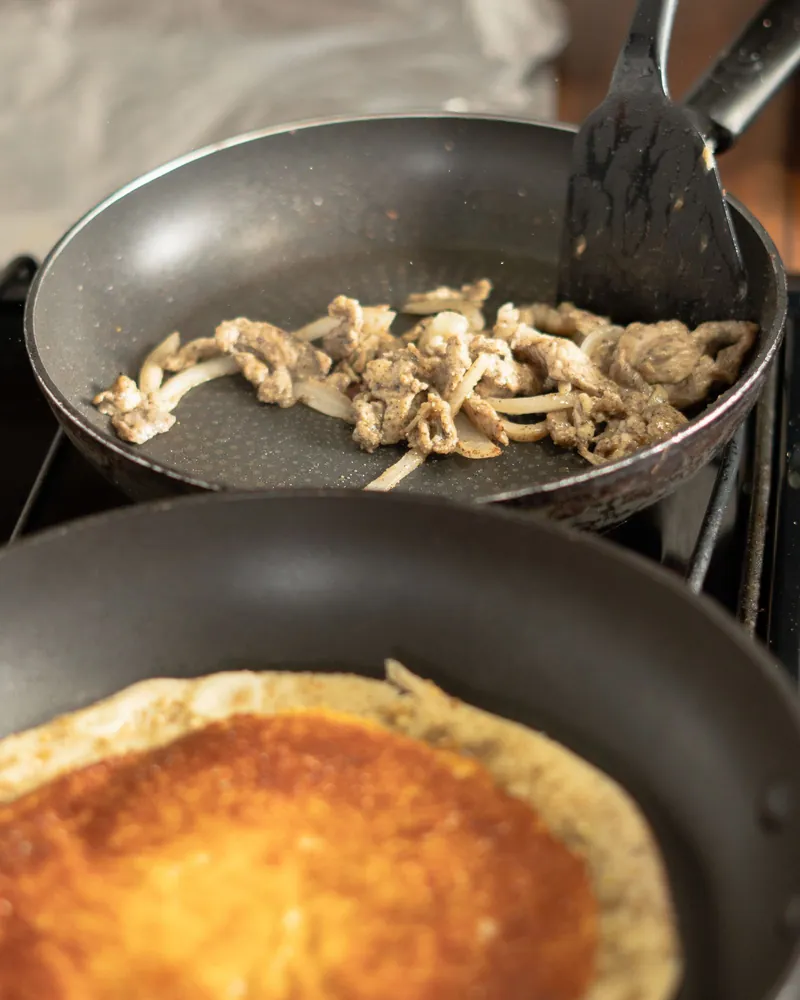
- Heat the oil in a wok over high heat until it shimmers and a wisp of smoke appears. Sear the beef in two batches, laying the strips in a single layer and leaving them alone for 90 seconds per side. They should sizzle hard and turn crisp and brown at the edges. Crowding the wok steams the beef instead of searing it, and you will end up with grey, floppy strips.
- Lift the beef out to a plate with a slotted spoon and pour off all but 1 tablespoon of oil. The wok should still be hot and glossy with a thin film of oil and browned bits. That is flavour for the sauce, so do not wash it out. The beef can rest while the sauce comes together, which takes only a few minutes.
- Add the garlic, spring onions, and dried chiles and fry for 30 seconds, stirring constantly. They should smell fragrant and sharp, and the garlic should stay pale. Pull the pan off the heat if the garlic starts to colour, because browned garlic turns bitter fast and there is no hiding it in a sauce this simple.
- Pour in the soy sauce, brown sugar, water, and Shaoxing wine, stirring until the sugar dissolves completely. The sauce will bubble hard and smell of garlic and caramel. Scrape the bottom of the wok as you go to lift the browned bits into the sauce. That fond is pure flavour, and it is what separates a good stir-fry from a flat one.
- Simmer for 2 minutes until the sauce turns glossy and thick enough to coat the back of a spoon. It should fall in a slow ribbon, not run like water. If it is still thin, give it another minute. The sauce sets the whole dish, so do not rush it. A sauce that is too thin slides straight off the beef.
- Return the beef to the wok and toss for 1 minute, turning the strips constantly so every piece is lacquered in sauce. The cornstarch crust will drink in just enough sauce to turn glossy while staying crisp at the edges. Work fast, because the longer it sits, the softer the crust gets, and the magic of this dish is the contrast between crisp and sticky.
- Take the wok off the heat, drizzle over the sesame oil, and toss once more. Scatter with sesame seeds and serve immediately over jasmine rice, with the extra sauce spooned over the top. Have the bowls ready before you start, because this dish waits for nobody.
Pro tips
- Freeze the beef for 30 minutes before slicing. It firms up and cuts paper-thin with ease, which is the whole secret of tender, quick-cooking strips. A sharp knife and a cold piece of meat make the job almost effortless.
- Sear in batches and do not move the beef around. A crowded wok steams instead of searing, and constant stirring stops the crust from forming. Let the strips sit, listen for the sizzle, and flip them once.
- Let the sauce reduce until it truly coats a spoon before the beef goes back in. A thin sauce slides off the meat and pools at the bottom of the bowl, leaving the beef naked and the rice swimming.
- Serve right away. The cornstarch crust softens if it sits, so have the rice cooked and the plates ready before the beef hits the wok. This is a dish you plate the moment it is done.
- Slice against the grain, always. Cutting with the grain leaves long muscle fibres that chew tough, no matter how thin the slices are. Look for the lines running through the meat and cut across them.
Variations & serving ideas
Swap the beef for chicken thighs, sliced the same way and seared in the same cornstarch coating, and double the aromatics, since chicken will not release the same juices. Pork tenderloin works beautifully too, and firm tofu, pressed and cubed, makes a fine vegetarian version that soaks up the sauce eagerly. For extra heat, add more dried chiles or a spoonful of chilli crisp to the sauce, and taste as you go so the heat builds the way you like it. Mushrooms, sliced thick and seared hard, make another good swap, and they bring an earthy depth that suits the soy and garlic. Whatever protein you choose, keep the slices thin and the wok hot, because the method matters more than the meat.
No Shaoxing wine? A dry sherry is the closest substitute, or a splash of rice vinegar with a pinch of sugar. Tamari replaces soy sauce for a gluten-free version, and coconut aminos work if you want less salt. Taste and adjust the sugar, since both are sweeter than soy. Brown sugar can be swapped for honey, but add it off the heat so it does not scorch, and use a little less, since honey is sweeter by volume.
Serve it over jasmine rice, the classic pairing, with the sauce spooned generously over the top. It is also good over noodles, or tucked into lettuce cups with extra scallion for a lighter meal that still feels satisfying. A pile of steamed greens on the side, bok choy, gai lan, or simple broccoli, balances the richness of the sauce and gives the plate a bit of colour. For a heartier plate, spoon the beef over egg noodles tossed with a little sesame oil, and let the sauce coat the noodles too. A fried egg on top turns the whole thing into a proper brunch.
Mongolian beef pairs well with other takeout-style dishes for a bigger spread: egg fried rice, hot and sour soup, or spring rolls. Keep the drinks simple and cold. Iced tea, a light lager, or sparkling water with lime all cut through the sweet-savoury sauce without competing with it, and a pot of jasmine tea after dinner rounds the meal off nicely.
Getting it right
The key technique is the cornstarch coat. A thin dusting of cornstarch does two jobs at once: it fries into a crisp shell in the hot oil, and it thickens the sauce just enough to cling to the meat. The coat must be light, so shake off the excess, or the beef comes out gummy instead of crisp. Let the coated beef rest for a few minutes before frying, which helps the starch grip the meat instead of sliding off into the oil.
Heat control is everything in a stir-fry. The wok needs to be genuinely hot before the beef goes in: the oil should shimmer and the beef should sizzle the instant it lands. If the pan is not hot enough, the beef steams in its own juices and the crust never forms. Sear in batches, let the wok recover its heat between them, and keep the sauce at a brisk simmer so it reduces instead of watering down. A wok that is merely warm is the enemy of a good stir-fry.
The most common mistake is crowding the wok, which drops the temperature and turns a sear into a steam. The second is returning the beef to a sauce that is too thin: it slides off and the crust goes soggy. The third is overcooking. Ninety seconds per side is enough for thin slices, and the beef keeps cooking in the hot sauce, so pull it while it still looks slightly pink in the middle. It will finish in the sauce without drying out.
Storing & reheating
Mongolian beef is best eaten fresh, but leftovers keep in a sealed container in the fridge for up to 3 days. The cornstarch crust will soften as it sits. That is unavoidable, but the flavour holds up well, and the sauce soaks into the rice nicely the next day. Freeze the beef and sauce together for up to 2 months, though the texture will be softer after thawing.
Reheat in a hot wok or skillet over medium-high heat with a splash of water, tossing for 2 to 3 minutes until heated through. The microwave works in a pinch but makes the crust soggy, so the wok is worth the extra minute. Add a fresh scattering of spring onion and sesame seeds to wake it up, and serve over freshly cooked rice.
Frequently asked questions
Is Mongolian beef actually from Mongolia?
No. Despite the name, it is a Chinese-American restaurant creation, not a traditional Mongolian dish. It was invented in Taiwan-style barbecue restaurants and popularised in the United States. The name nods to Mongolian barbecue, the stir-fry style it borrowed, but the dish itself was built for American tastes.
Is it spicy?
Only mildly. The heat is a warm background note from the dried chiles, not a burn. Increase the chiles if you like it spicy, or add a spoonful of chilli crisp at the end. Leave them out entirely for a kid-friendly version. The sauce is still full of flavour.
Can I use chicken instead of beef?
Yes. Slice chicken thighs, toss in cornstarch, and sear the same way; the sauce is identical. Double the aromatics, since chicken will not release the same juices as beef. Pork tenderloin works the same way, and firm tofu makes a good vegetarian swap.
What beef cut is best?
Flank steak is the top choice. It slices thin, cooks fast, and stays tender. Sirloin and skirt steak also work beautifully. Whatever you choose, slice thinly against the grain, and freeze the meat for 30 minutes first to make slicing easier.
Can I make it gluten-free?
Yes. Use tamari instead of soy sauce and check that your Shaoxing wine is gluten-free, or swap it for dry sherry. Cornstarch is naturally gluten-free, so the coating is fine. Serve over rice, which is already gluten-free, and you are set.
Why is my beef tough?
Usually it was sliced with the grain, overcrowded in the wok, or overcooked. Slice thinly against the grain, sear in batches in a very hot wok, and pull the beef after ninety seconds per side. Thin slices cook in moments. Any longer and they turn chewy.