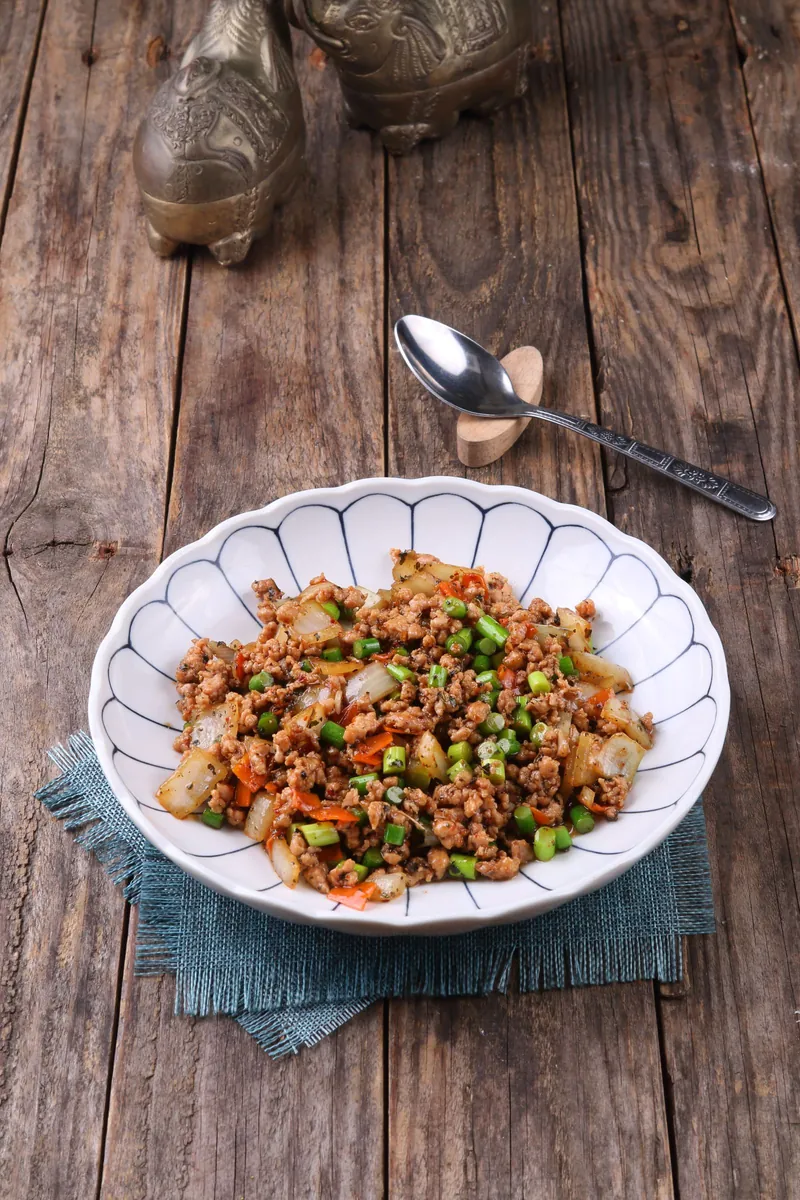
Kuay Teow Nam Sai Recipe

Kuay teow nam sai is Thailand's everyday noodle soup: silky rice noodles in a clear, gently sweet broth with sliced pork, fish balls and a tangle of fresh herbs. It is the bowl you find at every street stall, and it is endlessly customisable with chilli, vinegar and fish sauce at the table.
The story behind Kuay Teow Nam Sai
Kuay teow nam sai is the noodle soup of everyday Thailand — silky rice noodles in a clear, gently sweet broth, with sliced pork, fish balls, bean sprouts and a tangle of fresh herbs on top. It is the bowl you find at every street stall, in every market, and in every small shophouse restaurant across the country. It is not a special-occasion dish; it is the dish that Thais eat for lunch, for dinner, for a late-night snack, and for breakfast. It is the taste of ordinary life in Thailand, and it is wonderful.
The broth is the heart of the dish. It should be clear, not cloudy, with a gentle sweetness balanced by fish sauce and white pepper. The stock — pork or chicken — simmers gently, never boiled hard, so it stays clean and light. The pork slices cook in the broth itself, adding their flavour to the liquid, and the fish balls bob alongside, soft and springy. It is a broth that tastes simple and turns out to be anything but, because a clear broth hides nothing.
The noodles are cooked separately, in boiling water, so they do not cloud the broth with starch. Flat rice noodles — sen lek — are the traditional choice, silky and slightly chewy, but thin rice vermicelli works too. The noodles go into the bowl first, the hot broth is ladled over them, and the toppings follow: bean sprouts for crunch, spring onions and herbs for freshness, fried garlic for aroma. Each bowl is assembled to order, and each eater seasons their own at the table.
The condiments are part of the dish. Fish sauce, chilli flakes, sugar and chilli vinegar sit on every table, and each person adjusts their bowl to taste — more fish sauce for salt, more chilli for heat, a spoonful of sugar for sweetness, a splash of vinegar for tang. A Thai noodle soup is never finished in the kitchen; it is finished at the table, by the person eating it.
Cook kuay teow nam sai when you want a light, comforting meal that comes together in under an hour. It suits a weeknight dinner, a weekend lunch, or any moment when you want something warm and nourishing. Serve it with the condiments on the table and let everyone make their bowl their own.
- Prep time
- 20 mins
- Cook time
- 30 mins
- Total time
- 50 mins
- Servings
- 4 servings
- Calories
- 460
Ingredients
- 300 g flat rice noodles
- 1.5 litres pork or chicken stock
- 300 g pork loin, thinly sliced
- 8 fish balls, halved
- 2 tablespoons fish sauce
- 1 tablespoon sugar
- 1 teaspoon white pepper
- 2 garlic cloves, minced
- 2 tablespoons vegetable oil
- 100 g bean sprouts
- 2 spring onions, chopped
- 1 handful Thai basil leaves
- 1 handful coriander leaves
- Chilli flakes and lime wedges, to serve
Instructions
- Soak the flat rice noodles in a large bowl of warm water for 15 minutes, until they are pliable and soft enough to bend without breaking. They should feel flexible, not brittle. Drain them well in a colander and set aside — they will be blanched briefly just before serving.
- Heat the vegetable oil in a small pan over medium heat and fry the minced garlic, stirring constantly, until it turns a deep golden brown — about 2 minutes. Watch it closely, as garlic goes from golden to burnt in seconds. Lift the garlic out with a slotted spoon and set it aside on kitchen paper. Keep the garlic oil — it is full of flavour.
- Bring the pork or chicken stock to a boil in a large pot, then turn the heat down to a gentle simmer. Season with the fish sauce, sugar and white pepper, tasting as you go — the broth should be gently sweet and savoury, with a clean flavour. Skim any foam that rises to the surface so the broth stays clear.
- Add the thinly sliced pork and the halved fish balls to the simmering broth. Cook for 5 minutes, until the pork is cooked through and the fish balls are hot and springy. Do not overcook the pork — thin slices need only a few minutes, and overcooked pork turns tough and dry.
- While the pork cooks, bring a separate pot of water to a rolling boil. Blanch the soaked noodles in the boiling water for 1 minute — just long enough to heat them through and soften them fully. Drain them well and divide them between four deep bowls, loosening them with chopsticks so they sit in loose nests.
- Ladle the hot broth over the noodles, making sure each bowl gets a good share of pork slices and fish balls. The broth should be generous — a noodle soup needs plenty of liquid, and the noodles will drink some of it up as they sit.
- Top each bowl with a handful of bean sprouts, chopped spring onions, Thai basil leaves and coriander leaves, and scatter the fried garlic over the top. The herbs should be fresh and abundant — they are not a garnish, they are part of the dish.
- Serve at once, with chilli flakes, fish sauce, sugar and lime wedges on the table, so each person can season their own bowl. Tell everyone to taste the broth first, then adjust — a squeeze of lime, a spoonful of chilli, a dash of fish sauce — until the bowl tastes exactly right to them.
Pro tips
- Cook the noodles separately so the broth stays clear. Noodles cooked in the broth release starch and turn it cloudy — a separate pot of boiling water keeps the broth clean and the noodles silky.
- Do not overcook the pork; thin slices need only a few minutes. Five minutes in simmering broth is enough — any longer and the pork turns tough and dry, no matter how thin it is sliced.
- The fried garlic on top adds a wonderful aroma. Fry it until deep golden, not pale — the colour is where the flavour lives — and scatter it over the bowls just before serving so it stays crisp.
- Let everyone season their own bowl at the table. Fish sauce, chilli flakes, sugar and lime are the classic condiments, and each person knows their own taste better than the cook does.
- Keep the broth at a gentle simmer, never a hard boil. A rolling boil clouds the stock and toughens the pork, while a gentle simmer keeps everything clear and tender.
Variations & serving ideas
The protein can change with what you have. Thinly sliced beef is a popular variation — it cooks in the same time as pork and gives a deeper, richer broth. Chicken, sliced thin, works well too. For a seafood version, use prawns and squid, added in the last 2 minutes so they do not overcook. For a vegetarian version, use tofu and mushrooms in a vegetable stock, with soy sauce instead of fish sauce.
The noodles can vary. Flat rice noodles — sen lek — are traditional, but thin rice vermicelli, egg noodles or even spaghetti all work in a pinch. Each noodle gives a different texture: vermicelli is light and delicate, egg noodles are springy and rich, and flat noodles are silky and satisfying. Cook them separately whatever variety you use, so the broth stays clear.
The broth can be enriched. A few slices of ginger simmered in the stock add warmth, and a star anise gives a gentle, fragrant depth. A spoonful of soy sauce alongside the fish sauce adds colour and a different kind of saltiness. For a richer broth, use a pork bone stock simmered for hours — the difference is real, though a good shop-bought stock works well for a weeknight version.
Serve kuay teow nam sai as a main course on its own, or as part of a larger Thai meal with a salad and a stir-fry on the side. It is light enough for lunch and satisfying enough for dinner. For drinks, iced tea or a cold lager suits the warm, savoury flavours. The condiments on the table are essential — fish sauce, chilli, sugar and lime — and they are part of the meal, not an afterthought.
For a party, set up a noodle bar: a pot of broth, bowls of noodles, plates of toppings, and the condiments on the table, so guests can assemble their own bowls. It is a fun, interactive way to serve a crowd, and everyone gets exactly the bowl they want.
Getting it right
The key technique is the broth, and its secret is clarity. The stock should simmer gently, never boil hard, and any foam that rises should be skimmed off promptly. A clear broth is the mark of a careful cook, and it is what separates a good noodle soup from a great one. Season the broth before the pork goes in, so the meat cooks in seasoned liquid and picks up the flavour.
Cooking the noodles separately is the second skill. Rice noodles release starch as they cook, and that starch clouds the broth and thickens it. A separate pot of boiling water, a 1-minute blanch, and the noodles stay silky while the broth stays clear. Drain the noodles well before they go into the bowls — excess water dilutes the broth.
The assembly is the third part, and it is a matter of order. Noodles first, in loose nests. Hot broth ladled over, with pork and fish balls distributed evenly. Toppings last — bean sprouts, herbs, spring onions, fried garlic — so they stay fresh and crisp on top of the hot soup. The bowl should look abundant, with the herbs and sprouts piled high, and it should be served immediately, while the broth is steaming and the noodles are still silky.
Storing & reheating
Kuay teow nam sai is best eaten fresh, assembled just before serving. The broth keeps in the fridge for up to 3 days in a sealed container — reheat it gently and taste for seasoning before serving, as it may need a little more fish sauce after sitting.
Keep the noodles, broth and toppings separate for storage. Cooked noodles go soft and absorb broth if left sitting in it, so cook fresh noodles for each serving. The pork and fish balls keep in the broth for a day, though the pork will toughen slightly on reheating. The fried garlic keeps for 2 days in a sealed jar at room temperature.
Frequently asked questions
What noodles should I use?
Flat rice noodles, sen lek, are traditional. Thin rice vermicelli also works, and egg noodles give a springier texture. Cook the noodles separately whatever variety you use, so the broth stays clear.
Can I use beef instead of pork?
Yes, thinly sliced beef is a popular variation. It cooks in the same time as pork and gives a deeper, richer broth. Slice the beef thinly against the grain for the most tender result.
How do I keep the broth clear?
Simmer gently and skim any foam. Never boil the stock hard, and cook the noodles separately so their starch does not cloud the broth. A clear broth is the mark of a careful cook.
What condiments go with kuay teow?
Fish sauce, chilli flakes, sugar and chilli vinegar are always on the table. Each person seasons their own bowl to taste — more fish sauce for salt, more chilli for heat, sugar for sweetness, vinegar for tang.
Can I make the broth ahead of time?
Yes, the broth keeps for 3 days in the fridge and freezes well for up to a month. Reheat it gently, taste for seasoning, and assemble the bowls fresh with newly cooked noodles and toppings.
What are fish balls and where do I find them?
Fish balls are small, springy balls of fish paste, a staple of Thai and Chinese cooking. Find them in the refrigerated or frozen section of Asian grocers. They cook in minutes in simmering broth.