Gaeng Hang Lay Recipe
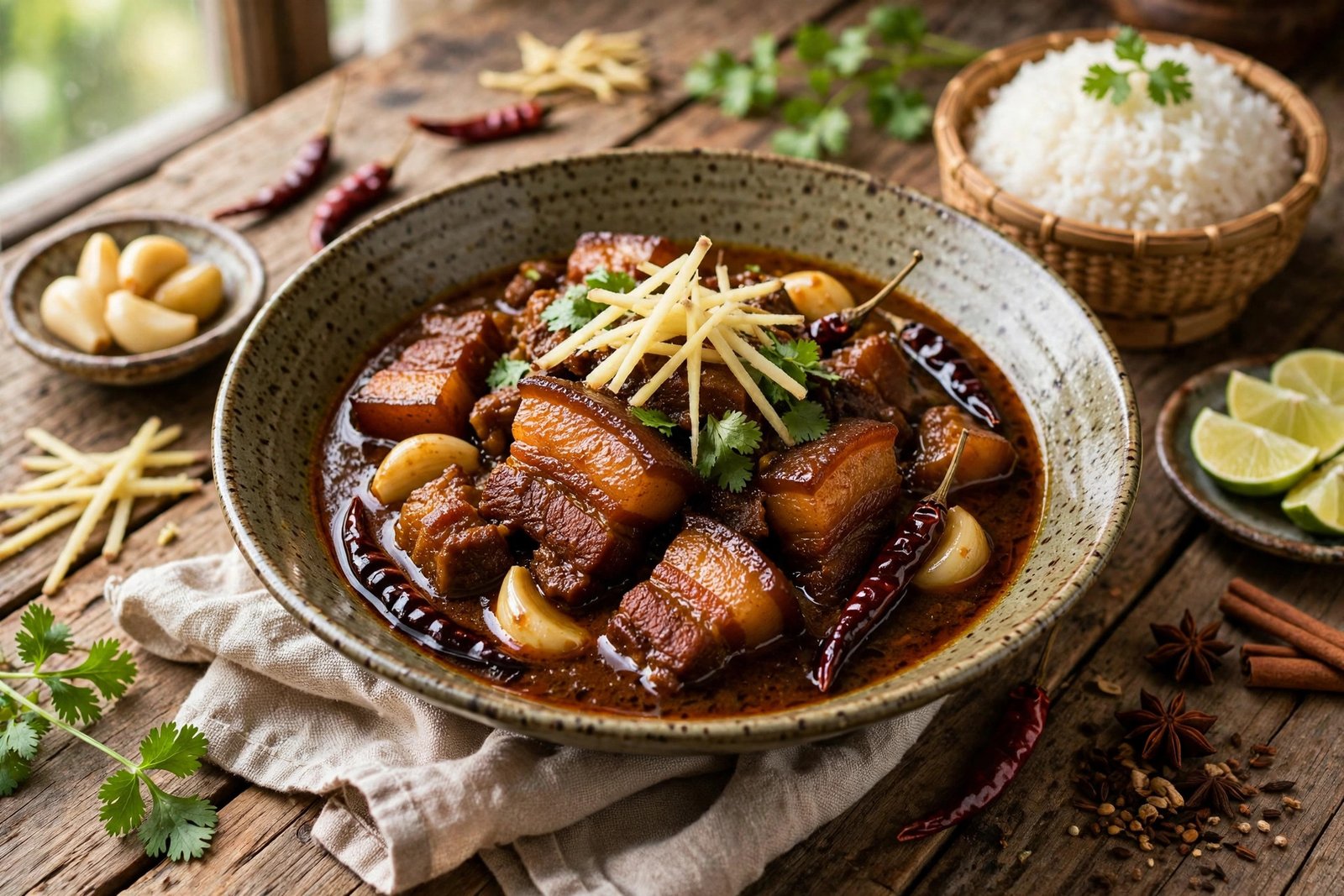
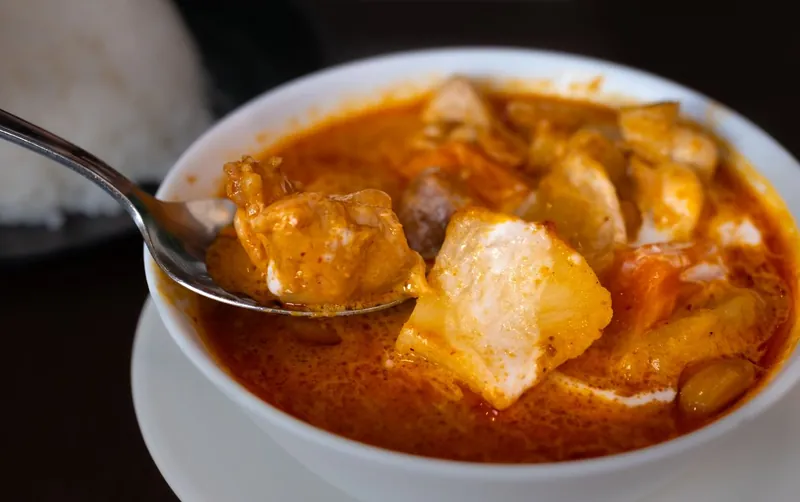
Gaeng hang lay is Northern Thailand's slow, fragrant pork curry: belly pork simmered for hours with ginger, tamarind, and pickled garlic until it falls apart in a dark, sweet-sour sauce. It is a celebration dish, rich and deeply comforting — and the leftovers, if there are any, taste even better the next day.
The story behind Gaeng Hang Lay
Gaeng hang lay comes from the north of Thailand, from Chiang Mai and the old Lanna kingdom, and its roots run across the border into Burma. The name means pork curry in the northern dialect, and the dish arrived with Shan traders and cooks who carried their slow-braised pork with them. Unlike the coconut-rich curries of central Thailand, hang lay has no coconut milk at all — the sauce is built from tamarind, palm sugar, ginger and pickled garlic, and it is dark, sweet-sour and deeply savoury.
What makes it special is the balance. Thai cooking is often described as a balance of sweet, sour, salty and hot, and hang lay is one of the clearest examples: palm sugar for sweetness, tamarind for sourness, fish sauce and soy for salt, and the fried dried chillies on top for heat. The pork belly slow-cooks for well over an hour until the fat renders and the meat falls apart, and the sauce reduces to something thick and glossy that clings to the rice. The pickled garlic is the ingredient that surprises people: sweet, tangy, and soft, it melts into the sauce and adds a note nothing else can replace. It is worth seeking out in an Asian grocery store.
In the north, gaeng hang lay is celebration food. It appears at weddings, temple festivals and family gatherings, made in large pots the day before so the flavours can settle overnight. It is the dish a family makes when people are coming home, and the smell of it — ginger, garlic, tamarind — is the smell of a house preparing for guests.
This recipe asks for about ninety minutes of mostly hands-off simmering, and it rewards patience the way all slow cooking does. It serves four generously with steamed rice, and it scales up easily for a crowd. Make it on a Saturday and eat it on Sunday — like most slow curries, it tastes better the second day, once the pork has had a night to soak in the sauce. A pot of hang lay in the fridge is a gift to your future self — it reheats beautifully and the sauce only gets better.
- Prep time
- 20 mins
- Cook time
- 90 mins
- Total time
- 110 mins
- Servings
- 4 servings
- Calories
- 480
Ingredients
- 800 g pork belly, cut into large chunks
- 3 tablespoons gaeng hang lay curry paste
- 2 tablespoons tamarind paste
- 2 tablespoons palm sugar
- 2 tablespoons fish sauce
- 1 tablespoon soy sauce
- 4 cm fresh ginger, julienned
- 6 cloves pickled garlic
- 6 dried red chillies, fried until crisp
- 2 tablespoons vegetable oil
- 500 ml water
- Steamed rice, to serve
Instructions
- Cut the pork belly into large chunks, about 4 cm across. Large pieces stay juicy through a long simmer; small ones dry out. Julienne the ginger into fine matchsticks and set it aside with the pickled garlic cloves.
- Heat the vegetable oil in a large, heavy pot over a medium heat. Add the gaeng hang lay curry paste and fry it for 2 minutes, stirring constantly, until it smells deeply fragrant and the oil starts to separate around the edges. This frying step wakes the paste up — raw paste tastes flat, fried paste tastes like the dish is meant to.
- Add the pork belly and turn the heat up a little. Brown the pieces on all sides for about 5 minutes, turning them with tongs, until the edges take on some colour. The pork will render a little fat as it browns; leave it in the pot, it is part of the sauce.
- Pour in the water, then stir in the tamarind paste, palm sugar, fish sauce and soy sauce. Stir until the palm sugar dissolves, scraping the bottom of the pot to lift up any browned bits. Bring the pot to a boil.
- Turn the heat down until the surface barely bubbles, put the lid on, and simmer gently for 1 hour 15 minutes. Check it every 20 minutes or so, giving it a stir and making sure the liquid is not reducing too fast — add a splash of water if the sauce is getting very thick before the pork is tender. The smell at this stage is wonderful — ginger and tamarind filling the kitchen — and it is the sign the curry is on its way.
- After 1 hour 15 minutes, test the pork: it should be soft enough to cut with a spoon, and the fat should be silky rather than rubbery. If it still resists, give it another 15 minutes — pork belly forgives extra time far more easily than too little.
- Stir in the julienned ginger and the pickled garlic cloves, and simmer for 10 more minutes with the lid off, until the sauce is thick and glossy and coats the pork. Taste the sauce now: it should be sweet, sour and salty all at once. Add a little more tamarind for sourness, palm sugar for sweetness, or fish sauce for salt until it tastes balanced.
- Fry the dried red chillies in a little oil until crisp, about 30 seconds — they darken fast, so watch them. Scatter them over the curry and serve hot with steamed rice, with the chillies on the side for anyone who wants more heat.
Pro tips
- A long, gentle simmer is essential; the pork should be soft enough to cut with a spoon. If your pork is still firm after the stated time, give it another 15 to 20 minutes — braised pork belly only gets better with more time.
- Taste and balance the sauce at the end: it should be sweet, sour, and salty all at once. No single flavour should dominate. Adjust with small amounts of tamarind, palm sugar or fish sauce, tasting after each addition.
- Pickled garlic is traditional and adds a lovely tangy sweetness; find it in Asian grocery stores, usually in jars near the pickles. If you cannot find it, use a couple of extra cloves of fresh garlic and a teaspoon of rice vinegar, though the flavour will not be quite the same.
- The curry tastes even better the next day, so make it ahead if you can. An overnight rest lets the pork soak up the sauce and the flavours settle. Reheat it gently on the hob, adding a splash of water if the sauce has thickened too much.
- Do not skip frying the curry paste. Two minutes in hot oil transforms it from raw and harsh to deep and fragrant, and the whole dish depends on it. The oil separating at the edges is the sign it is ready.
Variations & serving ideas
Pork shoulder works well in place of belly, though the sauce will be less rich — shoulder has less fat to render into it. Cut it into the same large chunks and cook for the same time. Avoid lean cuts like loin, which dry out over a long braise and turn stringy. Pork ribs, cut into short pieces, are another good option; they need an extra 15 minutes and the bones add body to the sauce. Whatever cut you use, keep the pieces large — small pieces lose their moisture over ninety minutes, while big chunks stay juicy inside.
For a chicken version, use bone-in thighs and reduce the simmering time to 45 minutes — chicken does not need the long braise that pork belly does, and it will fall off the bone if cooked for the full time. The sauce stays the same, and the ginger and pickled garlic suit chicken just as well. Bone-in thighs are best because the bones keep the meat moist and add flavour to the sauce; boneless thighs work but dry out faster.
A vegetarian version is possible, though it is not traditional: use firm tofu, cut into large cubes and fried golden first, with a handful of dried shiitake mushrooms for depth. Simmer for 30 minutes instead of 75, and use soy sauce in place of the fish sauce. The tamarind and palm sugar still carry the flavour. Add a few roasted peanuts at the end for crunch, and the dish feels complete even without the pork.
What you serve it with matters. Steamed jasmine rice is the everyday partner, and it soaks up the sauce beautifully. Sticky rice, eaten with the fingers in the northern Thai way, is the traditional choice for a celebration meal. A simple cucumber salad or some blanched greens on the side cut through the richness, and a fried egg on top of the rice turns it into a full meal. Leftover hang lay spooned over noodles makes a quick second meal, and the sauce alone, thinned with a little stock, is a fine base for a soup. If you like it hotter, serve extra fried chillies on the side rather than adding them to the pot — that way everyone controls their own heat, and the curry itself stays at the gentle, warming level it is meant to be.
Getting it right
Frying the curry paste is the technique the whole dish hangs on. Curry paste straight from the jar is raw — the garlic, shallot and chilli in it taste harsh and one-dimensional until they hit hot oil. Two minutes of frying, stirring constantly, cooks out the rawness and lets the aromatics bloom; the oil separating at the edges is the sign it is done. Skip this step and the curry tastes flat, no matter how long it simmers. If the paste starts to stick, add a splash of water — it should sizzle, not scorch.
The braise is about low, patient heat. Pork belly needs time for its fat to render and its connective tissue to melt into the sauce — that is what makes the meat soft enough to cut with a spoon and the sauce glossy and rich. A hard boil toughens the meat and clouds the sauce; a bare simmer, with the lid on, gives the gentle, even heat the dish needs. If the sauce reduces too fast, the heat is too high or the lid is not tight.
Balancing the sauce is the final skill, and it happens at the end, not the start. Tamarind, palm sugar and fish sauce each bring one note — sour, sweet, salty — and the proportions in the recipe are a starting point, not a law. Taste after the simmer, when the sauce has reduced and the flavours have concentrated, and adjust in small amounts. Too sour? A little more palm sugar. Too sweet? More tamarind. Flat? Fish sauce, a teaspoon at a time, until it wakes up.
Storing & reheating
Gaeng hang lay keeps for 4 days in the fridge in a sealed container, and it genuinely improves overnight — the pork soaks up the sauce and the flavours settle. It freezes well for up to 3 months; portion it into tubs and label with the date. Thaw overnight in the fridge. The fat will set on top in the fridge; you can lift it off before reheating if you prefer a leaner sauce, though it carries a lot of the flavour.
Reheat gently in a saucepan over a low heat, stirring occasionally, until it is bubbling all the way through. The sauce thickens in the fridge, so add a splash of water if it needs loosening. Fry fresh chillies for the topping rather than reheating the old ones, which go soft. A single portion reheats well in the microwave in 2-minute bursts, stirred between each, until piping hot.
Frequently asked questions
What is gaeng hang lay?
A Northern Thai curry of pork belly slow-cooked with ginger, tamarind, and pickled garlic, influenced by Burmese cooking. Unlike central Thai curries it has no coconut milk — the sauce is dark, sweet-sour and built on tamarind and palm sugar.
Can I use another cut of pork?
Pork shoulder works well, though belly gives the richest sauce. Avoid lean cuts like loin, which dry out over a long braise. Pork ribs are another good option; cut them short and give them an extra 15 minutes.
Is gaeng hang lay spicy?
It is mild to medium; most of the heat comes from the fried chillies served on top. The curry itself is warming rather than hot. Serve extra chillies on the side so everyone controls their own heat.
How long does it keep?
It keeps for 4 days in the fridge and freezes well for up to 3 months. It tastes better the next day, so make it ahead when you can. Reheat gently on the hob, adding a splash of water if the sauce has thickened.
Where do I buy the paste and pickled garlic?
Asian grocery stores stock gaeng hang lay curry paste and jars of pickled garlic, usually in the Thai section. Online Asian grocers carry both too. If you cannot find the paste, a mild red curry paste is the closest substitute, though the flavour will differ.
Can I make the curry paste from scratch?
Yes — blend dried red chillies, shallots, garlic, ginger, turmeric and shrimp paste with a little oil until smooth. It takes about 15 minutes and the flavour is fresher, but a good shop-bought paste is perfectly fine and is what most Thai home cooks use.