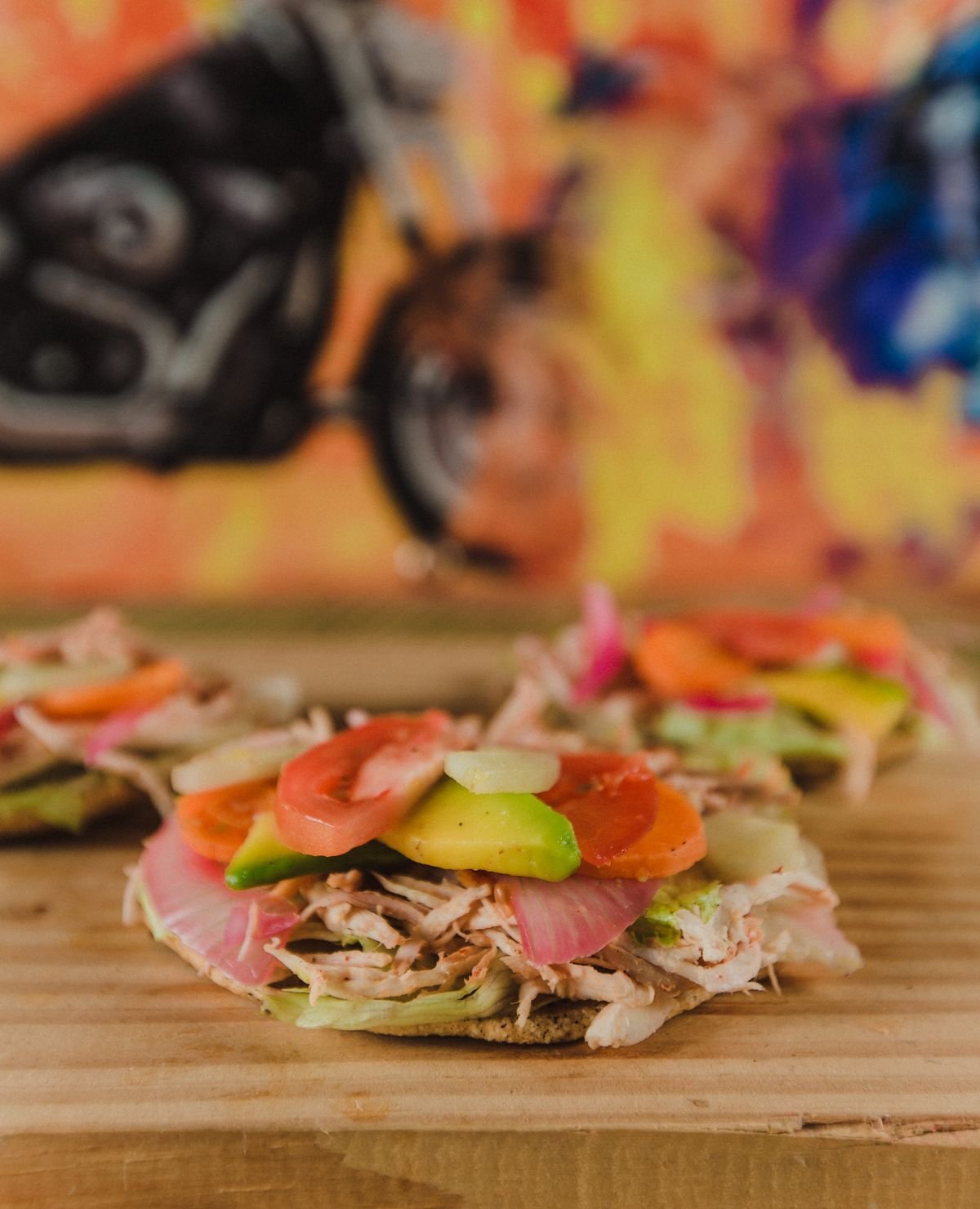
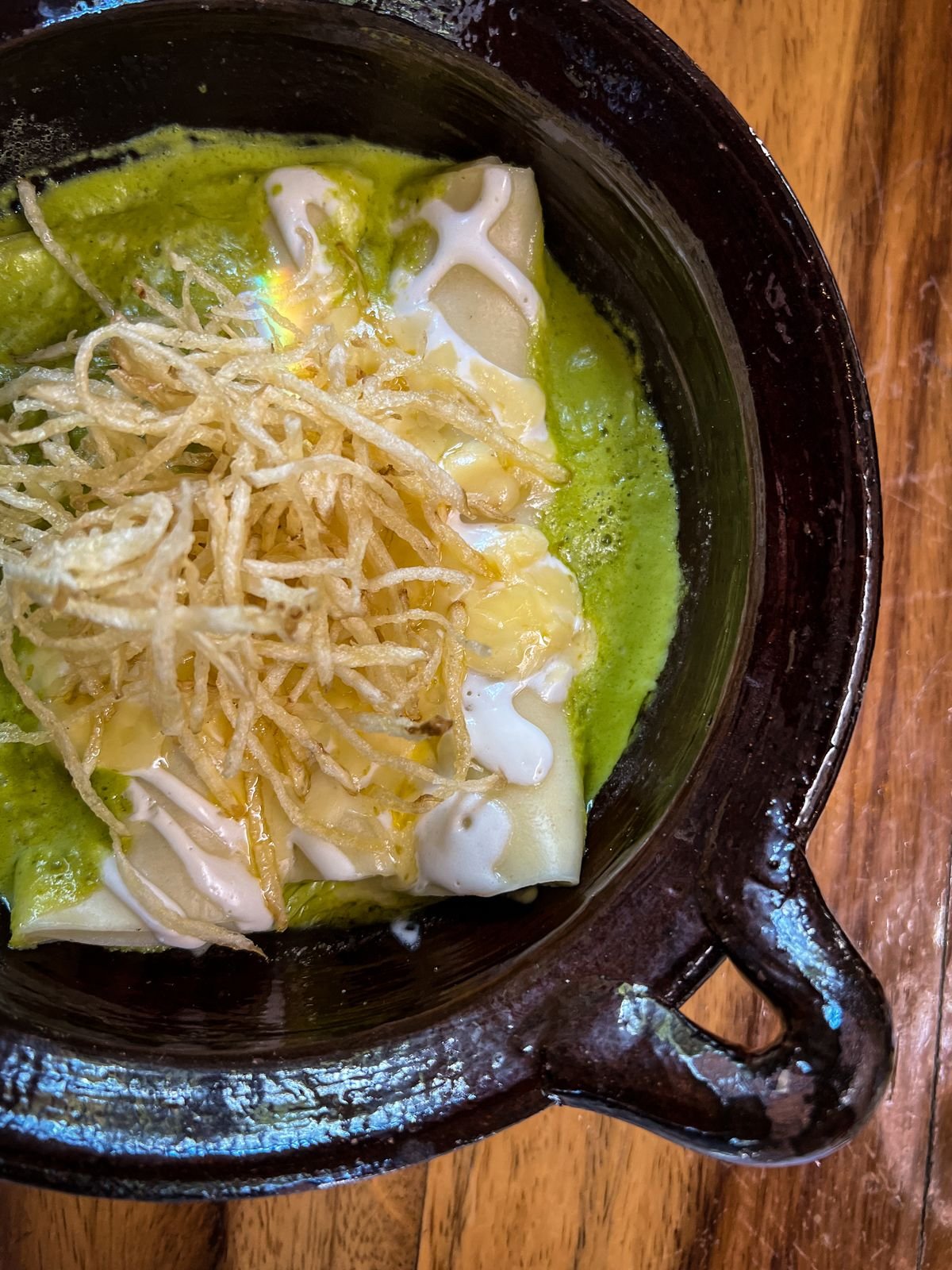
Pambazos Recipe

Pambazos are Mexico City street food at its most satisfying: crusty rolls dipped in smoky guajillo salsa, griddled until crisp, then stuffed with potatoes, chorizo, lettuce and crema. Every bite is crunchy, savoury and just a little messy — exactly as it should be. Make them once and they will become a weekend habit.
The story behind Pambazos
Pambazos come from the streets of Mexico City, where they have been sold from carts and market stalls for generations. The name comes from pan basso, the low, white bread of colonial-era bakeries, and the sandwich built on it became a working person's lunch: cheap, filling, and eaten standing up, wrapped in paper. The guajillo dip is what sets it apart from every other Mexican sandwich — the roll is dunked in chilli salsa before it hits the griddle, so it comes out crisp, deep red, and smoky all the way through.
In Mexico City, pambazos are street food in the truest sense. Vendors griddle them to order on flat-top planchas, the salsa hissing as the bread hits the hot surface, and the smell draws a queue. They are a lunchtime staple for office workers and market traders, and a late-night favourite after a long evening. The filling is almost always the same — potatoes and chorizo — because it is cheap, satisfying, and the soft filling is the perfect contrast to the crisp, crackling bread.
What makes a pambazo special is the bread itself. Dipping the roll in guajillo salsa and griddling it does two things at once: the outside crisps into a thin, crackling shell stained deep red, and the salsa's smoky, mild chilli flavour soaks into the crumb. Inside, the potato and chorizo filling is soft and rich, and the lettuce, crema and queso fresco on top bring coolness and freshness. It is a sandwich of contrasts — crisp and soft, smoky and fresh, rich and bright.
Make pambazos on a weekend when you have time to enjoy the process — the salsa, the filling, the griddling, the assembly. They are a project, but a joyful one, and the payoff is a sandwich that tastes like a Mexico City street corner. The salsa and filling can be made ahead, so the final assembly is quick. Serve them hot, with plenty of napkins, and do not try to eat one tidily — that is not the point.
The guajillo chilli is the quiet hero of the dish. It is mild — barely any heat — but it brings a smoky, slightly fruity depth that no other chilli quite matches. Dried guajillos are deep red and leathery, and they soften in hot water in minutes. Blended with garlic, oregano and cumin, they make a salsa that is as much about colour and aroma as it is about spice. It is the salsa that turns an ordinary roll into a pambazo.
- Prep time
- 30 mins
- Cook time
- 35 mins
- Total time
- 1 hrs 5 mins
- Servings
- 4 servings
- Calories
- 680
Ingredients
- 4 telera or bolillo rolls
- 3 dried guajillo chillies, stemmed and seeded
- 2 garlic cloves
- 1/2 teaspoon dried oregano
- 1/2 teaspoon cumin
- 300ml hot water
- 400g potatoes, peeled and diced
- 200g Mexican chorizo, casing removed
- 2 tablespoons vegetable oil
- 1 cup shredded lettuce
- 100ml Mexican crema or sour cream
- 100g crumbled queso fresco
- 1/2 white onion, finely chopped
Instructions
- Start with the guajillo salsa. Stem and seed the dried guajillo chillies, then soak them in the hot water for 15 minutes until soft and pliable. They should bend easily without cracking. Save the soaking water — it carries a lot of the chilli flavour.
- Blend the softened chillies with the garlic, dried oregano, cumin and 120ml of the soaking water until completely smooth. This takes a good minute in a blender; scrape down the sides halfway through. Season with salt. The salsa should be the consistency of thin tomato sauce — add a little more soaking water if it is too thick.
- While the chillies soak, boil the potatoes. Peel and dice them into even pieces, cover with cold salted water, and bring to the boil. Cook for 12-15 minutes until tender all the way through — a knife should slide in with no resistance. Drain well and set aside.
- Heat the vegetable oil in a large frying pan over medium heat. Crumble in the chorizo (casing removed) and fry for 6-8 minutes, breaking it up with a spoon, until cooked through and the fat has rendered out. The chorizo should be browned at the edges and smelling rich and smoky.
- Add the drained potatoes to the chorizo and stir them together, mashing lightly with the back of a spoon so some of the potato breaks down and binds with the chorizo fat. You want a chunky, rustic filling — not smooth mash. Season to taste; the chorizo is salty, so taste before adding more salt.
- Slice each telera or bolillo roll in half lengthwise, keeping the two halves hinged if you like. Dip both cut sides briefly in the guajillo salsa — a quick dip, just a second or two per side. The bread should be stained red but not soaked through. Too long in the salsa and the roll will fall apart on the griddle.
- Heat a lightly oiled griddle or large frying pan over medium-high heat. Lay the dipped rolls cut-side down and griddle for 2-3 minutes per side until crisp and deep red. Press them down gently with a spatula so the whole surface makes contact. The outside should crackle when you tap it.
- Fill each roll generously with the warm potato-chorizo mixture, then top with shredded lettuce, a drizzle of crema, crumbled queso fresco and finely chopped white onion. Serve immediately, while the bread is still crisp and the filling is hot. Have napkins ready — and maybe pickled jalapeños on the side.
Pro tips
- Do not over-soak the rolls in the salsa — a quick dip is enough or they will fall apart on the griddle. One or two seconds per side stains the bread red and gives it flavour without turning it to mush.
- Telera rolls are ideal, but any soft white roll with a firm crust works. The crust is what crisps up on the griddle, so avoid very soft, crustless rolls — they go soggy instead of crackling.
- Make the salsa and filling ahead; assemble and griddle just before serving so the bread stays crisp. The salsa keeps for days in the fridge and the filling reheats well in a pan.
- Add pickled jalapeños for extra heat if you like. They also add a sharp, vinegary note that cuts through the richness of the chorizo. A few slices on top of each pambazo is enough.
- Griddle the rolls in batches and keep the finished ones warm in a low oven while you fill them. A crisp roll that sits too long goes soft, so work quickly once the griddling starts.
Variations & serving ideas
For a vegetarian pambazo, replace the chorizo with soy chorizo or seasoned mushrooms, and use the same potato filling. Sliced mushrooms fried until crisp at the edges, with a little smoked paprika and cumin, give a similar smoky depth. The guajillo salsa carries most of the flavour, so the swap works well. Black beans, mashed with a little cumin, are another good filling.
The filling can change in other ways too. Rajas con crema — roasted poblano strips in cream — makes a rich, mild filling. Shredded chicken tinga works beautifully inside a pambazo, and leftover carnitas are wonderful. Whatever you use, keep the filling soft and generous — it should contrast with the crisp bread.
If you cannot find guajillo chillies, ancho chillies make a reasonable substitute, though the sauce will be sweeter and darker. A mix of ancho and a little chipotle in adobo gives a smokier result. Dried chillies are worth seeking out at a Mexican grocery — the salsa is the soul of the dish.
Serve pambazos with pickled jalapeños, a simple tomato salsa, and a cold drink — a Mexican lager or an agua fresca. They are a meal on their own, but a light salad of shredded cabbage with lime on the side is a good fresh counterpoint. For a party, set out the fillings and let people build their own.
For a breakfast pambazo, fill the griddled roll with scrambled eggs, chorizo and a little cheese instead of the potato mixture. It is a weekend brunch that disappears fast. A fried egg on top of the usual potato-chorizo filling is also wonderful — the yolk runs into the bread and makes the whole thing even richer.
Getting it right
The key technique is the dip and griddle. The roll goes into the salsa for one or two seconds per side — long enough to stain and flavour the bread, short enough that it keeps its structure. Then it goes cut-side down onto a hot, lightly oiled griddle, where the salsa caramelises slightly and the crust crisps into a crackling shell. Press gently with a spatula so the whole surface makes contact with the heat.
Heat control matters at two points. The griddle should be medium-high: hot enough to crisp the bread in 2-3 minutes a side, not so hot that the salsa burns and turns bitter. And the chorizo should fry over medium heat so the fat renders out slowly and the meat browns rather than steams. If the chorizo is releasing a lot of liquid, turn the heat up a touch and let it cook off.
The common mistakes are over-soaking the rolls and under-seasoning the salsa. A roll that has soaked up too much salsa falls apart on the griddle and steams instead of crisping — a quick dip is all it takes. And the salsa needs enough salt to taste properly seasoned on its own; bland salsa means a bland pambazo, because the salsa is the main seasoning for the bread. Taste the salsa and adjust before you dip anything.
Storing & reheating
Pambazos are best eaten the moment they are assembled, while the bread is crisp and the filling is hot. Once filled, they do not store well — the bread softens within half an hour. If you have leftovers, store the components separately: the filling keeps for 2 days in the fridge, and the salsa keeps for up to a week in a sealed jar.
To serve leftovers, reheat the filling in a pan, dip and griddle fresh rolls, and assemble again. The salsa also freezes well for up to 3 months — freeze it in small portions and thaw as needed. Do not freeze assembled pambazos; the bread and lettuce do not survive it.
Frequently asked questions
What is the difference between a pambazo and a torta?
A pambazo is dipped in guajillo salsa and griddled, giving it a crisp red crust, while a torta is a plain toasted sandwich. Pambazos are also usually filled with potatoes and chorizo rather than sliced meats. The salsa dip is the defining difference.
Can I make pambazos vegetarian?
Yes — replace the chorizo with soy chorizo or seasoned mushrooms, and use the same potato filling. The guajillo salsa carries most of the flavour. Black beans mashed with cumin are another good vegetarian filling.
Where do I find guajillo chillies?
Most Mexican grocery stores and the international aisle of large supermarkets carry dried guajillos. Ancho chillies make a reasonable substitute, though the sauce will be sweeter and darker. Buy from a shop with good turnover — old dried chillies lose their flavour.
Can I prepare the filling in advance?
Yes — the potato and chorizo filling keeps for 2 days in the fridge. Reheat it in a pan while you dip and griddle the rolls. The salsa keeps for up to a week, so the whole dish is easy to prepare ahead.
Why did my pambazo fall apart?
The rolls were soaked too long in the salsa, or the bread was too soft. Dip for one or two seconds per side only, and use a roll with a firm crust — telera or bolillo are ideal. A quick dip stains the bread without turning it to mush.
Can I bake pambazos instead of griddling?
You can — brush the dipped rolls with a little oil and bake at 200°C for 10-12 minutes until crisp. The result is good, though not quite as crackling as a griddled roll. A griddle or heavy frying pan gives the best crust.