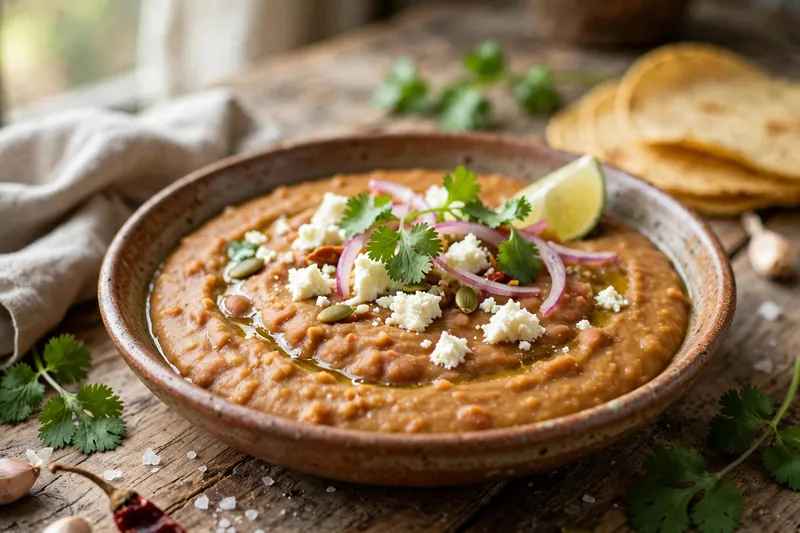
Frijoles de la Olla Recipe
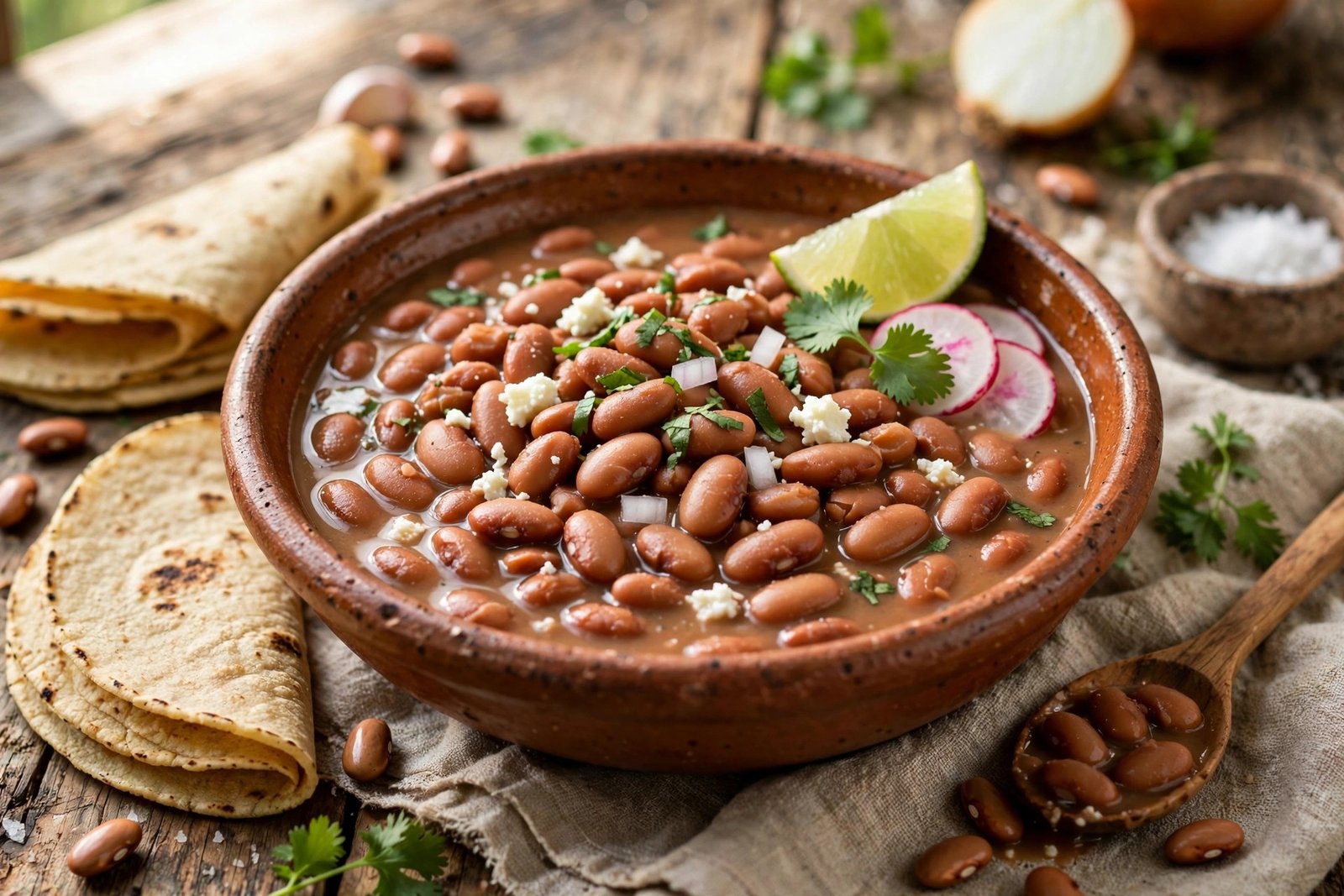
Frijoles de la olla, beans from the pot, are the quiet backbone of Mexican cooking. Dried beans simmer gently with onion, garlic and epazote until their broth turns silky and their skins yield at a touch. They are the base for refried beans, a side for almost any meal, and a bowl of comfort on their own.
The story behind Frijoles de la Olla
Frijoles de la olla — beans from the pot — are the foundation of Mexican cooking. A pot of dried beans, simmered slowly with onion, garlic and epazote until they are tender and their broth turns silky, is the starting point for half the meals in Mexico. The beans are eaten as they are, in a bowl with their broth, or mashed into refried beans, or spooned over rice, or folded into tacos. They are the quiet backbone of the cuisine, and they deserve more attention than they get.
The dish is ancient. Beans have been grown in Mexico for thousands of years, and the clay pot — the olla — has been the vessel for cooking them for just as long. The method has barely changed: beans, water, onion, garlic, a sprig of epazote, and time. The epazote is the traditional herb, with an earthy, slightly medicinal flavour that is said to aid digestion, and it gives the beans a distinctive taste that no other herb quite matches.
What makes them special is the broth. As the beans simmer, their starch thickens the cooking water into a silky, savoury liquid that is as good as the beans themselves. Mexican cooks call it liquid gold, and they save it for soups, for mashing into refried beans, and for spooning over rice. A pot of frijoles de la olla is two dishes in one: the beans and the broth, each as valuable as the other.
In Mexico, a pot of beans is almost always on the stove. It is the food that feeds a family cheaply and well, the food that stretches a meal, the food that turns a tortilla into a dinner. It is humble, honest and deeply nourishing — and it is the dish that Mexican cooks measure themselves by. A good pot of beans is a mark of a good cook.
Cook frijoles de la olla when you have an afternoon and a bag of dried beans. It takes two hours, but almost all of it is unattended simmering, and the house will smell of onion, garlic and epazote while the beans cook. Serve them in deep bowls with their broth, topped with onion and coriander, and eat them with warm tortillas.
The clay pot — the olla — is more than a cooking vessel; it is part of the dish's identity. Clay heats slowly and evenly, holding a gentle, steady temperature that suits the long simmer, and it gives the beans a subtle earthiness that a metal pot cannot quite match. Mexican cooks who use a clay pot will tell you the beans taste different, and they are right — the pot is part of the recipe. If you have one, use it; if not, a heavy pot with a tight lid is the next best thing.
- Prep time
- 10 mins
- Cook time
- 2 hrs
- Total time
- 2 hrs 10 mins
- Servings
- 6 servings
- Calories
- 280
Ingredients
- 500 g dried pinto beans
- 2 litres water
- 1/2 onion
- 4 garlic cloves, peeled
- 1 sprig fresh epazote (or 1 teaspoon dried)
- 1 tablespoon lard or vegetable oil
- 1 1/2 teaspoons salt
- 1/2 teaspoon black pepper
- Chopped onion and coriander, to serve
- Lime wedges, to serve
Instructions
- Rinse the dried pinto beans in a colander under cold running water, picking out any small stones, shrivelled beans or broken pieces. Stones hide in dried beans more often than you would think, and a stone in a soft bean is an unpleasant surprise.
- Put the beans, water, halved onion, peeled garlic cloves and epazote sprig in a large, heavy pot. The pot should be big enough that the beans have room to expand — they will nearly double in size as they cook. A clay pot is traditional, but any heavy pot works.
- Bring the pot to a gentle boil over high heat, then skim off any white foam that rises to the surface with a spoon. The foam is harmless, but removing it gives a clearer broth. Turn the heat down to the lowest simmer as soon as the foam is skimmed.
- Cover the pot with a lid, leaving it slightly ajar so the steam can escape, and cook for 1 hour 45 minutes at the gentlest simmer. The broth should barely bubble — a rolling boil will break the beans apart and cloud the broth. Check occasionally and top up with hot water if the level drops below the beans.
- Stir in the lard or vegetable oil and the salt, and cook for 15 minutes more, until the beans are completely tender — a bean pressed between your fingers should crush easily, with no firm centre left. Salt goes in late, because salt added early can toughen the bean skins.
- Fish out the halved onion and the epazote sprig and discard them — they have given their flavour to the broth. Taste the beans and adjust the salt and pepper. The broth should be silky and savoury, and the beans should be soft and creamy.
- Ladle the beans into deep bowls with plenty of the cooking broth. Top each bowl with chopped onion and coriander, and serve with lime wedges on the side. Eat them as they are, with warm tortillas for dipping, or save them for refried beans.
Pro tips
- Do not add salt until the beans are nearly tender, or they may stay tough. Salt added early hardens the bean skins, while salt added late seasons the beans without toughening them.
- Soaking overnight cuts the cooking time by about 30 minutes. Cover the beans with cold water and leave them in the fridge overnight, then drain and cook as directed — the beans will be tender sooner and the broth will be clearer.
- The bean broth is liquid gold; save it for soups or for mashing into refried beans. It is silky, savoury and full of flavour — do not throw it away. Freeze it in portions if you have more than you need.
- A clay pot gives the most traditional flavour, but any heavy pot works. A heavy pot holds a steady, gentle heat, which is what the beans need — a thin pot can scorch the beans on the base.
- Keep the simmer low throughout. A gentle bubble gives tender beans and a clear broth, while a hard boil breaks the beans apart and turns the broth cloudy.
Variations & serving ideas
The beans can change with what you have. Black beans are cooked the same way and are equally traditional in southern Mexico — they give a darker, earthier broth. Kidney beans, borlotti beans and cannellini beans all work with the same method, though the cooking time varies slightly. Use whatever dried bean you have; the method is the same.
The aromatics can shift. A bay leaf can replace the epazote if you cannot find it — the flavour is different, more herbal and less earthy, but it still gives the beans depth. A few sprigs of fresh thyme or a dried chilli added to the pot give a gentle warmth. Some cooks add a whole tomato, which breaks down into the broth and adds a subtle sweetness.
For a richer version, add a ham bone or a piece of smoked pork to the pot with the beans — the meat flavours the broth and the beans, and the shredded meat can be stirred back in at the end. A spoonful of lard stirred in with the salt is the traditional finish, and it gives the broth a silky richness that oil cannot quite match.
Serve frijoles de la olla as a side dish with almost any Mexican meal — tacos, enchiladas, grilled meats, eggs — or as a main course in a bowl with their broth, topped with onion, coriander and a squeeze of lime. They are the base for refried beans, and a pot of them in the fridge is the starting point for a week of meals.
For a slow cooker version, cook the beans on low for 6-8 hours with the onion, garlic and epazote, then stir in the salt and lard for the last 30 minutes. The slow cooker gives exceptionally tender beans, because the temperature stays low and steady throughout.
Getting it right
The key technique is the simmer, and its secret is gentleness. The beans need nearly two hours at the lowest possible heat — a bubble rising every few seconds, not a rolling boil. At that temperature, the beans soften slowly and evenly, and the broth thickens gradually as the starch releases. A hard boil breaks the beans apart, clouds the broth, and gives a pot of mush instead of a pot of beans.
Salting late is the second skill. Salt added at the start hardens the bean skins and can leave the beans tough no matter how long they cook. Salt added in the last 15 minutes seasons the beans fully without toughening them. It feels wrong to cook beans unsalted for so long, but it is the traditional method, and it works — the beans absorb the salt quickly once they are tender.
The water level needs watching. The beans absorb water as they cook, and the level drops over two hours. Check every 30 minutes and top up with hot water — never cold, which shocks the beans and can toughen them — so the beans stay submerged throughout. The finished beans should be covered in broth, not sitting dry at the bottom of the pot.
The beans will tell you when they are done. Press one between your fingers — it should crush easily, with no firm centre and no resistance. Taste one too: it should be creamy all the way through, with a skin that yields rather than resists. If the beans are still firm, give them another 30 minutes at a gentle simmer and test again. Old beans can take up to three hours, so patience is part of the recipe.
Storing & reheating
Frijoles de la olla keep in the fridge for 5 days in a sealed container, stored in their broth. Reheat them gently on the hob over low heat until steaming, adding a splash of water if the broth has thickened too much.
They freeze well for up to 3 months. Cool the beans completely in their broth, freeze in portions, and thaw overnight in the fridge before reheating. The beans hold their texture well after freezing, and the broth stays silky. Frozen beans are the starting point for refried beans, soups and tacos — a freezer full of portioned beans is a gift to your future self.
Frequently asked questions
Do I have to soak the beans first?
No, soaking is optional. Unsoaked beans simply need a longer, gentler simmer. Soaking overnight cuts about 30 minutes off the cooking time and gives a clearer broth, but it is not essential.
What is epazote and can I skip it?
Epazote is a Mexican herb with an earthy, slightly medicinal flavour. It aids digestion, but you can skip it or use a bay leaf instead. The beans will still be delicious, though they will miss epazote's distinctive note.
Can I use black beans instead of pinto?
Yes, black beans are cooked the same way and are equally traditional in southern Mexico. They give a darker, earthier broth and a slightly firmer bean — both are wonderful.
How long do frijoles de la olla keep?
They keep in the fridge for 5 days and freeze well for up to 3 months. Store them in their broth, which keeps the beans moist and flavourful. Reheat gently and add fresh onion and coriander.
Why are my beans still hard after 2 hours?
The most likely cause is old beans, which take much longer to soften, or hard water, which can toughen bean skins. Buy fresh dried beans, use filtered water if yours is very hard, and give them another 30 minutes at a gentle simmer.
Can I cook frijoles de la olla in a pressure cooker?
Yes, a pressure cooker cuts the time to about 35 minutes at high pressure, with a natural release. The beans come out tender and the broth is rich, though it will be a little cloudier than the slow-simmered version.