Mexican Ceviche Recipe
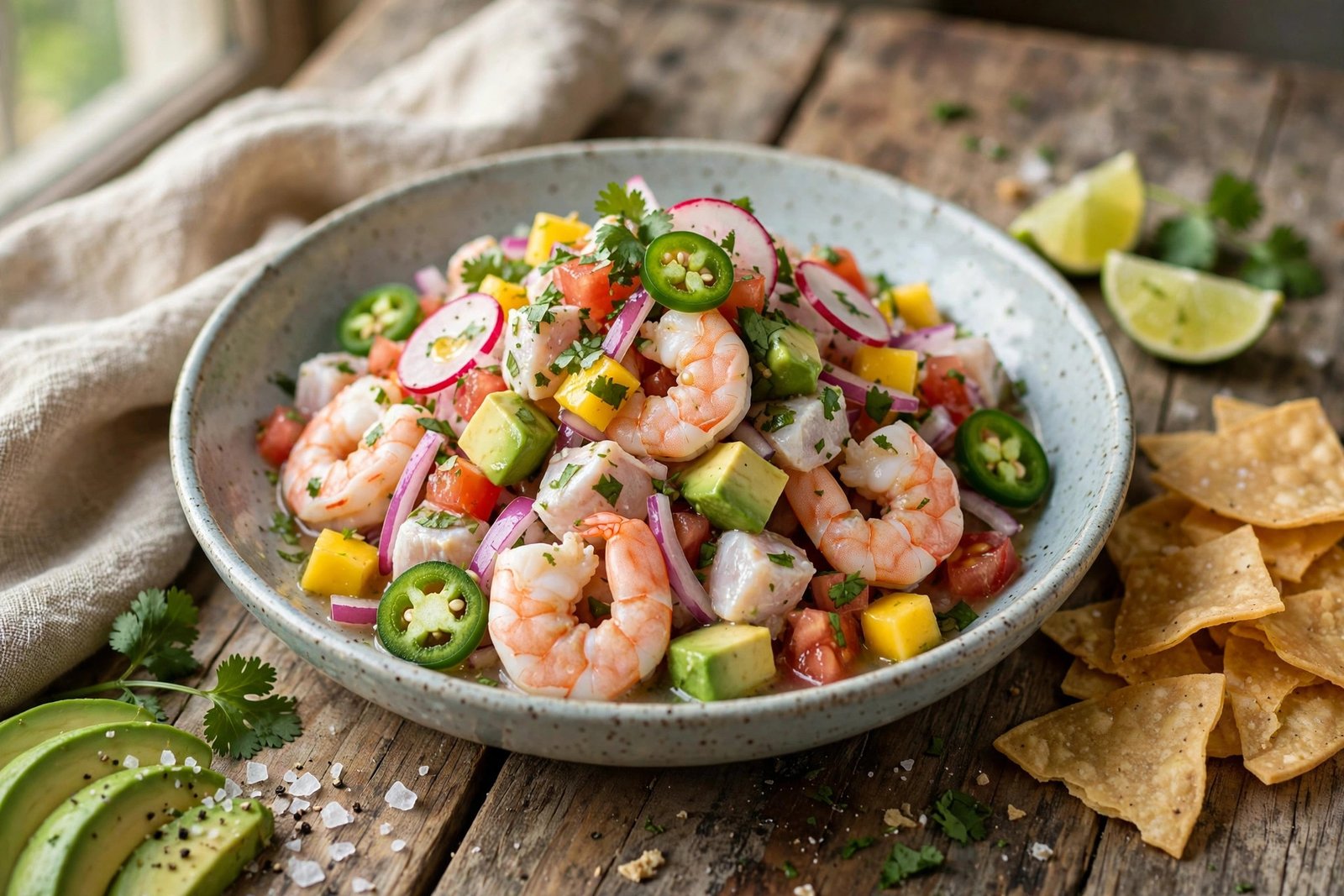
Fresh white fish cured in lime juice with tomato, red onion, coriander and jalapeño makes a bright, cooling ceviche. The lime juice firms the fish and gives it a clean, citrusy flavour, while the vegetables add colour and crunch. Serve it with tostadas for a light lunch that feels like a beach day, with the sun on your face and the sea nearby.
The story behind Mexican Ceviche
Ceviche is one of the great dishes of Latin America, a preparation in which raw fish is cured in citrus juice until it turns opaque and firm. It is eaten across the Pacific coast, from Mexico to Peru, with each country claiming its own version. Mexican ceviche, with tomato, onion, coriander and jalapeño, is bright and colourful, while Peruvian ceviche, with red onion, chilli and sweet potato, is sharper and more austere. Both are magnificent.
The dish has ancient roots, possibly stretching back to the pre-Columbian peoples of Peru, who cured fish in the juice of a tart fruit called tumbo. When the Spanish brought limes and onions to the Americas, the dish evolved into its modern form. The lime juice does not cook the fish in the way heat does, but it denatures the proteins, turning the flesh opaque and firm, which is why ceviche looks and feels cooked.
What makes ceviche special is its freshness. The fish is raw, the vegetables are crisp, the lime juice is bright, and the whole dish tastes like the sea and the sun. It is light, clean and invigorating, the kind of food that makes you feel alive. It is also quick: the fish cures in 20 minutes, the vegetables take minutes to chop, and the whole dish is ready in half an hour.
Make ceviche when the fish is at its freshest and the weather is warm. It is a dish for summer, for lunch by the sea, for eating with tostadas and a cold beer. Serve it cold, in a chilled bowl, with hot sauce on the side, and eat it within a few hours of making it. Ceviche waits for no one, and that is part of its charm.
The leche de tigre, the tiger milk, is the lime juice left over after the fish is cured, and it is prized in Peru as a drink in its own right. The juice, flavoured with fish, onion and chilli, is served in a small glass as a shot, and it is believed to be a hangover cure and an aphrodisiac. In Mexico, the leftover juice is often spooned over the ceviche or drunk from the bowl.
In Mexico, ceviche is often served as a botana, a snack to share with drinks, at beachside restaurants and market stalls. The ceviche is spooned onto tostadas, topped with avocado and hot sauce, and eaten standing up, with the sea breeze and the sound of the waves. It is a dish that belongs to the coast, and it tastes best with sand on your feet and salt in the air.
- Prep time
- 25 mins
- Cook time
- 10 mins
- Total time
- 35 mins
- Servings
- 4 servings
- Calories
- 320
Ingredients
- 600 g very fresh white fish fillets (sea bass or snapper), diced into 1 cm cubes
- 180 ml fresh lime juice (about 6 limes)
- 1/2 red onion, finely diced
- 3 Roma tomatoes, deseeded and diced
- 1 jalapeño, deseeded and finely chopped
- Small bunch of coriander, chopped
- 1 ripe avocado, diced
- Salt to taste
- Tostadas or tortilla chips, to serve
- Hot sauce, to serve (optional)
Instructions
- Start by choosing and preparing the fish. Buy the freshest white fish you can find, sea bass or snapper, from a fishmonger you trust. The fish should smell clean, like the sea, with no fishy odour. Dice it into neat 1 cm cubes.
- Place the diced fish in a glass or ceramic bowl, never metal, which reacts with the acid. Pour over the fresh lime juice, making sure the fish is completely covered. The lime juice is what cures the fish, firming it and turning it opaque.
- Cover the bowl with cling film and refrigerate for 20 to 30 minutes, stirring once halfway through, until the fish turns opaque and feels firm to the touch. The fish should look cooked, though it has never seen heat. Do not cure for more than 40 minutes.
- While the fish cures, prepare the vegetables. Finely dice the red onion, deseed and dice the Roma tomatoes, deseed and finely chop the jalapeño, and chop the coriander. The vegetables should be small and even, so they distribute through the ceviche.
- Drain off about half the lime juice from the fish, keeping the rest to moisten the ceviche. Fold in the red onion, tomatoes, jalapeño and coriander, stirring gently so the fish cubes stay intact and the vegetables are evenly distributed.
- Season generously with salt and taste. The ceviche should be bright and citrusy, with warmth from the jalapeño and freshness from the coriander. Add a little more salt if it tastes flat, or a squeeze more lime if it needs brightness.
- Chill the ceviche for 10 more minutes in the fridge, so the flavours marry and the dish is refreshingly cold when served. The vegetables will soften slightly and the flavours will meld together.
- Gently fold in the diced avocado just before serving, so it stays in neat cubes and does not go mushy in the lime juice. Serve cold with tostadas or tortilla chips and hot sauce on the side, and eat it within a few hours of making it.
Pro tips
- Use only fish you trust to be sushi-fresh; ceviche does not cook with heat. The quality of the fish is the quality of the dish.
- Do not cure the fish for more than 40 minutes or it turns rubbery. Check it after 20 minutes by cutting a cube open.
- Add the avocado last so it does not go mushy in the lime juice. Fold it in gently just before serving.
- Use a glass or ceramic bowl, never metal, which reacts with the acid and gives the ceviche a metallic taste.
- Serve ceviche cold, in a chilled bowl, and eat it within a few hours. It does not keep well overnight.
Variations & serving ideas
The fish in ceviche can be anything firm and white. Sea bass, snapper, halibut and mahi mahi all work beautifully. Shrimp, peeled and chopped, make a sweet and delicate ceviche. Scallops, sliced thin, are luxurious. A mix of fish and shrimp is popular in Mexico.
The vegetables can change too. Diced cucumber adds coolness and crunch. Diced mango adds sweetness and colour. Sliced radish adds peppery bite. The classic combination is tomato, onion, coriander and jalapeño, but there is room to experiment with whatever is fresh and seasonal.
The seasoning can shift. A spoonful of hot sauce adds fire. A little grated ginger adds warmth. A splash of orange juice, mixed with the lime, gives a sweeter, fruitier cure. A pinch of cumin adds an earthy depth. The key is to keep the flavours bright and fresh, so the fish remains the star.
For serving, ceviche is traditionally eaten with tostadas or tortilla chips, which provide crunch and a vehicle for scooping. It is also wonderful spooned over a tostada with a layer of avocado, or served in a martini glass as an elegant starter. A cold beer, a margarita or a glass of white wine is the natural drink. Keep the meal light and summery.
For a Peruvian-style ceviche, use red onion, aji limo chilli and a little ginger, and serve the ceviche with sweet potato and corn on the cob. The Peruvian version is sharper and more austere than the Mexican, with less tomato and more emphasis on the fish and the lime.
For a ceviche tostada, spread a layer of refried beans or guacamole on a crisp tostada, spoon over the ceviche, and top with diced avocado, a drizzle of hot sauce and a squeeze of lime. The tostada provides crunch, the beans add richness, and the ceviche stays bright and fresh on top. It is a complete, satisfying lunch in one crisp shell.
Getting it right
The key technique in ceviche is choosing the fish. It must be very fresh, from a fishmonger you trust, with no fishy smell and firm, translucent flesh. Ceviche does not cook with heat, so the quality of the fish is everything. If you are unsure about the freshness, use fish that has been commercially frozen first, which kills any parasites.
Timing the cure is the second skill. The fish needs 20 to 30 minutes in the lime juice to turn opaque and firm. Less than 20 minutes and the fish is still raw in the centre; more than 40 minutes and it turns rubbery and tough. Check the fish after 20 minutes by cutting a cube open: it should be opaque all the way through but still tender.
The most common mistake is adding the avocado too early, which lets the lime juice break it down into mush. Add the avocado last, just before serving, and fold it in gently so the cubes stay intact. Another common slip is using a metal bowl, which reacts with the acid and gives the ceviche a metallic taste. Glass or ceramic is essential.
The lime juice must be freshly squeezed, not bottled. Bottled lime juice tastes flat and metallic, and it does not cure the fish as effectively. Squeeze the limes just before using them, and use enough juice to cover the fish completely. The fish should be submerged, not just coated.
Storing & reheating
Ceviche does not keep well, as the fish continues to firm up in the acid and the vegetables lose their crunch. It should be eaten within a few hours of making it, and it is at its best within an hour of the avocado being added. Leftovers kept in the fridge overnight will be edible but the texture will be tougher and the avocado will have darkened.
If you need to prepare ceviche ahead, cure the fish and keep it separate from the vegetables, combining everything just before serving. The vegetables can be chopped a few hours ahead and kept in the fridge. Ceviche should never be frozen, as the fish turns mushy on thawing and the vegetables lose all their texture.
If you have leftover ceviche, use it within a few hours, as the fish will continue to firm up and the vegetables will lose their crunch. Leftover ceviche can be spooned over rice or used as a topping for a salad, but it is best eaten fresh, on the day it is made.
The lime juice used for curing, called leche de tigre, can be saved and served as a small shot alongside the ceviche. It is tangy, savoury and refreshing, and it is prized in Peru as a drink in its own right. Serve it chilled, in a small glass, with a little chopped onion and chilli.
Frequently asked questions
Is ceviche safe to eat?
Ceviche is safe when made with very fresh fish from a trusted fishmonger and eaten the same day. If you are unsure, use fish that has been commercially frozen first, which kills any parasites.
Can I make ceviche with shrimp?
Yes. Use peeled raw shrimp, chopped, and cure for the same time until pink and opaque. Shrimp ceviche is popular in Mexico and has a sweet, delicate flavour.
How long does ceviche keep?
Eat it within a few hours of making it. It does not keep well overnight because the fish continues to firm up in the acid and the vegetables lose their crunch.
What fish works best?
Firm white fish like sea bass, snapper, halibut or mahi mahi all work beautifully. The fish should be very fresh, with no fishy smell, and firm to the touch.
Can I use lemon juice instead of lime?
Yes, you can use half lime and half lemon juice, but lime is traditional and gives the cleanest, most authentic flavour. The acidity of both fruits cures the fish equally well.
How should I serve ceviche?
Serve ceviche cold, straight from the fridge, in a chilled bowl with tostadas or tortilla chips on the side. A cold beer or a glass of white wine is the perfect accompaniment.