Yangnyeom Chicken Recipe
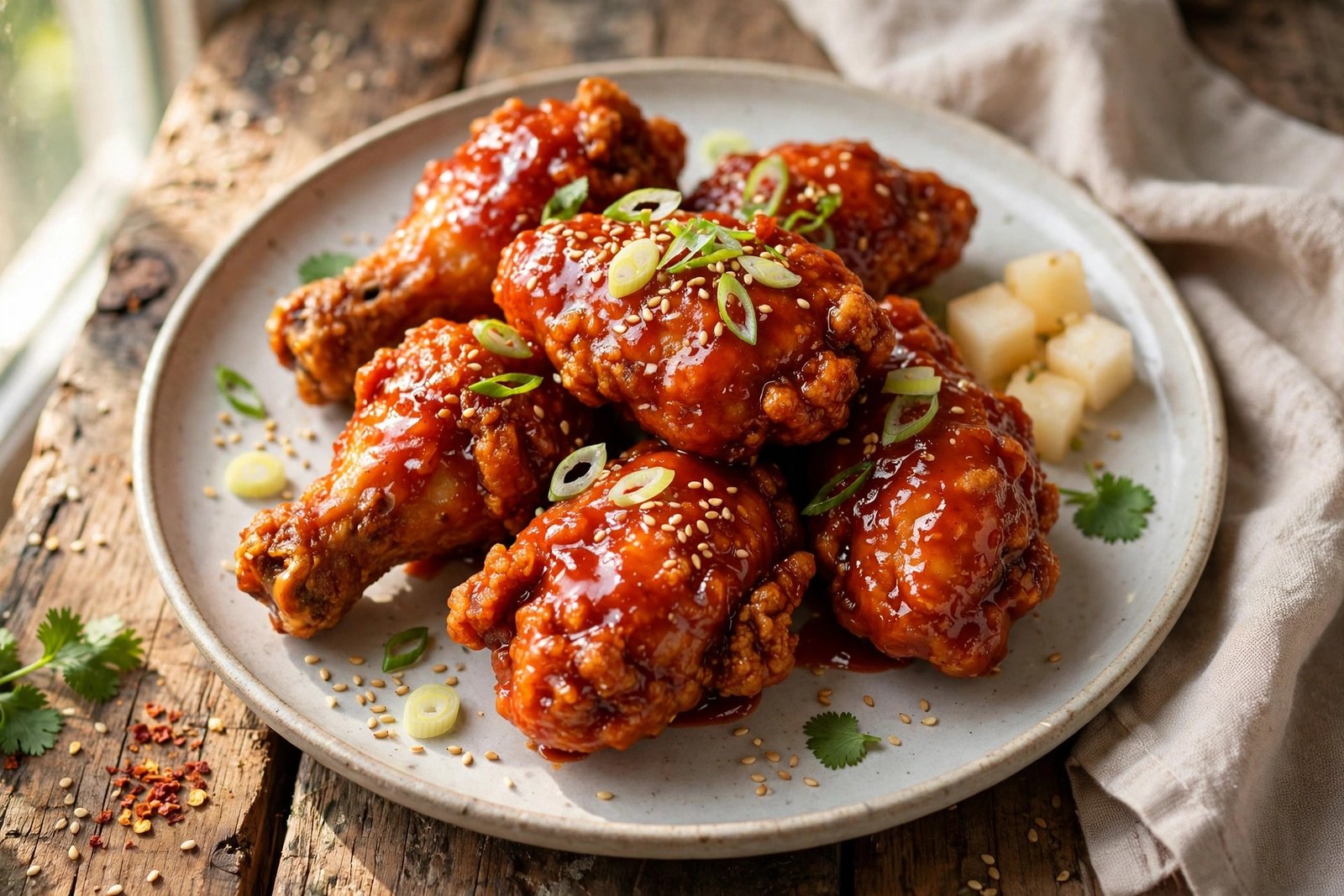
Yangnyeom Chicken is Korea's most famous fried chicken: shatteringly crisp pieces lacquered in a sticky, sweet and spicy red glaze. The double-fry keeps it crunchy long after saucing, which is exactly the point — the glaze clings to the crisp crust instead of soaking into it, and every bite is a mix of crunch, sweetness, heat and savoury depth.
The story behind Yangnyeom Chicken
Korean fried chicken is a phenomenon, and yangnyeom chicken is its most famous form. The story starts in the 1970s and 1980s, when fried chicken shops began opening across South Korea, and it took off in the 1990s when a cook named Yoon Jong-gye reportedly created the yangnyeom glaze — a sweet and spicy sauce based on gochujang, the Korean chilli paste — to make fried chicken more appealing to Korean tastes. The glaze was a hit, and yangnyeom chicken became a national dish.
The word yangnyeom means seasoned, and the seasoning is everything. The glaze is a balance of sweet, spicy, savoury and tangy: gochujang for heat and depth, ketchup for sweetness and body, honey for stickiness, soy sauce for salt, rice vinegar for brightness, and garlic for punch. It is cooked briefly until glossy, then tossed with the hot chicken so it coats every piece in a thin, lacquered layer.
The double-fry is the technique that makes Korean fried chicken different. The chicken is fried once at a moderate temperature to cook it through, then fried again at a higher temperature to drive out moisture and make the crust shatteringly crisp. The second fry is what keeps the chicken crunchy under the sauce — a single-fried piece would go soggy within minutes of being glazed.
Yangnyeom chicken is inseparable from chimaek — the Korean pairing of chicken and beer, from chi-kin and maek-ju. On a Friday night in Seoul, chicken shops are packed with people eating fried chicken and drinking cold beer, and yangnyeom is the flavour most tables order. It is social food, eaten with the hands, shared from a big plate in the middle of the table.
Make it for a gathering, or for a Friday night at home, when you want something fun and indulgent. The frying takes a little time, but the glaze takes minutes, and the result is one of the most satisfying things you can eat with your hands. Serve it with pickled radish and a cold beer, and do not bother with cutlery.
The double-fry technique has spread far beyond Korea, and Korean fried chicken shops now open in cities around the world. Part of the appeal is the crunch — the shattering crust that stays crisp under sauce is unlike any other fried chicken — and part of it is the glaze, which is sweet, spicy and savoury all at once. It is a dish that was designed to be eaten with beer and shared with friends, and it works just as well at home as it does in a Seoul chicken shop.
- Prep time
- 25 mins
- Cook time
- 30 mins
- Total time
- 55 mins
- Servings
- 4 servings
- Calories
- 680
Ingredients
- 800 g boneless chicken thighs, cut into bite-sized pieces
- 1 teaspoon salt
- 1/2 cup potato starch
- 1/4 cup plain flour
- 1 egg, beaten
- Vegetable oil, for frying
- 3 tablespoons gochujang
- 2 tablespoons ketchup
- 2 tablespoons honey
- 1 tablespoon soy sauce
- 1 tablespoon rice vinegar
- 2 garlic cloves, minced
- 1 teaspoon sesame oil
- Toasted sesame seeds and sliced spring onion, to garnish
Instructions
- Cut the boneless chicken thighs into bite-sized pieces, about 4 cm across. Thighs are the right cut — they stay juicy through two rounds of frying, where breast would dry out. Pat the pieces dry with kitchen paper.
- Season the chicken with salt and a little black pepper, tossing to coat evenly. Leave it for 10 minutes while you prepare the coating and the glaze — the salt will season the meat through.
- Beat the egg in a bowl and set it aside. Mix the potato starch and plain flour in a separate bowl. Potato starch is the key to a light, crisp crust — it fries up crunchier and stays crisp longer than flour alone.
- Coat the chicken pieces in the beaten egg, letting the excess drip off, then toss them in the starch and flour mixture until evenly coated. Press the coating on gently so it sticks. Shake off any excess — a thin, even coating fries crisper than a thick one.
- Heat the vegetable oil in a deep pot or wok to 175°C — use a thermometer, as the temperature matters. Fry the chicken in batches, without crowding the pot, for 5 to 6 minutes until golden and cooked through. Drain on a wire rack, not on kitchen paper, so the crust stays crisp.
- Raise the oil temperature to 190°C. Fry the chicken a second time, in batches, for 2 minutes until deeply golden and very crisp. The second fry drives out moisture from the crust and is what keeps the chicken crunchy under the sauce. Drain on the rack again.
- While the chicken fries, make the glaze. Combine the gochujang, ketchup, honey, soy sauce, rice vinegar and minced garlic in a pan over medium heat. Simmer for 2 minutes, stirring, until the glaze is glossy and slightly thickened. It should coat the back of a spoon.
- Take the glaze off the heat and stir in the sesame oil. The sesame oil goes in last because its flavour fades with cooking — off the heat, it keeps its nutty fragrance.
- Toss the hot, double-fried chicken through the glaze in a large bowl, turning gently until every piece is coated in a thin, lacquered layer. Work quickly — the chicken should be hot and the glaze warm. Serve immediately, garnished with toasted sesame seeds and sliced spring onion.
Pro tips
- Potato starch gives a lighter, crisper crust than flour alone. It fries up crunchier and stays crisp longer, which is essential for a sauced chicken.
- The second fry is essential — it drives out moisture so the chicken stays crisp under the sauce. A single-fried piece will go soggy within minutes of being glazed.
- Toss the chicken in the glaze just before serving so the coating stays crunchy. Glazed chicken that sits for too long will soften, though it will still taste good.
- Adjust the honey and gochujang ratio to make the glaze sweeter or spicier. More honey gives a sweeter, stickier glaze; more gochujang gives more heat and depth.
- Fry in batches and do not crowd the pot. Crowding drops the oil temperature and the chicken steams instead of frying, giving a soggy crust.
Variations & serving ideas
For a milder glaze, reduce the gochujang to two tablespoons and add an extra tablespoon each of ketchup and honey. The glaze will be sweeter and gentler, with just a background warmth — good for children or for anyone who does not like heat. A little extra rice vinegar keeps it from being too sweet.
For a spicier version, add a teaspoon of gochugaru — Korean chilli flakes — to the glaze, or a dash of hot sauce. The flakes add a brighter, fruitier heat than the gochujang alone. A pinch of cayenne pepper works too, though it is less traditional.
The chicken can change as well. Bone-in wings and drumettes are the classic Korean fried chicken cut — they take a little longer to fry, about 8 minutes for the first fry, but the bone keeps the meat juicy and they are fun to eat. Chicken breast works, though it dries out faster; cut it into smaller pieces and watch the frying time.
For a lighter version, bake the coated chicken at 220°C for 20 to 25 minutes, turning once, until golden and crisp. It will not be as crunchy as fried, but it is a good weeknight alternative. An air fryer also works — cook at 200°C for 15 minutes, shaking halfway through.
Serve yangnyeom chicken with pickled radish — the sweet, tangy crunch cuts the richness of the glaze — and steamed rice. A cold beer is the classic pairing, and a simple shredded cabbage salad on the side adds freshness. The chicken is also good in a bun, with a little mayonnaise and lettuce, as a Korean fried chicken sandwich.
For a soy-garlic version, skip the gochujang and make a glaze from soy sauce, honey, garlic and a little butter, simmered until glossy. Ganjang chicken is the other classic Korean fried chicken flavour — savoury and sweet, without the heat — and it is a good choice for anyone who does not like spice. The double-fry method stays exactly the same.
Getting it right
The coating is the foundation of the crust. Potato starch, mixed with a little plain flour, gives a light, crisp coating that fries up crunchier than flour alone and stays crisp longer. The egg wash helps the coating stick, and pressing it on gently ensures an even layer. A thin, even coating fries better than a thick one — shake off the excess before the chicken goes into the oil.
Oil temperature is critical, and a thermometer is worth using. The first fry at 175°C cooks the chicken through and sets the crust; the second fry at 190°C drives out moisture and makes the crust shatteringly crisp. If the oil is too cool, the chicken absorbs oil and turns greasy; if it is too hot, the crust burns before the inside is cooked. Fry in batches so the oil temperature does not drop.
The second fry is what makes Korean fried chicken different from other fried chicken. After the first fry, the chicken rests for a few minutes while the oil heats up, and the residual heat continues to cook the inside. The second fry, just 2 minutes at high heat, drives out the moisture that has migrated to the surface and leaves the crust dry and crisp. This is the step that lets the chicken stay crunchy under the sauce.
The glaze needs to be the right consistency — glossy and slightly thickened, thick enough to coat the chicken in a thin layer, not so thick that it clumps. Two minutes of simmering is enough. Toss the chicken through the glaze while both are hot, working quickly and gently, so every piece is coated evenly. Serve immediately, before the sauce has time to soften the crust.
Storing & reheating
Yangnyeom chicken is best eaten fresh, within 30 minutes of glazing, while the crust is still crisp. Leftovers keep in the fridge for up to 2 days in a covered container, though the crust will soften in the sauce. The flavour will still be good, but the crunch will be gone.
To reheat, warm the chicken in a 200°C oven for 8 to 10 minutes, or in an air fryer for 5 minutes, until hot and slightly crisp again. The microwave will make it soggy, so avoid it. Unglazed fried chicken freezes well for up to a month — freeze the double-fried pieces, reheat from frozen in a hot oven, and toss in fresh glaze.
Frequently asked questions
What is yangnyeom?
Yangnyeom means seasoned in Korean, and here it refers to the sweet-spicy gochujang glaze coating the fried chicken. The glaze is made from gochujang, ketchup, honey, soy sauce, rice vinegar and garlic, cooked briefly until glossy.
Can I bake the chicken instead?
Baked chicken will not be as crisp, but coating the pieces in starch and baking at 220°C for 20 to 25 minutes, turning once, gives a lighter version that is still good. An air fryer at 200°C for 15 minutes also works well.
Is it very spicy?
It is moderately spicy — the gochujang gives a warm, building heat rather than a sharp burn. Reduce the gochujang and add more ketchup and honey for a milder glaze, or add gochugaru chilli flakes for more heat.
What do I serve it with?
Pickled radish, steamed rice and a cold beer are the classic Korean pairings. The sweet, tangy radish cuts the richness of the glaze. A simple shredded cabbage salad on the side adds freshness and crunch.
Why is my fried chicken soggy?
The oil was probably not hot enough, the pot was crowded, or the chicken was only fried once. Use a thermometer, fry in batches, and always do the second fry at 190°C — it is what keeps the crust crisp under the sauce.
Can I make the glaze ahead of time?
Yes, the glaze keeps in the fridge for up to a week in a sealed jar. Warm it gently before tossing with the chicken — it should be warm and fluid, not cold and thick, so it coats evenly.