Galbi Jjim Recipe
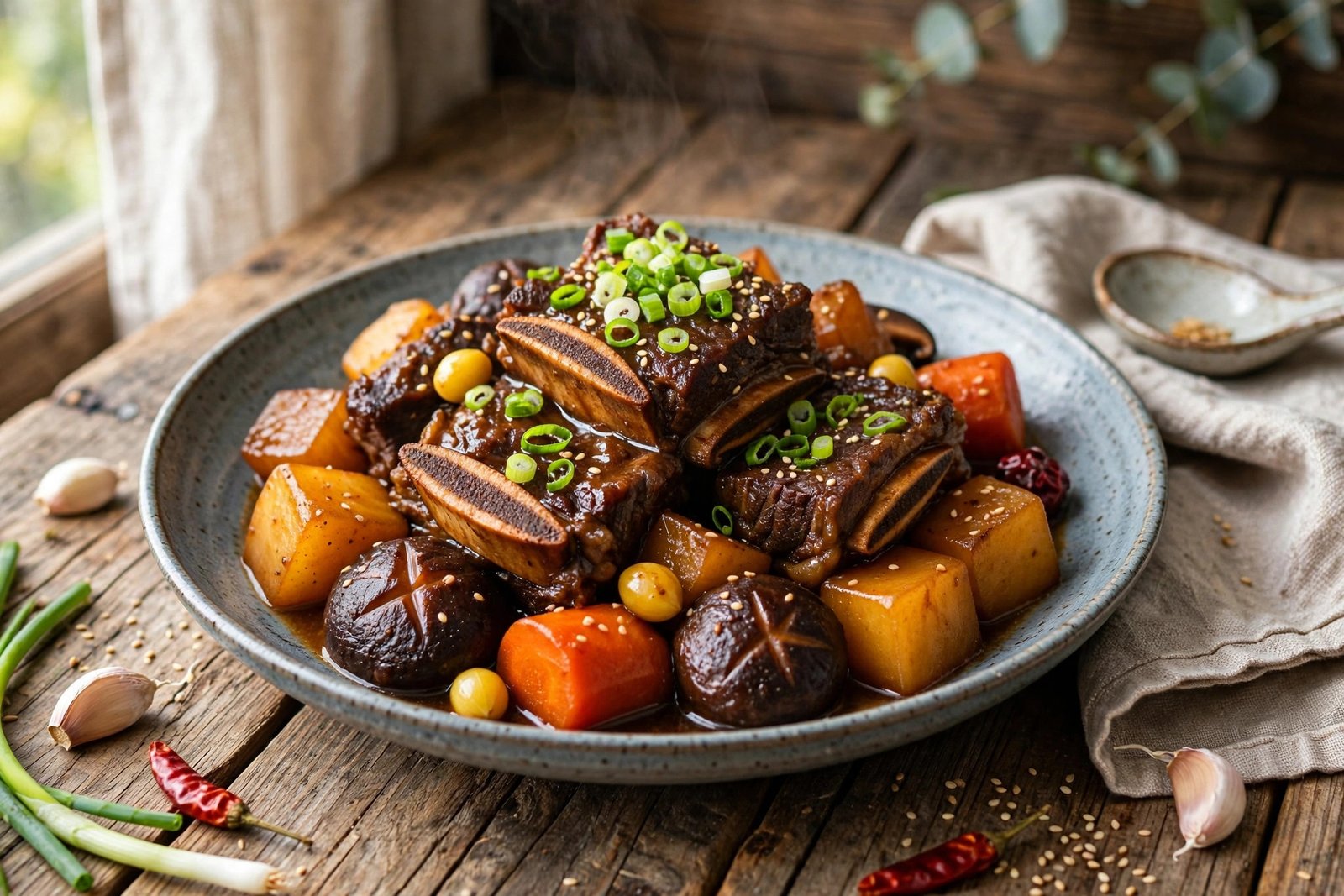
Galbi Jjim is Korea's celebratory braised short rib dish. Beef simmers low and slow with Asian pear, soy and sesame until it falls off the bone in a glossy, sweet-savoury sauce. It takes two hours and a little patience, but the result is a dish that tastes like a celebration — rich, tender, and deeply comforting.
The story behind Galbi Jjim
Galbi jjim is a dish for special occasions in Korea. It appears at Chuseok, the harvest festival, at Lunar New Year, at birthdays and family gatherings — whenever a meal needs to feel like a celebration. The dish is beef short ribs, braised low and slow in a marinade of Asian pear, soy sauce, sesame oil, honey, garlic and ginger, with carrots, onion and Korean radish, until the meat falls off the bone and the sauce reduces to a glossy glaze. It is rich, sweet, savoury and deeply comforting.
The Asian pear is the quiet star of the dish. It is a traditional Korean tenderiser — the enzymes in the pear break down the tough fibres in the short ribs, so the meat becomes tender without a long marinade. It also adds a subtle sweetness that balances the salty soy sauce. A regular pear works in a pinch, though it is a little less effective as a tenderiser. The pear is grated into the marinade and cooks down into the sauce, so you never see it in the finished dish — you just taste its work.
Short ribs are a cut that rewards slow cooking. They are rich in collagen, which breaks down over a long, gentle braise into gelatin, giving the sauce its silky body and the meat its falling-apart tenderness. Ninety minutes of simmering is the minimum, and the dish only gets better with a little more time. The sauce is reduced at the end to a glaze that coats the ribs and the vegetables, and the whole pot is scattered with spring onions and sesame seeds.
This is a dish to cook on a weekend, when you have time to let the pot simmer and the house fill with the smell of soy and sesame. It feeds four generously, and it tastes even better the next day, when the flavours have settled overnight. Serve it with steamed rice and kimchi, and let everyone help themselves from the pot.
The name breaks down simply: galbi means ribs, and jjim means steamed or braised. The dish is part of a family of Korean braised dishes — jjim — that includes braised chicken, braised fish and braised tofu, all cooked low and slow in a seasoned liquid. Galbi jjim is the most celebratory of them, reserved for occasions when the meal needs to feel special. The short ribs are an expensive cut, the cooking takes hours, and the result is a dish that says the cook has taken time and care. That is part of its meaning: galbi jjim is not everyday food, it is occasion food.
- Prep time
- 20 mins
- Cook time
- 120 mins
- Total time
- 140 mins
- Servings
- 4 servings
- Calories
- 620
Ingredients
- 1 kg beef short ribs, cut into pieces
- 1 Asian pear, grated
- 6 tablespoons soy sauce
- 2 tablespoons sesame oil
- 2 tablespoons honey
- 4 garlic cloves, minced
- 1 tablespoon grated ginger
- 2 carrots, cut into chunks
- 1 onion, quartered
- 200 g Korean radish, cubed
- 2 spring onions, sliced
- 1 tablespoon toasted sesame seeds
- Steamed rice, to serve
Instructions
- Soak the short ribs in cold water for 30 minutes to draw out excess blood, then drain and pat dry. This step gives a cleaner-tasting sauce — skip it and the sauce can taste slightly metallic.
- Whisk the grated Asian pear, soy sauce, sesame oil, honey, minced garlic and grated ginger together in a large bowl to make the marinade. Taste it — it should be sweet, salty and fragrant, with the pear adding a gentle fruitiness.
- Add the short ribs to the marinade and turn to coat every piece.
- Cover and refrigerate for at least 2 hours, or overnight if you have time. The longer marinade gives a deeper flavour and more tender meat.
- Transfer the ribs and all the marinade to a heavy pot. Add the carrot chunks, quartered onion and cubed Korean radish, and pour in enough water to just cover the ribs. Bring to a boil over high heat.
- Skim off any foam that rises to the surface, then reduce the heat to low, cover, and simmer gently for 90 minutes. Check occasionally, turning the ribs once or twice, and skim any fat or foam that rises. The meat should be very tender and starting to pull away from the bone.
- Remove the lid and simmer for 15 minutes more, turning the heat up slightly, to reduce the sauce to a glossy glaze that coats the ribs and vegetables. Watch it closely — the sauce thickens fast at the end and can catch on the bottom of the pot.
- Scatter the sliced spring onions and toasted sesame seeds over the top. Serve straight from the pot with steamed rice, spooning the sauce generously over each portion.
Pro tips
- Soaking the ribs first gives a cleaner-tasting sauce. Thirty minutes in cold water draws out blood that would otherwise cloud the flavour.
- Asian pear is the traditional tenderiser; a regular pear works in a pinch. The pear's enzymes break down the tough fibres in the short ribs.
- The dish tastes even better the next day after the flavours settle overnight. Make it a day ahead if you can, and reheat gently.
- Skim the foam and fat during cooking. A clean sauce is a glossy sauce, and the skimming takes only a moment each time.
- Do not rush the braise. Ninety minutes is the minimum — the collagen needs time to break down into gelatin, and that is what makes the meat tender.
Variations & serving ideas
The vegetables can change with the season. Chestnuts, peeled and added with the carrots, are a traditional addition for celebrations — they go soft and sweet in the braising liquid. Dried jujubes (Korean dates) add a gentle sweetness and are a classic festive ingredient. Ginkgo nuts, shiitake mushrooms and sweet potato all work in the pot. A few whole garlic cloves, added with the vegetables, turn soft and sweet in the sauce.
The sauce can be adjusted. More honey for a sweeter glaze, more soy for a saltier one. A spoonful of gochujang stirred into the marinade adds a gentle chilli heat and a deeper colour. A splash of rice wine in the marinade adds complexity. For a less sweet version, reduce the honey to one tablespoon and add a little more soy sauce.
The cooking method can change too. A slow cooker on low for 7 to 8 hours gives the same tender result with no attention — marinate first, then transfer everything to the slow cooker. A pressure cooker cuts the time to about 45 minutes at high pressure, followed by a stovetop reduction. The slow cooker version is the most hands-off; the pressure cooker version is the fastest.
Serve galbi jjim with steamed rice, kimchi and a few banchan — small Korean side dishes — for a complete meal. It also works as part of a larger Korean spread, alongside bulgogi, japchae and a soup. Leftovers make an excellent filling for a rice bowl or a sandwich the next day.
A spicy galbi jjim is a modern variation that adds gochujang and gochugaru to the marinade. The result is a deep red, gently fiery braise that suits people who find the classic version too sweet. The heat builds slowly and the sweetness of the pear and honey still comes through underneath. Add a tablespoon of gochujang and a teaspoon of gochugaru to start, and adjust to taste.
For a lighter, spring version, add a handful of spinach or watercress in the last five minutes of cooking, letting it wilt into the sauce. The greens add freshness and colour, and they cut through the richness of the ribs. A squeeze of lemon over the top at the end brightens the whole pot.
Getting it right
The braise is the technique. Short ribs are a tough cut, full of collagen and connective tissue, and they need a long, gentle simmer to become tender. Ninety minutes at a bare simmer — just a few bubbles breaking the surface — is the minimum. The heat should be low enough that the liquid barely moves. A hard boil tightens the meat and makes it tough; a gentle simmer lets the collagen melt into gelatin, which gives the sauce its body and the meat its tenderness.
The marinade does two jobs at once. The Asian pear tenderises the meat through its enzymes, and the soy, honey, sesame and garlic season it deeply. Two hours is the minimum marinating time; overnight is better. The marinade goes into the pot with the ribs, so nothing is wasted — it becomes the braising liquid and, after reduction, the glaze. That is why the marinade needs to taste good on its own: it is the sauce.
The final reduction is where the dish comes together. Removing the lid for the last fifteen minutes lets the liquid evaporate and the sauce thicken into a glaze. Watch it closely — the sugars in the honey and pear can catch and burn if the heat is too high or the pot is left unattended. Stir gently, turn the ribs to coat them, and take the pot off the heat when the sauce clings to a spoon in a glossy coat.
The choice of pot matters. A heavy pot — cast iron or a thick-bottomed Dutch oven — holds heat evenly and keeps the braise at a steady, gentle simmer. A thin pot has hot spots that can scorch the sauce, especially during the final reduction. If you only have a thin pot, use a heat diffuser or keep the flame as low as it will go, and stir more often during the reduction stage.
Storing & reheating
Galbi jjim keeps in the fridge for up to 4 days and tastes even better the next day, when the flavours have settled and the sauce has thickened. Reheat gently on the stove over low heat, adding a splash of water if the sauce has thickened too much. The meat will be even more tender after a night in the fridge.
The dish freezes well for up to 3 months. Freeze in portions with the sauce, thaw overnight in the fridge, and reheat gently. The vegetables may soften a little, but the meat and sauce hold up beautifully. Do not freeze the spring onion garnish — add fresh ones when serving. If the sauce seems too thick after reheating, add a splash of water or stock and stir gently until it loosens to a glossy coat.
Frequently asked questions
What is galbi jjim?
It is a Korean braised beef short rib dish, traditionally served at celebrations and family gatherings. The ribs simmer in a sweet-savoury sauce with Asian pear, soy and sesame until they fall off the bone.
Can I make it in a slow cooker?
Yes, cook on low for 7 to 8 hours after marinating, then reduce the sauce on the stove. The slow cooker gives the same tender result with no attention during cooking.
What cut should I use?
Flanken-cut or English-cut beef short ribs both work beautifully. Flanken-cut ribs are thinner and cook a little faster; English-cut are thicker and meatier.
Can I use a regular pear instead of Asian pear?
Yes. A regular pear works in a pinch, though it is a little less effective as a tenderiser. Grate it the same way and use the same amount.
Why is my sauce thin and watery?
It needs more time reducing with the lid off. Simmer uncovered for 15 minutes or more, until the sauce coats a spoon. If it is still thin, remove the ribs and reduce the sauce alone over medium heat.
Can I make galbi jjim ahead for a party?
Yes, and it is better for it. Make it a day ahead, refrigerate overnight, and reheat gently before serving. The flavours deepen and the meat gets even more tender.