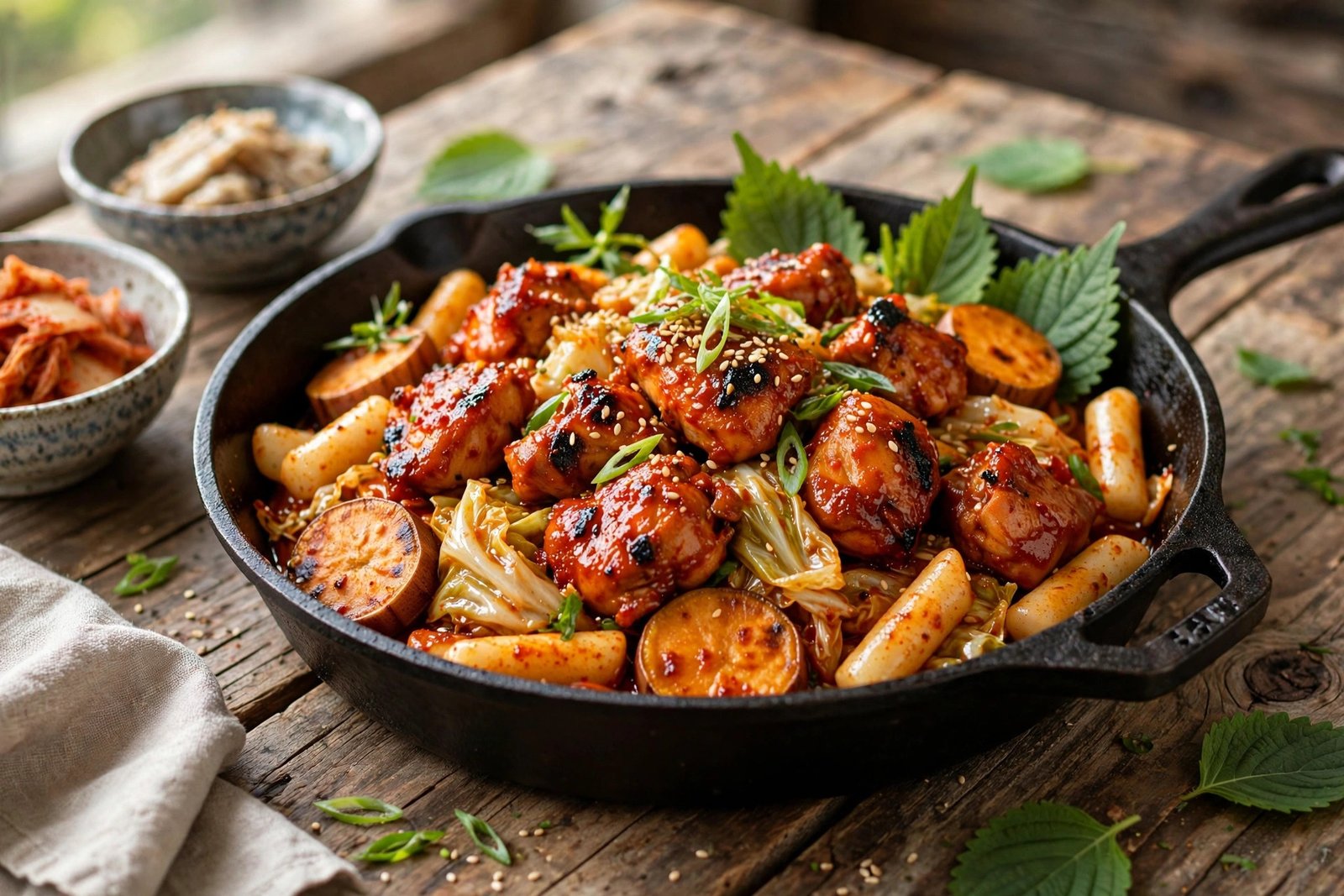
Dak Bokkeum Tang Recipe

Spicy, hearty and deeply warming, this Korean chicken stew braises chicken with potatoes and carrots in a gochujang broth until everything is tender and glazed. It is a one-pot dinner that fills the house with a rich, savoury smell and tastes even better the next day.
The story behind Dak Bokkeum Tang
Dak bokkeum tang is one of those dishes that Korean home cooks make without thinking twice, the way other families make a roast on Sunday. Chicken, potatoes and carrots go into a pot with a spicy-sweet braising liquid, and forty minutes later you have a stew that is rich, glossy and deeply satisfying. It is everyday food, but it never tastes ordinary.
The heart of the dish is gochujang, the fermented Korean chilli paste that brings heat, sweetness and a deep savoury note all at once. Mixed with gochugaru flakes, soy sauce and a little sugar, it turns plain stock into a braising liquid with real character. The sauce starts out thin and watery and finishes thick and shiny, clinging to every piece of chicken.
Bone-in chicken thighs are the right choice here. The bones add flavour to the sauce as it simmers, and the dark meat stays juicy through a long braise in a way that breast meat never does. The potatoes soak up the sauce from the inside, and the carrots turn sweet and tender. Every part of the dish feeds the others.
This is a stew for cold evenings and hungry tables. Serve it in the middle of the table with a big pot of steamed rice and let everyone help themselves. The rice is not optional: it is there to catch the sauce, and the sauce is the best part.
What makes dak bokkeum tang special is how forgiving it is. The timings are flexible, the ingredients are simple, and the result is almost always good. If the sauce is too thin, simmer it uncovered for a few more minutes. If it is too spicy, add a little more sugar. The dish bends to your taste.
Cook it on a weekend when you have an hour to spare, or make it on a weeknight and let it simmer while you set the table. Either way, it rewards you with a dinner that tastes like it took far more effort than it did.
The sauce deserves a word of its own. Gochujang brings fermented depth, the kind of flavour that comes from time rather than heat, while gochugaru adds a cleaner, brighter chilli note. Together they give the stew a warmth that builds slowly instead of hitting you all at once. The sugar is not there to make it sweet; it rounds off the edges and helps the sauce glaze the chicken as it reduces.
One of the pleasures of this dish is how it changes as it cooks. At the start the liquid is thin and pale, and the chicken looks plain. By the end the sauce is thick and dark, the potatoes are stained red at the edges, and the whole pot smells rich and savoury. Watching that change happen is half the fun of making it.
- Prep time
- 15 mins
- Cook time
- 40 mins
- Total time
- 55 mins
- Servings
- 4 servings
- Calories
- 620
Ingredients
- 800 g chicken thighs, bone-in, cut into pieces
- 2 potatoes, cut into chunks
- 2 carrots, cut into chunks
- 1 onion, sliced
- 4 garlic cloves, sliced
- 2 tbsp gochujang
- 1 tbsp gochugaru
- 2 tbsp soy sauce
- 1 tbsp sugar
- 500 ml water or chicken stock
- 2 spring onions, sliced
- 1 tbsp sesame oil
- Steamed rice, to serve
Instructions
- Stir the gochujang, gochugaru, soy sauce, sugar and sliced garlic into the water or chicken stock in a jug until the paste dissolves. Taste it: it should be spicy, salty and a little sweet, with the garlic in the background. This is your braising liquid.
- Place the chicken pieces in a wide, heavy pot in a single layer if you can manage it, then scatter the potato chunks, carrot chunks and sliced onion around and over the top.
- Pour the braising liquid over everything, making sure the chicken is mostly covered. The potatoes and carrots will cook in the liquid as it simmers, soaking up flavour from the start.
- Bring the pot to a boil over high heat, skimming off any foam that rises to the surface in the first few minutes. This keeps the sauce clean-tasting rather than murky.
- Cover the pot with a lid, turn the heat down to a gentle simmer, and cook for 25 minutes, stirring occasionally so nothing sticks to the bottom. The kitchen will start to smell wonderful about halfway through.
- Lift the lid and check the potatoes with the tip of a knife. They should be almost tender but still holding their shape. If they are still hard in the centre, give them another 5 minutes covered.
- Uncover the pot and simmer for 10 to 15 minutes more, stirring now and then, until the sauce thickens and turns glossy and the chicken looks glazed rather than wet. This uncovered simmer is what concentrates the flavour.
- Check the chicken is cooked through by cutting into the thickest piece: the meat should be opaque right to the bone and the juices should run clear. Season the sauce to taste with a little more soy or sugar.
- Turn off the heat and drizzle over the sesame oil, then scatter the sliced spring onions over the top. The sesame oil goes in last so its nutty aroma stays fresh.
- Serve the stew in deep bowls with plenty of sauce, alongside steamed rice for spooning up every last drop.
Pro tips
- Use bone-in thighs, not boneless. The bones flavour the sauce as it simmers and the dark meat stays juicy through a long braise, while breast meat dries out and turns stringy. Thighs also forgive you if the cooking runs a few minutes long.
- Cut the potatoes into large chunks, about the size of a golf ball. Small pieces fall apart and cloud the sauce; large ones hold their shape and turn creamy inside.
- Stir gently and not too often. Vigorous stirring breaks up the potatoes and tears the chicken. A slow turn with a wooden spoon every few minutes is enough.
- Let the sauce reduce uncovered at the end. This is where the gloss comes from, and it is the difference between a stew and a soup. Be patient with it and stir gently so the potatoes stay whole while the sauce thickens around them.
- Taste before you serve. Gochujang brands vary in heat and salt, so a final adjustment with soy, sugar or a squeeze of lemon makes the dish yours.
Variations & serving ideas
Add sweet potato alongside the regular potatoes for a sweeter, softer stew, or throw in some sliced mushrooms and a handful of green beans in the last ten minutes. The braising liquid welcomes almost any vegetable that can handle a simmer.
For a lighter version, use skinless chicken thighs and skim the fat from the surface before serving. The sauce will be a little less rich but still full of flavour, and the dish stays satisfying.
Turn up the heat with an extra tablespoon of gochugaru, or cool it down by halving the gochujang and adding a spoonful of honey. Families with children often make a mild version and serve chilli flakes at the table for the adults.
Leftovers are excellent. The sauce thickens overnight in the fridge and the flavours deepen, so the second day is often better than the first. Reheat gently with a splash of water, and serve over fresh rice or noodles.
Serve it Korean-style with kimchi, a small cucumber salad and steamed rice, or keep it simple with just rice and a green salad. Either way, put the pot in the middle of the table and let people serve themselves.
If you like mushrooms, add a handful of sliced shiitake or oyster mushrooms with the potatoes. They soak up the sauce beautifully and add a savoury depth that suits the gochujang. Dried shiitake, soaked first, are even better.
For a noodle version, cook some udon or glass noodles separately and ladle the stew over them instead of rice. The thick sauce clings to the noodles, and the dish becomes a hearty one-bowl meal that needs nothing else.
Getting it right
The braise has two phases, and both matter. The covered simmer cooks the chicken and vegetables through gently, while the uncovered simmer at the end reduces the sauce and builds the glaze. Skipping the uncovered stage leaves you with a thin, watery sauce and a stew that tastes unfinished.
Heat control is the key skill. A rolling boil toughens the chicken and breaks the potatoes apart, while too gentle a heat never reduces the sauce. You want a steady, lazy simmer with small bubbles breaking the surface, and you should be able to hear it without it sounding angry.
The most common mistake is cutting the vegetables too small. Potatoes and carrots need to survive 40 minutes in a simmering pot, so cut them generously. If you like, add the carrots halfway through so they keep a little bite.
Another easy error is adding the sesame oil too early. It goes in at the very end, off the heat, because its flavour fades with cooking. A drizzle at the end gives the whole dish a warm, nutty finish.
Watch the potatoes in the last ten minutes. They go from perfectly tender to falling apart quite quickly, and once they break up they cloud the sauce. If they are done before the sauce has reduced, lift them out, reduce the sauce on its own, then return them to the pot.
Storing & reheating
Dak bokkeum tang keeps well in the fridge for up to 3 days in a sealed container, and the flavour improves overnight as the sauce soaks into the chicken and potatoes. Reheat gently on the stove with a splash of water, and add fresh spring onions after reheating.
It also freezes well for up to 2 months, though the potatoes soften a little on thawing. Freeze in portions with plenty of sauce, thaw overnight in the fridge, and reheat until piping hot. The chicken holds up well.
Do not leave the stew at room temperature for more than 2 hours. Cool it quickly after cooking, get it into the fridge, and only reheat the portion you plan to eat.
When reheating, add the fresh spring onions and a new drizzle of sesame oil after the stew is hot, so the garnish tastes fresh rather than tired. A little extra gochujang stirred in can revive the sauce if it has mellowed overnight.
Frequently asked questions
Can I use chicken breast instead of thighs?
You can, but thighs are much better for a braise. Breast meat dries out over 40 minutes of simmering, while bone-in thighs stay juicy and the bones add flavour to the sauce. If you do use breast, add it halfway through cooking so it only simmers for about 20 minutes.
How spicy is it?
With 2 tablespoons of gochujang and 1 tablespoon of gochugaru it has a warm, rounded heat rather than a fierce burn. Reduce the gochugaru or add a little more sugar if you prefer it milder.
What is gochujang and where do I buy it?
Gochujang is a fermented Korean chilli paste made from glutinous rice, soybeans and chillies. It is sold in tubs at Asian supermarkets and in the international aisle of most large grocery stores, and a tub keeps for months in the fridge once opened.
Can I make it in a slow cooker?
Yes. Combine everything in the slow cooker and cook on low for 4 to 5 hours, then remove the lid and cook on high for 30 minutes to thicken the sauce before serving.
What should I serve with it?
Steamed rice is essential, since it soaks up the sauce and balances the heat. Kimchi, a cucumber salad or some steamed greens make good side dishes, and a fried egg on top of the rice is a classic touch that turns the meal into something special.
Can I add other vegetables?
Yes. Sweet potato, mushrooms, green beans, courgette and onion all work. Add quick-cooking vegetables in the last 10 to 15 minutes so they do not turn to mush.