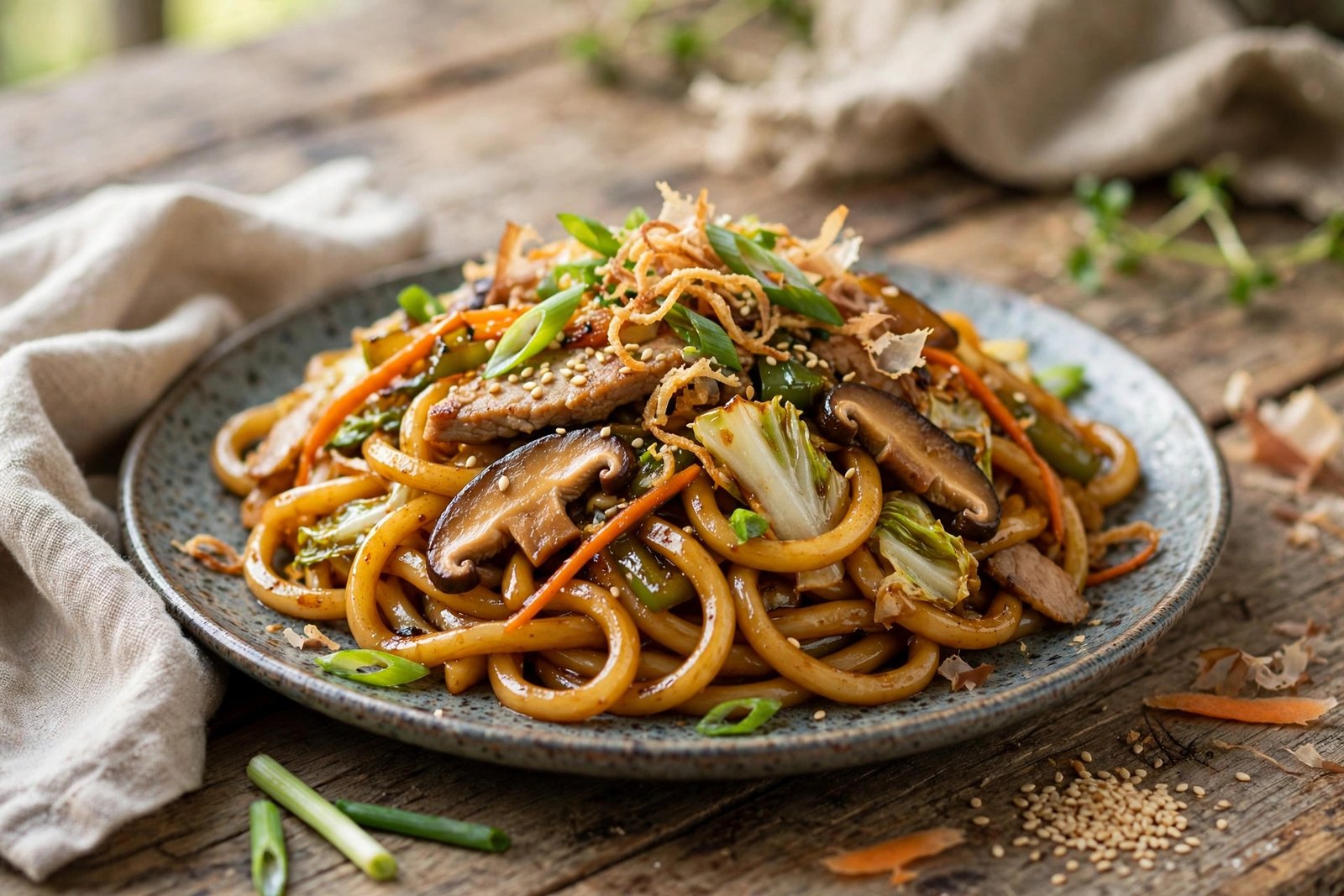
Chicken Udon Soup Recipe
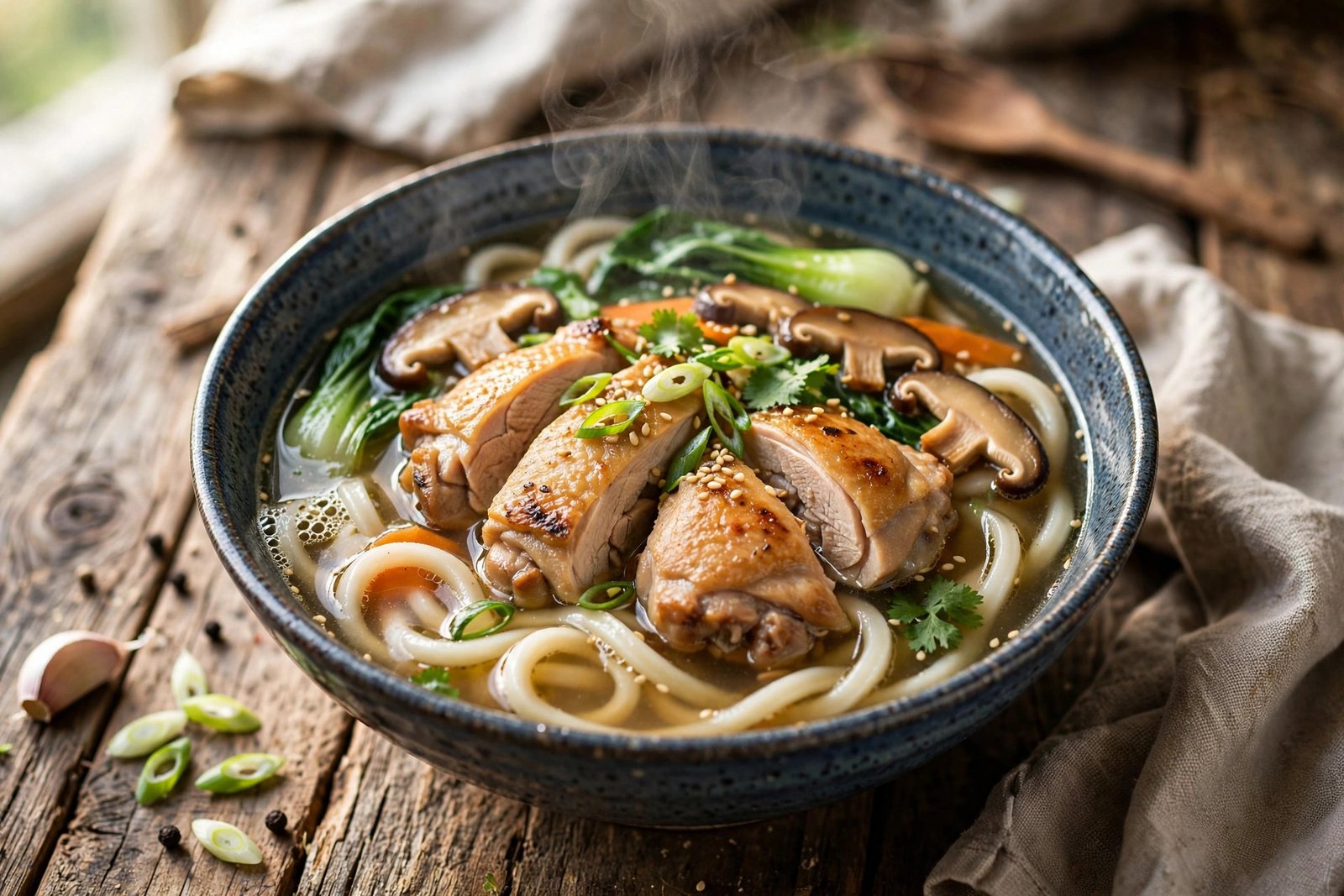
Chicken udon soup is Japanese comfort food at its simplest: thick, chewy udon noodles and tender slices of chicken simmered in a light, savory broth with bok choy and mushrooms. It is warming, gentle, and on the table in 40 minutes. Cook the noodles separately for a clear broth, then ladle everything into deep bowls with green onion and sesame oil.
The story behind Chicken Udon Soup
Udon is one of Japan's oldest noodle traditions, with thick wheat noodles that have been eaten for well over a thousand years. The most famous style comes from Kagawa prefecture on the island of Shikoku, where Sanuki udon is known for its firm, springy bite. Noodle shops there serve udon in a light, clear broth, and the dish has become a symbol of simple, honest Japanese cooking.
The appeal of udon is its texture. A good udon noodle is thick, smooth, and chewy, with a satisfying spring when you bite through it. The broth is deliberately light: chicken stock seasoned with soy sauce, mirin, and a touch of sugar, so the noodles and toppings do the talking. It is the opposite of a heavy, rich soup, and that lightness is the point.
This version keeps the classic shape. Chicken thighs simmer in the seasoned broth until tender, mushrooms add earthiness, and bok choy brings a fresh green crunch. The noodles are cooked separately and added at the end, which keeps the broth clear and the noodles from turning gummy. A drizzle of sesame oil and a scatter of green onion finish the bowl.
Chicken udon soup suits a cold evening, a quiet weeknight, or any day when someone in the house wants something warm and gentle. It comes together in 40 minutes, uses one pot plus a noodle pot, and feeds four from a handful of ingredients. Serve it steaming hot in deep bowls, with chopsticks and a spoon, and let everyone slurp.
In Japan, udon is everyday food, sold in train stations, school cafeterias, and tiny noodle shops with six seats at a counter. The cook pulls the noodles from a pot of boiling water, drops them into a bowl, and ladles over broth in under a minute. Slurping is not rude; it cools the noodles and pulls in air that lifts the flavour. A bowl of udon is quick, cheap, and satisfying, which is why it has fed students, workers, and travellers for generations.
- Prep time
- 15 mins
- Cook time
- 25 mins
- Total time
- 40 mins
- Servings
- 4 servings
- Calories
- 385
Ingredients
- 2 tablespoons neutral oil
- 1 lb (450 g) boneless chicken thighs, thinly sliced
- 3 cloves garlic, minced
- 1 tablespoon grated fresh ginger
- 6 cups good chicken broth
- 3 tablespoons soy sauce
- 2 tablespoons mirin
- 1 tablespoon sugar
- 3 packs (about 600 g) fresh or frozen udon noodles
- 8 oz (225 g) shiitake or cremini mushrooms, sliced
- 4 baby bok choy, halved lengthwise
- 4 green onions, thinly sliced
- 1 teaspoon toasted sesame oil
Instructions
- Heat the neutral oil in a large pot over medium-high heat. Sear the sliced chicken for 3 to 4 minutes, turning once, until lightly golden on the edges. The colour adds flavour to the broth, so do not rush this step or crowd the pot. Let the chicken sit undisturbed for the first minute so it browns instead of steaming; moving it too soon stops the colour from forming.
- Add the garlic and ginger and cook for 1 minute until fragrant, stirring so nothing burns. Garlic goes bitter fast at this heat, so keep the pieces moving and move on as soon as you can smell it.
- Pour in the chicken broth, soy sauce, mirin, and sugar. Bring the pot to a gentle boil, then reduce to a steady simmer for 10 minutes so the chicken turns tender. Skim off any foam that rises to the surface for a cleaner broth. If the broth looks cloudy, skim the surface with a spoon; the foam is harmless, but removing it keeps the soup clear and clean-tasting.
- Add the mushrooms and simmer for 5 minutes more. Taste the broth and adjust: a splash more soy sauce for saltiness, or a pinch of sugar for balance. The broth should taste light and savory, never heavy or salty.
- While the broth simmers, cook the udon noodles in a separate pot of boiling water according to the package, usually 2 to 3 minutes for frozen udon. Drain them and rinse briefly under warm water to wash off the excess starch. Fresh udon needs barely a minute or two, so taste a noodle before you drain; it should be springy and chewy, not soft.
- Add the bok choy to the broth and simmer just 2 minutes until bright green and tender-crisp. The leaves wilt quickly and the white stems stay crunchy; any longer and the colour dulls.
- Divide the noodles among 4 deep bowls. Ladle over the hot broth, chicken, mushrooms, and bok choy, making sure each bowl gets a good share of everything. The noodles should sit in the broth, not piled dry on top.
- Finish with the green onions and a drizzle of sesame oil. Serve steaming hot, with chopsticks and a spoon, and eat it while the noodles are still springy and the broth is hot. Eat the noodles first, while they are at their springiest, and sip the broth as you go.
Pro tips
- Cook the udon separately. Cooking noodles directly in the soup clouds the broth with starch and makes the noodles gummy, while a separate pot keeps both clean and springy.
- Do not boil the broth hard once it is seasoned. A gentle simmer keeps the flavour clean and delicate, and a rolling boil makes the broth cloudy and the chicken tough.
- Frozen udon is excellent and needs no thawing. Drop it straight into boiling water and cook for 2 to 3 minutes; it comes out springy and fresh-tasting every time.
- For a richer broth, add a strip of kombu while simmering and remove it before serving. It deepens the savory flavour without adding salt or clouding the broth.
- Taste the broth before you add the noodles. Once the noodles go in, it is hard to adjust the seasoning, so get the balance of soy, mirin, and sugar right first.
- Serve the soup in deep, wide bowls if you have them. A shallow bowl cools too fast, and udon is meant to be eaten hot, with the noodles still springy and the broth steaming.
Variations & serving ideas
Udon is a flexible bowl, and the toppings are easy to change. A soft-boiled egg with a jammy yolk is a classic addition, and tempura shrimp or a piece of fried tofu on top turns the soup into a full meal. Thinly sliced beef or pork can replace the chicken; sear it the same way and simmer it briefly so it stays tender. For a vegetarian bowl, use vegetable stock, extra mushrooms, and firm tofu.
The heat level is yours to set. The soup as written is mild and savory, so add a spoonful of chili oil or a pinch of shichimi togarashi at the table if you like warmth. A spoonful of miso stirred into the broth gives a deeper, richer flavour, and a little grated daikon on top adds freshness.
Other vegetables fit in easily. Napa cabbage, spinach, carrots, and corn all work; add heartier vegetables with the mushrooms and leafy greens at the end so nothing overcooks. Julienned carrots need about 5 minutes, while spinach needs barely a minute.
In summer, the same noodles make a cold dish. Cook the udon, rinse it under cold water, and serve it with a chilled dipping broth, sliced cucumber, and a soft egg. The hot soup is for cold evenings; the cold version is one of the best hot-day lunches you can make.
The broth can go deeper if you like. A teaspoon of dashi powder stirred into the stock adds a savory depth that tastes like it simmered for hours. A splash of sake in the broth adds a clean, dry note, and a few drops of soy sauce at the table let each person season their own bowl. If you want a richer soup, swap half the chicken broth for a light dashi made from kombu and bonito flakes.
Getting it right
The key technique in this soup is keeping the broth clear and the noodles springy. Cooking the udon in a separate pot is the single most important choice: noodles shed starch as they cook, and that starch clouds the broth and makes the noodles stick together. Rinsing the cooked noodles briefly under warm water washes off the surface starch, so they stay smooth and separate in the bowl.
Broth balance is a matter of small adjustments. Soy sauce gives salt and colour, mirin gives a gentle sweetness, and sugar rounds the edges. Taste after the mushrooms go in, when the broth has had time to pick up flavour from the chicken and the mushrooms. Add soy a splash at a time; you can always add more, but you cannot take it out. A strip of kombu simmered in the broth adds depth without salt.
The common mistakes are all about heat and timing. A hard boil makes the broth cloudy and toughens the chicken, so keep the pot at a steady simmer with small bubbles. Bok choy overcooks in minutes, so add it last and pull the pot off the heat as soon as it turns bright green. And noodles left sitting in hot broth go soft fast, so ladle the soup over the noodles just before serving, not ten minutes early.
If the broth tastes flat, it usually needs a touch more soy sauce or a pinch of sugar, not more salt. Taste it with a spoon, not by guessing, and adjust in small steps.
Storing & reheating
Store the broth and the noodles separately, or the noodles will soak up the broth and turn soft overnight. The broth with chicken and vegetables keeps in the refrigerator for 2 to 3 days in a sealed container. Cooked noodles keep for a day in the fridge in a little water, but they are best cooked fresh.
Reheat the broth gently over medium heat until it simmers, then cook a fresh batch of noodles and assemble the bowls as before. The broth itself freezes well for up to a month; freeze it without the noodles or bok choy, then add fresh vegetables and noodles when you reheat it.
If the broth gels in the fridge, that is just the chicken stock setting; it melts back to liquid as soon as it heats.
Frequently asked questions
Can I use chicken breast instead of thighs?
Yes. Slice the breast thinly and simmer it gently, adding it a little later so it does not overcook and turn dry. Breast cooks faster than thigh and has less fat to protect it, so keep the broth at a gentle simmer and pull the pot off the heat as soon as the chicken is opaque through.
Where can I find udon noodles?
Fresh or frozen udon is available in the refrigerated section of most Asian grocery stores and many supermarkets. Dried udon works too; just cook it a few minutes longer than the package says for a chewy texture. Frozen udon is often the best choice, since it cooks in 2 to 3 minutes and stays springy.
Is this soup spicy?
No, it is mild and savory. The broth is seasoned with soy sauce, mirin, and a little sugar, with no chili in the pot. If you like heat, add a spoonful of chili oil or a pinch of shichimi togarashi at the table so each person can set their own level.
Can I add other vegetables?
Yes. Napa cabbage, spinach, carrots, and corn all fit beautifully in this soup. Add heartier vegetables with the mushrooms and leafy greens at the end, so nothing overcooks. Julienned carrots need about 5 minutes, while spinach wilts in under a minute.
Can I use dried udon instead of fresh or frozen?
Yes. Dried udon takes longer to cook, usually 8 to 10 minutes, so follow the package time and taste a noodle before draining. Cook it in a separate pot just like fresh udon, and rinse it briefly under warm water to wash off the starch before adding it to the bowls.
How do I keep the broth clear?
Cook the noodles in a separate pot, simmer the broth gently instead of boiling it hard, and skim off any foam that rises while the chicken cooks. Rinsing the noodles before adding them keeps starch out of the broth, which is what makes it cloudy.