Oshitashi Recipe
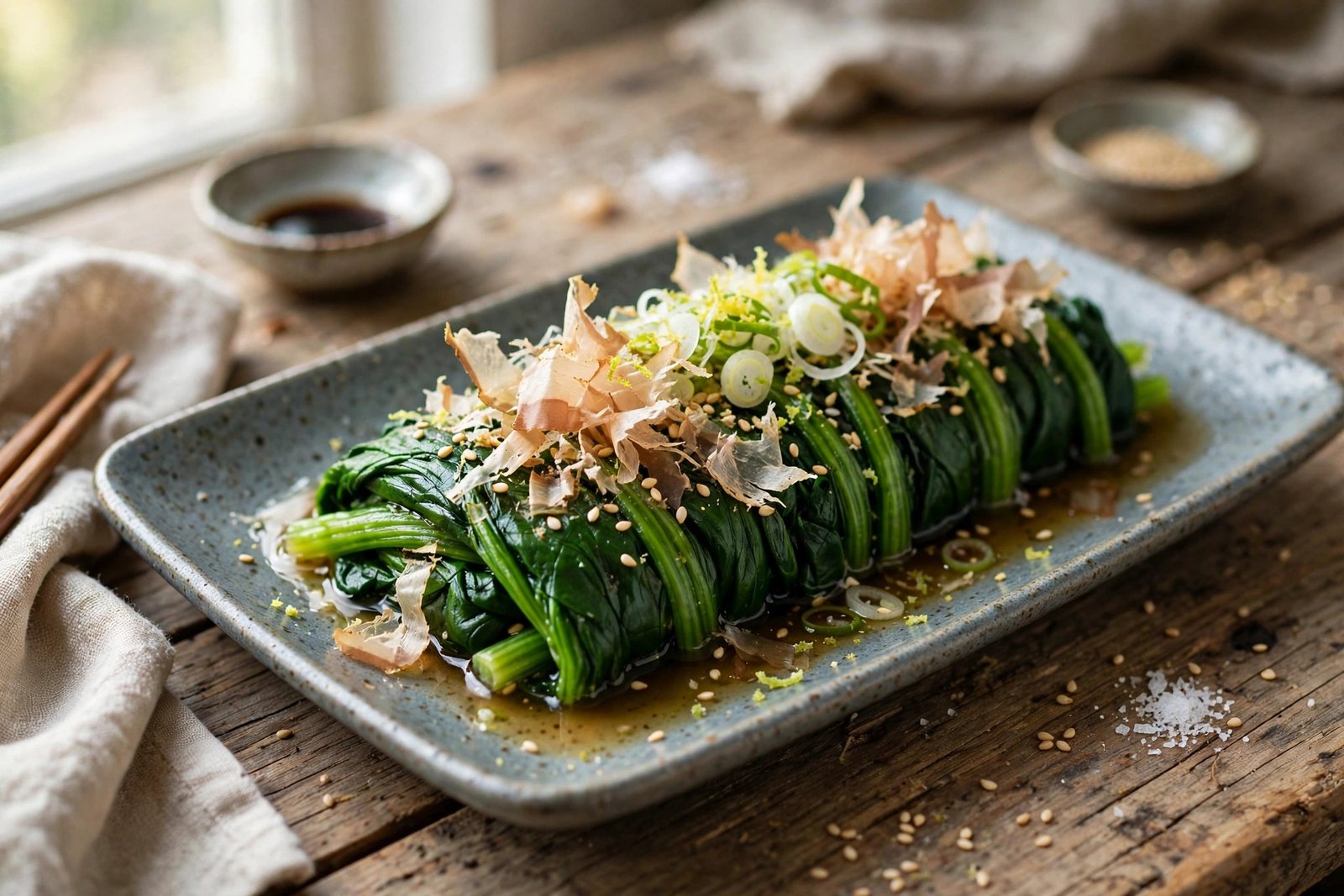
Fresh spinach blanched for 30 seconds, squeezed dry, and dressed in a light dashi, soy and mirin dressing, topped with grated ginger, sesame seeds and spring onion. Oshitashi is Japanese cooking at its simplest and most elegant: green, fresh and deeply savoury, ready in 20 minutes. It works as a side dish, a starter, or part of a larger Japanese meal.
The story behind Oshitashi
Oshitashi is one of the most basic dishes in Japanese cooking, and it is a perfect example of the Japanese approach to vegetables: minimal intervention, maximum respect for the ingredient. The name means soaked, and the method is exactly that. Spinach is blanched briefly, squeezed dry, cut into lengths, and soaked in a light dashi-based dressing. The spinach stays bright green and slightly crisp, and the dressing adds a gentle savoury flavour without overwhelming the vegetable.
Spinach has been grown in Japan since the 16th century, when it arrived from China, and it is one of the most common leafy vegetables in Japanese cooking. It appears in soups, in stir-fries, in salads, and in oshitashi. The variety grown in Japan has thicker, more crinkled leaves than Western spinach, and it holds up better to blanching. Any fresh spinach works for this dish, but choose the freshest, firmest leaves you can find.
The dressing is a simple mixture of dashi, soy sauce, mirin, sugar and sesame oil. Dashi is the fundamental stock of Japanese cooking, made from kombu seaweed and bonito flakes, and it gives the dressing a clean, savoury depth. The soy adds salt, the mirin adds sweetness, and the sesame oil adds a nutty fragrance. The proportions are delicate: the dressing should enhance the spinach, not drown it.
Oshitashi appears in Japanese home cooking, in bento boxes, and in the small dishes of a traditional set meal. It is the kind of dish that looks simple and tastes extraordinary, and it is a good introduction to Japanese flavours for cooks who are new to dashi.
Cook oshitashi when you want a light, fresh side dish that takes almost no time. It suits a Japanese meal, a healthy lunch, or any dinner that needs something green and clean. Serve it chilled, straight from the fridge, on a hot day.
The Japanese approach to vegetables, shown so clearly in oshitashi, is worth understanding. In Japanese cooking, vegetables are not a sidethought or a vehicle for sauce; they are treated with the same respect as fish or meat. The goal is to bring out the natural flavour and texture of the vegetable, not to mask it. Blanching, the simplest cooking method, is used precisely: just long enough to soften the vegetable and brighten its colour, then stopped instantly with cold water. The dressing is light and clean. The result is a dish that tastes like spinach, only more so.
- Prep time
- 10 mins
- Cook time
- 10 mins
- Total time
- 20 mins
- Servings
- 4 servings
- Calories
- 120
Ingredients
- 300 g fresh spinach
- 1/2 cup dashi stock
- 2 tablespoons soy sauce
- 1 tablespoon mirin
- 1 teaspoon sugar
- 1 teaspoon grated ginger
- 1 tablespoon toasted sesame seeds
- 1 teaspoon sesame oil
- 1 spring onion, finely sliced
- 1 pinch of salt
Instructions
- Bring a large pot of salted water to a rolling boil. Use plenty of water so the spinach has room to move and the water stays hot when the spinach goes in. The salt keeps the spinach bright green during blanching.
- Add the fresh spinach to the boiling water and blanch for just 30 seconds, pushing it down with tongs so it is fully submerged. The spinach will wilt dramatically and turn a vivid green. Thirty seconds is enough; longer blanching makes the spinach limp and dull.
- Drain the spinach immediately and plunge it into a bowl of cold water with ice if you have it. The cold water stops the cooking instantly and locks in the bright green colour. Leave the spinach in the cold water for a minute, then drain it well.
- Squeeze the spinach firmly with your hands to remove as much water as possible. This is the most important step: wet spinach dilutes the dressing and makes the dish watery. Squeeze hard, in small handfuls, until no more water comes out. The spinach should feel dry and compact.
- Shape the squeezed spinach into a tight log on a cutting board, rolling it gently with your hands. Cut the log into pieces about 4 cm long. The pieces should hold together in neat bundles. Arrange them on a serving plate or in small bowls.
- Whisk the dashi stock, soy sauce, mirin, sugar and sesame oil in a small bowl until the sugar dissolves. Taste the dressing: it should be lightly savoury and slightly sweet, with a clean, gentle flavour. The dressing should enhance the spinach, not overpower it.
- Pour the dressing over the spinach and toss gently to coat every piece. Be gentle; the spinach bundles should stay intact. The dressing will pool slightly at the bottom of the plate, which is fine.
- Chill the dressed spinach in the fridge for 10 minutes, then top with grated ginger, toasted sesame seeds and finely sliced spring onion. Serve chilled or at room temperature as a side dish.
Pro tips
- Blanch for just 30 seconds. Longer blanching makes the spinach limp and dull. Thirty seconds wilts it perfectly while keeping the colour bright and the texture slightly crisp.
- Plunge the spinach into cold water immediately after blanching. The cold water stops the cooking and locks in the green colour. Without it, the spinach keeps cooking and turns olive-grey.
- Squeeze the spinach as dry as you can. Wet spinach dilutes the dressing and makes the dish watery. Squeeze hard, in small handfuls, until no more water comes out.
- Shape the spinach into a log before cutting. The log gives neat, even bundles that look beautiful on the plate and are easy to pick up with chopsticks.
- Chill the dressed spinach for 10 minutes before serving. The rest lets the spinach absorb the dressing and the flavours meld. Cold oshitashi tastes fresher and cleaner than warm.
Variations & serving ideas
A sesame version adds a spoonful of ground toasted sesame seeds to the dressing, turning it into a goma-ae, or sesame-dressed spinach. The ground sesame gives a nutty, creamy richness that pairs beautifully with the spinach. Grind the seeds in a mortar until they form a rough paste, then mix with the soy, mirin and sugar.
For a richer version, add a soft-boiled egg, halved, on top of the dressed spinach. The creamy yolk mixes with the dressing and adds protein and richness. A 6-minute egg, with a jammy yolk, is ideal. This turns the side dish into a light lunch.
A mushroom version adds a handful of blanched shimeji or enoki mushrooms to the spinach before dressing. The mushrooms add an earthy flavour and a different texture. Blanch them for 1 minute, squeeze dry, and mix through the spinach.
Serve oshitashi as a side dish with steamed rice, miso soup and grilled fish, or as part of a Japanese spread with other small dishes. It also works as a healthy snack on its own, or as a topping for a rice bowl with a fried egg.
Leftover oshitashi keeps in the fridge for a day and tastes even better the next day, after the spinach has absorbed more dressing. Add fresh ginger and sesame at serving time.
A mustard version adds a teaspoon of Japanese mustard, or karashi, to the dressing. The mustard gives a sharp, pungent heat that contrasts with the mild spinach. Karashi is hotter and sharper than Western mustard, so use a small amount and taste as you go. A little goes a long way, and the heat wakes up the whole dish.
A citrus version adds a squeeze of yuzu or lemon juice to the dressing and a little grated zest on top. The citrus brightens the spinach and adds a fresh, fragrant note that pairs beautifully with the dashi. Yuzu is the traditional Japanese citrus for this dish, but lemon works well. Add the juice at the last minute so the flavour stays bright, and use the zest sparingly so it does not overpower the spinach.
A bonito flake version tops the dressed spinach with a handful of katsuobushi, the dried bonito flakes used in Japanese cooking. The flakes are so light that they wave and curl in the air, and they add a smoky, savoury depth. Scatter them over the spinach just before serving so they stay crisp. The combination of spinach, dashi and bonito is a classic Japanese flavour pairing.
Getting it right
The technique that decides oshitashi is the blanch and shock. Thirty seconds in boiling salted water wilts the spinach perfectly, and an immediate plunge into cold water stops the cooking and locks in the bright green colour. The timing is precise: too short, and the spinach is raw and tough; too long, and it turns limp and dull. Thirty seconds is the sweet spot, and the cold water is essential. Without the shock, the spinach keeps cooking from residual heat and loses its colour and texture.
Squeezing is the second technique. Spinach holds an astonishing amount of water, and if it is not squeezed out, the dressing dilutes and the dish turns watery. Squeeze firmly, in small handfuls, until no more water comes out. The spinach should feel dry and compact. This takes a minute of firm squeezing, and it is the most important step in the recipe.
The dressing balance is the third consideration. Dashi, soy, mirin, sugar and sesame oil in the right proportions give a dressing that is savoury, lightly sweet and clean-tasting. Taste it before pouring it over the spinach: it should taste gentle and balanced, not salty or overpowering. The spinach is the star; the dressing is the supporting act.
The most common mistake is under-squeezing the spinach. Wet spinach makes a watery dish, no matter how good the dressing is. Squeeze hard. The second mistake is over-blanching. Thirty seconds is enough; a minute is too long.
Plating matters in oshitashi, because the dish is so simple that presentation carries much of its appeal. The spinach bundles should be arranged neatly, in a row or a small mound, with the dressing pooled around them and the garnishes scattered on top. A small, shallow bowl or a rectangular plate shows the dish best. The bright green of the spinach against a white or dark plate is beautiful, and the ginger, sesame and spring onion add colour and texture. Take a moment to plate it well; the dish deserves it.
Storing & reheating
Oshitashi keeps in the fridge for up to 2 days in a sealed container, dressed or undressed. The flavour deepens overnight as the spinach absorbs more dressing. Add fresh ginger, sesame seeds and spring onion at serving time.
It does not freeze well. Spinach turns limp and watery after freezing and thawing. Make only as much as you will eat within 2 days. The dish is so quick to make that a fresh batch is always better than a frozen one. The dressing on its own keeps in the fridge for 3 days.
Frequently asked questions
What is oshitashi?
Oshitashi is a Japanese dish of blanched spinach dressed in a light dashi, soy and mirin dressing. The name means soaked. It is served chilled or at room temperature, topped with ginger, sesame seeds and spring onion.
Can I use frozen spinach?
Fresh spinach gives a much better result. Frozen spinach is already soft and watery, and it does not have the bright colour and slight crispness of fresh blanched spinach. If you must use frozen, thaw it completely and squeeze it very dry.
What is dashi?
Dashi is the fundamental stock of Japanese cooking, made from kombu seaweed and bonito flakes steeped in hot water. It gives a clean, savoury depth. Instant dashi granules are a convenient substitute, or use a light vegetable stock.
Why is my spinach dull green instead of bright?
It was probably blanched too long, or not plunged into cold water immediately. Blanch for just 30 seconds and shock in cold water to lock in the colour. Salt in the blanching water also helps.
Can I use other greens for oshitashi?
Yes. The same method works with Swiss chard, komatsuna, watercress, or green beans. Adjust the blanching time: chard needs 1 minute, green beans need 2 minutes. The dressing stays the same.
What do I serve with oshitashi?
It works as a side with steamed rice, miso soup and grilled fish, or as part of a Japanese spread. On its own with a soft-boiled egg it makes a light, healthy lunch.