Spaghetti Aglio e Olio Recipe
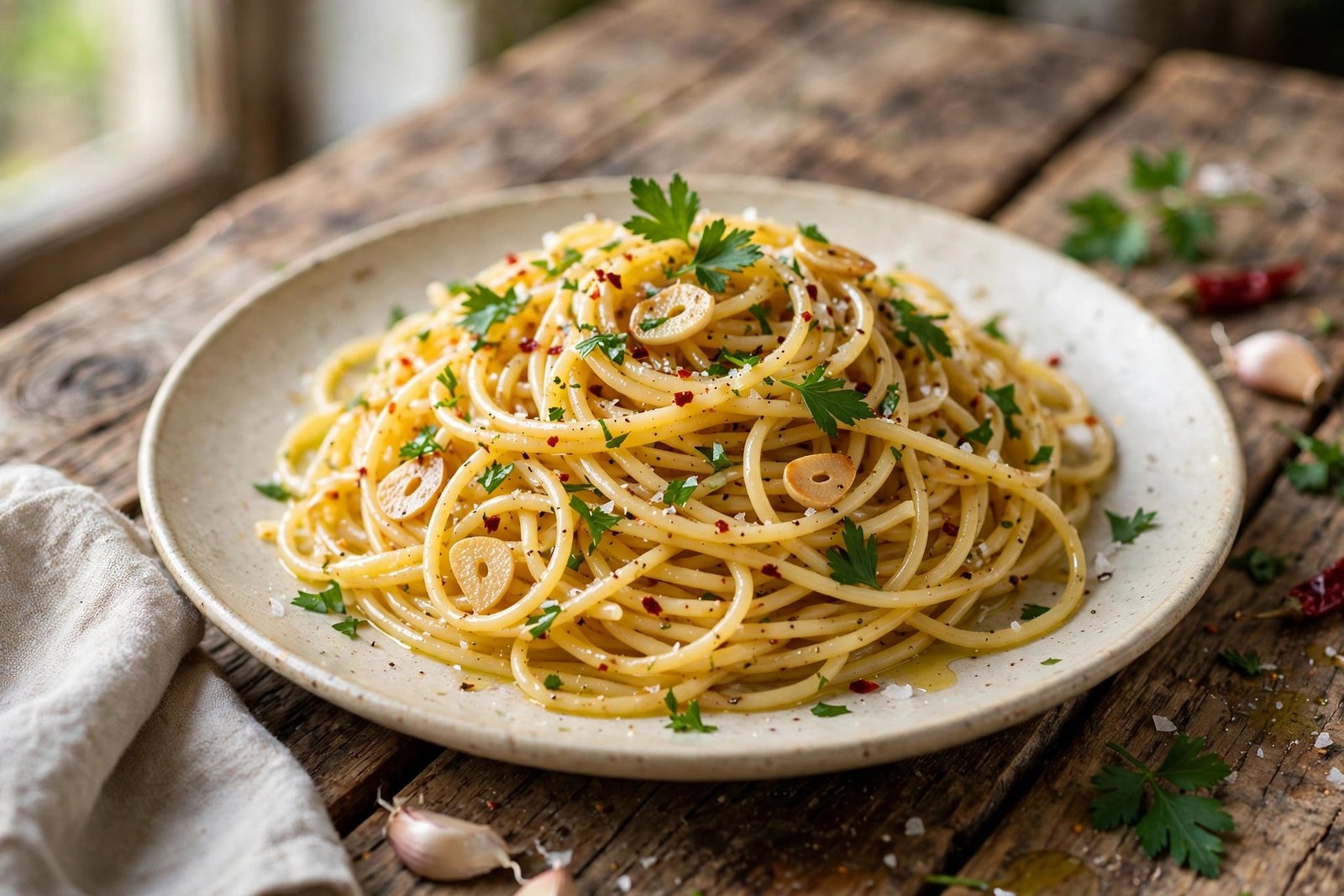
Simple yet deeply flavourful, Spaghetti Aglio e Olio turns a handful of pantry staples into a silky, garlicky pasta dish. It is ready in minutes and tastes like something from a Roman trattoria. The secret is in the garlic: cooked gently in olive oil until golden, never brown, and the pasta water, which turns the oil into a silky sauce.
The story behind Spaghetti Aglio e Olio
Spaghetti aglio e olio is one of the great pantry pastas, and it is a dish that proves simplicity is not the same as plainness. Garlic, olive oil, chilli flakes, parsley and spaghetti: five ingredients, fifteen minutes, and a result that tastes like a Roman trattoria. It is the pasta you make at midnight, when the fridge is empty and you are hungry, and it is also the pasta you make when you want to show off, because getting it right takes more skill than it looks.
The dish comes from Naples, in southern Italy, where it is a staple of home cooking. Aglio means garlic, olio means oil, and that is the whole sauce: garlic, gently cooked in good olive oil, with chilli flakes for heat and parsley for freshness. There is no tomato, no cream, no cheese in the traditional version. The sauce is the oil itself, emulsified with pasta water into a silky coating that clings to every strand.
What makes it special is the garlic. It must be sliced thin, cooked slowly in olive oil over low heat, until it turns pale gold and smells sweet and nutty. A second too long and it burns, turning bitter and ruining the dish. The garlic is the whole flavour: sweet, mellow and garlicky, not sharp or raw. Getting it right is the difference between a good aglio e olio and a great one.
Make it whenever you want pasta in a hurry, or whenever you want to taste the quality of your olive oil. It is a natural choice for a weeknight dinner, a late-night snack, or a light lunch. It is also a good dish for testing a new olive oil: with so few ingredients, the oil's flavour comes through clearly.
The dish is also a lesson in pasta technique. The pasta must be cooked al dente, the water must be well salted, and the starchy pasta water is the secret ingredient that turns oil into sauce. Once you have mastered aglio e olio, you have the foundation for every oil-based pasta sauce.
- Prep time
- 10 mins
- Cook time
- 15 mins
- Total time
- 25 mins
- Servings
- 4 servings
- Calories
- 520
Ingredients
- 320 g spaghetti
- 6 garlic cloves, thinly sliced
- 80 ml extra-virgin olive oil
- 1 tsp chilli flakes
- 1 handful fresh parsley, chopped
- 40 g grated Parmesan (optional)
- 1 lemon, zested
- 2 tbsp toasted breadcrumbs
- Salt to taste
Instructions
- Bring a large pot of water to a rolling boil and salt it generously: it should taste like the sea. Add the spaghetti and cook according to the packet, minus 1 minute, so it is slightly underdone. It will finish cooking in the sauce. Reserve at least 250 ml of the starchy pasta water before draining.
- While the pasta cooks, slice the garlic thinly and evenly, about 1-2 mm thick. Uneven slices cook unevenly: thin ones burn while thick ones stay raw. Use a sharp knife and take your time. The garlic should be sliced, not minced or crushed: slices turn golden and sweet, while minced garlic burns fast.
- Heat the olive oil in a large, wide pan over low heat. Add the sliced garlic and chilli flakes and cook very gently for 2-3 minutes, stirring often, until the garlic turns pale gold and smells sweet and nutty. Watch it closely: the garlic goes from gold to brown in seconds, and brown garlic is bitter. If it starts to darken too fast, take the pan off the heat.
- Add the lemon zest to the pan and stir for 30 seconds. The zest adds a bright, citrusy note that lifts the garlic. If you are using the optional Parmesan, do not add it yet: cheese goes in at the end, off the heat.
- Add the drained spaghetti to the pan, along with a ladleful, about 100 ml, of the reserved pasta water. Turn the heat up to medium and toss the pasta vigorously for 1-2 minutes, using tongs, until the sauce emulsifies into a silky coating. The oil and water should combine into a glossy sauce that clings to the pasta, not pool at the bottom of the pan.
- Add more pasta water, a splash at a time, if the pasta looks dry. The sauce should be glossy and loose, coating every strand, not oily or watery. The pasta should finish cooking in the sauce during this tossing, so it absorbs the garlic flavour. Taste a strand: it should be al dente, with a slight bite.
- Take the pan off the heat and stir in the chopped parsley and the toasted breadcrumbs, if using. The parsley adds freshness and colour, and the breadcrumbs add crunch. If using Parmesan, add it now, off the heat, and toss to combine. The residual heat will melt it slightly.
- Serve at once, in warm bowls, twirled into neat nests with tongs. Drizzle with a little extra olive oil and a pinch of chilli flakes if you like. Eat immediately: aglio e olio waits for no one, and the sauce starts to separate as it cools.
Pro tips
- Slice the garlic, do not mince it. Thin, even slices cook gently and turn golden and sweet. Minced garlic burns in seconds and turns bitter. Take the time to slice the garlic thinly and evenly: it is the most important prep step in the dish.
- Cook the garlic over low heat. The garlic should infuse the oil slowly, turning pale gold over 2-3 minutes. High heat burns it before it has time to sweeten. If the garlic starts to darken too fast, take the pan off the heat immediately: residual heat will finish it.
- Save the pasta water. The starchy water is what turns the oil into a sauce. Reserve at least 250 ml before draining, and add it a ladleful at a time while tossing. Without it, the oil stays separate and greasy. With it, the sauce becomes silky and glossy.
- Undercook the pasta by a minute. The pasta finishes cooking in the sauce, absorbing the garlic flavour and the starchy water. Pasta cooked fully in water, then tossed in sauce, is already overcooked by the time it reaches the table. One minute less is the rule.
- Use good olive oil. With only five ingredients, the quality of the oil shows. A good extra-virgin olive oil, fruity and peppery, makes the dish taste like a trattoria. A bland oil makes it taste flat. This is the dish to use your best bottle on.
Variations & serving ideas
Anchovies are a classic addition. Add 3-4 anchovy fillets to the oil with the garlic, and they melt into the sauce, adding a deep, savoury flavour that is not fishy. The anchovies dissolve completely, leaving only a rich umami note. It is a small addition that makes a big difference.
Breadcrumbs add crunch. Toasted breadcrumbs, stirred in at the end, give the pasta a pleasant crunch and a nutty flavour. They are a traditional addition in southern Italy, where they are called mollica, and they are a good substitute for cheese in a vegan version. A little lemon zest in the breadcrumbs adds brightness.
Lemon is a natural partner. The zest in this recipe adds a bright note, and a squeeze of lemon juice at the end, just a teaspoon, adds acidity that cuts through the oil. Be careful not to add too much: the dish should taste garlicky, not lemony. A little goes a long way.
For a heartier version, add prawns or white beans. Prawns, cooked in the garlic oil before the pasta goes in, make it a substantial main. White beans, tinned and drained, add protein and a creamy texture. Broccoli florets, blanched and tossed in at the end, add colour and crunch.
Mushrooms are another good addition. Slice them thin and cook them in the oil before the garlic goes in, until golden and crisp at the edges. They add a meaty, savoury depth that suits the garlic and chilli. A handful of baby spinach, wilted in at the end, adds colour and freshness without changing the character of the dish.
Getting it right
Garlic cooking is the technique that defines this dish. The garlic must be sliced thin, cooked in olive oil over low heat, until pale gold and sweet. The oil should be warm, not hot: the garlic should sizzle gently, not fry aggressively. Two to three minutes is enough. The moment the garlic turns gold, it is done. Brown garlic is bitter and ruins the dish, so watch it closely and take the pan off the heat if it darkens too fast.
Emulsifying the sauce is the second skill. The pasta water, starchy from the cooking spaghetti, is the emulsifier: when tossed vigorously with the oil, it forms a silky sauce that coats the pasta. The key is to add the water a ladleful at a time and toss hard, with tongs, for 1-2 minutes. The sauce should be glossy and loose, not oily or watery. It takes practice to get the balance right, but once you have it, you can make any oil-based pasta sauce.
Timing is the last thing to master. The garlic takes 2-3 minutes, the pasta takes 8-10 minutes, and the tossing takes 1-2 minutes. Start the garlic when the pasta has 3 minutes left, so the garlic is golden and the pasta is ready at the same moment. Aglio e olio is a dish that comes together in a rush, and the timing matters.
Storing & reheating
Aglio e olio is best eaten fresh, straight from the pan. It does not keep well: the sauce separates as it cools, and the pasta absorbs the oil and goes greasy. If you have leftovers, refrigerate for up to a day and reheat gently in a pan with a splash of water and a drizzle of olive oil, tossing to re-emulsify the sauce.
It does not freeze well. The pasta goes soft and the sauce separates completely. Make only what you will eat: the dish takes 15 minutes from start to finish, so there is no need to batch-cook it. If you want to save time, slice the garlic and chop the parsley ahead, and keep them ready.
Frequently asked questions
Why did my garlic turn bitter?
It was overcooked. Garlic goes from golden to brown in seconds, and brown garlic is bitter. Cook it over low heat, watch it closely, and take the pan off the heat the moment it turns pale gold. If it burns, start again: bitter garlic ruins the whole dish.
Should I add Parmesan to aglio e olio?
Traditionally, no: the classic Neapolitan version has no cheese. But a little grated Parmesan, added off the heat, is a common addition and it tastes good. It is a matter of taste. If you add it, use a small amount so it does not overwhelm the garlic.
Can I use dried chilli instead of chilli flakes?
Yes. A whole dried chilli, crumbled into the oil, gives a similar heat. Fresh chilli, deseeded and sliced, works too, though it adds a different, fresher heat. The chilli is there for warmth, not to dominate: use enough to notice, not enough to burn.
What pasta should I use?
Spaghetti is traditional, and its thin shape suits the light oil sauce. Linguine or bucatini also work well. Avoid short pasta shapes like penne: the sauce does not coat them as well. Use a good-quality dried pasta, ideally bronze-die, which has a rougher surface that holds the sauce better.
Can I make aglio e olio ahead of time?
No, it must be eaten fresh. The sauce separates as it cools, and the pasta absorbs the oil. It takes only 15 minutes to make, so there is no need to prepare it ahead. You can slice the garlic and chop the parsley in advance to save time.
Is aglio e olio vegan?
Yes, without the optional Parmesan. The dish is naturally vegan: pasta, olive oil, garlic, chilli and parsley. It is one of the best vegan pasta dishes, with a depth of flavour that comes from technique rather than animal ingredients. Add toasted breadcrumbs for crunch if you skip the cheese.


